My Battle With Hard Water: How I Keep My Coffee Maker Clean
I live in Alabama and the water here is very hard. This means it has a lot of minerals in it. These minerals are tough on home appliances. They are especially bad for coffee machines. I love a good cup of coffee in the morning. But my local water supply makes it hard to brew a perfect pot.
Today I want to share my own story. We can look at how I protect my gear. The exact steps I use to clean my machines are simple. You will learn how to spot scale build up. Readers will also see what works and what fails.
The Day My Glass Press Died
My journey started with a simple glass French press. It made a great cup of coffee. The ritual of pressing the plunger felt good every morning. But glass is very fragile. One day I was washing it in the kitchen sink. My hand slipped just a little bit. I bumped the glass against the side of the metal sink.
The glass shattered everywhere. It was a huge mess. Wet coffee grounds mixed with sharp glass shards. An hour went into cleaning it up, but losing my favorite brewer still felt disappointing. That moment made it clear a much stronger solution was needed.
Finding Tougher Coffee Gear
After the glass broke I bought a stainless steel French press. It has a double wall design. It keeps my morning brew hot for a long time. Best of all it will never shatter in the sink. I still use it today. It is a reliable tool in my kitchen.
But sometimes I want a standard pot of drip coffee. I wanted a machine that could brew for a crowd. So I started looking at electric brewers.
Testing Machines at the Office
Before buying one for my home, a few options were tested first. A Bunn Velocity Brew was set up at my office and used for a while to see how it performed.
It was incredibly fast. It could brew a full pot in just a few short minutes.
The speed was great for a busy work day. But I noticed a problem after a few weeks. The machine started making strange noises. It was sputtering and spitting hot steam. The hard water was already clogging the inside pipes. I realized I needed a solid cleaning plan.
Bringing Home the Moccamaster
Eventually, it was time to invest in a quality machine for home use. The Technivorm Moccamaster became the final choice, and unboxing it is still easy to remember.
It looked beautiful on my kitchen counter. The shiny metal parts felt very premium.
I wanted this machine to last a long time. I knew the water in my town was full of calcium. If I did not take care of it the heater would break down. The white crust would ruin the water flow. So I made a strict rule for myself. I descale my electric machines every two months.
Why Hard Water Ruins Your Brew
Hard water is full of calcium and magnesium. These are natural minerals from the ground. They are perfectly safe to drink. But they are terrible for hot water appliances. When water gets hot the minerals fall out. They stick to the metal parts inside your brewer.
This white crust is called scale. It acts like a thick blanket on the heating element. The machine has to work much harder to heat the water. This wastes electricity and wears out the parts fast.
It also ruins the taste of your drink. The scale traps old coffee oils. It makes your fresh cup taste bitter and stale. If your morning cup tastes flat you might have a scale problem.
Signs You Need to Descale Now
You should not wait for your machine to break completely. You need to watch for early warning signs. I look for a few specific things every month. If I see them I clean the machine right away.
First I listen to the sound of the brew. A clean machine has a nice steady hum. A clogged machine spits and hisses loudly. The water struggles to push through the narrow tubes.
Second I watch the total brew time. My machine usually takes six minutes to finish a pot. If it takes eight or ten minutes I know there is a block. The water flow is choking on the mineral crust.
Third I look at the main water tank. I check the clear plastic walls. If I see a cloudy white film it is time to act. That film is the first stage of heavy scale build up.
Comparing Different Cleaning Options
There are a few ways to clean out the mineral crust. I have tried most of them over the years. Some are cheap and easy to find. Others cost more but work much faster. I like to look at the data before I choose.
Table 1: Common Descaling Fluids
| Method | Cost Per Use | Smell Level | Best Used For |
| White Vinegar | Very Low | High and Sour | Light daily scale |
| Citric Acid Powder | Low | None | Heavy hard crust |
| Commercial Liquid | High | Low Chemical | Fast deep cleans |
My Experience With White Vinegar
White vinegar is the most common cleaner around. Most people already have a bottle in their pantry. It is very cheap to buy at the store. The mild acid slowly eats away the white crust.
For a long time, vinegar was the go-to solution. A simple mix of one part vinegar and one part water went into the tank before running the machine.
The smell was the hardest part to handle. Hot vinegar fills the whole house with a sharp sour odor. It makes my nose wrinkle every single time.
It also requires a whole lot of rinsing. You have to run fresh water through the machine four or five times. If you skip a rinse your next batch will taste like salad dressing. That is a terrible way to start the day.
Switching to Citric Acid Powder
Over time, vinegar was dropped completely in favor of something with less odor. That’s when pure citric acid powder became the better option.
It is cheap and easy to store in a small jar. You just dissolve a few spoons of powder into warm water.
This is my absolute favorite method now. It has zero smell at all. The kitchen stays fresh while the machine runs. The acid is also a bit stronger than normal vinegar. It clears out the tough crust in my Alabama home much faster.
I only need to run two tanks of fresh water to rinse it out. It saves me time and saves clean water. The coffee tastes perfectly clean the very next day.
My Exact Two Month Cleaning Routine
I like to keep things as simple as possible. Every two months I run my cleaning cycle. I mark it on my calendar so I do not forget. A regular schedule stops bad clogs before they even start.
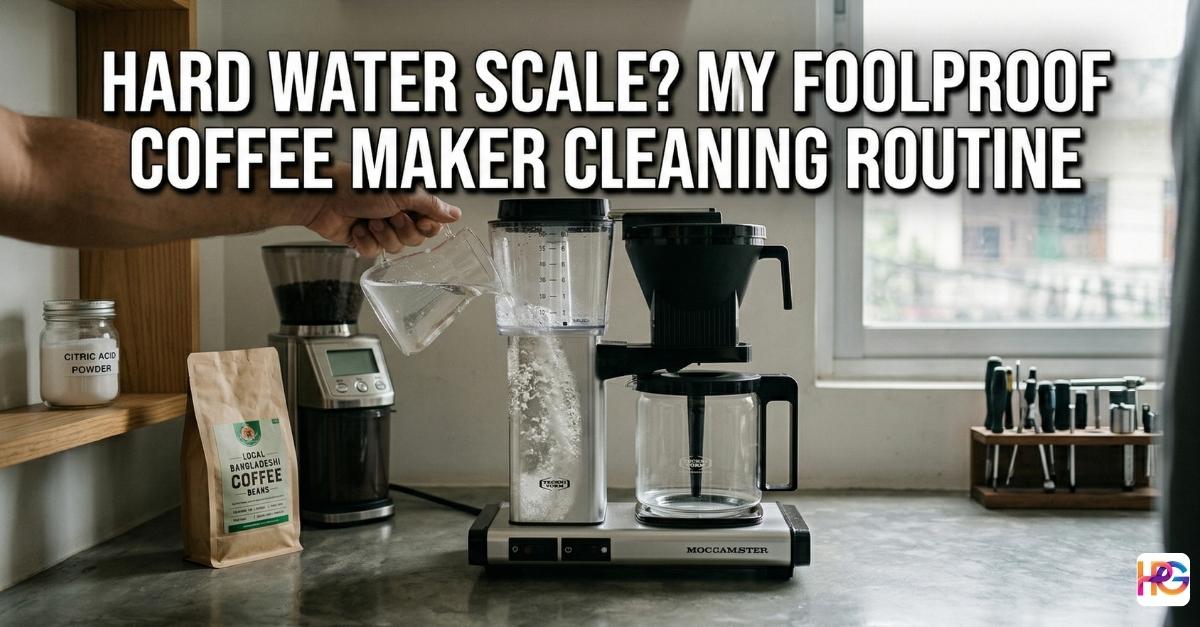
Here is the exact process I follow. I start by emptying the glass carafe and the filter basket. I wash them with warm soapy water first. Then I prepare my cleaning fluid. The process is simple: two tablespoons of citric acid are mixed into a liter of water, then poured into the tank. After that, the machine runs until it reaches about halfway.
Then I turn the power off quickly. I let the liquid sit inside the hot tubes for thirty minutes. This long soak time is the secret. It gives the acid time to melt the hard calcium blocks.
Finishing the Wash Cycle
After thirty minutes I turn the power back on. The rest of the liquid pushes through the system. It spits out bits of white chalky flakes into the glass pot. Seeing those gross flakes makes me feel good. It means the cleaner is doing its job well.
I dump the dirty liquid right down the sink. Then I fill the tank with fresh cold water. I run a full cycle to flush out the remaining acid. I do this one more time just to be safe. The whole process takes about forty five minutes. Most of that is just waiting for the long soak.
Taking Good Coffee on the Road
Of course I do not always brew at home. Sometimes I need to travel and get away. I took my AeroPress on a camping trip last summer. We went high up into the quiet mountains.
It was a much needed break from normal life. My kid got sick in the back seat of my new sedan during a hot July road trip right before that. I really needed a calm morning brew in the woods to relax.
The best part about the AeroPress is the easy cleaning. It has no tubes or internal heating elements. You just push the puck of grounds into the trash. A quick rinse in a stream is all it takes. You never have to worry about scale build up with manual brewers.
Why Bottled Water Fails as a Quick Fix
Some folks ask why I do not just use bottled water. Buying large jugs from the store seems like an easy fix. It would stop the heavy scale from forming. But doing this causes a few bad new issues.
First the true cost adds up very fast. You need a lot of water to brew a pot every single day. Buying plastic bottles hurts your budget over a long time. Second the empty plastic jugs create a ton of waste. My goal is to keep my kitchen organized and reduce trash.
Third coffee actually needs some minerals to taste good. Distilled or zero mineral water makes a very flat cup. The grounds need a small amount of magnesium to pull out the flavor. So using tap water and cleaning the machine is still my best choice.
Understanding How Water Pulls Flavor
Brewing is just a basic science experiment in your kitchen. Hot water acts like a strong chemical solvent. It washes over the dry grounds and extracts oils. Those oils hold all the dark taste and sweet smell.
If the water is too cold the oils stay trapped inside. Your drink will taste thin, weak, and sour. If the water is too hot it burns the grounds badly. That makes the drink taste like bitter ash.
A clean heating element hits the exact perfect temperature. It keeps the water right around two hundred degrees. That is the magic sweet spot for a great extraction. My two month routine protects that sweet spot.
How to Save a Completely Blocked Brewer
Sometimes a friend will bring me an old broken machine. They tell me it stopped working completely out of nowhere. The internal tubes are totally blocked by thick white rock. The water can not move through the pipes at all.
Fixing a dead machine takes a lot more patience. You cannot just run a normal fast cycle. You have to force the acid inside and let it sit for hours. Sometimes I use a small thin wire to poke the crust at the input valve.
It is a very dirty and messy job. You end up with chunks of wet calcium all over the counter. This is exactly why I hate skipping my cleaning days. Simple prevention is always much easier than doing a hard rescue mission.
Keeping Your Kitchen Tools Organized
A big part of my routine is pure organization. I keep all my coffee tools in one main zone. The grinder sits right next to the Moccamaster. The paper filters stay safely in a small drawer below.
I keep my citric acid in a clear labeled glass jar. It sits on a high shelf away from kids and pets. Having everything close by makes the work feel easy. I do not have to hunt for supplies when cleaning day arrives.
A neat kitchen vastly reduces my daily stress. It helps me focus on enjoying the quiet morning ritual. Finding the right tools quickly lets me pick better habits and live smarter every day.
Daily Habits to Stop Bad Build Up
Descaling is very important for machine health. But your simple daily habits matter just as much. You can easily slow down the crust by doing a few simple things. I always empty the water tank when I am done brewing.
Stagnant water leaves behind many more hard minerals. If you let water sit in the machine all day it will scale up faster. I always start with fresh cold water every single morning. It tastes much better and keeps the machine cleaner inside.
I also wipe down the shower spray head. This is the part where the hot water hits the grounds. Coffee oils can splash up and stick to the hot metal. A quick wipe with a damp cloth stops bad clogs from forming there.
The True Cost of Ignoring the Problem
Some people think deep cleaning takes way too much time. They ignore the loud sputtering sounds in the morning. They drink the flat tasting brew without thinking twice. But ignoring the problem will cost you real money later.
A heavily scaled heater will eventually burn out completely. It will get far too hot and snap the metal. When that happens the entire machine is dead. You have to throw it away and buy a brand new one. A bottle of cleaner costs a few small dollars. A new high end brewer costs hundreds of dollars.
Taking care of your tools is just common sense. A small amount of steady effort saves a large amount of cash. It also guarantees a much better morning routine for years.
Final Thoughts on Water and Gear
Living with hard water is a daily challenge. But it does not have to ruin your expensive gear. You just need to be smart about your tools. Pick machines that are easy to open and clean. Use the right fluids to melt the crust away safely.
Do not let the mineral scale win the battle. Set a schedule right now and stick to it. Your taste buds will thank you later. Your wallet will thank you too. I hope my story helps you keep your kitchen running smooth.
Frequently Asked Questions About Power Tools
Q: Can I leave my power tool batteries in a cold garage?
Cold weather can kill your power tool batteries fast. Bring your bare tools and battery packs inside during the winter. This simple step keeps them strong and safe.
Q: Will a hot summer garage damage my cordless power tools?
High heat can fry motor parts and melt tool grips. Store your DeWalt tools in a cool spot away from the hot sun. Your power tools will run well and last much longer.
Q: How much torque do I need for basic car repairs?
A good impact wrench needs about two hundred foot pounds to snap off tight lug nuts. This is plenty of power for most home auto work. Just read your car manual first.
Q: Can I use a DeWalt battery on my Milwaukee power tools?
No, these brands use distinct battery shapes and smart chips. You must stick to the same brand line for your power tools. Cheap adapters exist but they can cause fires.
Q: Are brushless power tools really worth the extra cash?
Yes, these motors run cool and save a lot of power. They outlast old brushed models in a hot home garage. You get far more work done on one single charge.