Can You Descale a Nespresso with Vinegar? What Actually Happens
A Tuesday Morning Mistake in Alabama
My name is Hasan. I live in Alabama. I love a good cup of espresso. A few months ago, my morning went bad.
The sun was just coming up. I walked into my kitchen for a warm brew. I pushed the shiny button on my Nespresso machine. The orange light started blinking at me.
Flashing in a steady beat, it showed a problem. It was time to clean the system. Sighing loudly, I opened my storage cabinet. I did not have the right cleaning kit.
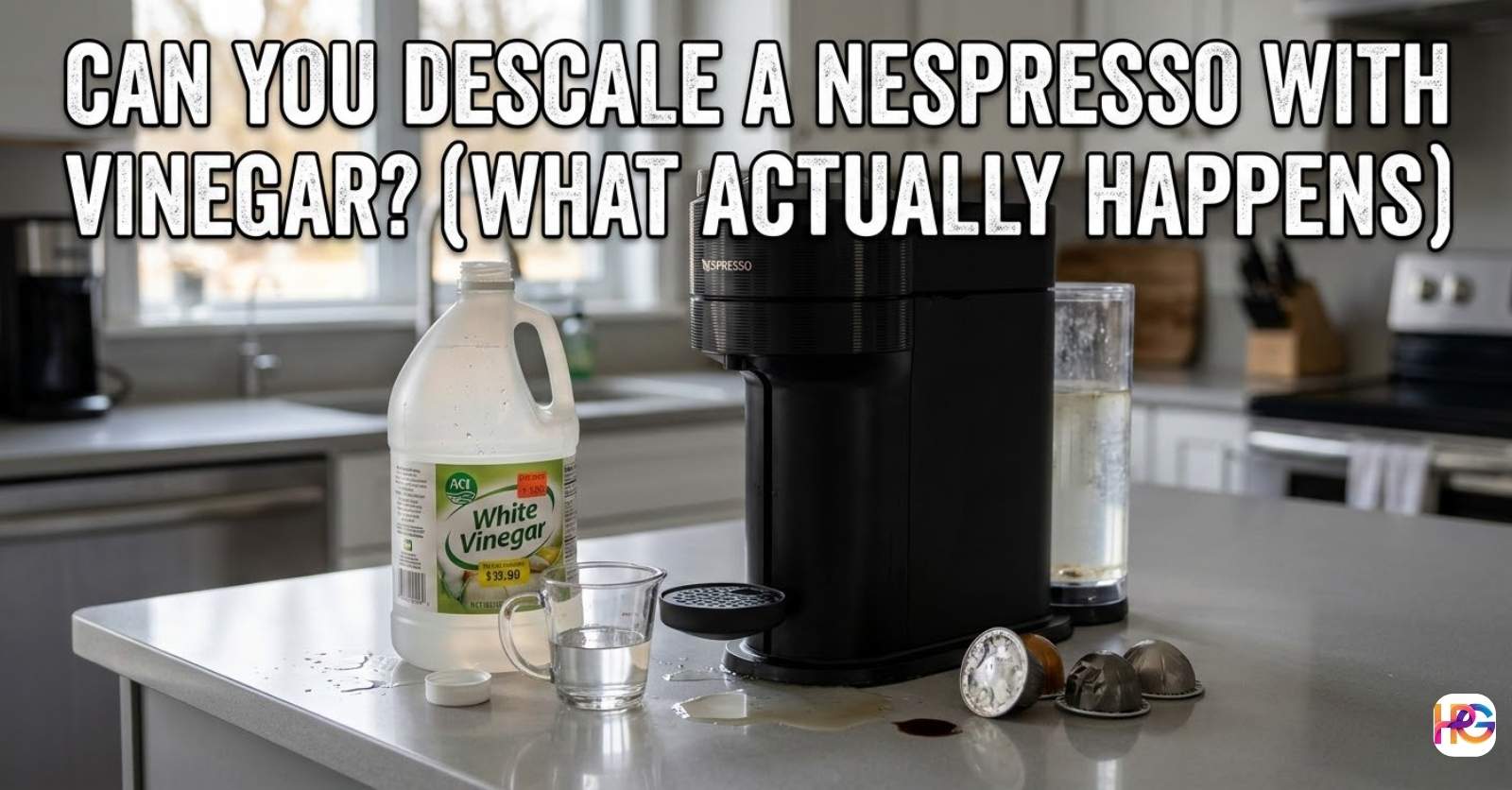
Looking around for a quick fix, I saw a bottle. A big plastic jug of white vinegar sat right there. This seemed like such an easy fix at the time. Pouring half a cup into the tank felt right.
I filled the rest of the tank with tap water. That choice was a huge mistake. I want to share my exact story with you today. You will learn why this is a truly bad idea.
I will show you what happens inside your brewer. My goal for Home Pick Guide is simple. I want to help you pick better and live smarter. Dodging bad web advice is a big part of that. Let us dive right into the hard facts.
Why We Think This Cleaning Hack Works
Why do folks think this hack works well? Friends often tell us this fluid cleans everything. You mostly use it to mop dirty kitchen floors. Maybe you use it to wipe glass windows until clear.
The liquid is cheap and very easy to find. Every grocery store sells large jugs for very little. Because of this, it becomes a top household cleaner. Naturally, we assume it works for coffee makers too.
Old glass drip coffee pots handle the acid fine. Those classic pots are very simple machines inside. Boiling water just drips down slowly through the grounds. They do not use high pressure to brew your drink.
Tiny delicate parts do not exist inside those pots. A modern espresso maker is not like those older models. Your new machine is a highly complex piece of gear. Treating it like an old drip pot causes real harm.
The Hidden Acetic Acid Problem
The main active part in vinegar is acetic acid. This chemical is okay at eating hard water spots. Yet, household vinegar is mostly just plain water. The large bottle holds only five percent actual active acid.
This weak mix fails to clean the deep scale. Tap water leaves behind tough rock called calcium. Weak acid just sits on top of this hard rock. Barely scratching the surface, it leaves all the blockages behind.
Using it causes more trouble than it actually fixes. You get a totally false sense of safety. Thinking your machine is clean feels really good. Sadly, the clear truth is quite different from that feeling. The inner pipes stay fully clogged with hard scale.
What Actually Happens to Your Machine
Let me tell you what happens inside the casing. I learned this while building my coffee maker review site. High pressure moves hot water through a Nespresso system.
Pushing water fast creates a lot of stress. This strong force needs very tight rubber seals. Every small tube must fit perfectly together. Hot acid liquid attacks these soft inner parts right away.
Ruined Rubber Seals Inside
Rubber gaskets keep boiling water from leaking out. Acetic acid proves very harsh on soft rubber parts. It slowly dries out the tiny silicone rings. Turning hard and brittle, the important seals soon fail completely.
They crack after just a few rough cleaning cycles. Water soon starts dripping onto your clean kitchen counter. Your espresso loses its rich, thick foam on the top. Pressure drops a lot because of those inner water leaks.
Fixing these tiny broken parts is a huge pain. You cannot just buy a new seal at normal stores. Many times, you have to throw the whole unit away. This turns a cheap hack into a total money loss.
The Heating Block Fails Fast
The inside heater goes by the name thermoblock. Getting water hot in seconds is its main job. This part is a smart piece of metal tubing. Scale builds up heavily inside this metal block over time.
Weak acid cannot melt the hard calcium rock away. Worse still, the chemical eats away at the metal walls. Making small pits inside the tube causes major water issues. Your machine fully stops heating water properly for your drinks.
Inner sensors get confused by the hidden chemical damage. Your morning drink quickly becomes warm and very sad. A cold espresso is a bad way to start any day. You want your coffee piping hot every single time.
The Terrible Taste Test Experience
Physical damage to the machine is bad enough. The resulting taste issue is a true nightmare to fix. Running three full tanks of fresh water seemed totally fine. I really thought the machine was fully clean and ready.
The sour smell still filled my Alabama kitchen anyway. This liquid is highly sticky and very stubborn inside pipes. Coating the plastic tubes inside the device happens very fast. The smell hides in tiny hidden pressure valves.
I decided to pop in a pricey dark pod. Buzzing loudly, the machine poured my first test drink. Looking closely, the foam looked a little thin and weak. Taking a small sip, I almost spit the coffee out.
Rich coffee oils mixed poorly with sour flavor notes. The cup tasted harsh, sharp, and totally bitter. Acid fully ruined the nice chocolate flavor notes I love. Paying good money for those tiny pods is very normal.
You never want them tasting like old pickle juice. It took me a full week of heavy daily flushing. Running clean water through the system became my daily chore. I wasted so much precious time and clean fresh water.
Vinegar vs Official Cleaners
You need to see the real numbers comparing these liquids. I put together a simple data table for you. This chart compares common pantry goods to proper cleaning fluid. Seeing the facts clearly helps you make much better choices.
| Feature | White Vinegar | Official Descaler |
| Acid Type | Acetic Acid | Lactic Acid |
| Cleaning Power | Very Weak | Highly Strong |
| Safe for Seals | No | Yes |
| Smell Left | Sour | None |
| Warranty | Voids It | Keeps It Safe |
This chart shows the clear winner right away. The official fluid mostly uses gentle lactic acid. Targeting the calcium rocks works without melting soft rubber rings. Washing away fully takes just one quick rinse cycle.
You never have to taste sour coffee ever again. Best of all, your machine stays perfectly safe and clean. Spending a little money saves your costly espresso maker. You avoid paying for highly expensive repair shop bills.
Safe Choices for Your Coffee Maker
You might wonder what else you can safely use. Buying the pricey brand name kit is not always required. Several safe options exist out there on the open market. Testing gear for my content sites is my daily job.
Finding great ways to keep things clean is very fun. You just need to know exactly what to look for. Let me share some smart tips I learned over time. Keeping your gear safe is my main goal today.
Lactic Acid is Your Best Friend
Look for liquid cleaners made mainly with lactic acid. Many good coffee brands sell these nice bottles online. Urnex makes a really great liquid cleaning product for brewers. Durgol stands out as another top choice on the market.
These often cost much less than name brand boxes. Working exactly the same way, they get the jobs done. Just read the back label closely before you buy anything. Make sure the bottle says it is fully safe.
Follow the simple steps written clearly on the side. Usually, you just mix the liquid with a water tank. Run the normal cleaning cycle exactly as you always do. Your coffee machine will surely thank you for the care.
Good Water Quality Matters Most
Stopping the scale early is the very best fix. Hard water causes the white chalky mess up front. My local tap water is full of heavy hard minerals. I started using filtered water in my tank instead.
A simple pitcher filter does a truly great job. Buying bottled spring water works wonderfully well for this too. Please do not use pure distilled water in your machine. Making this choice is a very common daily coffee mistake.
The brewing process actually needs some tiny mineral bits. Pure water makes the final cup taste very flat. Using better water means you clean the machine much less. Doing this saves you money and cuts down boring chores.
| Water Type | Scale Build Up | Coffee Taste |
| Tap Water | Very Fast | Just Okay |
| Filtered Water | Nice and Slow | Great |
| Spring Water | Very Slow | Excellent |
| Distilled Water | Zero Build Up | Flat and Dead |
How to Tell if Your Machine is Hurt
Maybe you already tried the cheap cleaning hack. You might feel a bit worried right now reading this. Please do not panic just yet about your coffee maker. Looking for a few warning signs can really help you.
First, listen closely to the inner water pump motor. Does the motor sound much louder than it usually does? A struggling pump means heavy scale is blocking the pipes. Pay close attention to how your machine sounds every day.
Second, carefully check the water heat level. Brew a plain cup of hot water without using pods. Stick a food thermometer inside the steaming mug right away. The water should read very hot within a few seconds.
Seeing only a warm reading means your heater broke. Third, look closely under the base of the heavy machine. Do you see small puddles of clear water hiding there? Finding water here means your rubber seals cracked fully open.
Seeing these signs means you might need a proper fix. Stop using harsh household chemicals right now to stay safe. Switch over to a proper lactic acid cleaner later today. Sometimes, a good clean saves a highly struggling brewer.
My Final Advice for Coffee Lovers
I really hope my bad morning saves you today. Vinegar absolutely belongs on your delicious fresh food. Making a great dressing for salads is its very best use. The liquid does not belong in your fancy coffee gear.
Ruining the soft inner rubber parts happens far too easily. Scratching the delicate metal heating block causes real daily harm. The sour residue makes your daily cup taste truly awful. Your morning routine deserves much better than a bad cup.
Doing this can even cancel your pricey warranty entirely. Nobody ever wants to buy a new machine over this. Spending a few extra dollars on proper cleaner makes sense. You protect your big investment with the right fluid.
Taking care of your gear keeps it running very long. You will keep enjoying those perfect, warm espresso cups. Stay smart about your home tools at all times. Always check the thick manual before pouring any random chemicals.
Frequently Asked Questions
What happens if I descale a Nespresso with vinegar?
Plain vinegar fails to clear the hard white scale. It quickly ruins soft rubber seals to cause bad inner leaks. Your pricey kitchen machine will just break fast.
Can vinegar rust the heating block in my coffee maker?
Yes, this cheap acid eats right through the metal heat block. Deep holes form inside the pipes and stop heat flow. You will just get sad, cold coffee drinks now.
Is it safe to use white vinegar on internal rubber rings?
No, the sour acid dries out tiny rubber rings very fast. Soft inner parts turn hard, crack wide open, and leak out water. Always use a proper safe cleaning kit.
Will descaling a Nespresso with vinegar void my warranty?
Yes, brands tell you to skip cheap home cleaning tricks. Repair guys see the ruined inner seals and stop your free fix. Buy the right kits to keep all gear safe.
How do I flush the sour taste out of my water lines?
You must run much fresh water to wash out that bad sour smell. The cheap acid coats plastic lines and ruins coffee taste. Avoid this huge mess with safe soaps.