
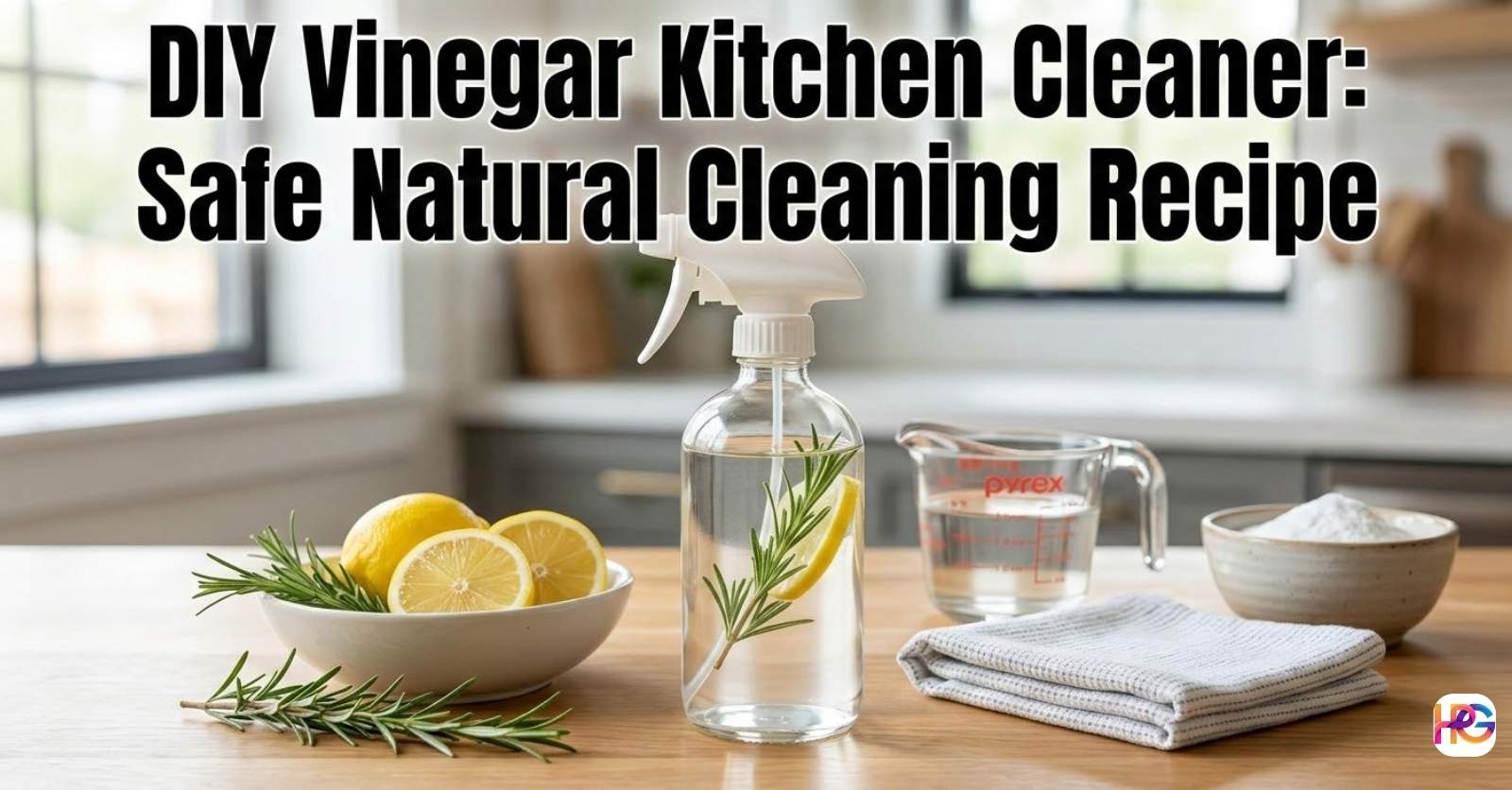
My DIY Vinegar Kitchen Cleaner: Safe Natural Cleaning Recipe
I spend a lot of time in my kitchen. It is my favorite room in the house. But it gets messy very fast. Flour covers the counter when I bake sourdough bread. Coffee spills happen almost every single morning. Grease builds up when I cook food. I needed a good way to clean everything. I wanted something safe and cheap. That is when I found my go-to DIY vinegar kitchen cleaner. It is a very safe natural cleaning recipe. You can make it in two minutes. Today I will share exactly how I use it.
I try to clean a little bit every day. This keeps the mess from piling up. Weekends are for deep cleaning. I wipe down the fridge and the stove. Everything takes less time when you have the right tools. I am very glad I found this recipe.
Why I Switched to a Natural Cleaner
I used to buy lots of harsh chemical sprays. My cabinets were full of bottles. Each bottle was for a different task. One day I looked at all those labels. I could not read half of the words. The strong smells gave me a headache. I decided to make a change. My goal is always to pick better products for my home. Making smart choices helps me live smarter every day.
Living here in Alabama, the weather gets quite humid. Sticky messes seem to happen faster. I needed a spray that could handle real dirt. I read about white vinegar. People said it worked wonders on grease. I was not sure at first. I thought it would just smell bad. But I decided to give it a try anyway. It turned out to be a great choice.
Solving the Salad Smell Problem
The first time I used plain vinegar, I laughed. My whole kitchen smelled like a giant bowl of salad. My nose wrinkled at the sour scent. It was very strong. The smell went away after it dried. But I still wanted a nicer scent while cleaning. That is when I learned to add essential oils. A few drops of lemon oil fix the problem completely. Now my kitchen smells fresh and clean.
My Everyday DIY Vinegar Spray Recipe
This recipe is very simple. You only need three things. You probably have them in your house right now. I mix a fresh batch every few weeks. It takes almost no time at all.
Here is what you need to gather. Get one cup of plain white vinegar. Pour it into a clean glass spray bottle. Next, add one cup of water. Distilled water is the best choice. It stops streaks from forming on shiny surfaces. Finally, add fifteen drops of essential oil. I really like using sweet orange or lemon oil. Put the top on the bottle. Give it a gentle shake.
Why This Mix Works So Well
You might wonder why vinegar is so strong. It contains a mild acid. This is called acetic acid. The acid breaks down dirt and grime. It cuts right through cooking grease. It also gets rid of bad odors. The water thins the acid just enough. This makes it safe for most daily chores. It is tough on stains but gentle on you.
Cleaning My Coffee Gear
I drink a lot of coffee. My counter looks like a small cafe. I have a Moccamaster, a Bunn brewer, and a Nespresso machine. Making coffee leaves a big mess. Water spots get everywhere. Brown stains appear on the trays. My DIY spray handles all of it.
I used to spend money on special coffee cleaners. They came in tiny bottles. They cost a lot of money. Now I save that money. I use my vinegar spray instead. It works just as well. My coffee always tastes fresh. A clean machine makes better coffee. It is that simple.
I just spray the outside of the machines. Then I wipe them with a soft cloth. The plastic and metal shine right up. Last summer I took a fun camping trip. I brought my small AeroPress with me. We brewed coffee out in the wild. When I got home, the AeroPress was very grimy. A quick soak in vinegar water made it look brand new.
Tackling the French Press
I also use a stainless steel French press. It gets oily inside after a few uses. Coffee oils cling to the metal walls. Dish soap does not always get it off. I spray my vinegar mix inside the press. I let it sit for five minutes. Then I wash it out. The metal gets totally clean and bright. There is no old coffee smell left behind.
Dealing with Big Kitchen Messes
Some messes need extra help. My air fryer gets very greasy. Cooking chicken leaves oil all over the basket. I wash it with soap first. Then I use my vinegar spray. It cuts any leftover greasy film. The basket feels squeaky clean afterward.
Air fryers are great for quick meals. But the grease gets trapped in the little holes. I used to dread washing it. I would put it off until the next day. The grease would get hard. Now I clean it right after dinner. The warm metal cleans up fast with my spray.
I also use a blender almost every day. Sometimes smoothies splash out. The sticky juice dries on the base. A quick spray of vinegar melts the fruit sugar. I just wipe it away with a damp rag. It is much easier than scrubbing hard.
The Ninja Creami Clean Up
I recently got a Ninja Creami to make ice cream. It is very fun to use. But the sweet base splashes up sometimes. Sticky cream gets on the machine parts. My vinegar spray saves the day here too. I mist a cloth with the cleaner. Then I wipe the machine down. It removes the sticky spots right away. Ants do not come looking for sugar spills anymore.
Sourdough Bread Cleanup
Baking sourdough bread is a messy hobby. I bake multiple times a week. Wet flour sticks to the kitchen island. It turns into a hard crust very fast. Scraping it dry is very hard work. Now I just spray the dried dough with vinegar. I wait about two minutes. The acid breaks down the starch. The hard flour turns soft again. I wipe it up easily with a paper towel.
Sourdough starter is like glue. It sticks to glass jars and spoons. I used to scrub my mixing bowls for ten minutes. My sponge would get ruined by the thick dough. Now I just soak the bowl with water and a splash of vinegar. The dough melts away. It saves my hands and my sponges.
My Cleaning Failures and Mistakes
I want to be totally honest with you. Vinegar is not magic. It can actually ruin some things. I learned this the hard way. I made a few mistakes when I first started.
One day, I left vinegar on a rubber seal. It was the gasket from my old blender. I forgot to wash it off. A few days later, the rubber felt dry and cracked. The acid had eaten into the material. I had to buy a new seal. Now I never let vinegar sit on rubber parts for long.
Watch Out for Stone Counters
You must never use vinegar on natural stone. This includes marble and granite. The acid will dull the shiny finish. It eats away the top layer over time. This is called etching. It looks terrible and costs money to fix. If you have stone counters, use dish soap and water instead. Save the vinegar for other areas.
Where You Should and Should Not Use Vinegar
It helps to have a quick guide. I keep these rules in my head when I clean. You do not want to ruin your good stuff.
Here is a simple table showing where to use this spray.
| Surface Type | Is It Safe? | Notes |
| Glass Windows | Yes | Leaves a clear shine with no streaks. |
| Stainless Steel | Yes | Removes water spots and fingerprints. |
| Granite Counters | No | Will ruin the shiny finish forever. |
| Cast Iron Pans | No | Strips off the dark cooking oil layer. |
| Plastic Boards | Yes | Gets rid of garlic and onion smells. |
Natural Kitchen Cleaning Tips I Swear By
I have picked up a few extra tricks over time. These make cleaning even easier. Try using baking soda with your spray. I sprinkle baking soda on a tough stain. Then I spray the vinegar over it. It bubbles up right away. The fizzy action lifts dirt from the surface. I use this trick on my stovetop. It works like a charm.
You should also use microfiber cloths. Paper towels leave little white fuzz everywhere. Microfiber grabs the dirt and holds it tight. You can wash and reuse the cloths many times. This saves money and helps the planet.
The Citrus Peel Trick
You might not have essential oils at home. That is perfectly fine. You can still make your spray smell great. Save your orange or lemon peels. Put them in a glass jar. Pour plain vinegar over them. Let the jar sit in a dark spot for two weeks.
After two weeks, take the peels out. The vinegar will smell like fresh citrus. Mix this scented vinegar with water. You now have a custom cleaning spray. It costs almost nothing to make.
Final Thoughts on Natural Cleaning
Switching to a DIY cleaner changed my routine. I do not worry about harsh fumes anymore. My kitchen stays very clean. The process is cheap and easy to maintain. I know exactly what is in my bottle.
You do not need fancy products to have a tidy home. Simple ingredients often work the best. Give this recipe a try this week. See how it works on your toughest grease. I think you will be very happy with the results. Let me know how it goes for you. Happy cleaning!
Frequently Asked Questions: Using Vinegar Cleaner in the Shop
Can I use a DIY vinegar cleaner on my power tools? Yes, but always spray your rag first to protect the tool. This keeps the acid away from the open motor vents. A clean tool gives a firm grip and lasts much longer.
Will white vinegar remove rust from my old hand tools? Yes, plain white vinegar is a great trick for removing rust. Soak your rusty wrenches in a bowl overnight. The mild acid eats the rust away without harming the steel.
Is it safe to clean a DeWalt battery with vinegar? No, keep all wet liquids away from your tool batteries. The acid can ruin the metal pins and cause bad shorts. Use a dry brush to keep your DeWalt battery power high.
Does cold garage storage hurt my DIY vinegar spray? Freezing temps can easily break your glass spray bottle. The simple water and vinegar mix will freeze solid. Keep your bottle inside the house if your shop gets very cold.
Can this natural cleaner cut thick workshop grease? Vinegar cuts light dirt and shop grease very well. For thick motor oil, you still need a strong shop degreaser. Add some baking soda to the spray for extra scrub power.