Last Tuesday night, I stood in my kitchen packing chicken and rice for the next day. I was tired and just wanted to finish fast.
I grabbed an old plastic container. It was light and easy to use. But when I opened it, I smelled garlic from last week’s pasta. That smell made me stop.
Next to it sat my heavy glass container. It looked clean and clear. No smell at all. But it felt heavy in my hand. And I knew it could break.
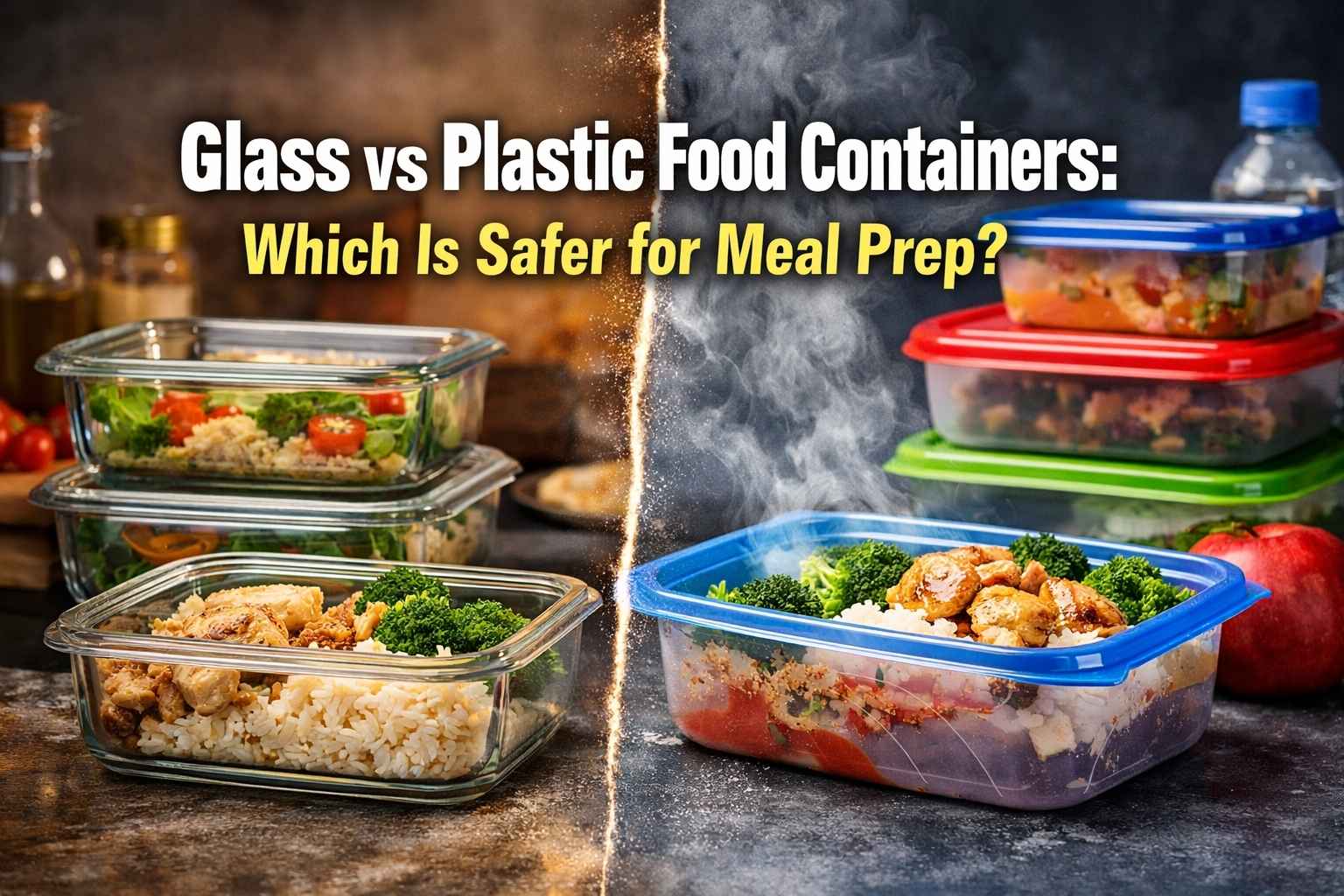
I paused and asked myself which is safer for meal prep: glass or plastic food containers? That simple moment pushed me to test both in real life. Over the years, I have used both for batch cooking, freezing, reheating, and school lunches.
Here is what I learned.
What Does “Food Safe” Really Mean?
When we talk about glass vs plastic food containers for meal prep, safety is the main concern. But the term “food safe” can feel vague.
For me, food safety means four simple things. No harmful chemicals. No smell or stain left behind. Easy to clean. Safe when heated.
You may see the label “BPA-free” on plastic containers. BPA is a chemical once used in many plastics. Heat can cause it to leach into food. Many brands removed it, which is good. But heat can still weaken plastic over time.
Glass is different. It does not leach chemicals. It does not react with acidic foods like tomato sauce or lemon juice. From what I saw, heat is the real test. Cold storage is easy. Heat shows the truth.
Glass Food Containers: Pros and Cons
After years of using glass for weekly meal prep, I have a clear opinion. Glass feels solid and clean. It gives me peace of mind.
Pros of Glass Food Containers
Glass does not release chemicals into food. It does not absorb smells or stains. Even after storing curry, it looks clear.
It is safe in the microwave and dishwasher. It also works well in the freezer if I leave space for food to expand. In my kitchen, glass containers still look new after years.
Cons of Glass Food Containers
Glass can break. I dropped one on tile once and it shattered. That was messy and expensive.
Glass is also heavier than plastic. It costs more at first. And it is not ideal for kids’ backpacks or busy mornings.
Plastic Food Containers: Pros and Cons
Plastic is common for a reason. It is light and easy to carry. For travel, it feels practical.
Pros of Plastic Food Containers
Plastic containers are affordable and hard to break. I use them for work lunches and road trips.
They are lighter in my bag. I do not worry as much if they fall. For cold foods, they work fine.
Cons of Plastic Food Containers
Plastic can stain, especially with tomato sauce. It can also hold smells.
Over time, mine developed scratches. Those tiny marks can trap food and bacteria. Some plastic may release chemicals when heated. Lids can warp in the microwave.
After seeing that wear and tear, I slowly shifted toward glass for daily meal prep.
Glass vs Plastic Food Containers for Hot Food
Heat is where the biggest difference shows. This is the key issue in glass vs plastic food containers for meal prep.
When I reheat food in glass, I feel safe. Glass handles heat well and does not release chemicals.
With plastic, I always check for a microwave-safe label. Even then, I feel cautious. If the food is oily or very hot, I transfer it to a plate first.
Here is a simple comparison:
| Feature | Glass | Plastic |
|---|---|---|
| Microwave safety | Very safe | Only if labeled |
| Chemical risk | None | Possible with heat |
| Warping | No | Yes over time |
| Odor after heat | None | Sometimes |
For hot meals, glass is clearly the safer choice in my experience.
Best Choice for Weekly Meal Prep
Every Sunday, I cook in batches. Rice, chicken, roasted vegetables, and sometimes pasta.
For home storage, I use glass containers. They stack well and stay clear in the fridge. By midweek, they still look clean.
Plastic works for cold salads or quick snacks. But for hot meal prep and reheating, glass wins. If health is your goal, glass gives peace of mind.
Which Is Safer for Kids and Family?
When packing food for kids, safety and durability both matter. Kids drop things often.
At home, I prefer glass for serving and reheating. For school, plastic can make more sense because it is lighter.
Still, I follow strict rules. I never use scratched plastic. I never reheat baby food in plastic. I replace warped lids fast. For babies, I prefer glass or silicone.
Environmental Impact: Glass vs Plastic
I looked deeper into waste and recycling. What I found surprised me.
Glass is recyclable again and again without losing quality. Plastic recycling is more limited.
Over time, plastic can break down into microplastics. Many containers end up in landfills. While glass takes more energy to produce, it lasts much longer. I replace plastic more often, and that adds up.
Cleaning and Hygiene Comparison
Cleaning is where I notice the biggest daily difference.
Glass washes clean with little effort. It does not keep smells or stains. Even spicy chili leaves no trace.
Plastic can trap grease smell. Tomato sauce may leave color behind. Scratches make deep cleaning harder. For hygiene, glass feels more reliable long term.
How I Choose Safe Food Containers (Buying Guide)
When buying meal prep containers, I keep things simple.
For glass, I look for tempered glass with leak-proof lids. It must be microwave and freezer safe. Oven-safe glass is a bonus.
For plastic, I check for BPA-free and microwave-safe labels. I avoid thin, flimsy material. I replace containers every few years if they show wear.
Spending a bit more on quality has saved me money and stress.
FAQ: Glass vs Plastic Food Containers for Meal Prep
1. Is glass or plastic better for meal prep containers?
Glass food containers for meal prep are safer for hot food and long storage. Plastic works for short trips, but heat can wear it down over time.
2. Can I microwave plastic meal prep containers safely?
Only use plastic food containers labeled microwave-safe. Even then, high heat and oily foods may cause warping or chemical release.
3. Do glass meal prep containers last longer than plastic?
Yes. Glass containers last longer if not dropped. Plastic containers scratch, stain, and hold odors after months of daily use.
4. Are plastic food containers safe in a hot garage or car?
High heat can weaken plastic and increase chemical risk. Glass handles heat better, but avoid sudden temperature changes to prevent cracks.
5. Which meal prep containers are easier to clean and keep odor-free?
Glass food containers resist stains and smells. Plastic can trap odor in scratches, especially after storing curry or tomato sauce.
My Final Thoughts After Years of Using Both
After years of testing glass vs plastic food containers for meal prep, my view is clear.
Glass is safer for hot food and long storage. It stays clean and does not hold odor. Plastic is lighter and more practical for travel.
Today, most of my kitchen uses glass. I still keep some plastic for short trips. That night when I smelled garlic in an old container changed my habits.
Now I choose with care. And that peace of mind feels worth the extra weight.