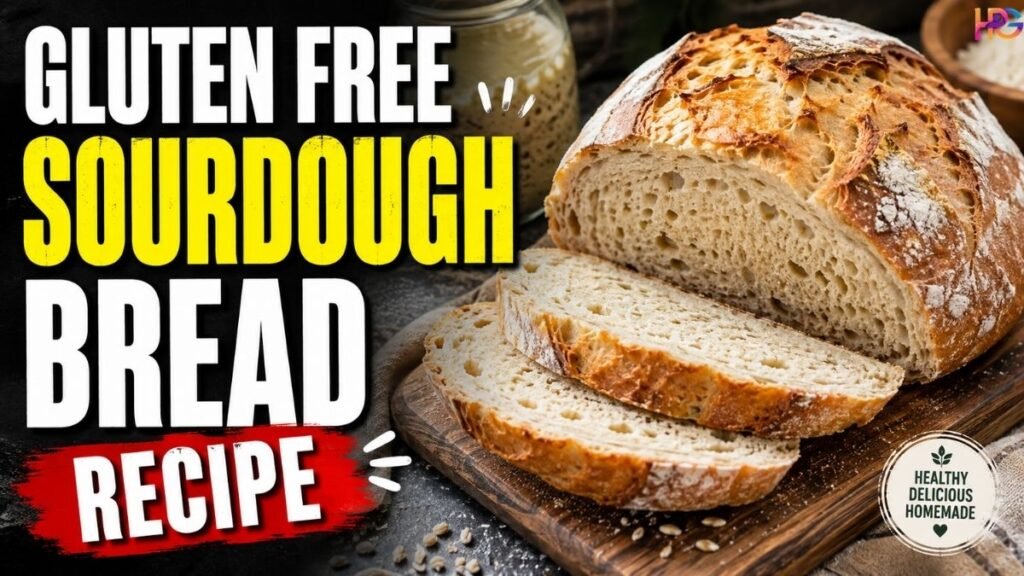
I spent months trying to bake a decent loaf of bread. Every gluten free sourdough bread recipe I tried felt like a science experiment gone wrong. My early loaves were heavy bricks. They tasted like sand. I almost gave up.
But I kept testing, tweaking, and baking for my blog. I learned that baking without gluten changes all the rules. You cannot just swap flours and hope for the best. Today, I want to share exactly what goes into a real, crusty, and delicious gluten free sourdough bread recipe so you can skip the frustration.
Is It Really Possible to Make Sourdough Without Gluten?
Yes, it is entirely possible. But you have to forget what you know about regular bread.
Traditional sourdough relies on gluten to trap air. Gluten acts like a stretchy balloon. When yeast creates gas, the balloon expands. Without gluten, the gas just escapes. Your bread falls flat. It becomes dense and hard.
To fix this, a good gluten free sourdough bread recipe uses binders. Ingredients like psyllium husk act as a glue. They trap the air and give your loaf that classic, chewy texture. Once I understood this, everything changed. My flat bricks finally started to rise.
The Best Flours for a Gluten Free Sourdough Bread Recipe
You cannot use just one type of flour. A single flour will make your bread too dense or too crumbly. The secret is blending different flours. You have to balance structure, taste, and softness.
Brown Rice Flour
This is my go-to base flour. It has a mild taste and feeds a sourdough starter perfectly. Just make sure it is finely ground. Gritty rice flour ruins the texture of the bread.
Sorghum Flour
Sorghum brings a slightly sweet, earthy flavor. It mimics the taste of whole wheat. I love using it to give my loaves a deeper, richer taste. It pairs very well with brown rice flour.
Buckwheat Flour
Despite the name, buckwheat has no wheat. It is completely gluten-free. It has a strong, nutty flavor. I use it in small amounts to add that rustic, traditional sourdough tang.
Tapioca Starch or Arrowroot
Whole grain flours make the bread heavy. You need starches to lighten the crumb. Tapioca makes the bread chewy and soft. I always mix a starch with my heavier whole grains for the best result.
Essential Tools You Need for Success
Baking gluten-free bread is much easier when you have the right tools. You do not need a fancy kitchen. But a few specific items will save you a lot of trouble.
A Digital Kitchen Scale
You must weigh your ingredients. Gluten-free flours settle differently in measuring cups. A cup of rice flour can vary by twenty grams depending on how you scoop it. A kitchen scale ensures your dough is never too dry or too wet.
A Dutch Oven
A cast-iron Dutch oven acts like a professional steam oven. It traps the moisture escaping from the dough. This steam helps the bread rise before the crust hardens. It is the secret to a crunchy, bakery-style crust.
A Proofing Basket
Gluten-free dough is very sticky. A proofing basket lined with a cloth helps the dough hold its shape. It stops the loaf from spreading out flat while it rests and rises.
Mistakes I Made (So You Do Not Have To)
I ruined a lot of bread before I got this right. Gluten-free baking is deeply unforgiving if you miss the small details. Here are the traps I fell into.
Rushing the Starter
A gluten-free sourdough starter moves differently than a wheat starter. Sometimes it looks bubbly but is not actually strong enough to lift dough. I used to bake before my starter peaked. The result was always a flat loaf. Now, I wait until the starter is thick, active, and smells distinctly sour.
Skipping the Psyllium Husk
In my early days, I tried replacing psyllium husk with xanthan gum. It was a complete disaster. Xanthan gum works well for cookies, but it makes sourdough feel like wet rubber. Whole psyllium husk creates a web that feels just like real gluten. Never skip it.
Cutting the Bread Too Soon
Nothing smells better than fresh bread out of the oven. I used to slice into my loaves while they were still hot. The steam would escape, and the inside would turn into a gummy mess. Gluten-free bread needs to cool completely. I now force myself to wait at least four hours before slicing.
Common Problems with Gluten-Free Sourdough
Even with the best gluten-free sourdough bread recipe, things can go wrong. Here is how to fix the most common issues I hear about.
Why is my bread gummy inside?
This usually means the bread needs more time in the oven. Gluten-free flours hold a lot of water. You have to bake the bread longer than regular sourdough. If the inside is gummy, try leaving it in the oven for an extra fifteen minutes next time.
Why did my loaf not rise?
Your starter was likely too weak, or your kitchen was too cold. Gluten-free dough needs warmth to rise. I like to let my dough rise in an oven that is turned off, with just the oven light on. It creates the perfect warm environment.
Why is the crust too hard?
You might have baked it without steam. Sourdough needs steam in the first half of baking to expand. I always bake my bread inside a hot Dutch oven with the lid on for the first forty minutes. This traps the steam and creates a perfect crust.
How to Maintain Your Gluten-Free Starter
Your starter is a living thing. It needs regular care to stay healthy. I learned this the hard way after letting my first starter die in the fridge.
Feeding Schedule
If you bake every day, keep your starter on the counter. Feed it equal weights of flour and water every twenty-four hours. If you bake once a week, keep it in the fridge. Take it out and feed it once a week to keep it alive and active.
Knowing When It Is Ready
A gluten-free starter does not stretch like a wheat starter. Instead, it gets bubbly and puffy. It should smell fruity and slightly sour, like yogurt. If it smells like nail polish remover, it is hungry. You need to feed it right away.
The Daily Reality of Gluten-Free Baking
Baking gluten-free sourdough requires a shift in mindset. You are not just following a recipe. You are learning a completely new skill.
The dough will not look like regular bread dough. It feels more like wet clay. You cannot knead it. You just mix it, shape it gently, and let it rest. This felt wrong to me at first. I wanted to stretch and fold it like the traditional bakers do.
But once you accept how the dough behaves, the process actually becomes easier. There is no endless kneading. There is less active work. You just need a bit of patience and a gentle touch.
Answering Your Biggest Questions
Are traditional sourdough breads gluten-free? No, traditional sourdough is made with wheat or rye, which contain gluten. The fermentation process lowers the gluten content, but it is never safe for anyone with Celiac disease.
Do I need a special gluten-free starter? Yes, you absolutely do. You cannot use a regular wheat starter. You must build a starter from scratch using gluten-free flours like brown rice or sorghum.
Can I use a store-bought gluten-free flour blend? I do not recommend it. Most store blends contain xanthan gum and too much starch. A specific recipe requires a custom ratio of flours to work properly.
Can I bake this bread without a Dutch oven? Yes, you can bake it on a regular baking sheet. But you must create steam by placing a pan of boiling water on the bottom rack of your oven.
How long does gluten-free sourdough last? It stays fresh on the counter for about three days. After that, I recommend slicing it and freezing the slices. You can pop them straight into the toaster.
Final Thoughts
Mastering a gluten-free sourdough bread recipe takes time, but it is deeply rewarding. The first time you pull a crusty, golden loaf out of the oven, all the failed attempts fade away. You finally get to eat real, satisfying bread again.
Do not let early failures discourage you. Start with a strong, active starter. Weigh your ingredients carefully. Be very patient during the cooling process. If you follow these simple rules, you will be baking beautiful gluten-free bread in no time.
Frequently Asked Questions
Is it possible to make sourdough bread with gluten-free flour?
Yes, you can make delicious sourdough with gluten-free flour. You just need psyllium husk to hold the dough together and trap air.
Which gluten-free flour is best for sourdough?
A blend of brown rice flour, sorghum, and tapioca starch works best. This mix gives your bread a great shape and a soft texture.
What are common problems with gluten-free sourdough?
Loaves often turn out too dense, gummy, or flat. You can fix this by weighing flour on a scale and baking the dough longer.
Are traditional sourdough breads gluten-free?
No, traditional sourdough uses wheat or rye flour, so it contains gluten. People with celiac disease must use a gluten-free recipe.
How do you fix gummy gluten-free sourdough bread?
Bake your loaf for ten extra minutes and let it cool completely. Slicing warm bread traps steam and makes the inside gummy.
Wait!!!! A Gift For You! Get a Printable Recipe Card For Gluten-Free Sourdough Bread Loaf : Download Now