My Smelly Kitchen Lesson
Last Tuesday started like any other normal day. I decided to test a new garlic salmon recipe in my air fryer. The food tasted amazing on my plate. The aftermath in my kitchen was terrible. My entire house smelled like stale fish for three straight days. The foul odor even ruined my morning coffee routine. I tried opening every single window. I used chemical room sprays everywhere. Nothing fixed the bad air inside.
That weekend, I checked my home air purifier. The machine had a basic white dust filter. It was completely useless against lingering smells. I spent the next few days reading about indoor air quality. I learned a huge lesson during this search. Standard filters only catch solid things like dust. To catch stubborn smells, you need an activated carbon filter. I bought a new unit right away. The change was like pure magic. Within hours, the fishy smell vanished completely. I want to share exactly how this works. You can fix your home air quality too.
What Are Activated Carbon Filters?
Activated carbon is a very special material. Some people simply call it activated charcoal. It is not the same stuff you use in a backyard grill. This clean carbon comes from natural organic things. Makers often use wood, coal, or coconut shells. I prefer the natural coconut shell type. It seems to work best for standard home use.
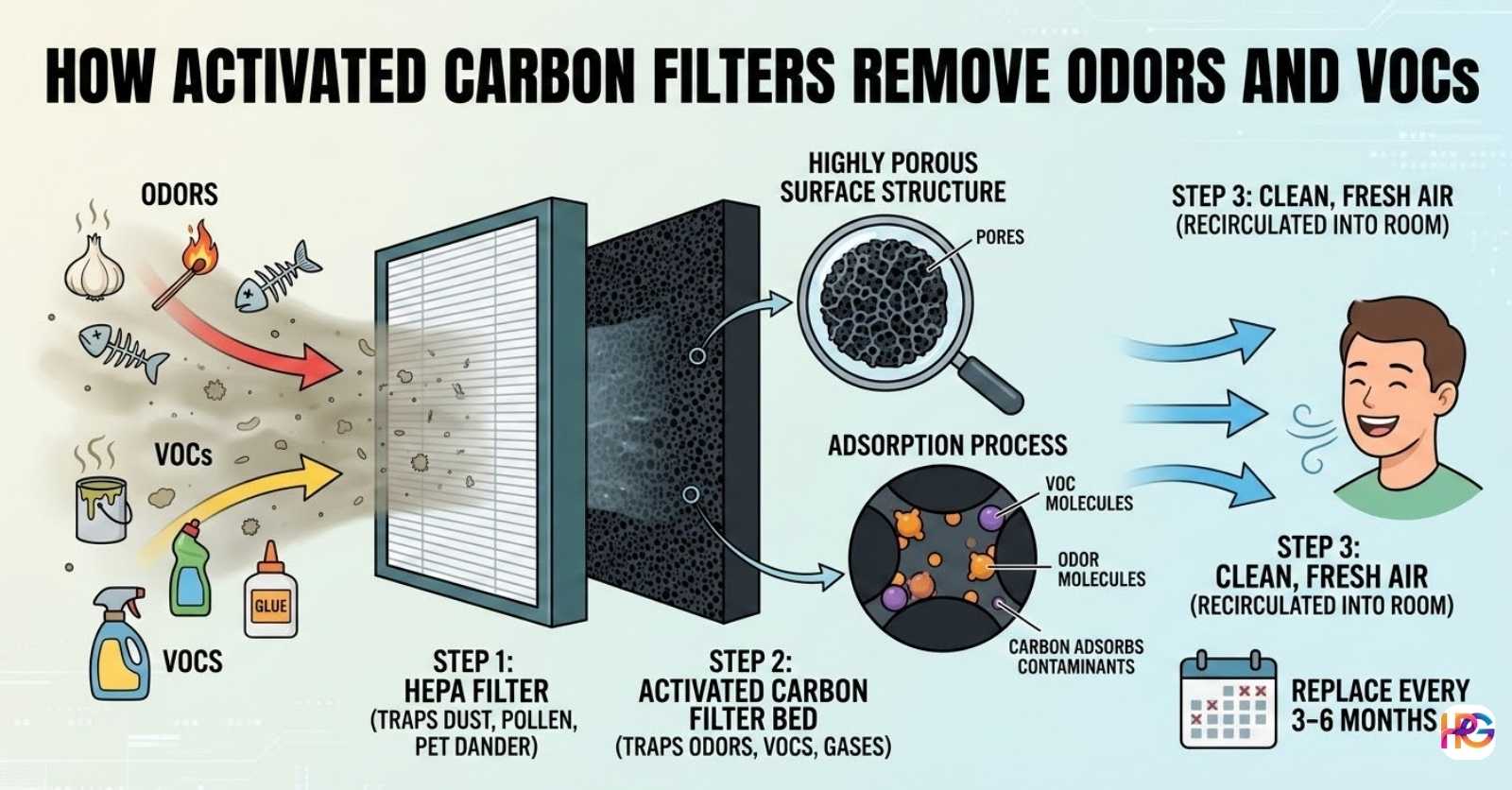
To make it active, factories heat the raw carbon. They use steam and very high temperatures. Sometimes they use liquid chemicals instead. This extreme process changes the solid carbon completely. It cracks the outer surface wide open. Millions of tiny little holes appear everywhere. Scientists call these tiny holes pores.
The Power of Surface Area
These tiny pores are the big secret here. They create massive surface space inside the small carbon bit. A single gram of this material is truly amazing. It has more surface space than a football field. That scientific fact completely blew my mind. I could not believe so much space fit in my hand. This huge internal surface catches the bad stuff in your room air.
How These Filters Trap Odors
You might think a filter acts exactly like a wet sponge. A sponge absorbs liquid water directly into itself. Carbon does not do this at all. It uses a very different process called adsorption. Notice the letter D in that special word.
The Magic of Adsorption
Adsorption is a neat chemical trick. Gas molecules float freely through your room air. They pass right through the dark carbon bed. The tiny pores pull these gas bits very close. A chemical bond forms right on the rough surface. The bad smell sticks fast to the carbon walls. It gets trapped right there permanently.
Think of it just like sticky flypaper. The bugs hit the yellow paper and stick fast. They cannot fly away anymore. Odors hit the carbon pores and stay stuck. They do not blow back into your clean bedroom. This is why my kitchen finally smelled fresh again. The carbon physically grabbed the floating garlic and fish gases.
Dealing With Harmful VOCs at Home
Smells are annoying to deal with. But some invisible gases are actually dangerous to breathe. We call these Volatile Organic Compounds. Most smart people just say VOCs for short. These are invisible toxic gases floating in your home. They come from normal daily household items.
When I organized my strong cleaning supplies last month, I coughed a lot. I was breathing in harsh VOCs. The chemical fumes were very strong. Many common home things release these hidden gases. You probably have them sitting in your house right now.
Common Sources of Indoor VOCs
Here are some regular things that leak bad gases into your breathing air.
- Harsh kitchen surface cleaners and bleach
- Fresh wet paint drying on your walls
- Brand new bedroom carpets or rugs
- Strong glue hiding in your new wooden furniture
- Bathroom hairspray and personal care aerosol cans
- Burning smoke from a bad blender motor test
These toxic gases are too tiny for normal paper dust filters. They slip right through the small paper holes. Activated carbon is your only real solid defense. The heavy gas bits get perfectly stuck in the carbon pores. Bigger gas molecules stick much easier than the tiny ones.
VOC Types and Health Risks
| VOC Source | Common Gas Type | Possible Health Risk |
| Strong Cleaners | Chlorine gas | Sharp lung pain |
| New Wood Furniture | Formaldehyde | Fast eye burning |
| Fresh Wall Paint | Benzene fumes | Bad dull headaches |
| Aerosol Spray Cans | Butane gas | Sudden feeling dizzy |
I always keep this simple chart in mind when I clean. I run my carbon purifier on high speed now. It gives me great peace of mind.
Comparing HEPA and Carbon Filters
People often get highly confused by different filter names. I certainly did when I first started learning. You really need to know the basic difference. They do two completely different jobs. You absolutely need both types for a truly healthy home.
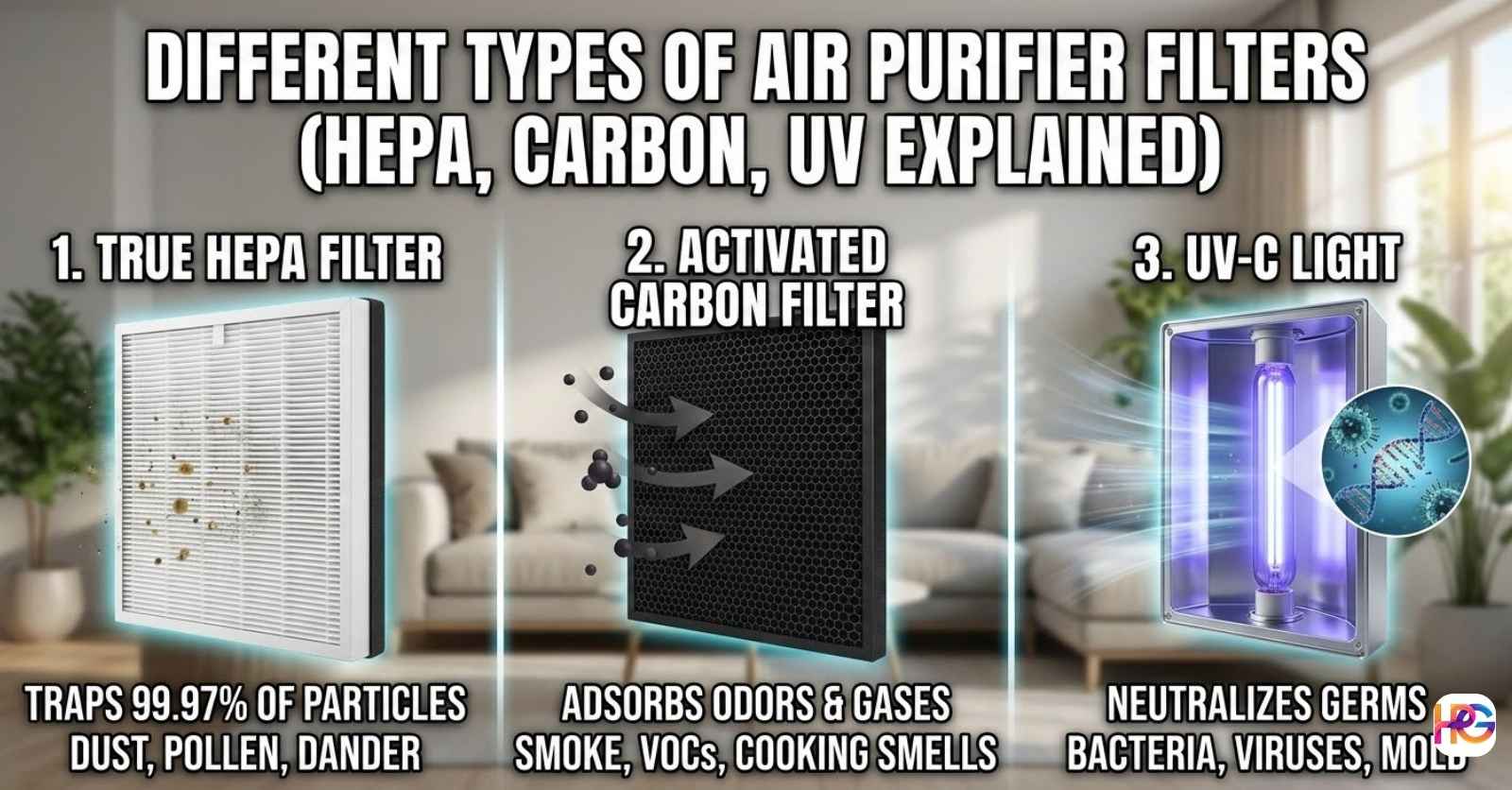
A standard HEPA filter catches physical pieces of room dirt. A good filter stops floating pet hair, traps spring pollen from outdoor trees, and catches tiny hidden dust mites. In simple terms, it works like a very fine string net.
But thin gases go right through any string net.
Carbon catches all the invisible bad gases. Strong filters also handle chemical paint fumes, remove stale smoke smells, and quickly trap unpleasant cooking odors.
Quick Filter Comparison Table
| Filter Feature | Normal HEPA Filter | Activated Carbon Filter |
| Main Target | Solid dirt bits | Invisible floating gases |
| Stops Normal Dust? | Yes | No |
| Stops Food Smells? | No | Yes |
| Stops Dog Hair? | Yes | No |
| Stops Paint Fumes? | No | Yes |
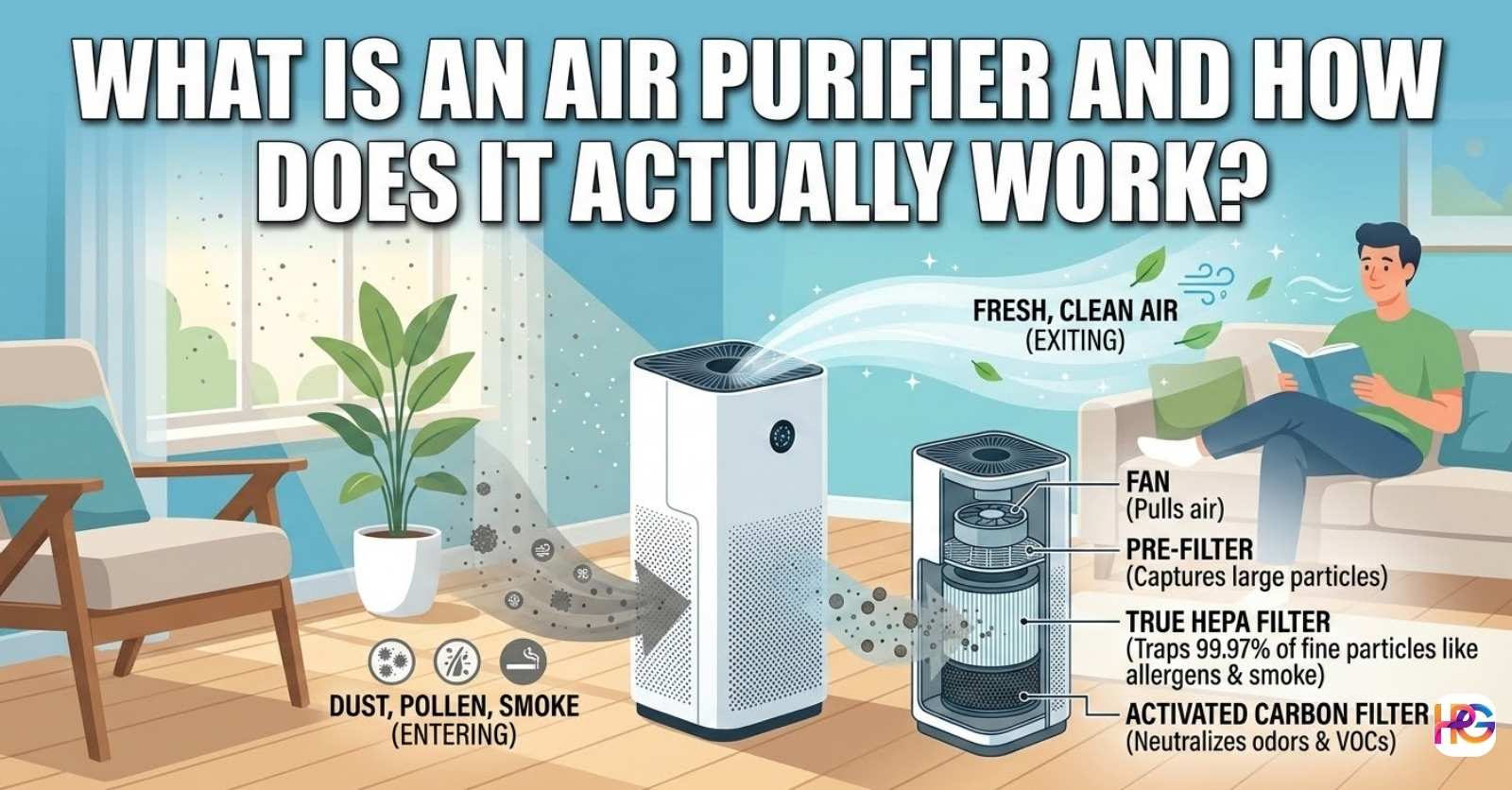
Most good modern purifiers put these two parts together. The dirty air hits the white HEPA side first. That layer stops all the big dust. Then the clean air hits the black carbon side. That dark layer pulls out the bad smells. This exact combo keeps my living space feeling very fresh.
Choosing the Right Carbon Filter
Not all black carbon filters work the exact same way. I bought a very cheap one once to save money. It was just a thin black foam sponge. It did absolutely nothing for my air. I learned you must always check the total weight. Good filter units use actual hard carbon pellets.
You want a thick filter that feels quite heavy. More overall weight means more real carbon inside. More carbon means millions more tiny holding pores. A filter with three heavy pounds of carbon will last a long time. It will grab far more VOCs than a light flat sheet. Always look closely for the thick pellet style. They rattle loud when you shake the frame. That funny sound means you bought the good stuff.
The Problem With High Humidity
Water floating in the air can cause major trouble. Carbon pores are very greedy little traps. They will gladly grab moisture right out of the air. If you live in a damp wet place, the carbon fills up with water fast. Then it has zero room left for bad room smells. Try your best to keep your home nice and dry. Use a good exhaust fan when you boil pasta water. This one simple step helps your expensive filter last much longer.
When to Replace Your Carbon Filter
Paper dust filters turn a dark ugly gray when dirty. You can clearly see the trapped fuzz layer. Carbon filters are quite tricky to judge. They look exactly the same when they are totally full. You cannot see the trapped gas molecules with your eyes. You have to rely on a time schedule and your own nose.
Most big makers say to change it every six short months. I find this rule really depends on your busy life. Do you cook spicy hot food every single day? Do you own three large messy dogs? You might easily need a brand new one in just three months.
Clear Signs Your Filter is Full
The very first clear sign is lingering stubborn smells. If my morning burnt toast smell stays until evening dinner, I know. The dark carbon bed is totally full. The tiny pores have zero empty holding space left. The room air just blows right past them.
Sometimes a full dirty filter gets much worse. It actually starts to release a gross sour smell. It smells a tiny bit like old white vinegar. This happens because the packed carbon is dumping old gases back out. When you suddenly smell that sour note, throw the old filter away fast. Do not ever try to wash it clean. Tap water will ruin the delicate carbon completely. You must always buy a fresh new replacement.
Final Thoughts on Clean Air
Having truly clean air makes a huge difference in my daily life. I actually sleep much better now every single night. My kitchen no longer holds onto weird heavy food smells. I do not worry about bad fumes when I clean my kitchen counters. Buying a real heavy activated carbon filter was a very smart choice. It is a very simple tool with amazing cool science inside. Make sure your next home air cleaner has a heavy carbon stage. Your pink lungs and your nose will be very happy.
Frequently Asked Questions
Q: Do standard shop air cleaners use an activated carbon filter?
A: Standard shop air units catch plain wood dust fast. But you must add a thick activated carbon filter to trap bad paint fumes and heavy garage smells safely.
Q: Can a HEPA filter stop VOC gases from my wood stains?
A: No. Normal HEPA units only grab solid shop dirt and fine dust. You must use a thick activated carbon filter to trap bad VOC gases from wet wood stains safely.
Q: How long do carbon filters last in a busy home garage?
A: Hot shops and heavy spray paint use fill up filters fast. You should swap your thick activated carbon filter every three months to keep your work air very clean.
Q: Will a Makita vacuum with a carbon filter fix smelly air?
A: A strong Makita shop vac helps clean up huge tool messes. But you still need a big activated carbon filter unit to pull all the bad smells from the shop room.
Q: Does high summer humidity hurt my garage air purifier?
A: Yes. Damp air in the shop fills up the tiny carbon pores very fast. Keep your tools and your thick activated carbon filter dry so they last a lot longer safely.