It is 6 PM on a Tuesday. You are tired from work. You just want crispy fries. But you do not want a pot of boiling oil. The pan starts spitting and strange smells fill the kitchen. Before long, a huge mess spreads across the stove.
So, you look at the air fryer.
It sits on the counter like a spaceship. It hums like a hair dryer. Yet, somehow, it turns a frozen potato into gold. It feels like magic. But it is not. It is just simple physics. Let’s look under the plastic hood of this machine. We will see how does an air fryer actually work. Understanding this helps you cook better food, faster. No more soggy wings. Just the crunch you want.
The “Secret” Mechanism: Air Fryer Working Theory
Let’s be honest and look inside this plastic box. We need to see why it acts like a high-speed wind tunnel for your chicken nuggets.
It’s Not Frying, It’s Convection
I have to burst a bubble here. The name is a bit of a marketing lie. An air fryer does not actually “fry” anything. It is really just a high-powered convection oven. It sounds less cool, right? But that is the truth.
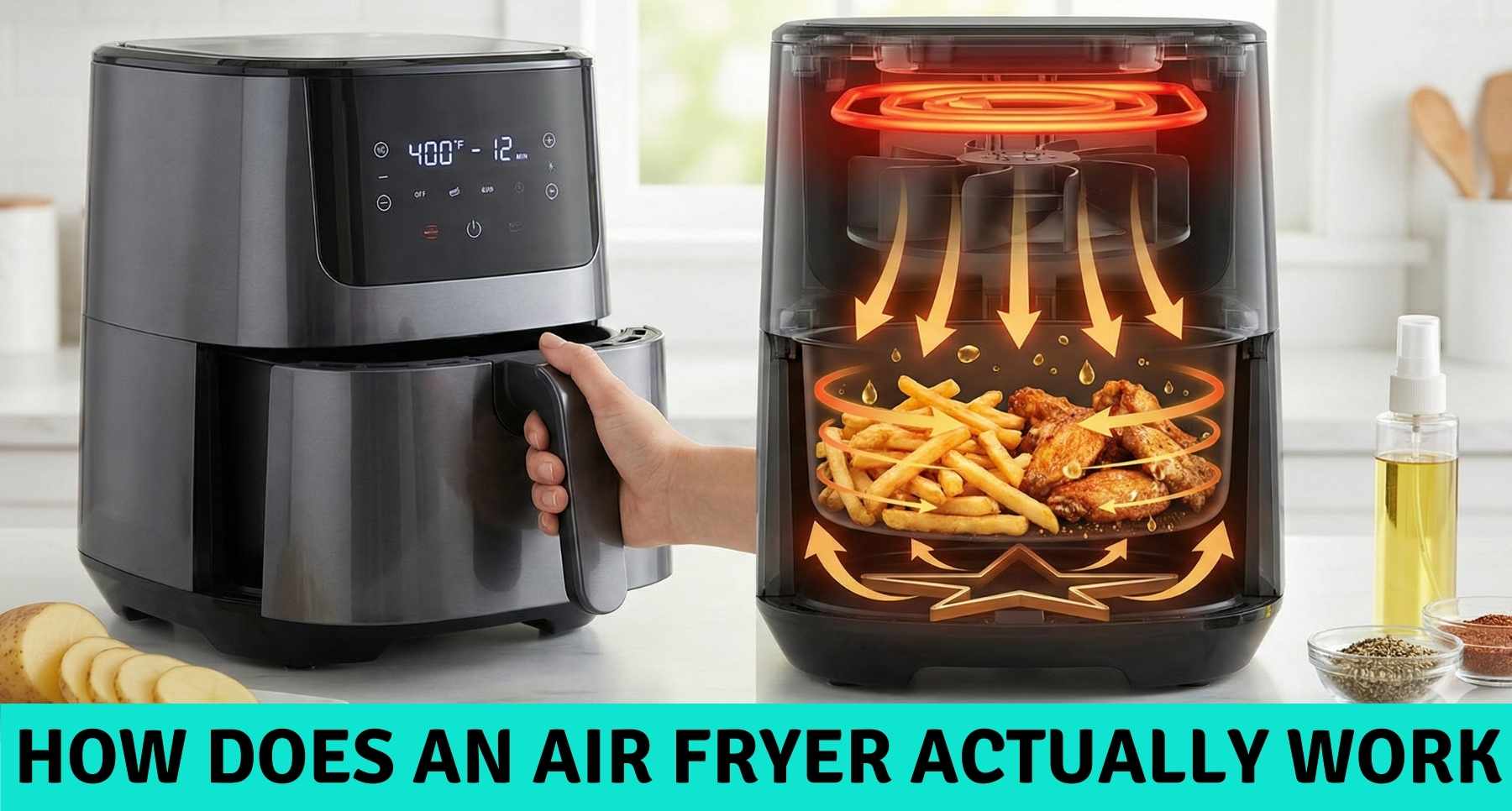
Think of it this way. Imagine a hair dryer. Now, put that hair dryer inside a shoebox. That is essentially your air fryer. It has a heating coil up top. It has a strong fan right above it.
You might ask, “Why not just use my big wall oven?” I used to ask that too. But my wall oven is huge. It takes twenty minutes just to get hot. The air fryer chamber is tiny. The fan is aggressive. The heat has nowhere to go but straight into your food. It cooks way more intensely than the big oven you use for Thanksgiving turkey.
The Maillard Reaction (Why It Gets Crispy)
You know that perfect golden-brown color on a chicken wing? That specific spot where the skin bubbles up and gets crunchy? That is my favorite part. It happens because of science. It is called the Maillard reaction.
Here is how does an air fryer cook food to get that texture. The fan blasts super-hot air over the food. It moves very fast. This strips away moisture from the surface instantly. It is like a hot desert wind.
Because the surface dries out so fast, it starts browning and crisping immediately. If you put that same wing in a slow cooker, it turns soggy and gray. In the air fryer, the high-speed air forces that chemical reaction. It gives you the crunch of deep oil, but without the greasy mess.
Step-by-Step: How Does an Air Fryer Actually Cook Food?
Let us trace exactly what happens inside. You shove the loaded basket in. You hit the start button. What goes on in the dark?
The Rapid Air Technology
I was making frozen hash browns last Saturday morning. I stood by the counter and just listened. You hear that loud, rushing “whoosh” sound right away. That is the rapid air technology kicking in.
Here is the exact path the heat takes:
- The Heat Source: A thick metal coil sits at the very top. It gets searing hot, glowing red almost instantly.
- The Downward Blast: Right above that hot coil is a heavy-duty fan. It forces that hot air straight down into the drawer.
- The Bounce Back: The air violently hits the bottom of the plastic pan. If you look closely, the bottom often has a bumpy “starfish” design. This shape shoots the hot air right back up the sides.
This creates a tiny, angry tornado of heat. That loud whooshing noise is just the wind storm whipping around your food.
Why the Basket Has Holes
Let me complain for a second. Cleaning the stuck grease out of those tiny basket holes is highly annoying. I have to scrub them with a stiff brush every single time. But those holes are actually the smartest part of the machine.
If your basket was a solid metal pan, the hot wind would just hit the top of your meal. The bottom would stay wet and soggy. Nobody wants a soggy hash brown.
The holes let that hot tornado completely wrap around the food. The heat blasts the top, rushes through the holes, and cooks the bottom all at the exact same time. We call this 360-degree cooking. It is the core secret behind the air fryer working theory. The wind touches every single edge. That is exactly how you get that perfect, even crunch.
Is It Actually Healthy? (The Truth)
We all bought this machine for the same reason. We wanted to eat french fries without the guilt. But does it actually deliver on that promise? Let’s look at the facts.
Cutting the Oil (Calories vs. Crunch)
I have a confession. When I first got my air fryer, I used zero oil. I threw in raw, flour-coated chicken tenders. I thought I was being super healthy.
It was a disaster. They came out pale, dry, and tasted like dusty cardboard.
Here is the trick. You still need some oil. But you only need a tiny bit. Think about deep frying. That submerges your food in a bath of hot grease. Air frying just needs a light mist.
So, to answer the big question: Is an air fryer healthy or unhealthy? It is definitely healthy. By switching from a deep fryer, you cut fat by 70% to 80%. You save hundreds of calories. You get the crunch, but your heart thanks you.
The “Acrylamide” Advantage
There is another hidden benefit. When you blast starchy foods like potatoes in deep, boiling oil, dangerous compounds can form. Scientists call this acrylamide. It is nasty stuff.
Because air fryers use hot air and less oil, they generally produce way less of this compound. It is a cleaner, safer way to cook your favorite snacks compared to the greasy fryer at a fast-food joint.
It’s Not All Perfect: What Are the Negatives of an Air Fryer?
I love this machine. But I will be honest. It is not perfect. It has some annoying habits that you should know about before you buy one.
The Noise and The Space
First, let’s talk about the sound. It is not silent. When I turn mine on, it sounds like a microwave that just won’t quit. It hums. It whirs. If you have an open kitchen, you will definitely hear it over the TV.
Then there is the size. It is a beast. My kitchen is not huge. This thing takes up a lot of real estate on my counter. I often have to unplug the toaster just to make it fit. If you live in a small apartment, finding a spot for it is a real puzzle. You might end up storing it in a closet, which is a pain.
The Dryness Risk
Here is a mistake I made just last week. Fresh broccoli florets went into the basket and the timer was set for fifteen minutes. After that, I walked away to check my email.
When I came back, I did not have roasted veggies. I had charcoal. They were black, tiny, and bitter.
This is the biggest risk. Because the fan moves air so fast, it pulls moisture out quickly. It is very easy to overcook delicate food. It goes from crispy to burnt in seconds. When people ask what are the negatives of an air fryer, this is my top answer. You cannot just set it and forget it like a slow cooker. You have to watch it like a hawk.
Quick Guide: How Does an Air Fryer Work for Beginners?
If you just took yours out of the box, do not panic. It is easy to use. But you can still mess up dinner if you ignore the physics. You might be asking how does an air fryer work for beginners to get the best results? You just need to follow these golden rules.
Don’t Overcrowd the Basket
This is the most common mistake. I did it too. I was hungry and dumped a whole bag of frozen fries in at once.
The logic goes back to the airflow. Remember, the heat is a moving wind. If you pile food up, the air cannot get through. It hits a wall of potato.
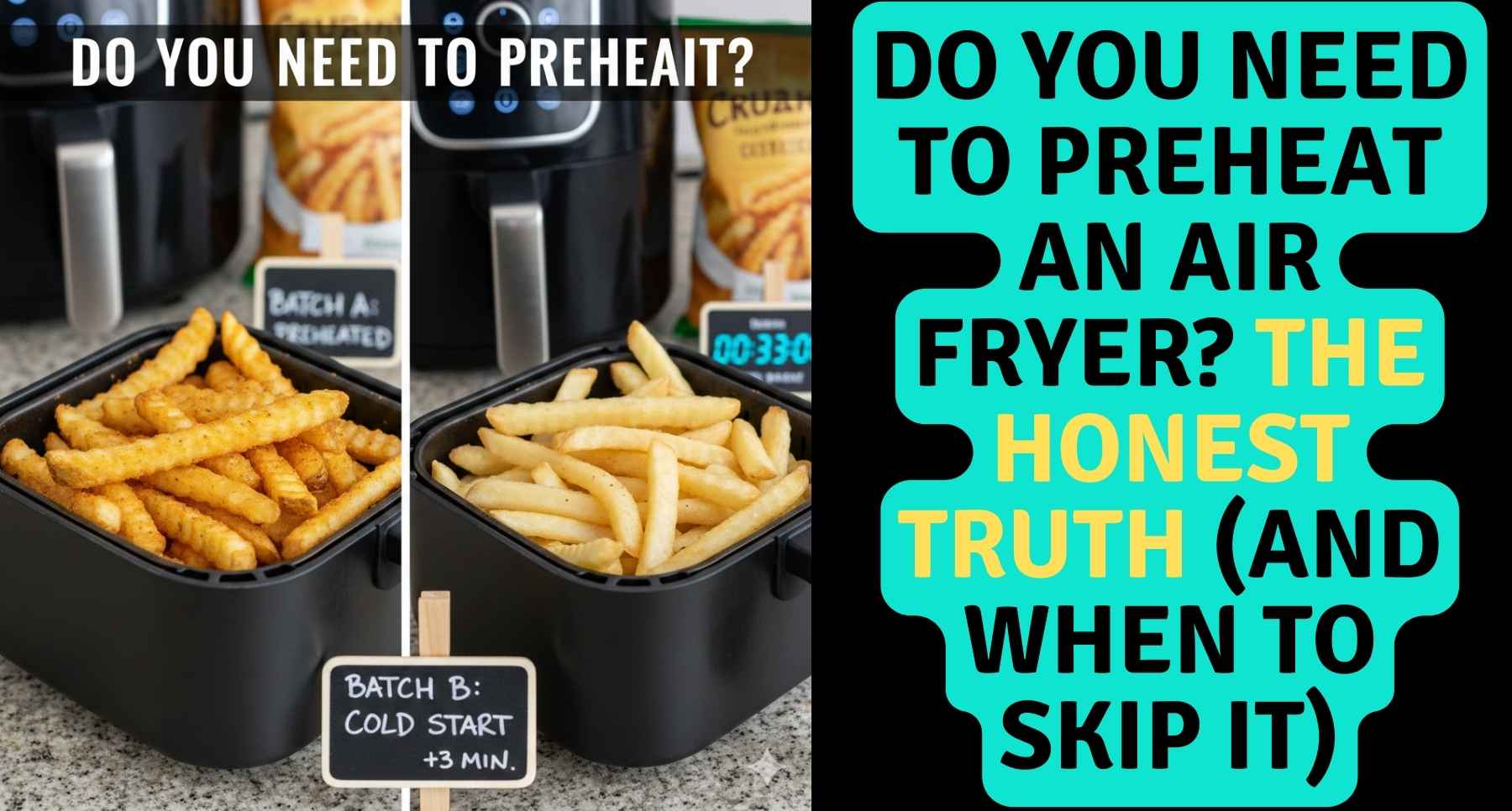
The result? The fries in the middle stay cold and soggy. Only the top layer gets crispy. It is better to cook in two small batches than one giant, mushy mess.
The “Shake” Technique
Since the heating coil is on the top, the top of your food browns first. The bottom usually stays pale.
You have to fix this manually. Halfway through the cooking time, pull the basket out. Give it a hard shake. You want to toss the food around so the raw spots get exposed to the heat.
Honestly, I love doing this. It makes me feel like a pro chef tossing a sauté pan. It is a fun little wrist flick that makes a huge difference in the final crunch.
Conclusion: Should You Keep It on the Counter?
So, does this noisy plastic box earn its huge spot in your kitchen?
I think the answer is yes.
We have looked under the hood. We know it is not magic. In reality, it is simply a machine that blasts hot air at high speed. The appliance can be loud and bulky, and careless cooking may even burn your broccoli. Technically, it is not “real” frying.
A fancy chef might scoff at it. But when it is 6 PM on a Tuesday and I am starving, I do not care what the chef thinks. I just want crispy food in ten minutes without a grease fire. For that alone, it is the best friend I have in the kitchen.
Frequently Asked Questions
1. How does an air fryer actually cook food?
It uses a fan and a hot coil. The fan blows hot air down fast. This cooks food from all sides. It makes food crispy like deep frying, but it uses hot air instead of oil.
2. Is cooking with an air fryer healthy?
Yes, it is very healthy. You use almost no oil to cook. This cuts fat by a lot. It is much better for your heart than deep frying in a vat of hot grease.
3. What are the negatives of an air fryer?
It can be very loud. It takes up a lot of space on the counter. Also, the fan dries food out fast. You can burn dinner if you do not watch it closely.
4. Can I put aluminum foil in my air fryer?
Yes, you can use foil safely. Just do not cover the whole bottom rack. The air needs to flow. Weigh it down with food so it does not fly up into the hot fan.
5. Do air fryers use radiation like microwaves?
No, they do not use radiation. Unlike a microwave, this appliance uses heat from a red-hot coil. The result is something closer to a small, powerful oven that sits right on your counter.