I bought my first air fryer years ago, expecting a miracle machine. I thought it was just a magic box that made perfectly healthy French fries out of thin air. But when my first batch came out pale and soggy, I realized I had no idea what I was doing. I had to step back and ask: how does an air fryer work, really?
It turns out, there is no actual frying involved at all. Once I understood the basic science inside that little plastic machine, my cooking changed completely. If you want better, crispier meals, you need to understand the simple mechanics hiding under the lid.
The Secret is Convection Heating
The short answer is convection heat. An air fryer is essentially a small, highly powerful convection oven. It sits right on your kitchen countertop. Instead of submerging your food in hot oil, it cooks food by blowing intense heat all around it.
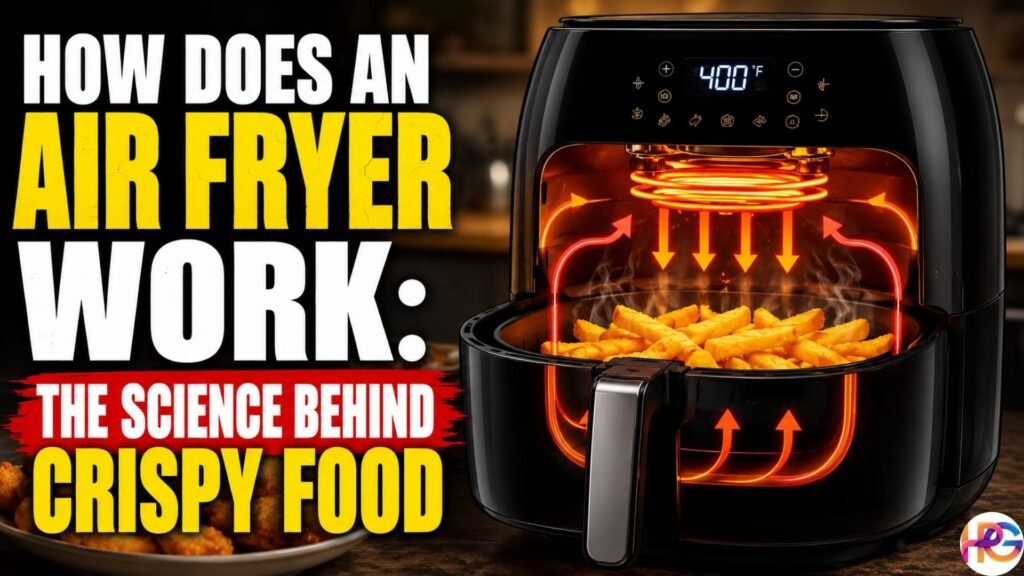
Two main components are doing all the hard work inside. First, there is a thick heating element located near the top of the machine. This metal coil gets incredibly hot, very fast. It acts as the main heat source for everything you cook.
Right above that heating coil sits a large, high-speed fan. This fan is the true brain of the operation. It forces the intense heat down and pushes it around your food at aggressive speeds.
Because the cooking space inside is so small, the heat moves much faster than it ever could in a normal kitchen oven. This fast-moving hot air creates a tight, crispy outer layer on your food in just a few minutes.
Why Airflow Makes or Breaks Your Meal
You cannot get crispy food without perfect airflow. The rapid air movement literally strips away moisture from the surface of your food. This dry environment is what creates the satisfying crunch.
I learned this lesson the hard way. I used to dump a whole frozen bag of chicken wings into the tray at once. They always came out steamed, pale, and rubbery. I blamed the machine for a long time.
The truth is, the hot air needs physical space to wrap around every single piece of food. If the air cannot touch the surface of the food, the food will not crisp. It will just steam in its own trapped juices.
The Genius of the Basket Design
Take a close look at your fryer basket. You will notice it has holes, grates, or long slits on the bottom and the sides. This design is not just to let extra fat drip away from your meal.
Those holes are absolutely crucial for the airflow cycle. The powerful fan pushes hot air down the solid inner sides of the main chamber. The air hits the bottom pan, bounces up forcefully through those holes, and lifts the food slightly.
This creates a literal wind tunnel effect inside the drawer. The hot wind ensures the food cooks evenly from all directions at the exact same time.
Deep Frying vs. Air Frying Physics
To really grasp how the machine works, we have to compare it to traditional deep frying. When you drop food into a vat of boiling oil, the hot oil surrounds the food completely. The oil boils the water out of the food instantly.
Oil is an incredible conductor of heat. It transfers high temperatures into the food rapidly. This flash-boiling process leaves behind a dry, crispy crust.
Your countertop fryer mimics this exact process, but it uses rapidly moving air instead of liquid oil. Air is a terrible conductor of heat compared to oil. To make up for this, the machine has to move the air incredibly fast. The extreme speed of the air replaces the density of the hot oil.
The Magic Behind the Crunch: The Maillard Reaction
So, how does hot air make food brown and tasty? The secret lies in a natural scientific process called the Maillard reaction.
This is a complex chemical reaction between amino acids and reducing sugars. It naturally happens when food hits a surface temperature of about 300 degrees Fahrenheit.
The fast, extremely dry heat of the fryer triggers this chemical reaction rapidly. It breaks down the surface proteins on your meat and vegetables. This creates that delicious, savory brown crust we all love.
This is exactly why a light spray of cooking oil is so helpful. The tiny bit of oil acts as a heat conductor on the surface of the food. It speeds up the Maillard reaction, giving you that golden, fried texture without gallons of messy grease.
Common Airflow Mistakes I Learned the Hard Way
Understanding the mechanical side is only half the battle. You also have to use the machine correctly in your daily life. Here are the biggest airflow mistakes that will ruin your crispiness.
Overcrowding the Basket
This is the number one mistake I see new users make. When you stack food on top of itself, you completely block the wind tunnel. The fast hot air cannot reach the middle layers. You must always cook in a single, flat layer.
Skipping the Mid-Cook Shake
Gravity is the natural enemy of airflow. As food cooks, it settles flat against the bottom grates of the basket. Tossing or flipping the food halfway through the cooking time exposes fresh surfaces to the hot moving air.
Cooking Wet Ingredients
Surface water completely destroys the crisping process. If you put wet chicken or soggy potatoes into the basket, the hot air has to turn that water into steam first. Always dry your meat and vegetables with a paper towel before cooking.
Blocking the Exhaust Vents
Look closely at the back of your machine. There is an exhaust vent that pushes out extra smoke, steam, and internal pressure. If you push the machine flush against a kitchen wall, you trap the air. Give the machine at least five inches of open breathing room.
Do You Really Need to Preheat the Machine?
This is a huge debate in the cooking community. I used to skip preheating because I was lazy. But understanding the science entirely changed my mind.
Because the machine relies on hot air to strip away moisture, starting with cold air puts you at a disadvantage. When you put food into a cold basket, it slowly warms up and releases steam.
Preheating the machine for just three minutes means the food hits a 400-degree wind tunnel instantly. The surface pores seal faster, trapping the juices inside while crisping the outside. It makes a massive difference for foods like steak and chicken.
The Hidden Truth About Heating Elements
Over time, you might notice your food takes longer to cook. It might not get as crispy as it did on day one. This is a very common problem that frustrates many people.
The issue usually hides right above the basket. The metal heating element gets covered in a thin layer of sticky grease. When the fan blows air around the food, tiny droplets of oil splash upward.
This grease bakes onto the metal coil. A dirty coil cannot produce heat as efficiently. I noticed my machine struggling after six months of heavy use.
To fix this, unplug the machine and let it cool completely. Turn it upside down. Wipe the metal coil softly with a damp soapy sponge. Keeping this part clean ensures the heat stays intense.
How Does an Air Fryer Work Compared to a Regular Oven?
People often ask me why they need another bulky appliance. If it is really just a convection oven, why not use the big one built into the kitchen wall?
The main difference comes down to scale, energy, and speed. A regular oven takes fifteen to twenty minutes just to preheat. The large interior space means the air moves much more slowly and loses its intensity.
Your countertop fryer is highly compact. The metal heating coil is right next to the food. The fan spins much faster in a tighter space. This extreme, concentrated environment cooks food in half the time it takes a normal oven, using far less electricity.
Quick Questions and Answers
Here are a few practical things people always ask me about the process.
Do I have to use oil in an air fryer?
No, you do not absolutely need oil. However, a light spray helps dry spices stick and greatly speeds up the browning process for a better crunch.
Can you put aluminum foil in the basket?
Yes, but you must be very careful. Never cover all the holes in the bottom basket, or you will completely block the airflow and ruin the cooking process.
Why is my machine blowing out white smoke?
Fatty foods like bacon drip heavy grease onto the hot bottom pan. The intense heat burns this sitting grease. Put two tablespoons of water in the bottom pan to stop the smoke.
Can I bake regular desserts in it?
Yes, you absolutely can. Because it is a small convection oven, it bakes cookies and small cakes perfectly. Just lower the temperature by 25 degrees so the top does not burn.
Final Thoughts
Learning exactly how an air fryer works changed the way I make dinner every night. I realized it is not a magic dietary device. It is just brilliant, compact engineering that uses rapid airflow and dry heat to brown food quickly.
Once you respect the airflow, your cooking results will improve instantly. Stop overcrowding the basket, take time to dry your ingredients, and give the hot air room to move. If you follow these basic rules, your meals will come out perfectly crispy every single time.