The first time I tried adding oil to my air fryer, I treated it like a frying pan. I poured a little oil into the basket. I thought it would help my fries crisp up faster.
Instead, I got smoke. A weird burnt smell filled my kitchen in Jessore. The bottom tray was greasy. Cleaning took longer than cooking.
That small mistake taught me something important. Air fryers do not work like pans. If you want to know how to add oil to an air fryer without damaging it, let me share what I learned the hard way.
Why You Should Not Pour Oil Into the Air Fryer Basket
An air fryer is not a deep fryer. It cooks with hot air. Oil sitting at the bottom does nothing useful.
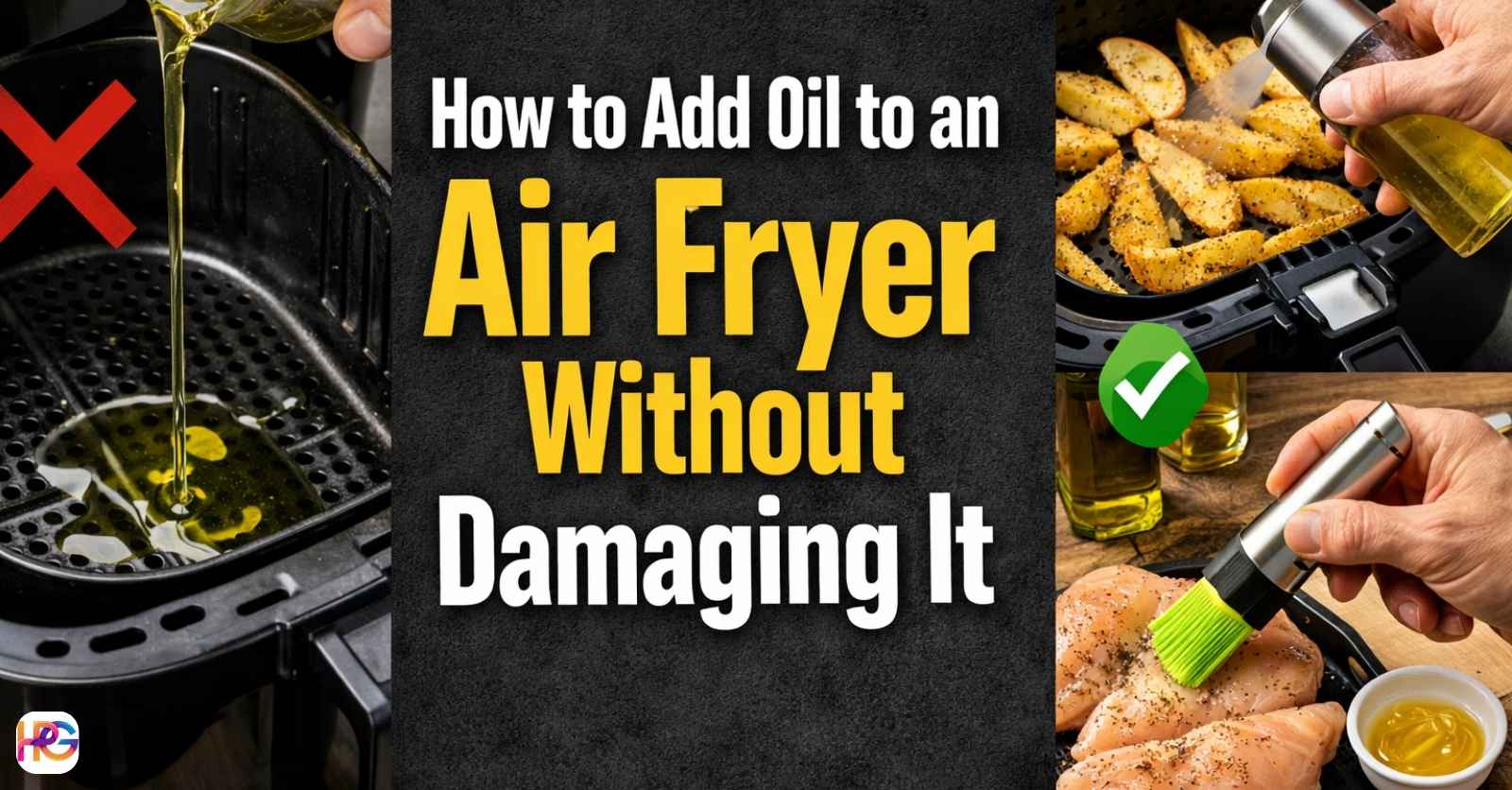
When I poured oil directly into the basket, here is what happened:
- Oil dripped through the holes
- Grease collected in the bottom tray
- Smoke started after a few minutes
- The non-stick surface felt sticky later
Air fryers push hot air around food at high speed. If oil pools at the bottom, it heats up fast. That can cause smoke. Over time, burnt oil can damage the coating.
Here is a simple comparison based on my trial and error:
Table: Oil in Basket vs Oil on Food
| Method | What Happens | Result |
|---|---|---|
| Oil poured in basket | Oil drips and burns | Smoke and messy cleanup |
| Oil applied to food | Even coating | Better browning and less smoke |
Since that day, I never pour oil into the basket again. Oil goes on food. Not inside the machine.
Best Ways I Add Oil to an Air Fryer
Over time, I tested different ways to apply oil. Some worked well. Some did not.
These are the methods that gave me the best results.
Tossing Food in a Bowl First
This is my go-to method.
On a Friday night, I was making potato wedges. I placed them in a bowl. Then I added one teaspoon of oil. I mixed them with my hands.
Every piece had a thin coat. Nothing was dripping.
After air frying, the wedges were crisp outside and soft inside. No smoke. No burnt smell.
Steps I follow now:
- Put food in a bowl
- Add a small amount of oil
- Mix well
- Place food in basket
It is simple. It works every time.
Using a Brush
A silicone brush gives more control.
I use this for fish or chicken breast. I dip the brush lightly into oil. Then I spread a thin layer on the surface.
This method helps when I do not want extra oil. It also prevents dry spots.
However, brushing takes more time. When I am in a rush, I skip it.
Using an Oil Sprayer
An oil sprayer changed my routine.
I bought a refillable mister. It sprays a fine mist. The coating is light and even.
Spraying uses less oil. It also feels cleaner. I no longer worry about pouring too much.
One mistake I made early on was using aerosol cooking spray. After a few uses, the basket felt sticky. Many sprays contain additives. Those can build up on non-stick surfaces.
Now I stick to pure oil in a refillable bottle.
Oil Brushing vs Spraying: What I Noticed
I tested both methods for weeks.
Here is my honest comparison:
Table: Brushing vs Spraying Oil
| Feature | Brushing | Spraying |
|---|---|---|
| Oil control | High | Medium |
| Oil amount used | Slightly more | Less |
| Speed | Slower | Faster |
| Even coverage | Good | Very even |
For vegetables and fries, spraying wins.
For meat or fish, brushing gives better control.
Both are safe when used correctly.
How Much Oil Is Enough in an Air Fryer?
This was my biggest confusion.
I used to think more oil means more crisp. That is not true.
After many tests, here is what works for me:
- 1 teaspoon for 2–3 potatoes
- Light mist for frozen fries
- No extra oil for chicken wings
- 1–2 teaspoons for a full basket of vegetables
Air fryers need only a thin layer. Too much oil causes smoke. It can also make food soggy.
When I reduced oil, I noticed better texture. The air could circulate better. The food crisped up instead of frying in grease.
Mistakes That Can Damage Your Air Fryer
I learned these lessons slowly. Some were frustrating.
Here are common mistakes I made while learning how to add oil to an air fryer safely:
- Pouring oil directly into the basket
- Using too much oil
- Using aerosol spray often
- Not cleaning grease after cooking fatty foods
- Overcrowding the basket with oily items
One evening I cooked sausages. I did not check the bottom tray. The next day, the leftover grease smoked when I reheated food.
Since then, I always check for grease buildup.
Oil is helpful. Oil buildup is harmful.
Cleaning Tips After Using Oil
Cleaning is not fun. Still, it protects the air fryer.
Here is my routine after cooking with oil:
- Let the air fryer cool fully
- Remove the basket and tray
- Wash with warm water and mild soap
- Use a soft sponge only
- Wipe the inside chamber if needed
If grease sticks, I soak the basket for 10 to 15 minutes. That loosens everything.
Never use steel wool. It scratches the coating. Once scratched, food sticks more easily.
Regular cleaning prevents smoke. It also keeps the air fryer working well.
Real-Life Cooking Test: What Changed After I Used Less Oil
One Sunday afternoon, I made three batches of fries.
Batch one had almost no oil.
Batch two had one teaspoon.
Batch three had two tablespoons.
Here is what happened:
- Batch one: Slightly dry but still crisp
- Batch two: Golden and crispy
- Batch three: Oily and soft, with light smoke
That test showed me something clear. More oil does not mean better results.
Air fryers are built for hot air cooking. Oil is just a helper, not the main tool.
Key Takeaways: How to Add Oil to an Air Fryer Without Damaging It
If you want simple advice from someone who made the mistakes first, here it is:
- Never pour oil into the basket
- Always apply oil directly to food
- Use a bowl, brush, or sprayer
- Keep oil amounts small
- Clean grease after cooking
Air fryers are strong machines. They can handle daily use. Still, small habits make a big difference.
I damaged nothing permanently, but I did waste time cleaning burnt oil. That experience taught me to respect how the machine works.
Now my kitchen stays smoke-free. Food turns out crisp. Cleanup takes minutes, not hours.
If you are learning how to add oil to an air fryer, start simple. Less oil. More airflow. Clean often.
That small change made my air fryer cooking easier and more enjoyable.
FAQs:
1. Can I pour oil directly into my air fryer basket?
No, do not pour oil into the basket. It can drip to the bottom and burn. When adding oil to an air fryer, always coat the food instead to prevent smoke and damage.
2. What is the safest way to add oil to an air fryer?
The safest way to add oil to an air fryer is by tossing food in a bowl or using a refillable oil sprayer. This gives light, even coverage and protects the non-stick coating.
3. How much oil should I use in an air fryer?
Most foods need only 1 to 2 teaspoons of oil. A thin layer helps crisp food without causing grease buildup. Too much oil can create smoke and messy cleanup.
4. Can cooking spray damage an air fryer?
Some aerosol cooking sprays contain additives that leave sticky residue. Over time, this can harm the non-stick surface. A manual oil mister is usually a safer choice.
5. Do I need to clean my air fryer after using oil?
Yes, always clean your air fryer after cooking with oil. Wipe grease from the basket and tray once cool. Regular cleaning prevents smoke and keeps airflow strong.