
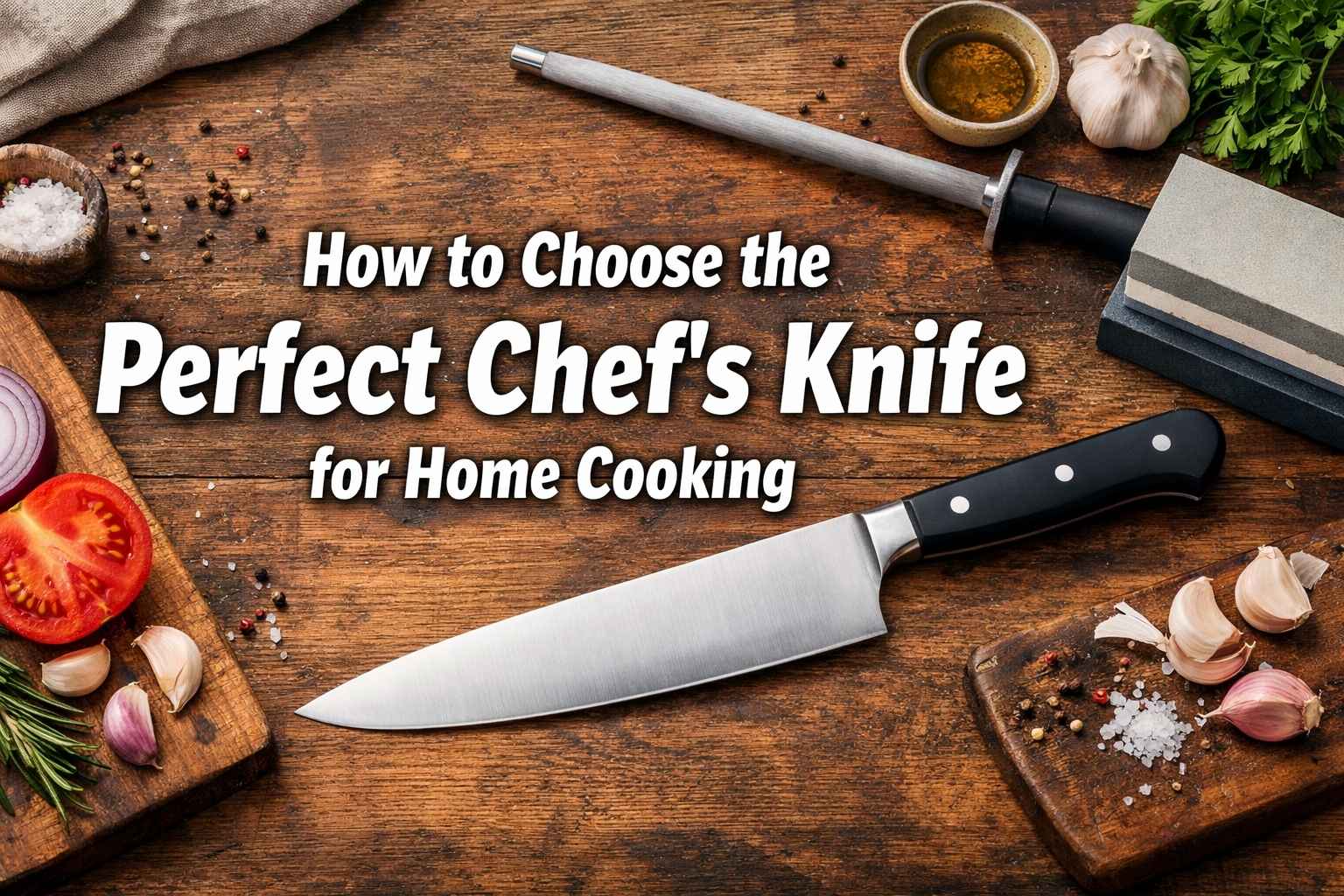
A few years ago, I thought any sharp blade would do. I was wrong. I still remember standing in my small kitchen on a Sunday night, trying to chop onions with a dull knife. The blade slipped, and the pieces came out uneven. Pain shot through my hand. That moment pushed me to learn how to choose the perfect chef’s knife for home cooking.
Since then, I have tested many knives in real meals. In a tiny apartment kitchen, space was tight and prep felt rushed. Later, in a larger kitchen, I noticed how much easier cooking became with the right tools. I have sliced meat, chopped herbs, and diced more onions than I can count. Here is what real use, real mistakes, and real meals taught me.
Why Choosing the Perfect Chef’s Knife Matters
A good chef’s knife changes how you cook. When I upgraded to a better one, prep time dropped fast. During one meal prep session, I timed myself and finished about 25% quicker.
Speed was not the only benefit. Stress went down too. Instead of crushing tomatoes, the blade slid through them. Herbs stayed fresh instead of bruised. Even after long prep sessions, my wrist felt fine. That is when I understood why choosing the perfect chef’s knife for home cooking truly matters.
Types of Chef Knives I Have Used
When I began searching, I tested both Western and Japanese styles. The difference was clear the moment I held them. Each style served a different purpose in my kitchen.
Western-Style Chef’s Knife
My first serious knife was Western-style. The curved blade made rocking cuts easy. Chopping garlic and herbs felt smooth and controlled.
Its weight helped with dense foods like carrots and squash. Over time, though, long prep sessions caused wrist fatigue. If you cook heavy vegetables often, this knife works well. Just expect a bit more weight in your hand.
Japanese-Style Knife (Santoku and Gyuto)
Later, I switched to a lighter Japanese knife. The first tomato I sliced felt like butter under the blade. Thin, clean cuts became effortless.
Precision improved right away. However, the thinner edge required care. Twisting it into a hard sweet potato caused a small chip once. That mistake taught me to cut straight and avoid force.
Here is how I compare them:
| Knife Type | Feel in Hand | Best For | Downside |
|---|---|---|---|
| Western Chef Knife | Heavy, solid | Hard veg, rocking cuts | Can cause fatigue |
| Santoku | Light, flat edge | Veg, quick slicing | Less rocking motion |
| Gyuto | Light, sharp | Meat, thin slices | Needs gentle use |
Both styles work well. The right choice depends on how you cook and what feels natural.
What Is Full Tang and Why It Matters
Early on, I ignored the term “full tang.” It sounded technical and unimportant. That changed after a cheap knife handle loosened during use.
Full tang means the steel runs through the entire handle. Often, you can see the metal along the handle’s edge. This design improves strength and balance.
Better balance gives more control during heavy cuts. The knife feels stable when slicing meat or dense vegetables. That extra stability builds trust in your tool.
Blade Material Explained From My Kitchen Tests
Over time, I tried stainless steel, high-carbon stainless steel, and carbon steel blades. Each behaved differently during daily cooking. One carbon steel knife even developed rust spots after I forgot to dry it.
Stainless Steel
Stainless steel resists rust and stains well. Maintenance is simple and stress-free. While edge retention is moderate, it works great for busy kitchens.
High-Carbon Stainless Steel
This blend offers better sharpness and longer edge life. Rust resistance remains strong, though not perfect. In my experience, it strikes the best balance for home cooking.
Carbon Steel
Carbon steel gets extremely sharp and sharpens easily. However, it requires strict drying and care. Skipping that step leads to rust quickly.
Here is a simple comparison from my notes:
| Material | Edge Life | Rust Risk | Care Level |
|---|---|---|---|
| Stainless Steel | Medium | Low | Easy |
| High-Carbon Stainless | Long | Low-Medium | Moderate |
| Carbon Steel | Very Long | High | High |
When deciding how to choose the perfect chef’s knife for home cooking, always match the material to your maintenance habits.
Best Knife Size for Beginners
During testing, I rotated between 6-inch, 8-inch, and 10-inch knives. Each felt different after long prep sessions.
A 10-inch knife handled large produce with ease. Yet extended use caused wrist strain. The 6-inch option felt light and nimble but struggled with large cabbage and melon.
For daily cooking, the 8-inch chef’s knife stood out. It covered nearly 90% of my kitchen tasks. Balance, reach, and control all felt right.
Handle Comfort and Balance
One evening, I prepped food for friends for nearly two hours. That experience showed me how much handle shape matters.
Poor design leads to palm pressure and fatigue. Excess forward weight strains the wrist. Proper balance should feel natural from the start.
Using a pinch grip, I test how steady the knife feels near the blade. Holding it for at least a minute helps reveal pressure points. Comfort becomes obvious quickly.
How I Maintain Sharpness at Home
Sharp knives are safer than dull ones. A dull blade forces extra pressure and increases slips.
Weekly honing keeps the edge aligned. It takes less than a minute but makes a big difference. Honing does not remove metal; it simply straightens the edge.
Every few months, I use a whetstone. Starting with 1000 grit restores sharpness. Finishing with a finer stone smooths the edge.
Dishwashers are off-limits. Instead, I wash by hand and dry immediately. Wooden cutting boards also help protect the blade.
My Simple Data-Based Method
Tracking results helped me choose wisely. I logged prep time, edge life, and fatigue levels in simple notes.
Lighter knives reduced hand strain by around 20%. High-carbon stainless blades stayed sharp two to three weeks longer. An 8-inch blade handled most meals with ease.
Clear data removed guesswork. The process became calm and logical instead of emotional.
Final Thoughts on Choosing the Perfect Chef’s Knife for Home Cooking
Trends and brand hype do not matter much. Comfort, balance, and daily use matter more. The right knife should feel like part of your hand.
My ideal choice is an 8-inch, full tang, high-carbon stainless steel chef’s knife. It may not be the most expensive tool I own, but it performs every day.
Take your time when deciding. Good tools reward you with better cuts, faster prep, and less strain. Once you experience that difference, there is no going back.
FAQs: How to Choose the Perfect Chef’s Knife for Home Cooking
1. What size chef’s knife is best for home cooking?
An 8-inch chef’s knife is best for home cooking. It handles most tasks with ease. It feels balanced and works well for meat, herbs, and large vegetables.
2. What does full tang mean in a chef’s knife?
Full tang means the steel runs through the whole handle. It adds strength and balance. A full tang chef’s knife feels solid and lasts longer.
3. Is high-carbon stainless steel good for a chef’s knife?
Yes, high-carbon stainless steel is a great choice. It stays sharp longer than basic stainless. It also resists rust, which helps in busy home kitchens.
4. How do I keep my chef’s knife sharp at home?
Use a honing steel every week to keep the edge straight. Sharpen with a whetstone every few months. Always hand wash and dry your chef’s knife right away.
5. Are expensive chef’s knives worth it for home cooking?
Not always. A well-balanced, full tang chef’s knife with good steel matters more than price. Focus on comfort, sharpness, and build quality over brand hype.