Why I Ditched the Vinegar (And You Should Too)
It was a rainy Tuesday morning. I needed my coffee fast. But my kitchen smelled like a jar of pickles. I had cleaned my machine with vinegar the day before. The smell just would not go away. It lingered for days. It totally ruined my morning brew.
Vinegar cleans well, sure. But the smell is awful. The sharp scent soaks into the plastic parts of the machine. It is so hard to rinse out.
That is why I stopped using it. I needed to find how to clean a coffee maker without vinegar.
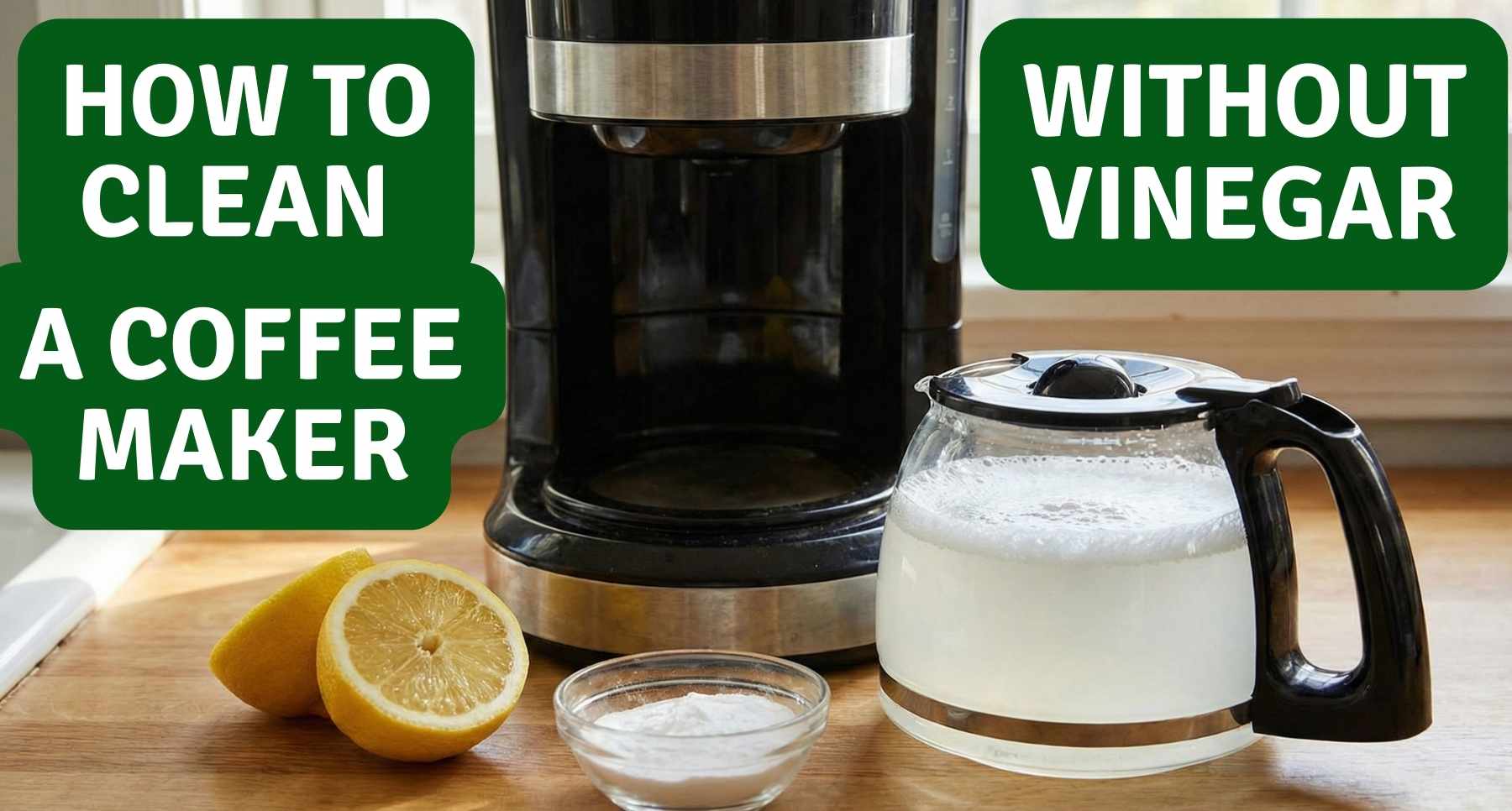
I found two heroes. Lemon juice and baking soda. They work just as well. But they smell fresh. They do not leave that sour funk behind.
I learned this the hard way. I once made a fresh pot right after a vinegar soak. I took a big sip. It tasted like hot salad dressing. Yuck. Never again.
Method 1: The Lemon Juice Cleanse (My Favorite Way)
There is something satisfying about cutting a fresh lemon. It smells like clean sunshine. It definitely does not smell like a high school science lab. That is why this is my go-to method. It is the best way to clean a coffee maker without vinegar if you want your kitchen to smell nice.
Why Lemon Juice Works Lemon juice is acidic. It cuts through mineral buildup just like vinegar does. But it smells way better. It leaves a light, fresh scent instead of a sour funk.
What You Need
- Water
- Plain lemon juice (Fresh is great, but bottled works too)
Mix the Solution
I grab my glass carafe to measure. I usually mix equal parts water and lemon juice. That is a 1:1 ratio. If I am cleaning a standard 12-cup pot, I use about three cups of water and three cups of juice. If you are low on lemons, you can use less. A mix of two parts water to one part juice works fine too.
Run the Cycle
Pour the mix right into the water reservoir. Make sure you put a paper filter in the basket. This catches any loose grime that breaks free. Hit the brew button. Then, just wait. I like watching the pot fill up. The water usually comes out a bit cloudy or yellow. That means it is working. It is washing away the scale inside.
The Rinse (Crucial Step)
Please do not skip this part. I learned this the hard way once. If you stop now, your next cup will taste like hot lemonade. Yuck.
Dump out the lemon water. Fill the tank with fresh, cold water. Run a full brew cycle again. I usually do this two or three times. This flushes out all the lemon residue.
My Sunday Routine I usually tackle this on Sunday mornings. I have more time then. I let the machine run its cycles while I am whisking eggs for breakfast. By the time the toast pops up, the machine is rinsing. The kitchen smells fresh, and I know my Monday morning coffee will taste perfect.
Method 2: The Baking Soda Scrub
Baking soda is not just for keeping the fridge smelling fresh. It is gritty. It is cheap. You definitely have an orange box hidden in the back of your pantry.
This is the best method if you need to scrub out stubborn stains. It is also the perfect answer if you were searching for how to clean a coffee maker without lemon juice.
Dissolving the Powder
You have to be careful here. You cannot just dump dry powder into the machine. It will clog the water tubes. I learned to be cautious with this.
I mix a quarter cup of baking soda with warm water. I use warm water because it helps the powder dissolve faster. Stir it really well. You want a clear liquid, not a sludge. Make sure there are absolutely no clumps left before you pour.
Running the Machine
Pour your mixture into the water tank. Hit the brew button. As it runs through, the baking soda works to neutralize acidic odors. It is great for getting rid of that stale, old-coffee smell.
The “Paste” Trick While the machine runs, I sometimes make a thick paste with a little water and extra soda. I use this to scrub the glass pot. There is nothing more satisfying than watching those old, brown coffee rings lift right off the glass. It wipes away so easily. It feels like erasing a bad memory.
How to Clean a Coffee Pot Without Vinegar (The Carafe)
Sometimes the machine itself runs fine. But the glass pot looks gross. It gets that brown, burnt ring at the bottom. It looks like old sludge. Here is how I tackle that mess. I use a simple trick to clean a coffee pot without vinegar.
The Ice & Salt Trick
I actually learned this from a bartender. It works like magic on coffee stains. You do not need a fancy brush.
Grab a few ice cubes. Drop them into the empty, cold pot. Add a big spoon of coarse salt. I like to add a squeeze of lemon juice too. Now, swirl it around.
Why It Works
Stand over the sink and swirl the pot vigorously. The ice clinks against the glass. It acts like a moving scrubber. The salt adds grit to scrape away the burnt coffee. The lemon cuts through the oily residue.
A Tip for Big Hands I love this trick for one main reason. My hand is too big to fit inside the pot. I used to get my knuckles stuck trying to reach the bottom with a sponge. This method saves me from that pain. It cleans the spots I just cannot reach.
Cleaning Without Lemon Juice or Baking Soda (Soap & Water)
Okay, maybe you are out of EVERYTHING. No lemons. No baking soda. Just a dirty machine and a dream. I have been there. It usually happens on a busy morning when I simply forgot to go to the store.
This is the “Dish Soap” method. It is the simple answer if you are looking for how to clean a coffee maker without baking soda.
Wash Removable Parts
I start by taking the machine apart. I pull out the filter basket. I take the glass carafe to the sink. I fill the basin with warm, soapy water. Then, I just scrub. I wash away the brown oils and loose grounds. It is simple, but it makes a big difference to the flavor.
Wipe the Exterior
Please listen to me on this one. Do not put dish soap inside the water tank. I tried this once. It was a disaster. The machine turned into a bubble volcano. It took hours to rinse the suds out of the tubes.
Instead, just dip a soft cloth in the soapy water. Wring it out well. Then, wipe down the outside of the machine. It removes dust and sticky spills.
A Quick Reality Check Ideally, you should descale the inside to remove minerals. But sometimes, you just need a clean machine for today. This method works fine for that.
Signs Your Coffee Maker is Dirty (The “Ew” Factor)
You know that sound? The slow, sputtering noise? It sounds like the machine is choking. Or maybe your morning pot takes ten minutes to brew instead of five. That is the machine crying for help. It is clogged with minerals and needs a wash.
Sensory Cues I usually notice the taste first. My coffee starts to taste bitter. sometimes it has a weird, metallic tang. If fresh beans taste burnt, the machine is the problem.
Then there is the steam. Sometimes steam spits out sideways instead of going into the pot. It fogs up my glasses.
Finally, look at the spout. Do you see a white, chalky crust? That is mineral buildup. We call it scale. If you see it on the outside, there is way more inside.
How Often I Actually Clean It The experts say you should do this once a month. I try to follow that rule. But honestly? I often forget. I usually wait until the coffee tastes “off.” That ends up being about every six weeks. If you live in a place with hard water, you might need to do it more often than I do.
Final Thoughts: Enjoy Your Fresh Brew
There is a really nice feeling when the job is done. My kitchen smells like lemons, not old chemicals. The coffee maker is finally quiet again. It does not wheeze or sputter anymore.
Best of all, my coffee actually tastes like coffee. It is rich and smooth. It does not have that weird, bitter bite.
You do not need fancy store-bought cleaners to fix this. You just need to check your pantry. Go grab that lemon or that box of baking soda. Give your machine the love it deserves today. It will thank you with a perfect cup tomorrow morning.
Time for my second cup. Cheers.
Frequently Asked Questions (That I Googled Myself)
I have stood in the kitchen aisle staring at my phone. I had the same questions you probably have right now. Here are the quick answers I found through trial and error.
Can I use apple cider vinegar instead?
Technically, yes. It is acidic. It will clean the machine. But here is the catch. It has a very distinct smell. It smells like fermented apples. It is not as harsh as white vinegar, but it still lingers. If you are trying to avoid funky smells, I would skip it.
How do I descale without chemicals?
Stick to the lemon juice method. It is my favorite for a reason. Citric acid is a natural descaler. It eats away the mineral buildup without using harsh chemicals. It is safe, effective, and you probably already have a lemon.
Will lemon juice affect the taste?
It will only affect the taste if you rush the process. You must run those plain water cycles at the end. If you skip the rinse, your coffee will be sour. If you rinse properly, your coffee will taste fresh and smooth.
Is it safe to run soapy water through the machine?
No! Please do not do this. Dish soap creates suds. The pump inside your coffee maker will turn those suds into a giant mess. It is incredibly hard to rinse all the soap out of the internal tubes. You do not want soapy bubbles in your morning cup. Keep the soap for the glass pot only.
How do I clean a coffee maker without vinegar?
Use plain lemon juice. It is the best natural choice. Mix it with water and run the machine. It cuts through grime fast. It leaves a fresh scent, not a sour one.
Can I use baking soda in my coffee machine?
Yes, baking soda works well. Mix it with warm water first. Ensure no clumps are left. Run it through to remove odors. It cleans old oil buildup and is very safe.
How often should I clean my coffee maker?
Try to clean it once a month. This stops hard water buildup. It keeps your coffee tasting smooth. If you wait too long, the machine might clog or break down.
Will lemon juice make my coffee taste sour?
No, it will not affect the taste. Just run fresh water after the cleaning cycle. Do this two times. This rinses out the lemon. Your next cup will be perfect.
Why is my coffee maker brewing slowly?
Minerals clog the tubes over time. This slows down the water flow. A deep clean fixes this. Use lemon juice to clear the path. Your machine will run fast again.