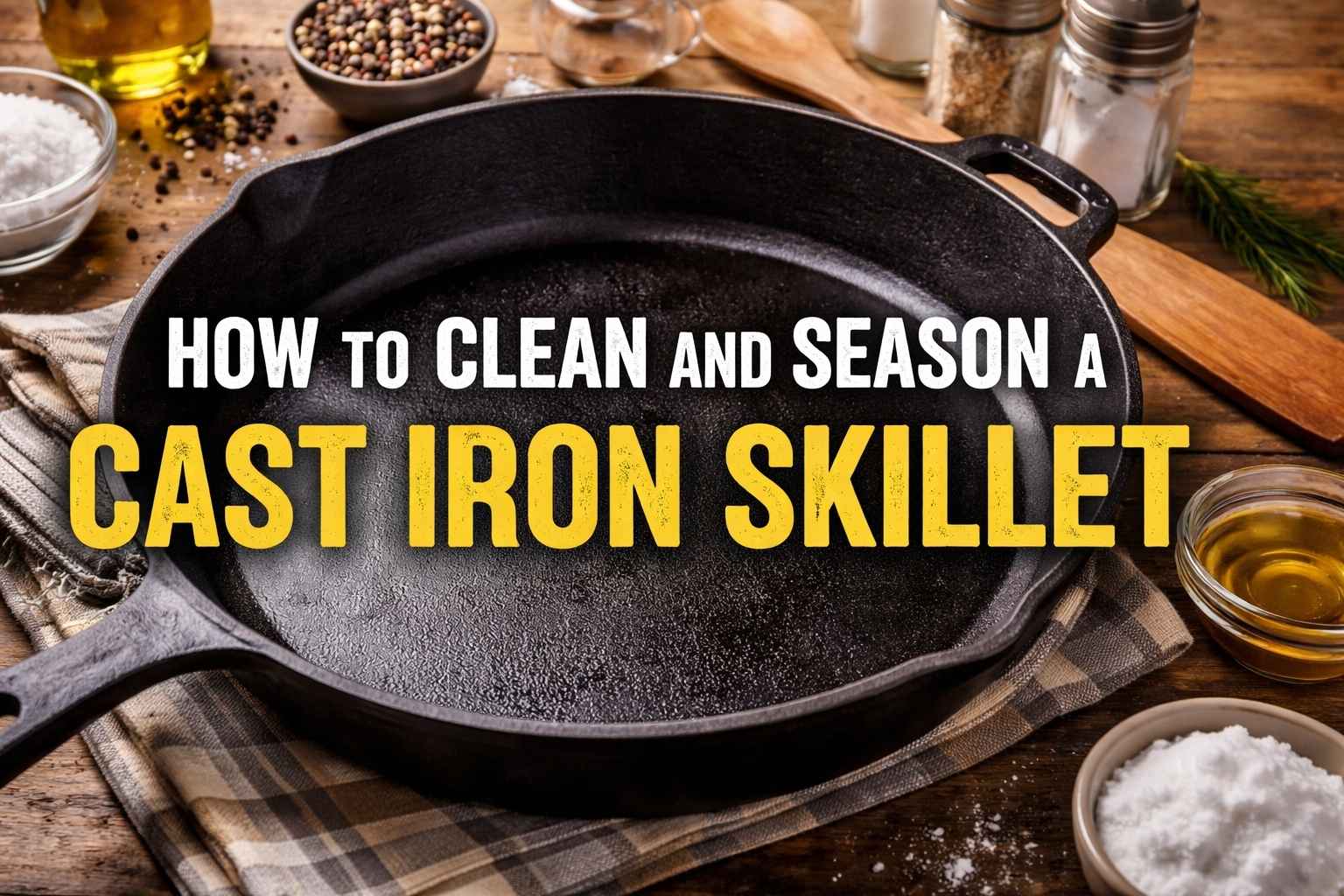
I still remember the first time I tried to clean and season a cast iron skillet on my own. It was a Sunday afternoon. I had just made cornbread, and the bottom stuck like glue. I stood there staring at the pan, half proud of the food and half worried I had ruined it.
Over the years, I’ve learned that cast iron is tough. It’s not fragile. It just needs simple care. Once I understood how to clean and season a cast iron skillet the right way, everything changed. My food tastes better. Cleanup feels easy. And the pan keeps getting better with time.
Here’s what I’ve learned from real use — mistakes included.
Why Cast Iron Rusts (And How I Learned the Hard Way)
Cast iron rusts because it’s made of iron. Iron reacts with water and air. That reaction creates rust.
I learned this after leaving my skillet in the sink overnight. It looked fine before bed. The next morning, orange spots covered the bottom. That sinking feeling in my stomach? I still remember it.
Moisture is the real enemy. Even a small amount can cause rust.
Here are the main reasons cast iron rusts:
| Cause | What Happens |
|---|---|
| Air drying | Water sits on the surface |
| Soaking in sink | Iron absorbs moisture |
| Storing damp | Rust forms slowly |
| Weak seasoning | Bare metal gets exposed |
Seasoning protects the pan. When that layer wears down, water reaches the iron. Rust shows up fast.
The good news? Rust is fixable. I’ve restored more than one skillet.
Cleaning a Cast Iron Skillet (Yes, You Can Use Soap)
For years, I believed the “no soap” rule. I treated my skillet like it would fall apart if soap touched it.
Turns out, that’s not true.
Old soaps used lye. Modern dish soap is mild. A small amount will not ruin your seasoning.
Now, here’s exactly how I clean and season a cast iron skillet after normal cooking.
My Simple Cleaning Routine
Right after cooking, I let the pan cool a bit. Not fully cold. Just warm enough to handle.
Then I rinse it with warm water. If food sticks, I use a soft brush. Sometimes I sprinkle coarse salt and scrub gently. Salt works like a natural scrub.
If grease builds up, I add a drop of mild dish soap. Just a drop.
After washing, I dry it right away with a towel. This step matters most.
Next, I place it on low heat for a minute or two. That burns off hidden moisture. You can see the water evaporate. I like that part. It feels reassuring.
Finally, I rub in a thin layer of oil. Very thin. I wipe off the extra with a clean cloth.
That’s it.
Cleaning takes less than five minutes now.
How to Season a Cast Iron Skillet Step by Step
Seasoning used to confuse me. I thought it required special oils or secret tricks.
It doesn’t.
Seasoning is just oil baked onto iron until it forms a hard layer.
Here’s how I season a cast iron skillet when it needs a full reset.
Step 1: Start with a Clean, Dry Pan
If there’s rust, I scrub it off with steel wool. The pan may look dull after. That’s normal.
Once clean, I dry it fully. I always heat it on the stove for a minute to remove hidden moisture.
Step 2: Add a Very Thin Layer of Oil
This part took me time to learn.
The first time I seasoned my skillet, I used too much oil. The surface turned sticky. It felt tacky for weeks.
Now I use a small amount of neutral oil like canola or grapeseed. I rub it over the entire pan. Inside. Outside. Handle too.
Then I wipe it again like I’m trying to remove all the oil. The pan should look almost dry.
Less oil works better.
Step 3: Bake It
I place the skillet upside down in the oven at 475°F (245°C).
A sheet of foil goes on the lower rack to catch drips.
After one hour, I turn off the oven and let the pan cool inside.
Sometimes I repeat the process two or three times if I want a stronger seasoning layer.
Each round makes the surface darker and smoother.
Common Mistakes I Made (So You Don’t Have To)
I’ve made almost every mistake possible with cast iron. Here are the big ones.
Using Too Much Oil
This causes sticky buildup. Thin layers win every time.
Letting It Air Dry
Water left behind leads to rust. Towel dry first. Heat dry after.
Cooking Acidic Food Too Soon
Tomato sauce stripped my new seasoning once. Now I wait until the surface is well built before cooking acidic dishes.
Soaking in Water
Even one long soak can undo weeks of care.
Experience taught me that cast iron rewards small habits. Ignore it, and problems show up fast.
Storage Tips That Keep My Cast Iron Rust-Free
Storage matters more than I expected.
Moisture in cabinets can cause rust. I learned that during a humid summer.
Now I follow a simple routine:
- Always apply a light oil coat before storing
- Keep the lid off
- Place a paper towel inside to absorb moisture
- Store in a dry cabinet
If I stack pans, I place a cloth between them.
Since doing this, I haven’t seen rust return.
What Seasoning Actually Does (In Plain Terms)
Seasoning creates a natural non-stick surface.
When oil heats past its smoke point, it bonds to the iron. Over time, layers build up. The surface becomes darker and smoother.
Here’s what I’ve noticed after years of use:
| Stage | How It Feels | Cooking Result |
|---|---|---|
| New seasoning | Slightly rough | Some sticking |
| 3–5 uses | Smoother | Eggs release easier |
| Months of use | Dark and glossy | Very non-stick |
Patience matters. A well-used pan outperforms a freshly seasoned one.
Strengths and Weaknesses of Cast Iron
I love my skillet. Still, it’s not perfect.
What I Love
Heat retention is amazing. Steak sears beautifully. Cornbread forms crisp edges. Food tastes rich and deep.
Durability stands out too. My pan has survived drops, high heat, and years of use.
What Can Be Annoying
It’s heavy. Really heavy.
Preheating takes time. Quick meals need planning.
Maintenance requires attention. You can’t toss it in the dishwasher.
Still, the trade-off feels worth it.
My Quick Habit: Clean and Season a Cast Iron Skillet in 5 Minutes
After each meal, I follow this flow:
Clean → Dry → Heat → Light oil → Cool → Store
This routine keeps my skillet ready at all times.
Consistency beats deep cleaning sessions.
Final Thoughts from My Kitchen
Learning how to clean and season a cast iron skillet felt intimidating at first. Mistakes happened. Rust showed up. Sticky layers formed.
Over time, I realized cast iron is forgiving. It just needs small, steady care.
Now my skillet feels like an old friend. It cooks evenly. It looks better with age. And every time I clean it properly, I know it will be ready for the next meal.
If you build the habit, your cast iron skillet will reward you for years.
Frequently Asked Questions About How to Clean and Season a Cast Iron Skillet
Can I really use soap on cast iron?
Yes. A small amount of mild dish soap is fine. Avoid soaking for long periods.
How often should I season my skillet?
Full oven seasoning is only needed if rust appears or the surface looks dull. Light oil after each use maintains it.
What oil works best?
Neutral oils with a high smoke point work well. Canola and grapeseed are simple choices.
Why is my skillet sticky after seasoning?
Too much oil was used. Wipe off more before baking. Thin layers prevent buildup.
Can rust ruin the pan forever?
No. Rust looks scary but scrubbing and re-seasoning restore the surface.