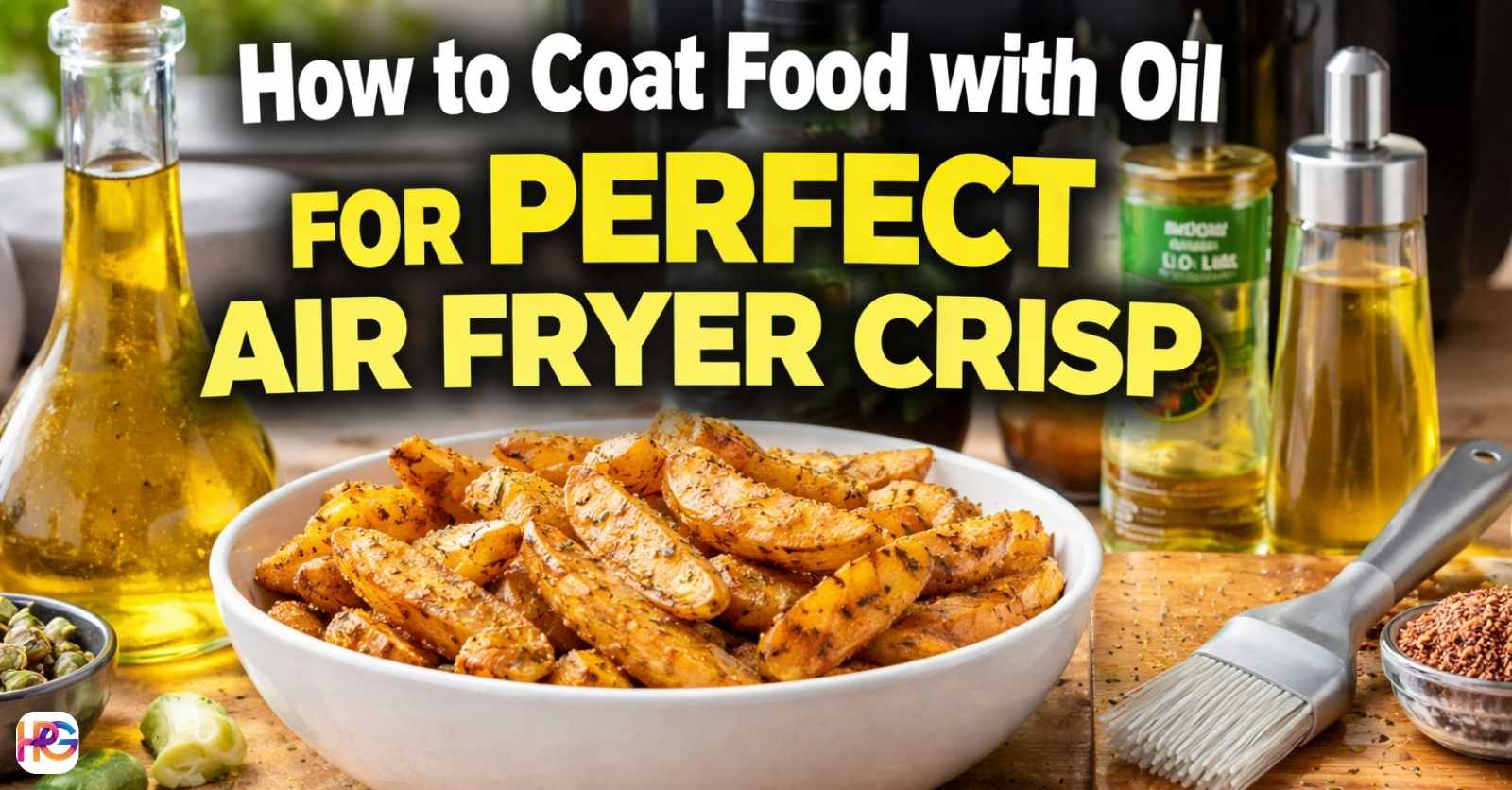
How to Coat Food with Oil for Perfect Air Fryer Crisp (My Real Experience)
The first time I used my air fryer, I thought oil did not matter. I just dumped in frozen fries and pressed start. Ten minutes later, I got dry sticks with pale spots. They looked sad. I still ate them. But I knew something was wrong.
That night, I learned a simple truth. Air fryers need oil. Not a lot. Just the right amount. And it must touch every piece of food.
Over months of cooking chicken, potatoes, and veggies, I tested many ways to coat food with oil. Some worked. Some failed badly. I burned garlic once and filled the kitchen with smoke. My family still jokes about that day.
This article is my honest guide. I am sharing what I learned through mistakes, messes, and many crispy wins.
Why Even Oil Coating matters in an air fryer
At first, I poured oil on top of food and hoped for magic. That never worked. Some pieces turned dark. Others stayed white and dry.
Even oil coating matters for three reasons:
• It helps heat spread evenly
• It makes food brown and crisp
• It stops food from drying out
Think of oil like a thin jacket. Each piece of food needs one. If some pieces have jackets and others do not, cooking feels unfair.
One evening after work, I cooked potato wedges. I rushed and skipped mixing them well. Half were crunchy. Half tasted like paper. That day taught me to slow down for 30 seconds and coat them properly.
Oil also carries flavor. Salt and spices stick better when oil is present. Dry spices fall off during cooking.
What I learned about oil types
I tried olive oil, vegetable oil, and avocado oil. Each behaves a bit differently.
Olive oil smells great but burns fast at high heat. I use it for veggies at 350°F.
Vegetable oil is neutral and cheap. It works for fries and nuggets.
Avocado oil handles high heat best. I use it for chicken wings.
The key lesson: use oils with high smoke points for air frying. Burnt oil tastes bitter and smells bad.
Bowl-toss method (my favorite way)
This is the method I use most days. It is fast and clean.
I place food in a big bowl. Then I add oil. Then I toss.
That’s it.
Sounds simple, but details matter.
How I do the bowl-toss method
- Put food in a large bowl
- Add oil in small amounts
- Toss with spoon or shake the bowl
- Check if all pieces shine lightly
I learned to add oil slowly. If I pour too much, food becomes greasy.
One Saturday morning, I overdid oil on sweet potatoes. They came out soggy. My dog refused a piece. That hurt my pride.
Common mistakes I made
• Bowl too small (food cannot move)
• Adding oil after spices (spices clump)
• Pouring oil directly on one spot
The bowl must be big enough for movement. Food needs space to roll and flip.
Hand-mixing method (when food is fragile)
Some foods break if you toss them hard. Fish. Tofu. Mushrooms.
For these, I use my hands.
It feels messy at first. But it works best for gentle coating.
How I use my hands safely
I wash hands first. Then I drizzle oil on food. I gently rub each piece.
It feels like giving a tiny massage to dinner.
This method helped me with battered fish. Tossing broke the coating. Hand-mixing kept it whole.
When hand-mixing is best
• Fish fillets
• Soft vegetables
• Marinated food
• Breaded items
Cleanup is easy if you wash hands right away. Warm water works best.
Using brush vs sprayer (my honest comparison)
I bought an oil brush first. Later, I bought a sprayer. Both have good and bad sides.
Here is what I noticed:
Brush vs Sprayer Table
| Tool | What I liked | What I did not like |
|---|---|---|
| Brush | Cheap and simple | Can add too much oil |
| Sprayer | Even mist, less oil | Can clog easily |
The sprayer feels modern and clean. I like it for fries and veggies.
The brush feels old-school. I use it for meat and breaded food.
One day my sprayer clogged with olive oil. I spent 10 minutes shaking it like a maraca. Lesson learned. Clean it after each use.
How much oil per serving (my real guide)
This took time to learn. I used too much oil in the beginning. I feared dryness.
Now I follow a simple rule:
Oil amount table
| Food amount | Oil I use |
|---|---|
| 1 cup veggies | 1 teaspoon |
| 2 cups fries | 2 teaspoons |
| Chicken wings (6 pieces) | 1 tablespoon |
| Breaded food | 1 tablespoon |
Food should look shiny, not wet.
If oil pools at the bottom of the bowl, it is too much.
If food looks dusty, it is too little.
One winter night, I tried no oil on broccoli. It came out bitter and hard. Oil was the missing hero.
Foods that need more or less oil
Not all foods need the same amount of oil. Some already have fat. Others are dry.
Foods that need more oil
• Fresh potatoes
• Breaded chicken
• Tofu
• Zucchini
These foods start dry. Oil helps them crisp and brown.
Foods that need less oil
• Frozen fries
• Sausages
• Bacon
• Chicken thighs
These foods already contain fat. Extra oil makes them greasy.
One time I added oil to bacon. Smoke filled the room. The fire alarm joined dinner. Never again.
My sensory signs of perfect oil coating
I judge oil coating by sight and feel.
Here is what I look for:
• Food shines slightly
• No oil dripping
• Spices stick well
• Fingers feel slick, not soaked
Smell also helps. Fresh oil smells clean. Burnt oil smells sharp and heavy.
When coating is right, food sounds louder in the air fryer. You hear gentle sizzling. That sound makes me smile every time.
Common oil coating mistakes I made (so you don’t have to)
I made many mistakes. Learn from them:
• Pouring oil directly into basket
• Using too much spray
• Skipping mixing
• Using butter (burns fast)
• Overcrowding food
Overcrowding is the silent killer of crisp. Oil cannot reach all sides if food stacks up.
I now cook in batches. It takes longer but tastes better.
Real-life moment that changed my method
One evening after a long workday, I cooked fries for guests. I rushed and sprayed oil only on top.
They came out half crisp, half dry. I felt embarrassed.
Next day, I tested bowl-toss method slowly. Same fries. Same oil. Same air fryer.
They came out golden and crunchy.
That moment taught me this: technique beats tools.
Pro tips I trust now
• Always coat food before putting it in basket
• Mix oil and spices first
• Use less oil than you think
• Shake basket halfway through cooking
• Clean sprayer after use
These habits now feel natural to me.
Quick checklist for perfect air fryer oil coating
• Use high smoke point oil
• Coat evenly
• Do not soak food
• Match oil to food type
• Avoid crowding
When I follow this list, results stay consistent.
Final thoughts from my kitchen
Learning how to coat food with oil for perfect air fryer crisp changed my cooking. I waste less food now. I enjoy meals more.
This is not about fancy tools. It is about small actions. A bowl. A spoon. A few teaspoons of oil.
Some nights I still mess up. That is normal. Cooking is human.
But most days, I hear that crisp sound when I open the basket. I smell warm spices. I see golden edges.
That feeling is worth the effort.
If you are new to air frying, start simple. Toss your food with oil. Take your time. Watch how it cooks.
Your air fryer will teach you. Mine did.
FAQs How to Coat Food with Oil for Perfect Air Fryer Crisp.
FAQ 1: What tool works best to coat food with oil for perfect air fryer crisp?
A bowl and spoon work best for even oil coating. They help spread oil on every piece and avoid puddles. This simple tool setup improves crisp results and saves oil.
FAQ 2: Is an oil sprayer safe to use for air fryer oil coating?
Yes, an oil sprayer is safe if it sprays a fine mist. It helps control oil amount and keeps food from turning greasy. Clean the sprayer often to prevent clogs.
FAQ 3: How much oil should I use when coating food for air fryer crisp?
Use about one teaspoon of oil per cup of food. The food should look shiny, not wet. Too much oil can cause smoke and soft texture.
FAQ 4: Does using a brush give better air fryer oil coating than spraying?
A brush gives thick coverage and works well on meat and breaded food. A sprayer is better for fries and vegetables. Both tools work if oil is spread evenly.
FAQ 5: Can poor oil coating damage air fryer tools or baskets?
Yes, uneven oil can cause burned spots and sticky buildup on the basket. This makes cleaning harder and can reduce tool life. Even oil coating protects surfaces and heat flow.