
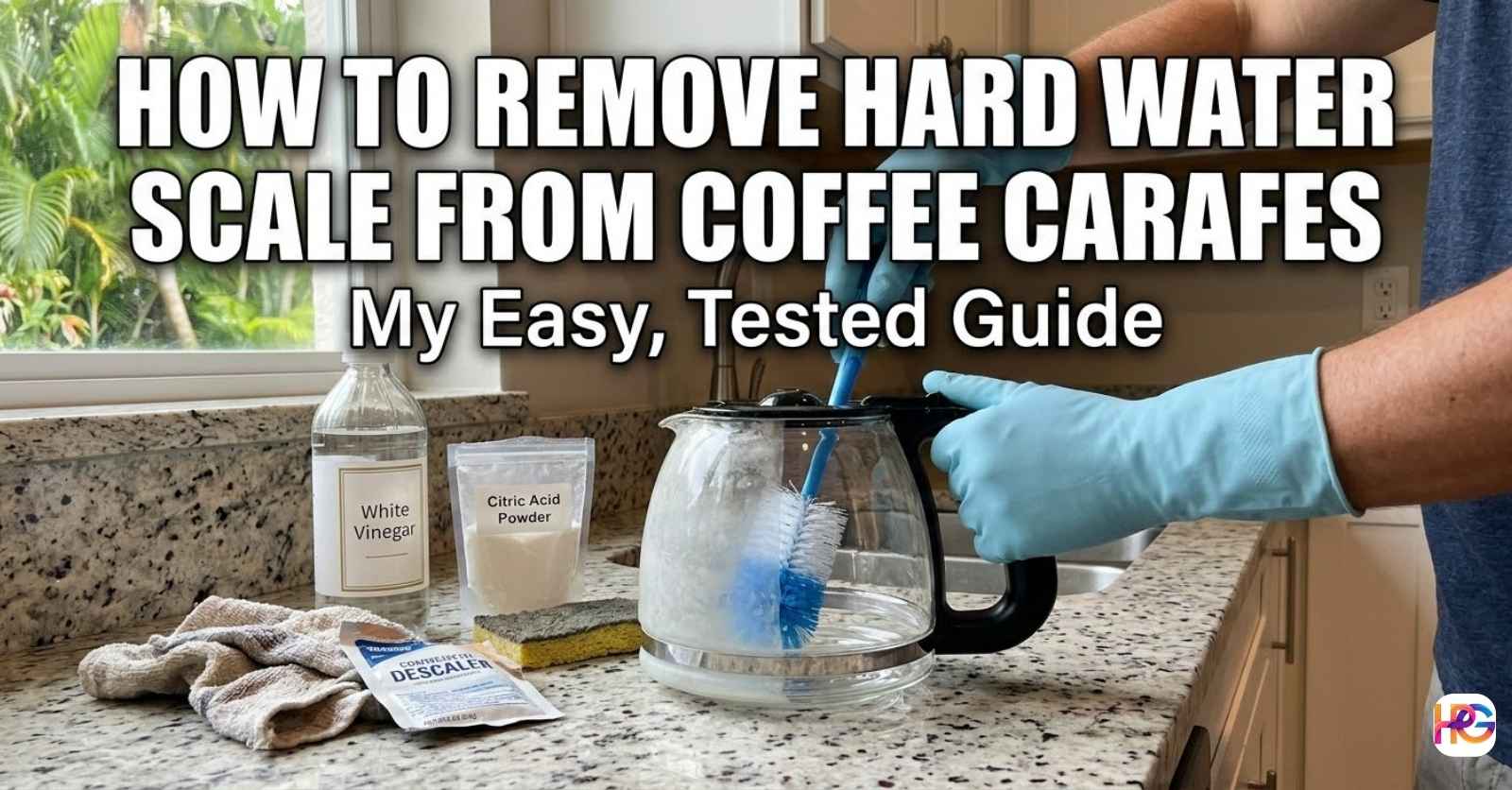
It was a rainy Sunday morning here in Houston. Craving a hot drink, I walked into my kitchen. The glass on my Moccamaster looked terrible. A cloudy white film covered the entire pot. This sad sight happens to all of us. Nothing ruins a fresh morning cup quite like a dirty glass pot. You might own a fancy glass brewer. Perhaps you rely on a tough steel French press instead. Mineral buildup remains a stubborn part of making coffee. Today is the day we fix this mess. Sharing my exact cleaning steps is the goal here. My guide will show you how to remove hard water scale from coffee carafes. Let us get your gear clean and your coffee tasting perfect again.
What Exactly is Hard Water Scale?
I used to wonder what that chalky film really was. It clings tightly to the inside of the glass. The white crust looks absolutely awful. That cloudy mess is simply hard water scale. Tap water holds many hidden natural minerals. Calcium and magnesium are the most common ones. Water travels miles underground before reaching your house. It picks up bits of the earth along the way. These tiny rocks are totally invisible in cold water. Heat changes the rules completely.
The Science Behind the Stains
When the brewer boils your water, pure vapor rises up. Heavy minerals get left behind in the pot. They actively look for a solid place to stick. Hot glass walls provide the perfect resting spot. Over time, these tiny bits build up into a thick crust. The surface feels very rough to the bare touch. Eating or drinking this crust will not hurt your body at all. Health is not the main issue here. The real problem is how it acts like a dry sponge.
Why Your Coffee Tastes Bad Now
Scale does much more than just look ugly. It actively attacks your morning drink. The mineral crust traps old oils from past brews. These stale oils go rancid very fast. Hot fresh coffee hits that dirty crust later. The heat pulls those nasty oils right into your new cup. You get a bitter and muddy taste every single time.
Problems get worse if scale coats the heating parts.
The machine simply cannot reach the correct heat level. Great coffee demands very hot water to brew right. The temperature should hit near two hundred degrees. Cool water fails to pull rich flavors from the beans. You end up with a sour and weak cup. The drink feels thin and hollow on your tongue. Buying costly beans will not save a bad brew. A dirty pot wastes your good money. Keeping your gear scale-free is vital for good taste. It guarantees you taste the sweet coffee and not the old residue.
My Cleaning Failures and Early Tests
Testing tools for my home guide website teaches me a lot. Ruining a few things is part of the learning curve. My steel French press suffered from a bad mistake once. The shiny metal walls kept the heat locked inside perfectly. Sadly, the slick steel showed water spots very quickly. Heavy scale grew thick over a few busy months. Laziness took over my normal washing routine.
The Wire Scrubbing Mistake
Thinking a quick scrub would work, I tried a fast fix. A harsh wire sink pad seemed like a great idea. Scrubbing the base with all my strength was a huge error. Yes, the chalky scale finally came off. Sadly, deep micro-scratches ruined the smooth finish. The shiny bottom looked dull and heavily damaged. Later brews forced fine grounds right into those tiny cuts. Washing the pot became much harder after that day. Force is never the answer for delicate kitchen tools.
The Boiling Water Failure
Another time, I tried boiling plain water to melt the scale. The idea sounded smart in my head. Pure heat did nothing at all to fix the mess. High temps just baked the crust on even harder. You cannot just scrub or heat the hard scale away. Chemistry must do the heavy lifting for you. An acid is needed to break the tight mineral bonds.
The Big Showdown: Vinegar vs Citric Acid
Breaking down tough mineral crusts requires the right acid type. The two top home choices are plain vinegar and citric acid. Testing both of them many times gave me clear results. Each option has distinct pros and cons for daily use. Let us look at how they perform in real home tests.
Using Distilled White Vinegar
Vinegar costs almost nothing at the local store. Finding a big bottle is incredibly easy anywhere. You probably have a jug sitting in your pantry right now. A simple mix of half water and half vinegar works magic. It will melt the scale away very fast.
However, a major downside comes with this cheap liquid. It leaves a very sharp and nasty smell behind. I used it on the Bunn Velocity Brew kept at my office. That large machine holds hot water inside it all day long.
The Office Stink Incident
The sour vinegar smell got trapped deep inside the tank. Hot vapor filled the entire office break room fast. Coworkers kept asking who brought hot pickles for breakfast. Clearing the odor took ten full flush cycles with fresh water. My boss was not very happy with my cleaning test. This event explains why I warn people about vinegar now. It works fine for a simple standalone glass pot. You can wash glass in the sink with soap right away. Never put vinegar inside a closed pump system though. You will regret the nasty smell for many days.
Testing Citric Acid Powder
Citric acid stands as my top overall pick today. It is totally free of any bad smell. The cleaner comes as a dry white powder. Stores sometimes sell it labeled as sour salt. Appliance brands also pack it as a fancy machine cleaner. It melts hard scale just as fast as vinegar does.
The Perfect Clean Rinse
The best part is the final wash step. The powder mixture rinses completely clean on the very first try. You get zero leftover taste or annoying smell.
One small catch exists with this great option. The powder costs a bit more money than common vinegar. Planning ahead is required to buy it online or at a specialty shop. It rarely sits ready in your kitchen drawer.
Comparing the Two Top Acids
Here is a simple look at how they stack up.
Table 1: Vinegar versus Citric Acid
| Trait | White Vinegar | Citric Acid Powder |
| Cost Level | Very low | Mid range |
| Leftover Smell | Strong and sharp | No smell at all |
| Rinsing Effort | Hard, takes many tries | Easy, one rinse works |
| Best Tool Use | Simple glass pots | Complex pump machines |
Being in a rush makes vinegar okay for a plain pot. Washing it well with dish soap fixes the smell quickly. High-end gear or closed pumps need the dry powder instead. Citric acid remains the true undisputed champion for complex gear.
A Simple Monthly Maintenance Routine
Waiting until the glass turns totally white is a bad plan. Heavy crust takes a massive amount of work to clear. Making this a fast monthly habit is much smarter. Regular care saves time and protects your expensive gear. The exact routine I use at home is very simple.
Step One: Mix Your Cleaning Solution
First, you must prepare the simple acid bath. Filling the pot with half water and half vinegar works well. Or, use warm water mixed with two large spoons of acid powder. Stir the liquid until the powder fully melts into the water.
Step Two: Let the Acid Soak
Patience is the most important part of this step. Allow the liquid to sit in the pot for a full hour. Do not rush the soaking process at all. The acid needs time to do its chemical job. Breaking the strong bonds of the calcium crust takes a while. Reading a book or checking emails helps pass the time.
Step Three: Gently Agitate the Grime
Grab a soft tool after the full hour passes. A gentle bottle brush or a clean sponge works best. Lightly wipe away the loose scale from the walls. The mess should slide right off the smooth glass. Never use a harsh scouring pad for this step. Rough pads will ruin smooth glass or shiny steel fast. Scratches give future stains a safe place to hide. Keep your rubbing motions very gentle and slow.
Step Four: Rinse the Pot Thoroughly
Dump the dirty acid mix down your sink drain. Wash the empty pot well with warm tap water. Adding a tiny drop of mild dish soap helps cut loose oils. Rinse the glass until the running water looks totally clear. Smell the inside of the clean pot carefully. Smelling nothing means your hard work is finally done. Your gear stands ready for a fresh and tasty brew.
Keeping Your Gear Clean Long Term
This simple monthly task changes your morning routine completely. The fresh coffee will taste bright, sweet, and pure again. Hiding a dirty pot when friends visit is no longer needed.
My small AeroPress gets this same exact treatment too. The dark plastic tube forms a cloudy film over time. The tight rubber seal starts to stick to the dirty sides. A quick ten-minute soak in weak acid water fixes it fast. The plastic gets slippery and smooth almost instantly. Once you learn how to remove hard water scale from coffee carafes, the chore feels easy. Tackling any dirty pot becomes a fast and simple job.
Quick Tips to Avoid Fast Buildup
Slowing down the scale crust is very possible. The exact type of water you use matters a great deal. Hard tap water causes the fastest and thickest stains. Pouring water from a filter pitcher is a much better choice. The filter pulls out many of the heavy dirt minerals early.
Leaving old coffee sitting in the pot all day is bad. Dumping the rest out after drinking saves the glass. Rinsing the empty pot with hot water right away is smart. This simple habit stops the oils from baking onto the hot walls. Small daily steps make the big monthly clean much faster.
Why You Should Start Cleaning Today
We spend really good money on fancy whole beans. Buying great grinders and neat brewers is a fun hobby. Letting a thin layer of crust ruin all that effort is sad. Clean tools always do the very best job. This fact holds true for a big garage saw or a kitchen pot.
Enjoying the Perfect Cup
Take a close look at your main brewer right now. Grab some acid if the glass looks even a bit cloudy. Set a kitchen timer for an hour and let the magic soak. The very next cup you make will taste so much better. Notes of dark chocolate and bright fruit will shine through. Old stale oil flavors will vanish from your mug.
Testing this simple process taught me a massive lesson. Basic daily care makes fine things last much longer. My guide aims to help you enjoy your daily brews more. Cleaning your gear is fully worth the minimal time spent. Have a wonderful time brewing your next perfectly fresh pot.
Frequently Asked Questions
Q: Will a wire shop brush damage my heavy-duty steel French press?
A: Yes, a harsh wire shop brush ruins the smooth steel finish very fast. Deep scratches trap old oils and dirt, ruining your brew. Always use a soft sponge to protect your tough gear.
Q: How to remove hard water scale from coffee carafes in a cold garage?
A: Cold air makes crust harder to clean. Bring your jobsite carafe inside to warm up first. Then soak it with warm water and citric acid powder for one hour to melt the scale away.
Q: Is vinegar safe for the pump on a Makita cordless coffee maker?
A: Vinegar leaves a nasty smell in closed pumps. For your Makita or DeWalt jobsite brewers, use citric acid powder instead. It melts scale fast and gives a clean, odor-free rinse.
Q: Does hard tap water in the shop ruin my coffee maker faster?
A: Yes, hard shop water builds thick mineral crust fast. This scale coats heating parts, which lowers brewing power. Filter your water to keep heavy-duty tools running very strong.
Q: Can I boil water to blast the scale out of my tough shop thermos?
A: No, pure heat will not fix the mess. Boiling water just bakes the hard crust onto the walls even tighter. You must use a good acid soak to break those tight mineral bonds safely.