
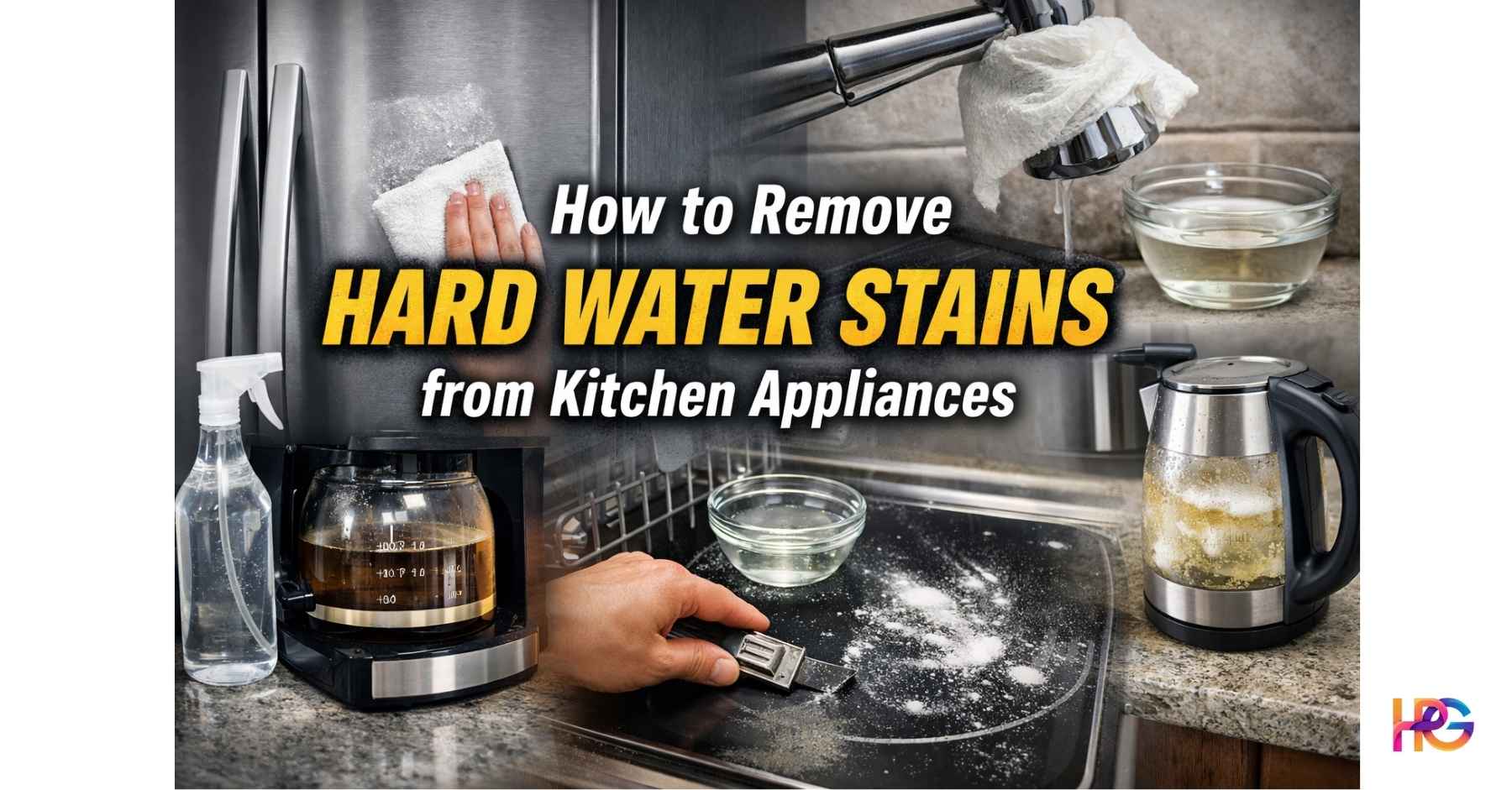
Hard water stains drove me crazy last summer.
It started on a Sunday. I had friends coming over. The sun hit my kitchen just right. And there they were. Chalky white marks on my stainless steel fridge. Cloudy spots on the faucet. A dull ring inside my kettle.
I tried to ignore them. I couldn’t.
So I went deep into fixing hard water stains from kitchen appliances. I tested methods. I failed a few times. I scratched one surface. I learned the hard way.
This is what actually worked for me.
If you are dealing with mineral deposits, limescale buildup, or cloudy residue, this guide is for you.
Why Hard Water Stains Happen in My Kitchen
Before I cleaned anything, I wanted to know why this kept happening.
Hard water has minerals. Mostly calcium and magnesium. When water dries, those minerals stay behind. Over time, they build up.
In my home, I noticed stains most in:
- Stainless steel appliances
- Glass stovetop
- Faucet heads
- Coffee maker
- Electric kettle
- Dishwasher interior
If you see white crust, cloudy film, or rough spots, that is mineral buildup.
Now let me show you what worked for me.
How I Remove Hard Water Stains from Stainless Steel Appliances
The first battle was my fridge door.
I used to spray random cleaners. That made streaks worse.
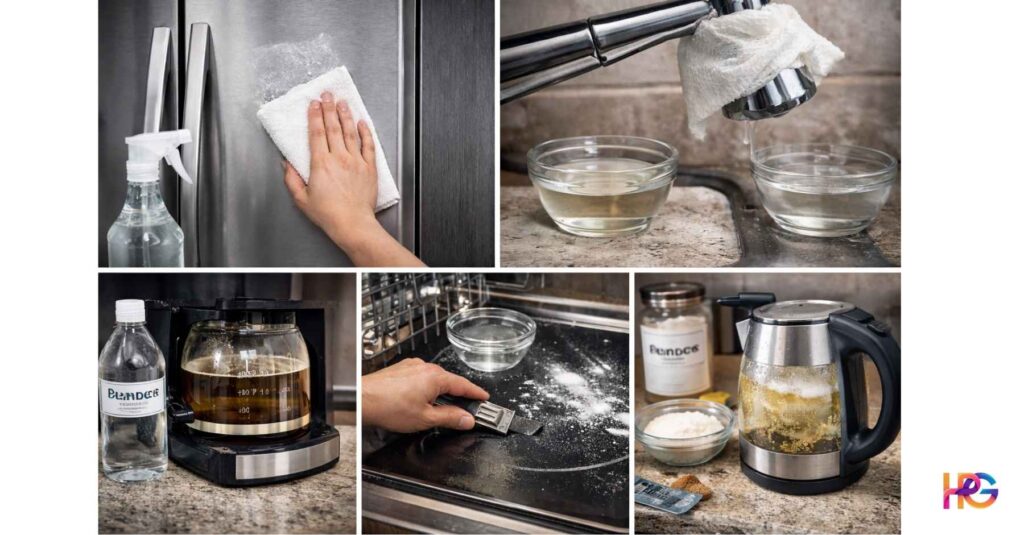
What worked was simple: white vinegar and warm water.
What I Used
- White vinegar
- Warm water
- Spray bottle
- Microfiber cloth
I mixed equal parts vinegar and water.
I sprayed lightly. I let it sit for five minutes. Not longer. The smell was strong, but it fades fast.
Then I wiped with the grain of the steel.
That part matters. Wiping against the grain made it look dull.
What I Learned the Hard Way
I once used a rough scrub pad. Big mistake. It left tiny scratches. You can’t see them from far away, but I know they are there.
Now I only use soft cloth.
If the stain is thick, I make a paste of baking soda and water. I rub gently. Then I wipe clean and dry right away.
Drying is key. If I skip that step, new water spots show up.
Cleaning Hard Water Stains from Faucets and Sink Fixtures
My kitchen faucet was the worst.
White crust around the base. The spray head clogged.
One night after dinner, I decided to fix it.
The Vinegar Wrap Trick
I soaked a paper towel in vinegar. I wrapped it around the faucet. I left it for 45 minutes.
When I came back, the crust looked softer.
I used an old toothbrush. It came off with light scrubbing.
The shine came back. I did not expect that.
Aerator Surprise
I unscrewed the aerator. It was full of scale.
I soaked it in vinegar for an hour. Then rinsed it.
Water pressure improved right away. I did not even know it was weak until it got better.
Descaling My Coffee Maker (The Day It Brewed Slow)
One morning, my coffee took forever.
It tasted flat. I knew something was off.
That was mineral buildup inside the machine.
How I Descaled It
I filled the tank with:
- 50% white vinegar
- 50% water
I ran a brew cycle with no coffee.
The smell was strong. I opened a window.
After the cycle, I let it sit for 20 minutes. Then I ran two full cycles with clean water.
The first rinse still smelled like vinegar. The second was better.
Now I descale every month.
My coffee tastes cleaner. The machine sounds smoother too.
Cleaning Hard Water Stains from a Glass Stovetop
This one scared me.
Glass can scratch fast.
One night, after boiling pasta, I saw cloudy rings where water spilled.
Here is what I did.
- Sprayed vinegar on the surface
- Sprinkled baking soda
- Placed a warm, damp towel over it
- Waited 15 minutes
When I lifted the towel, most of the film wiped away easily.
For one stubborn patch, I used a razor scraper at a low angle. Very gently.
I went slow. No force.
It worked. No scratches.
But I would not do that often. Gentle cleaning is safer long term.
Removing Hard Water Stains from My Electric Kettle
My kettle told the whole story.
When I looked inside, I saw thick white scale at the bottom.
It looked bad.
What I Did
I filled it halfway with equal parts vinegar and water.
I brought it to a boil.
Then I turned it off and let it sit for 30 minutes.
When I poured it out, flakes came out too.
I rinsed it three times. Then I boiled plain water once and threw that out.
The inside looked almost new.
Cleaning My Dishwasher to Remove Mineral Buildup
One day I noticed cloudy glasses.
That is when I knew my dishwasher needed help.
My Two-Step Clean
Step 1:
I placed a cup of white vinegar in a bowl on the top rack. I ran a hot cycle with no dishes.
Step 2:
After that, I sprinkled baking soda on the bottom. I ran a short hot cycle.
The smell improved. The interior looked brighter.
And my glasses stopped coming out cloudy.
What Worked Best for Me (Data from My Own Testing)
I like simple comparisons. So I tracked what worked best.
Here is a quick table from my notes.
Methods I Tested to Remove Hard Water Stains
| Appliance | Method Used | Time Taken | Result Level (1–5) |
|---|---|---|---|
| Fridge exterior | Vinegar + water spray | 10 min | 4 |
| Faucet | Vinegar wrap | 45 min | 5 |
| Coffee maker | 50/50 vinegar cycle | 40 min | 5 |
| Glass stovetop | Vinegar + baking soda | 20 min | 4 |
| Kettle | Boil vinegar solution | 30 min | 5 |
| Dishwasher | Vinegar + baking soda | 2 cycles | 4 |
Result level 5 means it looked almost new.
The common pattern?
Vinegar worked every time.
What Did Not Work Well for Me
I also tried:
- Random all-purpose cleaners
- Dish soap alone
- Scraping dry scale
They barely touched mineral deposits.
Hard water stains need mild acid to break down calcium. That is why vinegar helps.
But I never mix vinegar with bleach. That is dangerous.
How I Prevent Hard Water Stains Now
Cleaning is fine. Preventing is better.
Here is what I changed in my routine:
- I wipe surfaces dry after cooking
- I descale appliances monthly
- I do a quick faucet wipe every week
- I use filtered water in my kettle
It takes less than five minutes most days.
And it saves me from deep cleaning later.
The Real Lesson I Learned
Hard water stains are not a sign of a dirty kitchen.
They are a sign of mineral buildup.
Once I understood that, I stopped feeling frustrated.
Now I see a white mark and think, “Okay. Quick vinegar fix.”
No panic.
No harsh chemicals.
Just simple steps that work.
If you are dealing with hard water stains on kitchen appliances, start small. Pick one appliance today. Try the vinegar method. Be gentle. Dry it well.
That is what worked in my home.
And honestly, seeing my kitchen shine again feels pretty good.
FAQs: How to Remove Hard Water Stains from Kitchen Appliances
1. What is the best way to remove hard water stains from kitchen appliances?
White vinegar works best for me. It breaks down mineral buildup fast and is safe for most surfaces. Wipe dry after cleaning to stop new hard water stains.
2. Can hard water stains damage stainless steel appliances?
Yes, over time they can dull the finish. Mineral deposits may cause light pitting if ignored. Regular cleaning keeps stainless steel smooth and bright.
3. How often should I descale appliances to prevent mineral buildup?
I descale once a month. If your water is very hard, you may need to do it more often. This keeps coffee makers, kettles, and dishwashers running well.
4. Is vinegar safe for removing hard water stains from glass stovetops?
Yes, vinegar is safe when used gently. Let it sit, then wipe with a soft cloth. Avoid rough pads to prevent scratches on the glass surface.
5. Why do hard water stains keep coming back on my faucet?
Hard water leaves minerals each time it dries. If you do not wipe it dry, buildup returns fast. A quick weekly vinegar clean helps stop thick scale.