How to Store Spices Properly (Beginner Guide From My Kitchen Mistakes)
I did not learn how to store spices properly from a book.
I learned it the hard way.
One Sunday afternoon, I made a pot of chili. I added paprika, cumin, and chili powder. It looked perfect. It smelled flat. The color was dull. The taste was weak.
That was the day I realized my spice storage habits were ruining my food.
If you are searching for how to store spices properly, I have been there. I made the mistakes. I fixed them. Let me share what actually worked in my own kitchen.
Why Proper Spice Storage Changed My Cooking
For years, I kept my spices on a cute open rack next to my stove.
It looked nice. It felt convenient. It was a disaster.
Every time I cooked, steam hit the jars. Heat from the burners warmed them. Sunlight came through the window in the afternoon.
Within months, my bright red paprika turned brown. My dried basil lost its smell. Ground cumin tasted like dust.
Spices do not spoil fast. They fade. That fade is slow and sneaky.
When I finally moved them to a dark cabinet, I noticed a real difference. The aroma came back. My food tasted alive again.
That was my first real lesson in proper spice storage.
What I Learned About What Spices Are Made Of
I used to think spices were just dry plant powder.
Later, I learned they hold tiny essential oils. Those oils carry flavor and smell.
Heat breaks them down.
Light fades them.
Air dries them out.
Moisture ruins them.
When I understood this, spice storage made sense.
If I protect the oils, I protect the flavor.
That simple idea changed how I treat every jar.
How Long Spices Really Last (Based on My Tracking)
Two years ago, I started labeling my jars with the purchase date. I wanted real data, not guesses.
Here is what I noticed in my own kitchen.
Shelf Life Table From My Pantry
| Type of Spice | When Flavor Dropped Noticeably | My Replacement Rule |
|---|---|---|
| Whole black pepper | After about 3 years | Replace at 3 years |
| Whole cloves | Around 3–4 years | Replace at 3 years |
| Ground cinnamon | Around 18 months | Replace at 1 year |
| Paprika | Lost color at 1 year | Replace at 1 year |
| Dried oregano | Weak after 2 years | Replace at 1.5 years |
Whole spices clearly lasted longer.
Ground spices faded faster. Much faster.
Tracking dates helped me avoid cooking with stale spices. It also stopped me from throwing out jars too early.
The 4 Enemies of Proper Spice Storage
After ruining a full set of spices, I wrote these four words on a sticky note inside my cabinet.
Heat
Light
Air
Moisture
Every spice problem I had came back to one of these.
Heat from the stove shortened shelf life.
Light from the window faded color.
Air from loose lids made them stale.
Moisture from steam caused clumps.
Now when I think about how to store spices properly, I just ask: am I blocking those four enemies?
Best Containers for Storing Spices (What I Tested)
I have tried almost everything.
Glass Jars With Tight Lids
These worked best for me.
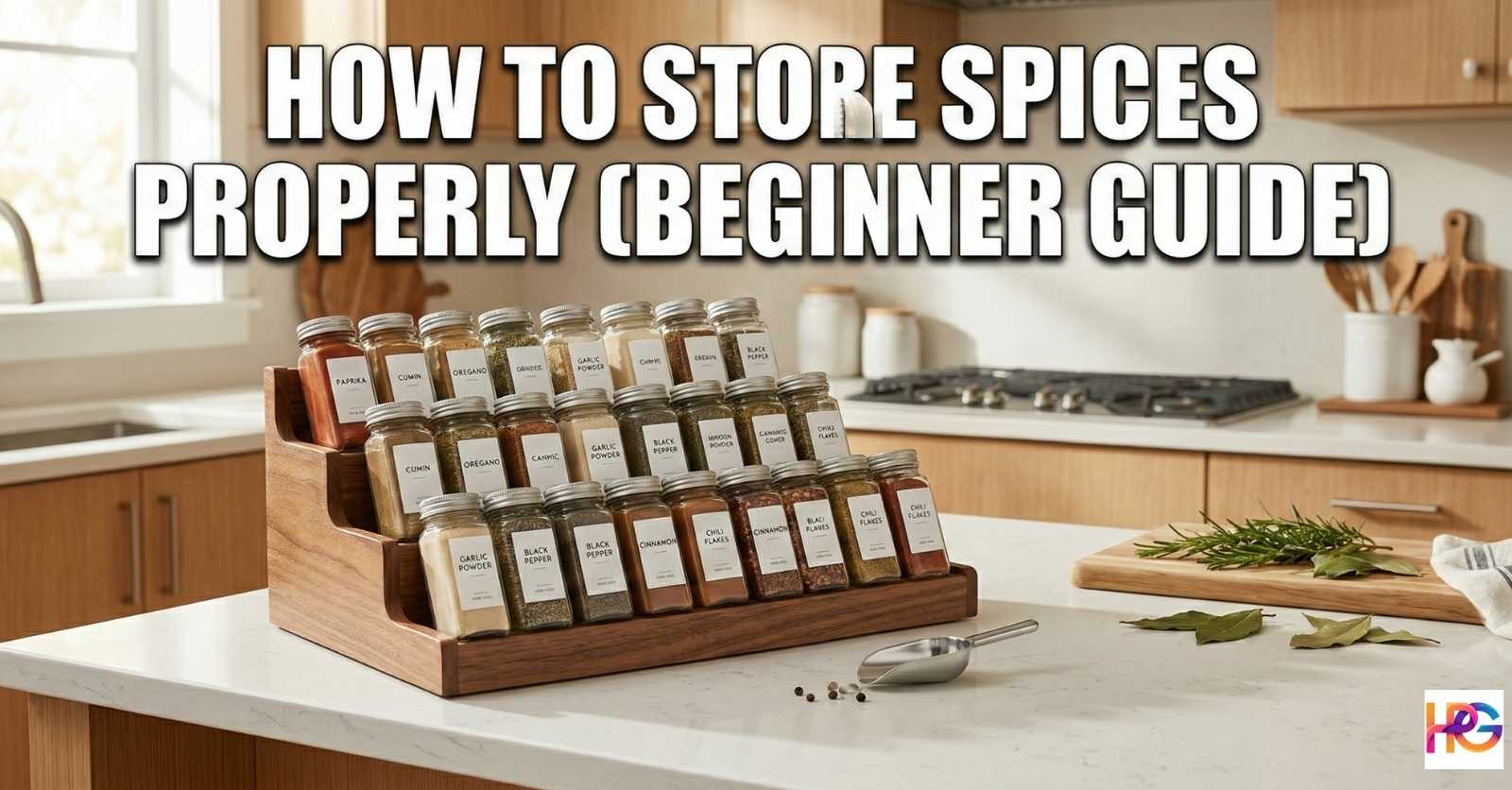
Glass does not hold smell. It does not stain. Airtight lids keep air out.
When I switched to uniform glass jars, my cabinet looked cleaner and my spices stayed fresh longer.
Plastic Containers
Plastic worked at first. Over time, some picked up smells. A few stained from turmeric.
They are not terrible. They just are not ideal long term.
Original Paper Packets
I regret leaving spices in paper packets for months.
They are not airtight. Air sneaks in. Flavor leaks out.
Now I transfer every spice into an airtight jar on the same day I buy it.
That small habit improved my spice storage fast.
Best Place to Store Spices in the Kitchen
For years, my spices lived next to the stove.
It felt practical. It was a mistake.
Now they live in a cabinet across the kitchen. It stays cool and dark. No steam reaches it.
Some friends keep spices in a drawer. That works too. A pantry shelf is also fine.
The key is simple:
Cool
Dark
Dry
If you are wondering where to store spices in your kitchen, choose the least exciting spot. Boring is good for spices.
Worst Places I Stored Spices (Learn From Me)
I have stored spices in almost every wrong place.
Above the stove
Near the sink
On an open wall rack in sunlight
Next to the dishwasher
Each location caused problems.
The worst was above the stove. Every time I cooked pasta, steam rose into the jars. Within months, garlic powder formed hard clumps.
Moisture damage is real. I saw it.
Never shake spices directly over a boiling pot. I did that for years. Steam goes straight inside the jar.
Now I measure into a spoon first. It feels slower. It saves flavor.
How I Keep Moisture Out of My Spice Jars
Moisture used to be my biggest issue.
Here is what I changed:
I only use dry spoons.
I never shake jars over steam.
I close lids right away.
I wipe the rim if powder spills.
In summer, humidity rises in my kitchen. I noticed clumping more during rainy weeks. So I run ventilation while cooking.
These small habits protect spice freshness more than fancy containers ever did.
How I Label and Organize My Spices
One afternoon, I pulled every jar out and checked the dates.
It shocked me. Some were five years old.
Now every jar has:
Spice name
Date purchased
Optional “replace by” date
Here is how I organize them.
My Simple Organization System
| Method | Why It Works For Me |
|---|---|
| Alphabetical order | Easy to find fast |
| Similar cuisines grouped | Helps when cooking one style |
| Frequently used in front | Saves time daily |
When spices are easy to see, I use them more. When I use them more, they stay fresh.
That is a small but powerful cycle.
Whole vs Ground Spices: What I Noticed
Whole spices changed how I cook.
Whole black pepper smells strong even after years. Ground pepper fades much faster.
Whole cumin seeds still pop with aroma after toasting. Ground cumin loses depth sooner.
Grinding small amounts fresh gives better flavor. It also stretches shelf life.
If you want better spice storage results, buy whole when possible. Grind as needed.
It takes a minute. The taste payoff is huge.
How I Check If My Spices Are Still Fresh
I do not guess anymore.
Here is my quick routine.
Smell it.
Rub a little between fingers.
Look at the color.
Check for clumps.
If there is no strong aroma, it is done.
Faded color often means faded flavor.
Hard clumps usually mean moisture damage.
Trust your nose. It rarely lies.
How Often I Replace Spices Now
After tracking for two years, this is my simple rule.
Ground spices: replace every year.
Whole spices: replace every three years.
Dried herbs: replace every one to two years.
Heavy cooks may replace sooner. Light cooks might stretch a bit longer.
Data helped me stop guessing. My cooking improved once I followed clear timelines.
Common Spice Storage Mistakes I Made
I left lids loose.
I kept jars near heat.
I stored spices in bright light.
I ignored purchase dates.
I shook jars over steam daily.
Each mistake seemed small.
Together, they ruined flavor.
Learning how to store spices properly was not about buying new tools. It was about fixing habits.
Simple Daily Habits That Keep My Spices Fresh
Here is what I do every day now.
Close lids tight.
Return jars to the cabinet right away.
Measure away from steam.
Keep the storage area dry.
These steps take seconds.
The reward is better aroma every time I cook.
Quick Beginner Checklist: How to Store Spices Properly
Store in airtight containers.
Keep them cool, dark, and dry.
Block heat, light, air, and moisture.
Label with purchase dates.
Replace ground spices yearly.
Buy whole when possible.
Never shake over steam.
That is it.
Nothing fancy. No expensive system.
Just simple habits backed by real kitchen mistakes.
If your food tastes flat lately, check your spice storage first. I ignored mine for years. Fixing it was one of the easiest upgrades I ever made in my cooking.
Fresh spices do not just improve recipes.
They bring your kitchen back to life.
FAQs: How to Store Spices Properly (Tool & Storage Focus)
1. What is the best container to store spices properly?
Use airtight glass jars for proper spice storage. Glass does not hold odor and seals tight. It protects spices from air and moisture in hot garages or kitchens.
2. Can I store spices in plastic containers?
Plastic spice containers work short term. Over time, they can stain and trap smells. For long shelf life and better flavor, airtight glass jars are safer.
3. Should I store spices near my stove for easy access?
No. Heat and steam from the stove break down spice oils fast. For proper spice storage, keep jars in a cool, dark cabinet away from burners.
4. How do I keep moisture out of my spice jars?
Always use a dry spoon and close lids tight. Do not shake jars over steam. Moisture causes clumps and shortens spice shelf life.
5. Do whole spices last longer than ground spices?
Yes. Whole spices keep their oils sealed inside. Ground spices lose strength faster, so replace them sooner for best flavor and freshness.