The Safe Way to Use Tin Foil in Your Air Fryer
I love testing kitchen gadgets at home. Cooking should feel fun and easy. Cleaning up usually ruins that joy. Scrubbing stuck food takes too much effort. You probably feel the exact same way. We all want faster cleaning routines. Tin foil seems like the perfect solution. Wrapping food in metal saves time. Tossing a dirty sheet is very easy. But doing this wrong creates huge risks. Your favorite machine could catch fire. It could break down completely. I learned this lesson the hard way. Today I will share my safety rules. These tips will protect your kitchen.
My First Big Mistake in the Kitchen
A humid afternoon recently hit Birmingham. Rain poured heavily outside my small window. I stayed inside to stay dry. My stomach wanted a salty snack. I found half a loaf of sourdough. Making fresh croutons sounded perfect. I chopped the bread into tiny cubes. Olive oil went over the top. My cooking basket sat there clean. Washing it again felt like a chore. Laziness took over my brain quickly. I lined the entire bottom with shiny foil.
The Sourdough Crouton Disaster
The bread cubes went inside the machine. I set the heat to high. The dial turned to ten minutes. I walked away to check my phone. A strange scraping noise started soon after. It sounded like metal hitting metal. Then a weird burning smell filled the room. Panic made me run back quickly. I ripped the plastic drawer open. The loose wrapper had flown upwards. The powerful fan sucked it to the roof. The metal touched the red hot coil. Smoke drifted out into my face. My quick snack nearly caused a real fire.
The Science Behind the Appliance
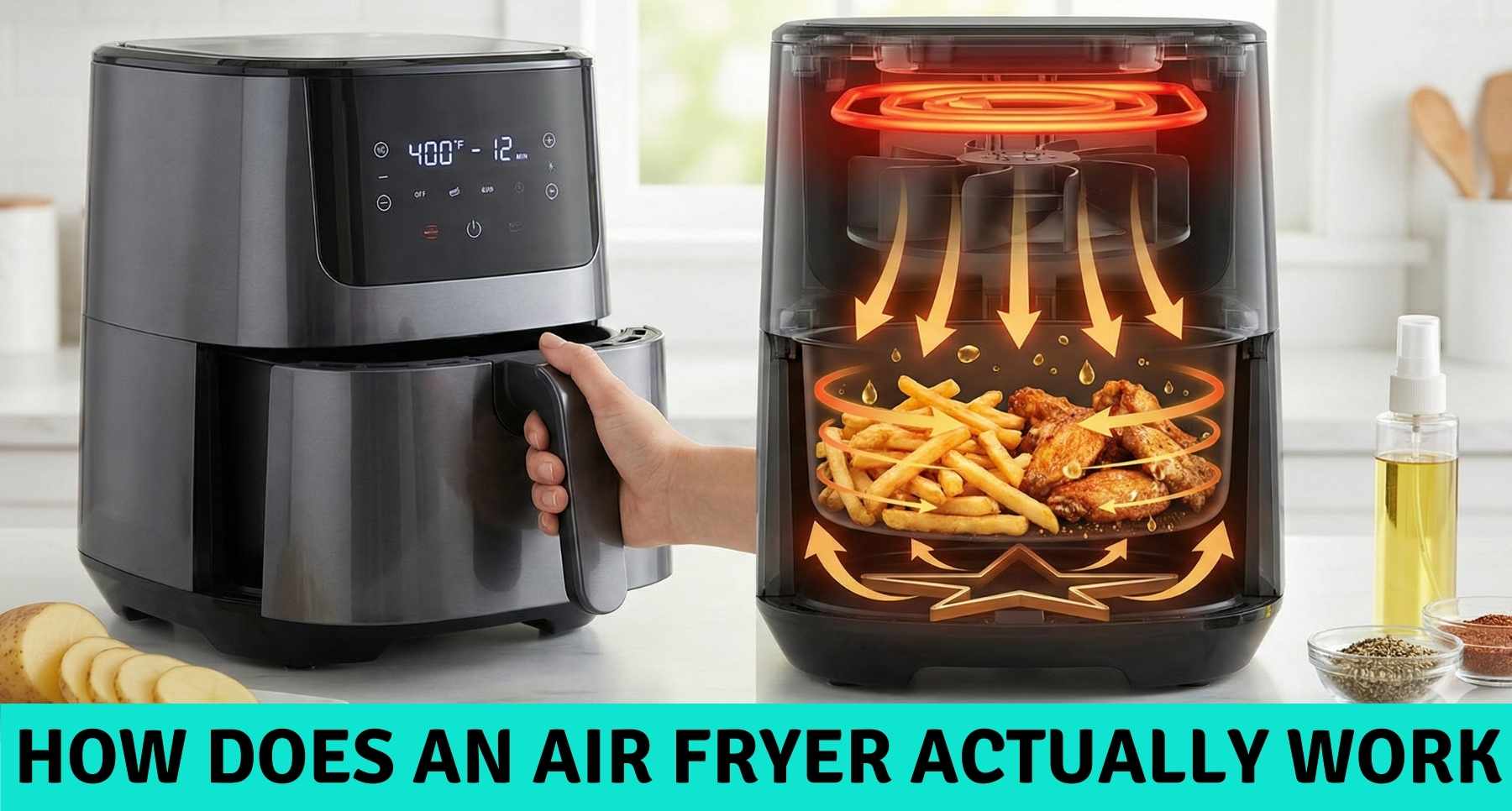
People call these machines fryers regularly. They do not actually fry anything. They are just tiny convection ovens. A strong heating element sits up top. A large fan spins right above it. This fan blows intense heat downward. The hot wind moves extremely fast. Fast wind creates that crispy texture. This is how food gets crunchy without oil. The design relies entirely on moving air.
Why the Fan is So Important
Look closely at your cooking basket. You will see holes everywhere inside. The bottom is full of empty spaces. The sides have long open vents. Air must travel down and back up. The wind needs a clear path. Blocking these holes stops the cooking process. Your meals will turn out soggy. The top might burn completely black. The bottom will stay cold and wet. Airflow is the real secret to success.
Can You Safely Put Foil in There?
Yes, you can use metal safely. Many people do this every single day. The material itself is not the problem. How you place it matters most. Normal sheets melt near 1200 degrees. Home models max out near 400 degrees. The heat alone will not melt anything. The real danger comes from the fan. Loose sheets act like flying kites. Moving air lifts them straight up.
The Hidden Fire Hazard
The heating coil glows bright red. Touching that coil causes instant trouble. Sparks can fly across the chamber. The thin sheet can melt onto the coil. A ruined coil means a broken machine. You cannot fix a damaged heating element. Replacing the whole unit costs money. Keeping things away from the roof is vital. Safety requires careful placement every time.
When to Pick Foil Over Parchment Paper
These two items look similar in use. They perform totally different jobs mostly. I keep rolls of both nearby. Knowing which to grab saves frustration. Metal bends and holds a shape well. Paper stops sticky things from grabbing hold.
Making the Right Choice
Let us look at a direct comparison. Here is a simple guide for you.
| Material Type | Best Food Uses | Heat Limit | Main Benefit |
| Aluminum | Burgers, thick bacon, baked potatoes | Very high | Catches heavy grease |
| Parchment | Soft cookies, sticky dough, wet fish | Medium | Stops sticking totally |
Metal blocks grease from leaking through completely. You can fold it into custom shapes. Paper breathes a tiny bit more naturally. Paper prevents delicate edges from tearing away.
Foods That Hate Metal Wrapping
Not everything belongs on a shiny sheet. Science causes problems with certain fresh ingredients. Metals react badly to high acid levels. The acid slowly eats away the surface. Tiny black specks will appear on dinner. Your meal will taste like old pennies.
The Acid Reaction Problem
Avoid wrapping acidic foods entirely today. Tomato sauce is the biggest common offender. Lemon juice causes the same bad reaction. Vinegar marinades destroy the surface fast. Cooking these items requires paper instead. Glass bowls also work well for wet dishes. Protect your health by choosing correctly. Keep lemons far away from your metal rolls.
Smart Cleanup Tricks I Actually Use
I write for Home Pick Guide often. Testing gear happens constantly in my house. My days involve cooking many weird meals. Washing baskets used to take hours. I developed tricks to skip the sink. These hacks work safely without blocking air.
Building a Custom Grease Trap
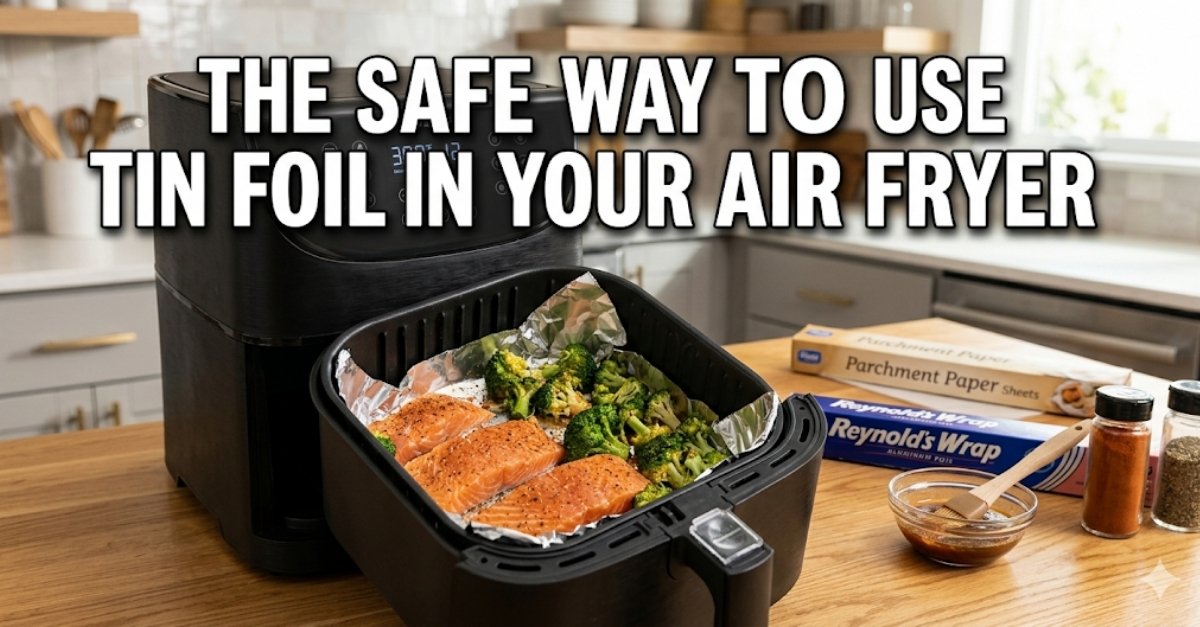
Cooking fatty meat creates a huge mess. Drippings burn onto the lower pan quickly. I never cover the whole basket floor. Instead, I tear off a small square. I fold the edges up slightly higher. This makes a tiny shiny bowl. I place it exactly under the meat. The fat drips right into the trap. Air continues flowing around the outer sides. The vents stay totally open and clear. I just throw the bowl away later.
The Easy Lifting Sling
Baking cakes in this machine is tricky. Pulling a hot pan out hurts fingers. Your hands can touch the hot walls. I make a sling out of shiny sheets. I fold a long strip over itself twice. It looks like a thick flat belt. I lay this under my small baking dish. The ends hang over the top edge. I grab the ends like handles later. Lifting hot dishes becomes perfectly safe now.
| Cleaning Method | Scrubbing Time | Mess Level |
| No liner used | Ten minutes | Very high |
| Full bottom cover | Zero minutes | None (Food gets soggy) |
| Custom small trap | One minute | Very low |
Rules for Everyday Safe Cooking
Following basic rules keeps you completely safe. I learned these through lots of testing. Make these habits part of your routine. You will never face a scary fire again.
Never Block the Bottom Vents
Leave space around the edges always. Never push sheets flat against the walls. The fan works hard to move air. Give the wind room to breathe freely. Food cooks evenly with open pathways. Your meals will taste much better.
Always Weigh Everything Down
Never put an empty sheet inside. Preheating an empty liner is super dangerous. The fan turns on immediately upon starting. The empty sheet will fly straight up. Always put heavy food down first. The food acts like a heavy anchor. It holds everything firmly in place. Heavy things stop the flying kite effect.
Testing Different Foods on Metal
I run tests on many common snacks. Some items work perfectly on shiny liners. Others fail completely and make a mess. Knowing what works saves you precious time.
Cooking Greasy Meat and Bacon
Bacon causes thick smoke in my kitchen. The fat hits the hot bottom pan. Smoke alarms go off quickly sometimes. A custom metal trap fixes this issue. It catches the fat before it burns. The room stays clear of gray smoke. The strips turn out very crunchy.
Reheating Leftover Pizza Slices
Cold pizza tastes great sometimes really. Warm crispy pizza tastes even better. Putting a slice on metal traps moisture underneath. The bottom crust stays a little soft. Paper liners work much better here. Paper lets the crust dry out properly. Skip the shiny stuff for old pizza.
Testing Frozen Fast Food Snacks
Buying frozen snacks saves money weekly. Heating them up is very fast. I test many snacks for my site readers.
Reheating Cold French Fries
Fries get cold very fast outside. Microwave ovens make them super soggy. My machine makes them perfectly crispy again. I tried putting them on a liner. The heat cooked the tops nicely enough. The bottoms stayed a little soft though. The liner blocks heat from below entirely. I learned to skip the wrapper here. Shaking the bare basket works best.
Cooking Frozen Mozzarella Sticks
Cheese sticks are my favorite quick treat. Cheese often explodes during the cooking cycle. Melted cheese sticks to everything inside. A custom metal trap is absolutely perfect. I build a tiny square little boat. The hot cheese leaks into the boat. My cooking basket stays totally clean underneath. I highly recommend this easy trick.
Are Silicone Liners Any Better?
People sell reusable rubber liners everywhere now. You might see them online often. I bought a few to test them out.
Pros and Cons of Silicone
Rubber liners wash very easily mostly. They do not fly around inside ever. But they block airflow very badly unfortunately. They are thicker than thin metal rolls. Thick walls stop the hot wind fast. Your snacks take longer to cook fully. Metal remains my favorite quick tool. You just have to use care always.
My Favorite Home Appliance Hacks
Testing gear teaches you valuable tricks. Readers ask many questions about daily care. People struggle with daily machine maintenance. Metal liners solve many annoying problems fast. They protect surfaces from sticky stains. They catch falling crumbs perfectly well. You just have to fold them right. Always match the liner to the exact task.
Frying Fresh Vegetables Safely
Broccoli florets fall through wide grates often. Small carrot cubes do the same thing. They burn on the hot lower pan. I use a small sheet here sometimes. I poke tiny holes in the flat sheet. The holes let the wind pass through. The sheet stops the tiny pieces falling. The vegetables roast nicely without burning up.
Why Basket Size Changes Everything
A tiny cooking basket needs less wrapping. A huge family size model needs more. Big fans move air much harder always. Stronger winds lift heavy things easily. You must fold edges tightly in large models. Small machines are a bit more forgiving. Always adjust your strategy for your size. Learn how strong your specific fan blows.
What to Do if Things Go Wrong
Accidents still happen in busy home kitchens. Maybe a light piece flew away quickly. Maybe it hit the hot upper coils. You might see a flash of light. You might smell burning plastic or metal. Do not panic if this happens.
Fixing Melted Messes
Turn the power off right away safely. Pull the plug out of the wall. Let the whole machine sit for hours. It must become completely cold first. Take a soft wooden spoon from a drawer. Gently scrape the stuck pieces off carefully. Never use hard metal tools here. A knife will scratch the special coating. Scratching the coil breaks it forever. Work slowly and carefully to fix it.
Final Thoughts on Easier Cooking
Kitchen tools should make life easier daily. Air fryers do an amazing job overall. Adding clever liners makes them even better. Using them safely requires some quick thought. Remember the flying kite rule always. Keep the air holes open and clear. Avoid strong acids like lemon juice. Build tiny traps for messy grease drops. Your cleanup times will drop down fast. You can spend more time eating dinner. Enjoy your crispy and perfectly safe meals.
Common Questions About Using Tin Foil in Your Air Fryer
General Safety and Brand Tips
Can tin foil touch the air fryer heating element?
Never let foil touch the hot top coil. Doing this can spark or cause a house fire. Always weigh the metal down with heavy food to keep your kitchen very safe at all times.
Can I use tin foil in Ninja or Cosori air fryers?
Yes, you can use it in Ninja or Cosori models. Just keep the metal away from the fan and heating parts. These brands rely on fast air to make food taste crispy.
Airflow and Efficiency
Does using tin foil block the air fryer fan?
Yes, it can block the wind if you cover every hole. This stops the heat from reaching your meal. Leave the side vents open so the hot air moves around very easily now.
Why does tin foil fly inside the air fryer basket?
The fan moves air at very high speeds. This wind lifts light sheets toward the hot coil. Always place heavy food on top of the foil before you turn the power on.
Choosing the Right Tool
Is foil better than parchment paper for air fryer cleanup?
Foil is best for catching heavy grease and oil. Parchment paper works better for sticky dough or cookies. Both tools keep your basket clean if you use them correctly.