Everyone knows that specific kind of morning. A fresh pot brews, you take a sip, and something immediately feels wrong.
But it tastes flat.
Or worse. It smells a bit like a swimming pool.
That is chlorine. And it means your filter is done.
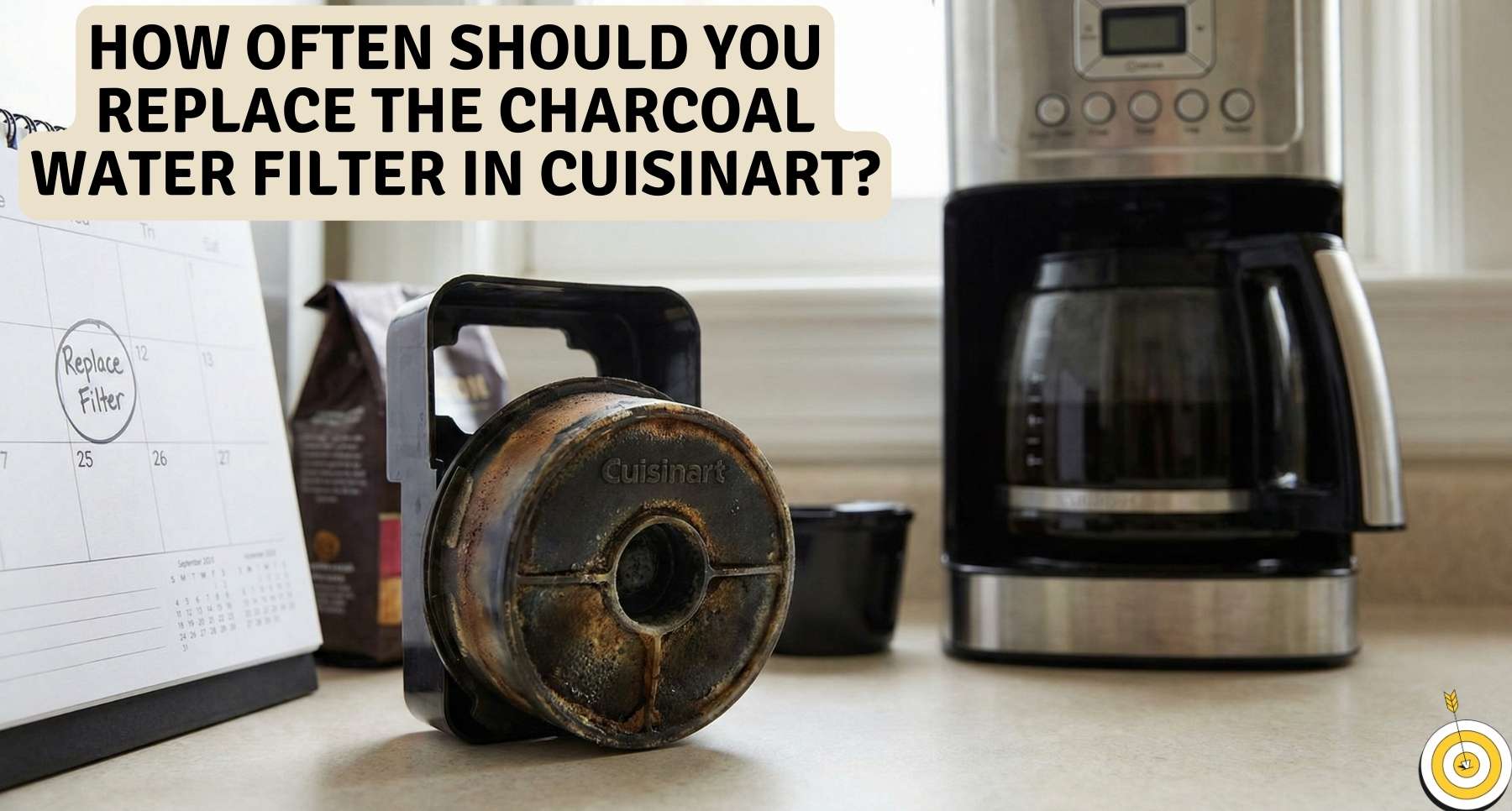
So, how often should you replace the charcoal water filter in Cuisinart?
Here is the direct answer: Every 60 days. Or, after 60 full brewing cycles.
I know. It is easy to forget.
I have stood in my kitchen, staring at my coffee maker. I wonder, “Is that filter from last month? Or last Christmas?”
We all do it.
But that little charcoal pod matters. It is not just about following the manual. It is about the flavor in your cup.
Let’s get that fresh taste back.
The 60-Day Rule: How Often Should I Change My Cuisinart Charcoal Filter?
Ideally, you stick a note on the fridge. You mark the date. But life gets busy. We usually forget about the coffee pot until the brew starts tasting funky.
The Manufacturer’s Guideline
Cuisinart gives us a simple benchmark: Every 60 days. Or, after 60 brewing cycles.
But pay attention to that “cycle” part. A cycle is one full pot of coffee.
If you are a casual drinker, two months is fine. But if you are like me? I brew a full carafe at 7 AM. Then, I often brew a fresh half-pot around 2 PM for a pick-me-up.
That is two cycles a day.
At that pace, I hit the 60-cycle limit in just one month. That two-month rule just became a one-month rule.
The “Hard Water” Factor
Geography plays a huge role here, too. A lot of us in the US are dealing with hard water.
I know I have hard water because I see it. It leaves those annoying white spots on my drying dishes. That is scale and mineral buildup. If the water leaves spots on a glass, imagine what it does to the mesh on your filter.
The charcoal has to work double-time to trap those minerals.
If this sounds like your kitchen, the standard rule doesn’t apply. You should probably swap it out every 45 days. If you wait too long, the filter gets clogged with calcium, and the water eventually just flows right over it.
Signs Your Filter Is Dead (Listen to Your Taste Buds)
Most Cuisinart models stay silent about this. They do not have a “Check Filter” light. They only beep when the coffee is ready.
So, you have to play detective. You have to use your senses.
The Taste Test
This is the biggest giveaway.
I remember buying a bag of expensive, locally roasted beans. I was ready for a great cup. But the first sip was disappointing. It tasted flat. It had a weird, metallic tang to it.
I almost blamed the beans. I thought I got a bad batch.
But then I smelled the water reservoir. It smelled faintly like chlorine.
The charcoal was full. It had stopped absorbing the bad stuff. If your fancy coffee tastes cheap or “muddy,” do not blame the roast yet. Check your filter first.
Brewing Speed Slowdowns
Pay attention to the clock. And the noise.
A fresh filter lets water flow fast. A dead filter gets clogged. It fills up with calcium and grime.
If your machine starts making loud hissing noises, listen closely. If it sounds like it is wheezing or struggling to push water through, the path is blocked. It is like trying to drink a thick milkshake through a tiny straw.
If the brew takes longer than usual, your filter is likely the culprit.
Step-by-Step: Cuisinart Coffee Maker Filter Replacement
This whole process takes about two minutes. Honestly, most of that time is just standing around while the filter soaks. It is not a repair job. It is just a quick swap.
Prep the New Filter (Don’t Skip This!)
If you look at the Cuisinart Charcoal water filter instructions, there is one rule you cannot ignore.
You have to soak the new pod.
I usually grab a glass of cold tap water. I drop the new filter in and let it sit for 15 minutes.
Why?
Fresh charcoal filters are full of loose dust. If you put a dry filter straight into the machine, that black dust washes right into your first pot. I have done it once. The coffee looked cloudy and tasted like dirt. Nobody wants gritty coffee.
Swapping It Out
Once your timer goes off, the rest is easy. Here is how I go about replacing the Cuisinart charcoal filter without making a mess:
- Lift the lid: Open the water reservoir on top of your machine.
- Remove the holder: Reach in and pull out the tall plastic filter holder.
- Open it up: The holder snaps open at the bottom.
- Toss the old one: Throw the old, soggy pod in the trash.
- Rinse the mesh: I always rinse the plastic holder under the sink. The mesh screen usually has a little slime or grime on it after two months.
- Insert the new one: Place your soaked filter into the holder and snap it shut.
- Put it back: Slide the holder back into the reservoir. push it down until it fits snug.
Flushing the System
You are almost done. But don’t add coffee grounds yet.
I always run one cycle with just fresh water. It flushes out any remaining charcoal particles. Plus, it heats up the internal tubes so your first real pot of coffee is piping hot.
Why Do I Need This Thing Anyway?
It looks like a tiny tea bag. It feels flimsy in your hand.
I used to wonder if it was just a gimmick. But after testing coffee with and without it, I realized it does heavy lifting for your morning routine.
Chlorine vs. Coffee Oil
Here is the science-lite version.
Most city water has chlorine in it. That is great for killing bacteria. But it is terrible for coffee beans.
Chlorine kills delicate flavors.
Coffee beans are full of natural oils. These oils give the coffee its rich aroma and taste. When you use straight tap water, the chlorine fights those oils. The result is a cup that tastes flat.
The charcoal filter absorbs that chlorine before it hits the beans. It steps out of the way so the coffee oils can shine. It is the difference between brewing with swimming pool water and brewing with fresh bottled water.
Protecting Your Machine
It is not just about the flavor. It is about the life of your Cuisinart.
Water carries tiny bits of sediment. Rust, sand, or just pipe gunk. You don’t always see it, but it is there.
Your coffee maker has very thin heating tubes inside. If that sediment gets into those tubes, they get blocked. The filter catches that junk before it enters the system. It is a cheap way to help your machine last years longer.
Don’t Let Bad Water Ruin Good Beans
Go check your filter right now.
Seriously. Walk to the kitchen and lift the reservoir lid.
Does the pod look dark? Is the plastic holder a little slimy?
If it looks gross, toss it.
You spend good money on coffee beans. You deserve to actually taste them.
Go grab a fresh pack. Soak one while you make toast. It only takes a few minutes. You will thank yourself when you take that first sip tomorrow morning.
Common FAQ About Cuisinart Water Filters
1. Can I run my Cuisinart without a filter?
Yes, you can. The machine will still brew. But the coffee may taste like tap water. Chlorine will stay in your cup. It is best to use one.
2. How do I reset the filter light?
Find the “Filter Reset” button. Press and hold it. Count to three. The red light will stop flashing. It is now set for two months.
3. Do I need brand name filters?
No, you do not. Generic charcoal pods work well. Just check the size first. They fit the plastic holder and save you cash.
4. Can I wash and reuse the old filter?
No, do not do that. The charcoal is full of gunk. Water cannot clean it out. You must toss it and buy a new one.
5. How do I know if the filter is bad?
Taste your coffee. Does it taste flat? Does the water smell like a pool? If yes, the charcoal is dead. It is time to swap it out.