
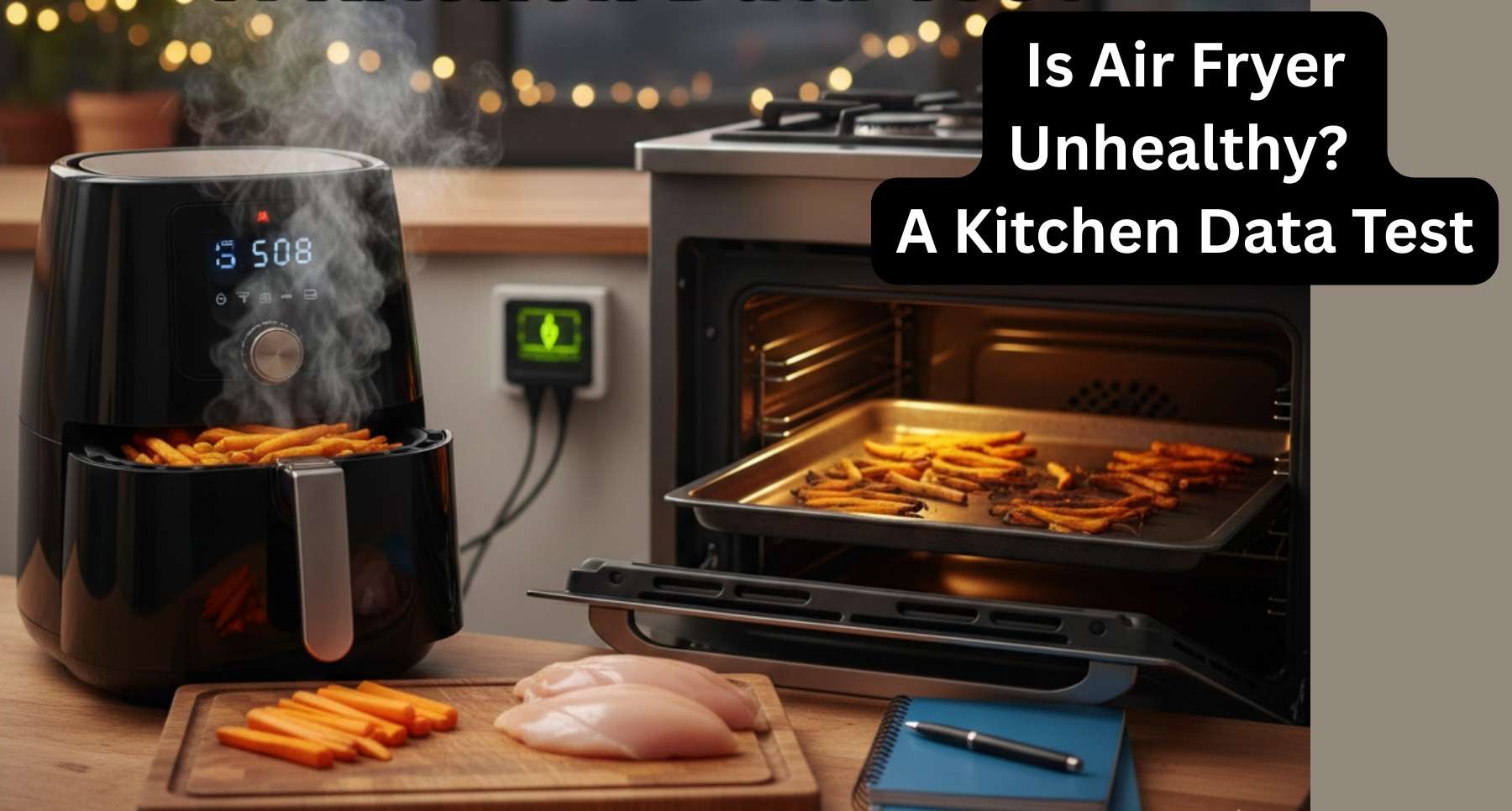
In short: No, air fryers are not inherently unhealthy. In fact, compared to traditional frying methods, they are significantly healthier.+1
An air fryer is essentially a small, high-powered convection oven. It uses a fan to circulate hot air around your food, creating a crispy exterior with just a fraction of the oil used in deep frying.+1
Here is a breakdown of the health benefits, as well as a few things to keep in mind.
The Health Benefits of Air Frying
- Dramatically Less Oil: Air fryers require only a tablespoon or less of oil (or none at all) to achieve a crispy texture. This drastically reduces the overall fat and calorie content of your meals compared to deep frying.+1
- Reduced Acrylamide Risk: Acrylamide is a potentially harmful compound that forms in certain foods (like potatoes) when cooked at high temperatures. Studies show that air frying reduces acrylamide formation by up to 90% compared to traditional deep frying.
- Encourages Better Eating Habits: Because it cooks food quickly and makes things like broccoli, Brussels sprouts, and lean chicken breast taste delicious and crispy, it can make eating whole foods much more appealing.
The “Catches” to Keep in Mind
While the appliance itself is a healthy cooking tool, there are a few nuances to be aware of:
- The “Halo Effect” on Junk Food: Just because a food is air-fried doesn’t automatically make it nutritious. If you use your air fryer exclusively to cook frozen mozzarella sticks, french fries, and chicken nuggets, you are still eating highly processed foods with a lot of sodium and preservatives.
- Other Cooking Compounds: While air frying reduces acrylamide, cooking meat at very high temperatures can still produce other potentially harmful compounds, like Advanced Glycation End products (AGEs) or Polycyclic Aromatic Hydrocarbons (PAHs). You can mitigate this by not overcooking or burning your meat.
- Non-Stick Coatings: Most air fryer baskets are coated with Teflon or similar non-stick materials. These are generally recognized as safe for cooking, but if the coating starts to scratch, peel, or chip, you should replace the basket to avoid ingesting the flakes.
The Verdict
Air frying is a healthy, safe, and efficient way to cook, provided you are using it primarily for fresh, whole foods like vegetables and lean proteins, and replacing the basket if it becomes damaged.
My Air Fryer vs Oven Comparison: A Kitchen Data Test
It was a wet Tuesday afternoon. The rain hit the glass of my small city kitchen. I felt a deep hunger for crispy food. I looked at my big gas oven. Then I looked at my small air fryer. A friend gave it to me last month. I had a thought. Which tool is truly better? A sudden thought came to mind. As a nerd for numbers, real facts matter to me. So I decided to track my cooking and compare the results.
This is my true air fryer vs oven comparison. No fake chef skills here. Just me, some raw food, and a timer. Let me share my kitchen journey with you.
Why I Started This Food Math
Cooking mistakes used to happen a lot in my kitchen. Honestly, I am not a great cook and I get distracted easily. Because of that, a foolproof way to cook good food became my goal.
The Day I Burned My Lunch
Last week, I tried to make sweet potato fries. The fries went into the oven. A moment later, I walked away to check my phone. Sadly, the timer slipped my mind.
Soon, I smelled thick smoke. I ran back to the stove. The edges of the fries were pure black. The middle was cold mush. I felt sad and hungry. That was my lowest point. I knew I needed a better way. The new machine promises fast results. But does it work? Or is it just a loud box? I wanted to test the heat. I wanted to test the time. Most of all, I wanted to test the taste.
Setting Up The Big Test
A notebook and blue pen went onto the counter first. Next came two bags of frozen fries, fresh chicken, and carrots. The goal was simple: create a fair cooking test.
Both machines would cook the exact same food. The cooking minutes were tracked on my watch. Power usage also needed checking. For that reason, a cheap power meter was ordered online.
It plugs straight into the wall socket. It tells you exactly how many watts you use. This tool adds real data to the mix. It removes the guess work.
Test One: The Frozen Fries Battle
This was the most basic test. Everyone loves fries. It is a common snack. I split a frozen bag in half. One half went onto a flat metal pan for the oven. The other half went into the deep basket.
The Oven Fries Data
I turned the dial to four hundred degrees. I waited for it to get hot. That took ten whole minutes. I put the cold pan inside. I waited twenty more minutes. The kitchen got very warm. The smell was nice. But it took a long time. I took them out. The fries were okay. Some were soft. A few were crisp. It was just an average snack.
The Air Fryer Fries Data
The remaining fries went straight into the basket. Digital heat was set to four hundred degrees. No preheating was needed, so the test began with a quick press of the start button.
The machine roared to life. It sounded like a loud hair dryer. Ten minutes later, it made a sharp beep. I opened the hot drawer. The fries were golden brown. They sizzled with heat. I took a bite. It made a loud crunch. It was pure joy. The small machine won this round.
Data Table: The Fries Test
| Tool | Heat | Prep Time | Cook Time | Taste Score |
| Oven | 400 F | 10 mins | 20 mins | 6 out of 10 |
| Air Fryer | 400 F | 0 mins | 10 mins | 9 out of 10 |
Test Two: Cooking Fresh Chicken
Next, I wanted to cook real meat. Protein is important for my lunch. Fresh chicken breasts were the next test item. After adding salt and pepper, one piece went into a glass dish.
That was for the big stove. I put the other piece straight in the basket.
Where The Fast Air Fails
Here is a hard truth. The fast wind is bad for wet foods. It blows hot air super fast. This dries things out. I cooked the chicken for fifteen minutes. I took it out to rest. It looked very dry. I cut into it with a knife. It was like tough rubber. The hot wind sucked the juice right out of the meat. I chewed it slowly. It was not a fun meal. This was a clear fail for the new tool. It ruins lean cuts of meat.
The Oven Wins With Meat
I put the other piece in the big stove. It baked for thirty long minutes. Yes, it took twice as long. But the result was great. The meat stayed very moist. The gentle heat kept the juice inside. The meat cut like soft butter. The big stove was the clear winner here. If you want soft meat, skip the fast wind. Take your time and bake it right.
Test Three: Roasting Fresh Carrots
I eat a lot of root crops. Carrots are cheap to buy. They taste sweet when you cook them. Two large carrots were chopped into small sticks. A tiny drop of oil coated the pieces. The batch was then split into two equal piles.
Fast And Crisp Veggies
The big stove took twenty five minutes to cook the sticks. The carrots were soft. They tasted fine. But they lacked that special bite. Then I checked the basket batch. They cooked in twelve quick minutes. The edges had a nice dark char. They were soft inside and very crisp outside. The quick blast of heat works magic on veggies. It brings out the sweet sugar inside them.
Test Four: The Toast Fail
I had another wild idea. Can I make toast in the small drawer? Two slices of white bread became the next test. They went into the basket flat. The heat went to the highest setting, and the fan roared to life while I waited by the counter.
The Flying Bread Mess
The internal fan is so strong. It blew the light bread around the dark drawer. The bread flipped over. It got stuck on the top heat coil. It started to burn fast. Sharp smoke suddenly filled the room. I rushed to the machine and quickly pulled the plug from the wall.
The bread was pitch black on one side. It was raw white on the other. It was a funny mess. I learned a hard rule. Do not put light things in a high wind box. A normal toaster is much safer for bread. This was a fun failure to add to my data log.
Tracking The Power Use
Now let us talk about money. Cooking costs daily cash. Electricity is not free at all. To measure energy use, a small wall meter came in handy. It tracked the exact watts during cooking. That data helped reveal the real power math.
The Real Cost Of Cooking
My large gas stove uses a lot of energy to heat up. An electric oven uses about three thousand watts. That is a huge amount of power. It runs for a long time. It heats the whole room up. In the summer heat, that is bad. My home AC has to work much harder. The small machine uses fifteen hundred watts. That is exactly half the power. Plus, it cooks in half the time. The math is simple. The small box saves real money on the power bill each month.
Data Table: Energy Use
| Tool | Watts Used | Time On | Heat Loss |
| Big Oven | 3000 W | 40 mins | Very High |
| Air Fryer | 1500 W | 15 mins | Very Low |
Looking At The Oil Math
I also tracked how much fat I used. This is a big health point for me. When I make potato wedges on a flat pan, I pour oil on them. I use maybe three big spoons of oil. The flat pan needs it so the wet food does not stick and burn.
Less Fat For Crisp Food
With the new tool, I use way less oil. A small glass spray bottle works best for this step. It gets filled with pure olive oil. Two quick sprays are enough to coat the raw food.
That is maybe half a spoon of oil. The hot wind does the hard work. The food still gets a nice hard crust. But it feels much lighter in my stomach. I do not feel sick after eating a large bowl of hot potato wedges. The math shows a huge drop in my daily fat intake. This is a big win for my long term health.
The Cleaning Phase
Cooking is fun for me. Cleaning is awful. I hate doing dirty dishes. This is a big part of my test. Which tool is easier to wash in the sink?
Scrubbing The Big Pans
Scrubbing the pan hurts my tired hands. The large sheet also fills the entire sink basin. Overall, it becomes a frustrating daily chore.
I often avoid cooking just to avoid this bad task.
Washing The Small Basket
The small machine has a slick non stick drawer. Most cooked food slides right off it. First, the basket cools down on the counter. Then warm tap water runs over it. A soft wet sponge finishes the quick cleaning job.
It takes one minute flat. But there is a small catch. The bottom grate has tiny holes. Hot fat gets stuck in the holes. You need a small stiff brush to get it out. If you wait too long to wash it, the fat turns to hard glue. You must wash it right away while it is warm.
The Noise And Smell Factors
We must talk about our senses. A home kitchen should feel nice. The big stove is mostly quiet. You turn it on and you forget it. It makes the house smell like warm fresh food. It feels cozy on a very cold winter day.
The Loud Fan Output
The small tool is loud. It is very loud. It sounds like a car heater on full blast. You have to speak much louder when it is on. You cannot hear the TV in the next room. It also pushes cooking smells out fast. If you cook fish, your whole house will smell like fish in two fast minutes. The fast air blows the raw scent everywhere. You need to open a good window.
Size Matters In The Kitchen
I live alone right now. I just cook for one person. The small deep drawer holds enough food for me. I can fit six chicken wings. I can fit one full cup of cut fries. That is plenty of food for a single meal.
Cooking For A Crowd
But what if I have good friends over? The small box fails hard here. You can only cook a tiny bit at a single time. If you want to feed four hungry people, you must cook in four slow shifts. By the time the final batch is fully done, the very first batch is cold. The big stove shines bright here. The big oven can hold three large metal sheets at once. That capacity makes feeding a loud dinner party easy. The small air fryer simply cannot handle that much food.
My Final Thoughts On Kitchen Tools
So, what did my test data tell me? It told me that no tool is truly perfect. The trendy new box is not magic. The machine is basically a tiny, fast, loud fan box. Still, it works great for quick hot snacks and frozen foods. Cut veggies turn out especially tasty and crisp. Best of all, it saves both time and power.
Keeping Both Tools
But the big stove is not dead at all. The big oven is still the king for fresh raw meat. It also shines when baking sweet bread and cooking for big dinner parties. Because of that, my old stove is not going anywhere. Both tools will stay in my kitchen. The fast air fryer works best for lazy quick lunches, while the big oven handles proper slow dinners.
A New Way To Cook
This fun test changed how I cook daily. I look at raw food differently now. I ask myself what texture I truly want. Do I want soft food or hard food? Then I pick the exact right tool for the job. My daily kitchen life is much better now. I have far less burnt food. I have a lot more tasty meals.
Common Questions About Air Fryer Tools
Is an air fryer better than a toaster oven for small kitchens?
The air fryer wins for speed and crisp results. It uses a high-speed fan to move heat fast. It takes up less counter space than most large toaster ovens.
How do I clean the heating coil inside the machine?
Unplug the tool and let it cool down first. Use a soft damp cloth to wipe the metal coil gently. This prevents smoke and keeps the heating element working like new.
Can I use metal foil inside the air fryer basket?
Yes, but do not cover the whole grate. The air must flow freely to cook the food. If you block the wind, the motor can overheat and fail during use.
Does the non-stick coating wear off over time?
Hard scrubbing can damage the protective layer. Use a soft sponge and mild soap to wash it. If the tray peels, replace it to keep your food safe and clean.
Is it safe to run the air fryer on a wooden counter?
Most units vent very hot air from the back. Keep it four inches away from walls and wood. Use a heat-safe mat to protect your counter from high heat damage.