
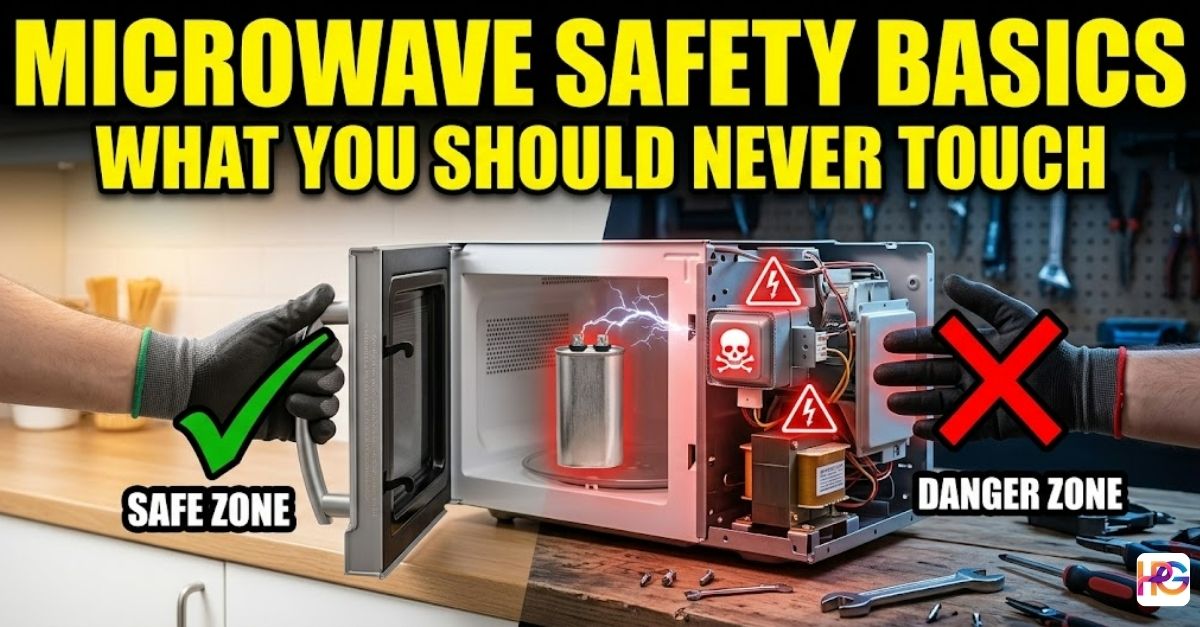
Microwave Safety Precautions: What You Should Never Touch During DIY Repairs
My Close Call in Birmingham
I live in Birmingham. The sun was beating down hard last week. My house gets very warm in the summer. I was busy descaling my electric coffee machines. The water here is very hard. Doing this every two months is a must. It keeps my morning cup tasting great.
Fixing things is my main hobby. You might know my site, Home Pick Guide. Our motto is very simple. We say pick better and live smarter. So, doing my own repairs feels right. I even fixed my car last July. My kid got sick in the back seat on a road trip. Cleaning that mess taught me deep patience.
That same patience almost got me in trouble. My old microwave started making loud noises. A bright spark flashed behind the glass door. Unplugging it right away was my first move. I grabbed my tools without a second thought. I felt ready to take the whole thing apart. Opening the metal case seemed like a fun puzzle.
The Hidden Trap Inside
Something told me to stop and search online first. That quick search saved me from a huge mistake. Microwaves are not like normal kitchen tools. They hold a deadly secret inside. Unplugging them does not make them safe to touch. Power stays trapped inside for a long time.
Most tools lose power the second you unplug them. You can open a toaster with zero fear. The microwave works in a completely different way. It needs massive power to cook your food fast. Standard wall plugs do not give enough juice. The machine steps up the power inside the box.
How the Parts Hold Power
This brings us to a part called the capacitor. Think of it like a huge temporary battery. It stores thousands of volts of raw power. This power feeds the cooking parts to heat food. It does not care if the cord is unplugged. The charge stays locked inside the metal can.
Touching the wrong wire can stop your heart. Getting a normal wall shock hurts a lot. A shock from this part is far worse. It holds enough power to be truly fatal. I felt sick just reading about the actual numbers. My hands shook as I looked at my tools. My basic screwdrivers would not keep me safe at all.
Safe External Fixes You Can Do
You do not have to give up on all DIY repairs. Some fixes are totally safe for anyone to try. You just need to know the basic rules. Keep the main outer metal cover on the unit. Never take off the big wrap around the back. Working on the outside is fine and safe.
Let me share a clear list of simple tasks. These jobs will not put you in danger. They take very little time to finish. You can save money without risking your life.
Quick Repair Task Guide
Here is a quick breakdown of common appliance jobs. It shows you what is safe. It also shows what you must avoid.
| Repair Job | Danger Level | DIY Safe? |
| Swapping a glass tray | Zero | Yes |
| Changing air filters | Low | Yes |
| Fixing a door handle | Low | Yes |
| Touching a capacitor | Fatal | No |
| Fixing the magnetron | Fatal | No |
Changing the glass tray is the easiest job. Sometimes you drop it and it breaks. I broke a glass French press once against my sink. Shards flew everywhere across the floor. Replacing a microwave tray is much less messy. You just open the door and swap it out.
More Safe Projects for Beginners
Air filters are another very simple fix. Many units sit right above the kitchen stove. They have flat grease pads on the bottom. You can pull them out with one hand. Buying new ones costs just a few dollars. Popping them in takes about ten seconds.
Charcoal filters live under the top plastic vent. Two small screws hold the vent grill in place. You take those out and lift the plastic. The old filter lifts right out of the slot. You drop the new one in and close it up. It takes no special skill to do this right.
Fixing a door latch takes a bit more work. You still stay completely safe while doing it. You just pry the plastic trim off the door. A butter knife works well for this step. Then you unscrew the old handle parts. Put the new handle on and snap the trim back.
When to Call for Help
Sometimes the problem is just too big to handle. Knowing when to stop is a smart move. Loud grinding noises mean internal parts are failing. Bright sparks mean the high voltage side is broken. These are not simple jobs for the weekend.
You have two good choices when this happens. You can call a trained repair worker. They have special tools to work safely. Or you can buy a brand new machine. Small counter units are often very cheap now. A costly repair bill might waste your money. Think about the costs before you pay a pro.
What You Must Never Touch
We must talk about the highly dangerous parts now. Seeing the main metal cover come off means extreme risk. Trained pros go to school to learn this stuff. They wear special gear to stay alive. Do not try to copy what they do on video.
The capacitor is the biggest threat in the box. It looks like a shiny silver oval can. Wires connect to metal posts on the top. Pros use huge rubber tools to drain the power. They cross the metal posts to clear the charge. It makes a very loud popping noise.
The Magnetron Risk
The magnetron is the part that cooks the food. It looks like a heavy block with metal fins. This part uses extreme heat and massive voltage. It is very dangerous to handle without training. Keep your hands far away from this area.
There is a pink part inside the magnetron. It is made of a very toxic material. Dropping the unit can break this pink piece. Breathing the dust will hurt your lungs badly. It can cause deep sickness very fast. This is why you must leave it alone.
The Heavy Transformer
The transformer sits right next to the other parts. It is a huge block of heavy copper wire. Its job is to boost the wall voltage up high. This gives the machine the power it needs. It carries the exact same fatal shock risk.
Touching this part is just as bad as the capacitor. It will send a lethal shock through your body. The metal case is there to keep you away. The makers use special screws for a reason. They want to stop you from opening the box. Heed their warning and keep it shut tight.
Gear and Safety Rules for the Home
Let us say you are doing a safe door repair. You still need to follow strict safety rules. I never start a job without my basic gear. Safety should always be your very first thought. Taking shortcuts leads to pain and regret.
Unplugging the unit is always step one. You must pull the cord from the wall plug. Do not just turn off the kitchen switch. You need to see the plug in your hand. This proves the machine has no new power coming in.
Protecting Your Hands and Eyes
I always put on thick work gloves next. Metal edges inside appliances are very sharp. I used to work without them and got cut often. Tiny slices on your fingers sting for days. Good gloves stop the cuts before they happen. They give you a much better grip too.
Safety glasses are just as vital to wear. Old plastic clips get weak from the heat. Prying them apart makes them snap and break. Broken pieces fly across the room very fast. You must protect your eyes from flying debris. I keep my glasses right on my workbench.
Use strong tools with good grips. Solid rubber handles are the best choice. Cheap tools with thin plastic can slip easily. You want gear that feels safe in your hands. Taking photos of the parts helps a lot too. Snap a picture before you take screws out. It helps you put everything back together right.
Keeping Your Tools Organized
Having the right tools ready is a big deal. My garage setup was a mess for years. I spent hours looking for a single screwdriver. Getting into home organization changed my life. I built a pegboard wall for my gear. Everything has a clear spot to hang now.
Finding the right gear takes two seconds today. This habit makes doing quick repairs much easier. You never want to rush a fix. Searching for tools puts you in a bad mood. A bad mood leads to making lazy mistakes. Staying calm is part of working safely.
Why Real Tools Matter
Using cheap items can hurt you over time. I used a cheap wrench on my car. It slipped and smashed my hand on metal. Buying good items is a real safety choice. You want handles that will not bend or break. They give you complete control over your work.
I talk about this on my site often. Finding the best tools is part of the mission. We want you to avoid useless junk products. Spending a little extra upfront saves heavy stress later. Your hands will surely thank you for it. Keeping your workspace neat helps your brain focus.
Learning from My Mistakes
Looking back at that hot day brings a smile. I am so glad I checked my phone first. Taking that machine apart would have been bad. My love for fixing things almost pushed me too far. We all have limits on what we can do safely.
Building Home Pick Guide taught me to dig deeper. I want to share true advice that helps people. Telling you to avoid internal microwave repairs is true advice. It goes against the normal DIY spirit a bit. But keeping you safe is far more important to me.
These days, I stick to fixing my coffee makers. A durable steel French press handles daily use without worry, and my AeroPress even came along on a recent mountain camping trip.
They are simple and very safe to use. You can clean them without any fear at all. That is my kind of easy weekend project.
The next time an appliance breaks, think it through. Ask yourself if the job is truly safe. Read the warning labels on the back panel. They are put there to save your life. Respect the hidden power inside the metal box. Pick the safe path so you can live smarter.
Frequently Asked Questions About Appliance Repair Tools
Do I need special insulated tools for safe microwave repair?
Yes, you need tools with thick rubber grips for safety. Normal metal tools will not stop big shocks from hot parts. Buy good gear that keeps your bare hands very safe.
Can I use basic Milwaukee screwdrivers to fix inner parts?
No, do not use basic Milwaukee screwdrivers for inside parts. They lack the thick rubber walls needed to block huge shocks. Keep them for the safe outer door screws only.
What safety gear is best for home appliance DIY fixes?
Always wear thick work gloves and clear eye safety glasses. Old plastic clips often snap and fly at your face very fast. Good safety tools will help you live smarter.
How should I store rubber repair tools in a cold garage?
Keep your rubber tools inside a dry tool box to stop bad cold cracks. Cold winter air can make safety grips hard and weak over time. Keep them in the house so tools stay safe.
Will a basic tool brand like Makita work for safe outer fixes?
Yes, your good Makita drill or driver is fine for the outer case. Just unplug the power cord first before you take out any screws. Stay out of the inner box to save your life.