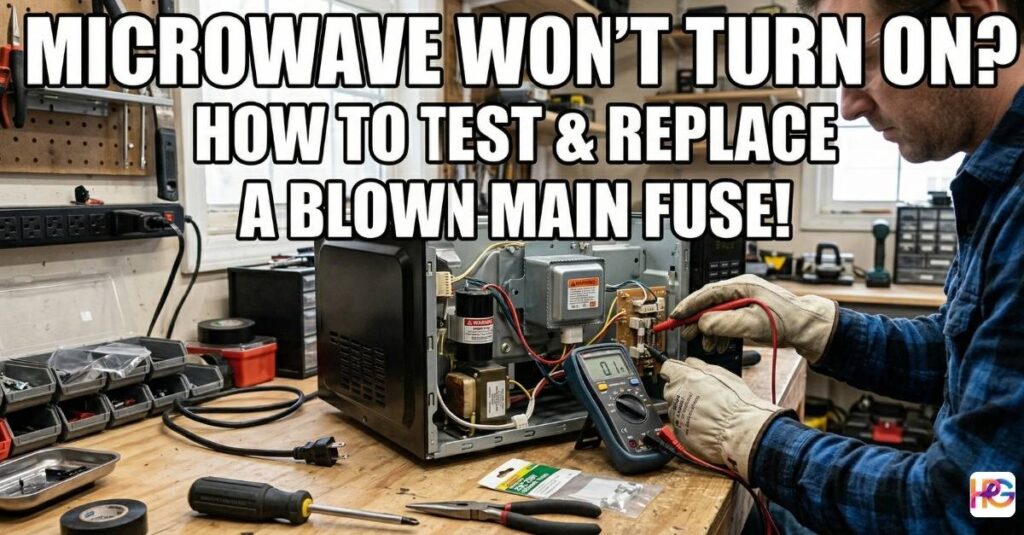
How to Test and Replace a Blown Main Fuse
The Day My Microwave Died
It was a rainy Tuesday afternoon here in Birmingham. I just wanted to warm up a slice of leftover sourdough bread. Baking bread takes a lot of time. Eating it warm makes the effort worth it.
I put my plate inside and shut the door. Then I pressed the start button. I expected the usual hum. Instead, I heard a tiny click. After that, the kitchen went totally silent. The digital clock went dark. My first thought was simple: Microwave Won’t Turn On.
I stood there for a minute. Annoyance washed over me. I really wanted that warm bread. But then the DIY side of me kicked in. I love fixing things around the house. Our goal at Home Pick Guide is to help you pick better and live smarter.
Before reaching for my tools, though, I knew there was one important issue. A microwave is not a normal kitchen appliance to open. Its high-voltage components can remain dangerous even after the power cord is unplugged.
Signs It Is Just a Fuse and Not a Dead Microwave
It is easy to panic when an appliance suddenly stops working. I use my kitchen tools constantly, so a dead microwave can be frustrating.
A blown main fuse can cause a microwave to go completely dark. The machine may work perfectly one moment and then lose all power the next. There may be no display, interior light, or response from the buttons.
If the display still lights up, the main fuse is probably not the reason for the problem. If the display works but the microwave does not heat, you may have a different issue involving the door switches, high-voltage system, control board, or magnetron.
When a Microwave Won’t Turn On, checking whether the display is completely dead is a useful first clue.
What Causes a Microwave Main Fuse to Blow?
A totally dark appliance can make you think the entire machine has failed. Sometimes, however, a relatively inexpensive fuse has opened the electrical circuit.
The main fuse is designed to protect the microwave from excessive current. When an electrical fault or abnormal current occurs, the fuse can open the circuit. This helps protect other components from damage.
Several problems can cause a fuse to blow. A power surge may be responsible. A failing component can also draw excessive current. Problems with the door-switch system can sometimes cause repeated fuse failures.
Replacing a fuse without finding the reason it failed is not always a good solution. If the replacement blows again, stop using the microwave and have it inspected by a qualified technician.
Common Culprits Behind a Blown Fuse
| Possible Cause | What It Can Do | What to Do |
|---|---|---|
| Power surge | Can damage electrical components | Use proper electrical protection |
| Door-switch problem | Can create abnormal electrical conditions | Have the switches inspected |
| Failing component | May draw excessive current | Diagnose the underlying fault |
| Internal short | Can cause the fuse to open | Stop using the appliance and seek professional service |
Safety First: Read This Before Opening Your Microwave
I need to be very honest with you here. Microwaves are not like standard kitchen mixers. Opening one can expose you to lethal high voltage.
Inside the cabinet is a high-voltage capacitor. It can retain a dangerous electrical charge even after the microwave has been unplugged. You should never assume that unplugging the appliance makes the internal components safe to touch.
I also want to correct a common DIY mistake: do not attempt to discharge a microwave capacitor yourself with a screwdriver or other improvised tool. A spark does not mean the process was safe. An accidental discharge can cause severe injury, burns, equipment damage, or death.
If your microwave is under warranty, check the warranty before opening it. If you are not trained to work on microwave high-voltage circuits, the safest option is to have a qualified appliance technician diagnose and repair it.
Step 1: Unplug the Microwave
If your microwave is completely dead, start with the simple external checks.
Unplug the microwave from the wall outlet. Check the outlet with another appliance that you know works. Also inspect the microwave’s power cord for obvious damage.
If the outlet works and the microwave remains completely dead, an internal electrical problem becomes more likely.
At this point, avoid removing the cabinet unless you have the proper training and equipment to work safely around microwave high-voltage components.
Step 2: Understand Where the Main Fuse Is Located
On many microwave models, the main fuse is located near the power-input section. It may be mounted on a filter board or in a fuse holder.
The exact design varies by manufacturer and model. Some microwaves use ceramic fuses, while others use different fuse arrangements.
Your owner’s service documentation should identify the correct fuse location and specification.
Do not rely on a random online photo. Microwave layouts can differ considerably, even between models from the same brand.
Step 3: Test the Fuse Safely
A fuse can sometimes look normal even when it has failed. Ceramic fuses can be especially difficult to inspect visually.
A continuity test with a properly rated multimeter can determine whether the fuse element is open. However, accessing the fuse may require removing the microwave cabinet and working near the high-voltage section.
For that reason, I would not recommend opening the microwave solely to test a fuse unless you have appropriate electrical training.
A technician can isolate the appliance from power, follow the manufacturer’s service procedure, and test the fuse safely.
If the fuse has no continuity, it has opened. That does not necessarily mean the fuse itself was the original cause of the failure.
Step 4: Find the Correct Replacement Fuse
If a qualified technician confirms that the fuse is bad, use the exact replacement specified by the manufacturer.
Fuse ratings matter. The voltage, current rating, physical dimensions, and fuse type must match the appliance requirements.
Never install a higher-rated fuse because the correct one is unavailable. A fuse is a safety component. Using the wrong rating can allow excessive current to flow and may create a serious fire or shock hazard.
For example, replacing a specified 20A fuse with a 30A fuse is not an acceptable shortcut.
Check the microwave’s service documentation or the marking on the original fuse for the correct specification.
Step 5: Determine Why the Fuse Failed
This step is easy to overlook.
Imagine you replace the fuse and the microwave suddenly powers up. It may feel like the problem is solved. But if another component caused the original fuse to blow, the replacement may fail again.
A qualified technician may need to inspect the door switches, control circuitry, high-voltage transformer or inverter, capacitor, diode, magnetron, and other relevant components depending on the microwave design.
If the new fuse immediately blows again, stop testing the appliance. Repeatedly replacing fuses can hide a more serious electrical problem.
What If the Microwave Still Won’t Turn On?
If the outlet works, the power cord looks fine, and the microwave remains completely dead, the problem could involve the fuse, thermal protection, control circuitry, wiring, or another internal component.
A Microwave Won’t Turn On situation does not automatically mean the fuse is bad.
You should also check whether the microwave is receiving power through a properly functioning outlet. If the display works but the microwave will not start, check the door and make sure it closes completely. Some models will not operate if the control system does not detect a properly closed door.
For a completely dead microwave, professional diagnosis is often the better choice because of the high-voltage hazards inside the cabinet.
Common Questions About Microwave Fuses
Can I use a basic digital multimeter to test a microwave fuse?
A multimeter can test fuse continuity, but reaching the fuse may require opening the microwave. Because dangerous high-voltage components are inside, this work should be performed by someone trained to service microwave ovens.
Why is a microwave more dangerous to open than many other kitchen appliances?
Microwaves contain high-voltage components, including a capacitor that can retain a dangerous electrical charge after the appliance is unplugged.
Can I discharge the capacitor with an insulated screwdriver?
No. Do not use an improvised screwdriver-discharge method. A microwave capacitor can deliver a dangerous shock, and improper discharge can cause injury or damage. Have a qualified technician perform this procedure.
Should I install a fuse with a higher amp rating if the original keeps blowing?
Absolutely not. A higher-rated fuse can defeat part of the appliance’s intended protection. Use only the manufacturer’s specified fuse rating and investigate why the original failed.
Why does my Microwave Won’t Turn On even after I replace the fuse?
The fuse may have blown because another component has failed. If the replacement fuse opens again, stop using the microwave and have the appliance professionally diagnosed.
Is a microwave worth repairing if the main fuse is blown?
It depends on the microwave’s age, condition, repair cost, and the underlying fault. A simple repair may be worthwhile on a newer or expensive model. An older budget microwave may make replacement more practical.
Final Thoughts
When a Microwave Won’t Turn On, a blown main fuse is one possible cause, but it should not be treated as the only explanation.
The most important lesson I learned is that microwave repair is different from ordinary kitchen DIY. The high-voltage capacitor creates a serious shock hazard, even when the appliance is unplugged.
Checking the outlet and power cord is a reasonable first step. Beyond those basic checks, use the manufacturer’s service information and consider professional repair rather than opening the cabinet yourself.
A few minutes of caution can prevent a dangerous accident. Sometimes the smartest DIY decision is knowing when to put the tools down and call a qualified technician.