Signs of a Warped Brake Rotor (And What Happens If You Ignore It)
Hi there. I am Mike. Welcome back to Home Pick Guide. Today we need to talk about a scary car problem. Have you ever felt your steering wheel shake? It happens when you step on the brakes. I know that feeling well. It is not fun at all. In fact, it can be quite terrifying.
My First Scary Brake Experience
Let me tell you a quick story. It was a very hot Tuesday afternoon. I was driving through the busy streets of Alabama. The sun was beating down hard. My car AC was running on full blast. Traffic was moving at a good speed. Then a stray dog ran into the road.
I had to slam on my brakes hard. My foot pushed the pedal to the floor. Right away, my whole car started to vibrate. The steering wheel shook wildly in my hands. It felt like my car was falling apart. My heart pounded in my chest. Thankfully, I stopped in time. The dog ran away safely. But my car was not okay.
That day taught me a big lesson. My experience with warped brake rotors taught me an important lesson. Early warning signs had been ignored, and now those mistakes are worth sharing so others can avoid the same problem.
This way, you can avoid that same scary moment. We will look at why this happens. We will also talk about how to fix it.
What Causes Brake Rotors to Warp
You might think rotors bend like a cheap spoon. That is actually a myth. Metal rotors are very thick and heavy. They do not fold or bend easily. So what does warping really mean? It just means the surface gets uneven.
The flat metal disc gets wavy over time. It develops high spots and low spots. This happens for a few main reasons. Let us look at them closely.
Extreme Heat Ruins Metal
Brakes use friction to stop your car. Friction creates a huge amount of heat. Think about rubbing your hands together fast. They get warm quickly. Car brakes get much hotter than that.
Sometimes they get too hot. This happens if you drive down a steep hill. It also happens in heavy stop and go traffic. The metal gets red hot. Then it cools down too fast. This quick temperature change makes the metal wear unevenly.
Bad Driving Habits Add Up
We all have bad driving habits. I certainly know I do. One bad habit is resting your foot on the brake. We call this riding the brakes. It keeps the brake pads rubbing the rotor.
This constant rubbing makes extra heat. Another bad habit is hard sudden stops. You brake hard and stay completely stopped. The hot pad melts a little bit. It leaves a thin layer of material on the rotor. This creates a tiny bump. You will feel that bump later.
Stuck Brake Calipers
Your brake system has parts called calipers. They squeeze the pads against the rotor. Sometimes a caliper gets stuck. It does not let go of the metal rotor.
The pad just keeps scraping as you drive. You might not even notice it right away. But that constant scraping builds up massive heat. Eventually, the rotor surface gets ruined. I had to replace a stuck caliper once. It was a messy job in my garage.
Top Warning Signs You Should Never Ignore
Your car usually talks to you. It gives you warning signs when things go wrong. You just need to listen and feel. Here are the top signs of a bad brake rotor.
The Shaking Steering Wheel
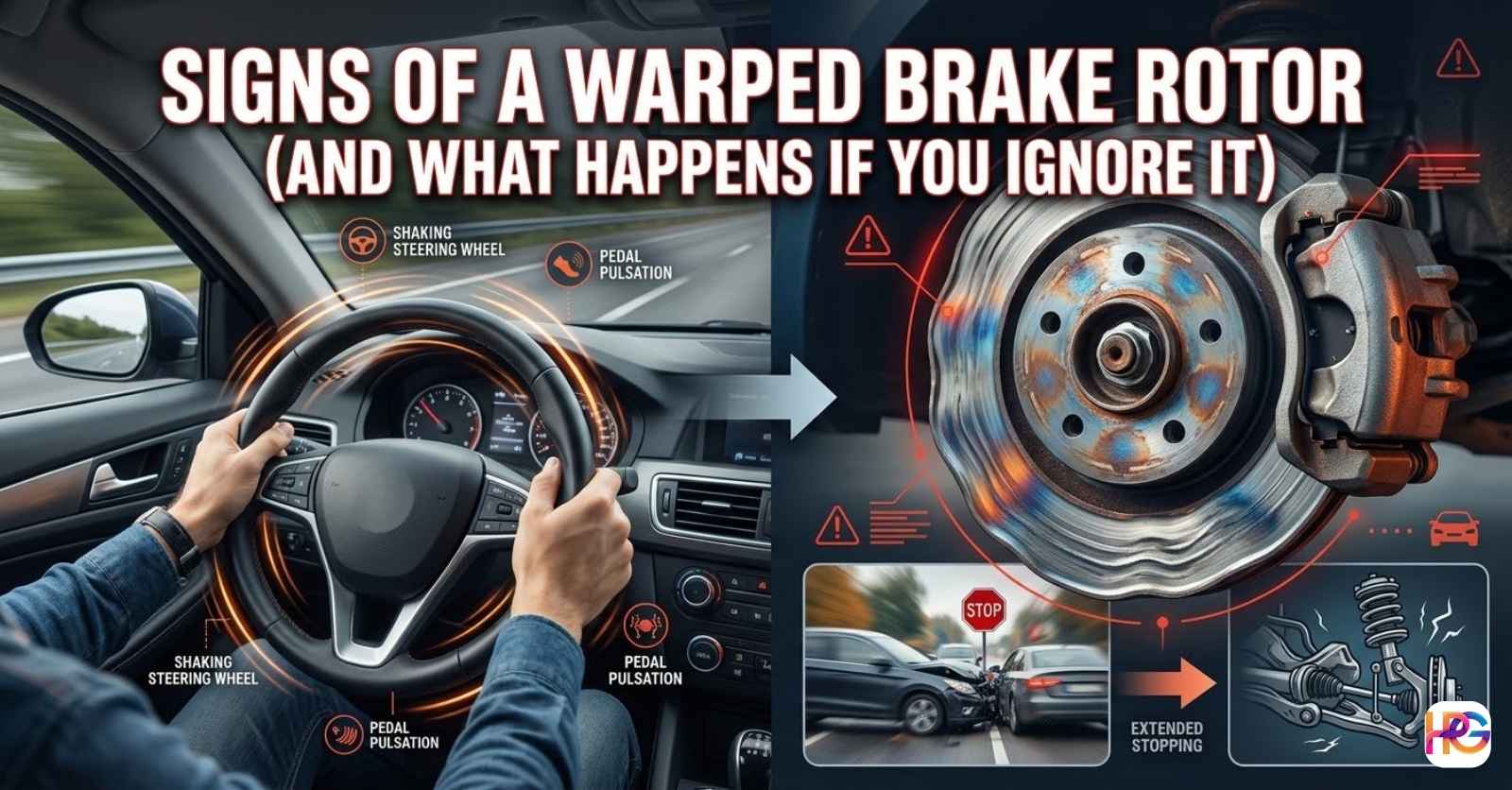
This is the most common sign. I felt this on that hot day in Alabama. You press the brake pedal gently. Suddenly, the wheel vibrates in your hands.
The vibration matches your driving speed. If you slow down, the shaking slows down. If you stop, the shaking stops completely. This happens because the brake pads are hitting those high spots. They bounce over the wavy metal. This bouncing travels up the steering column right to your hands.
The Bouncing Brake Pedal
Sometimes the steering wheel stays perfectly still. But your foot feels funny. You press the brake pedal down. The pedal pushes back against your foot.
It feels like a steady rhythm. Thump, thump, thump. This is called brake pulsation. The uneven rotor pushes the brake fluid back up the line. Your foot feels that pressure change instantly. It is a very strange feeling. You should never ignore it.
Weird Noises You Might Hear
Bad rotors also make terrible noises. You might hear a high squeak. You might hear a deep groan. Sometimes it sounds like metal scraping metal.
An uneven surface makes the brake pads vibrate. Fast vibrations create high squealing sounds. Rough spots create loud scraping sounds. Open your window next time you drive. Listen closely when you stop the car. If you hear loud noises, get your brakes checked fast.
Is It Safe to Drive with Warped Rotors?
People ask me this question a lot. The simple answer is no. It is not safe at all. Yes, your car will still stop. But it will not stop well.
You are putting yourself in real danger. You are also putting other drivers at risk. Let me explain why you need to fix this problem fast.
Longer Stopping Distances
Your brake pads need a flat surface. They need to grab the rotor tightly. A wavy rotor gives them much less room to grab.
Less contact means less stopping friction. Less friction means it takes longer to stop. In a panic stop, every single inch matters. You might need those extra feet to avoid a crash. I learned that when the dog ran out. Good brakes truly save lives.
Hidden Dangers to Your Car Parts
Driving with bad rotors hurts your car. The heavy shaking does real damage. It hurts your entire suspension system over time.
Your wheel bearings take a heavy beating. Your tie rods can get very loose. These parts are expensive to fix. Ignoring a small brake problem leads to big repair bills later. Do not wait until things break. Fix the rotors early and save your money.
Fixing the Problem: Resurface or Replace?
So you have a warped rotor. What do you do now? You have two main choices. You can fix the old ones. Or you can buy new ones.
I look at car tools and parts all day long. Here is what I usually tell people. It depends heavily on how thick your rotors are.
Resurfacing Your Old Rotors
Mechanics can sometimes fix your old rotors. They use a special machine called a brake lathe. The lathe shaves off a tiny bit of metal.
This makes the surface perfectly flat again. We call this turning the rotors. It is cheaper than buying new ones. But there is a major catch.
Your rotors get thinner when you shave them. Thinner metal gets hot much faster. This means they will probably warp again soon. I only do this if the rotors are very thick.
Buying Brand New Rotors
This is usually the much better choice. You throw the old ones away. You put shiny new metal on your car.
New parts give you real peace of mind. They last longer. They handle heat much better. Modern cars use thinner metal to save weight. Because of this, many shops will not even try to fix old rotors. They just tell you to buy new ones.
Here is a simple table to show the differences.
Cost and Choice Comparison
| Option | Good Points | Bad Points | Best For |
|---|---|---|---|
| Resurfacing | Costs less money today. | Metal gets thin. Might warp again. | Very thick, old style rotors. |
| Replacing | Lasts a long time. Very safe. | Costs more money up front. | Most modern cars and trucks. |
How to Check Your Brakes at Home
You can check your brakes yourself. You do not always need a mechanic right away. I like to look at my car right in my driveway.
First, you need to park on flat ground. Put some heavy blocks behind your back wheels. This keeps the car from rolling away. Then use a safe jack to lift the front of the car.
Taking Off the Wheel
Use a strong lug wrench to take off the tire. Now you can see the brake parts clearly. Look at the big shiny metal disc. That is your brake rotor.
Run your finger gently down the metal. Wait until it is completely cool first. Hot brakes will burn you badly. The metal should feel very smooth. It should feel almost like glass.
If you feel deep grooves, you have a problem. If it feels rough like heavy sandpaper, that is bad too.
Checking the Brake Pads
You should also look at the brake pads. They sit inside the metal brake caliper. They grab the rotor to stop the car.
Look at how thick the soft pads are. They should be thicker than a standard pencil. If they are very thin, you need new ones. Bad pads often cause bad rotors. Always change your pads when you change your rotors. They work together as a solid team.
How to Break In New Brake Rotors
If you buy new rotors, you must break them in. We call this bedding the brakes. It is a very important step. Many people skip this part completely. Then they ruin their brand new parts.
Why Bedding Is Important
New metal needs to get hot slowly. You want to leave a nice even layer of pad material. This layer sits right on the new metal. It helps the car stop very smoothly. If you brake too hard right away, you ruin that smooth layer. The brakes will feel jumpy again.
The Bedding Process Explained
Find a quiet road with no traffic. Drive up to forty miles per hour. Press the brakes evenly and firmly. Slow down to ten miles per hour. Do not stop completely. If you stop completely, the hot pad will stick.
Drive back up to forty miles per hour. Repeat this slow down process five times. Your brakes will get very hot. You might smell them burning a little bit. That is totally normal. After five times, drive normally for ten minutes. Let the fresh air cool the metal down. Now your new parts are ready to use.
How Weather Affects Your Brakes
Where you live changes how your car drives. Weather plays a big part in car health. Hot days and cold days stress the metal.
Driving in Heavy Rain
Water cools hot metal down way too fast. Imagine driving fast and using your brakes. They get super hot. Then you hit a deep puddle of water. The freezing cold water splashes the red hot metal.
This causes instant thermal shock. The metal changes shape in a split second. This is a very quick way to ruin a good rotor. Try to avoid deep water when driving fast.
Humid and Salty Air
Some places are very wet and sticky. The air holds a lot of water. This water causes ugly rust to form. Rust eats away at the smooth metal. If you do not drive your car often, rust builds up fast.
This rough rust ruins the smooth feeling. Try to drive your car at least once a week. Using the brakes scrapes the light rust away. It keeps the vital parts clean and safe.
Final Thoughts on Keeping Your Brakes Smooth
Taking care of your car is highly important. Brakes are the most important safety feature you have. Do not ignore a shaking steering wheel. Do not ignore weird scary noises.
These days, driving habits are much more careful. Extra space stays between my car and the vehicle ahead, and hard braking is avoided whenever possible.
These simple daily habits keep my car running smooth. They keep my family safe on the open road.
I hope this guide helps you today. It is always better to fix things early. If you feel that scary shake, get your car checked right away. Stay safe out there on the road. Thank you for reading my tips on Home Pick Guide.
Frequently Asked Questions
What tools do I need to change a warped brake rotor?
You need a safe floor jack and a heavy impact wrench. A strong DeWalt impact gun takes off tight lug nuts fast. Good garage tools save you lots of time.
Can I measure a warped brake rotor at home?
Yes, you can easily check the metal right at home. You just need a handy tool called a dial indicator. It mounts to the car and finds the bad spots very fast.
Are cheap hand tools safe for fixing a warped rotor?
Cheap tools can slip and hurt your hands fast. Always use a good quality socket set for tough car repairs. A strong grip keeps you safe in the busy workshop.
Do I need a heavy brake lathe in my home garage?
No, a real brake lathe is huge and uses lots of power. Most home mechanics just buy brand new rotors. Putting on new car parts is much safer and far easier.
How do I pull off a stuck brake rotor safely?
Rust makes old rotors stick hard to your car. Just hit the metal with a heavy rubber mallet. A good soft mallet knocks the part loose safely without damage.