
It is a normal Tuesday morning. You walk into the kitchen. You want to make a fresh green smoothie. You put ice, spinach, and chia seeds into your blender. The machine spins up fast. It does a great job. You pour your drink into a glass. It tastes perfect.
Then you wash the blender jar in the sink. You use warm water and good dish soap. You scrub the inside clean. You put it on the drying rack. You leave the kitchen to start your day.
An hour later, you come back. You look at your clean jar. It does not look clean at all. It looks like white frosted glass. You rub your finger on the side. It feels dry and a bit chalky.
You feel frustrated. Why does a clean jar look so dirty? Did you use bad soap? Did you leave food inside? The answer is no. You did nothing wrong. The real problem comes right out of your kitchen tap.
My name is Hasan. I see this happen all the time. Here at Home Pick Guide, we test many kitchen tools. We want to help you pick better and live smarter. I have tested many blenders in my own kitchen. I watched my clear jars turn cloudy. It drove me crazy at first. Then I learned the simple science behind the fog.
The Real Villain Is Your Tap Water
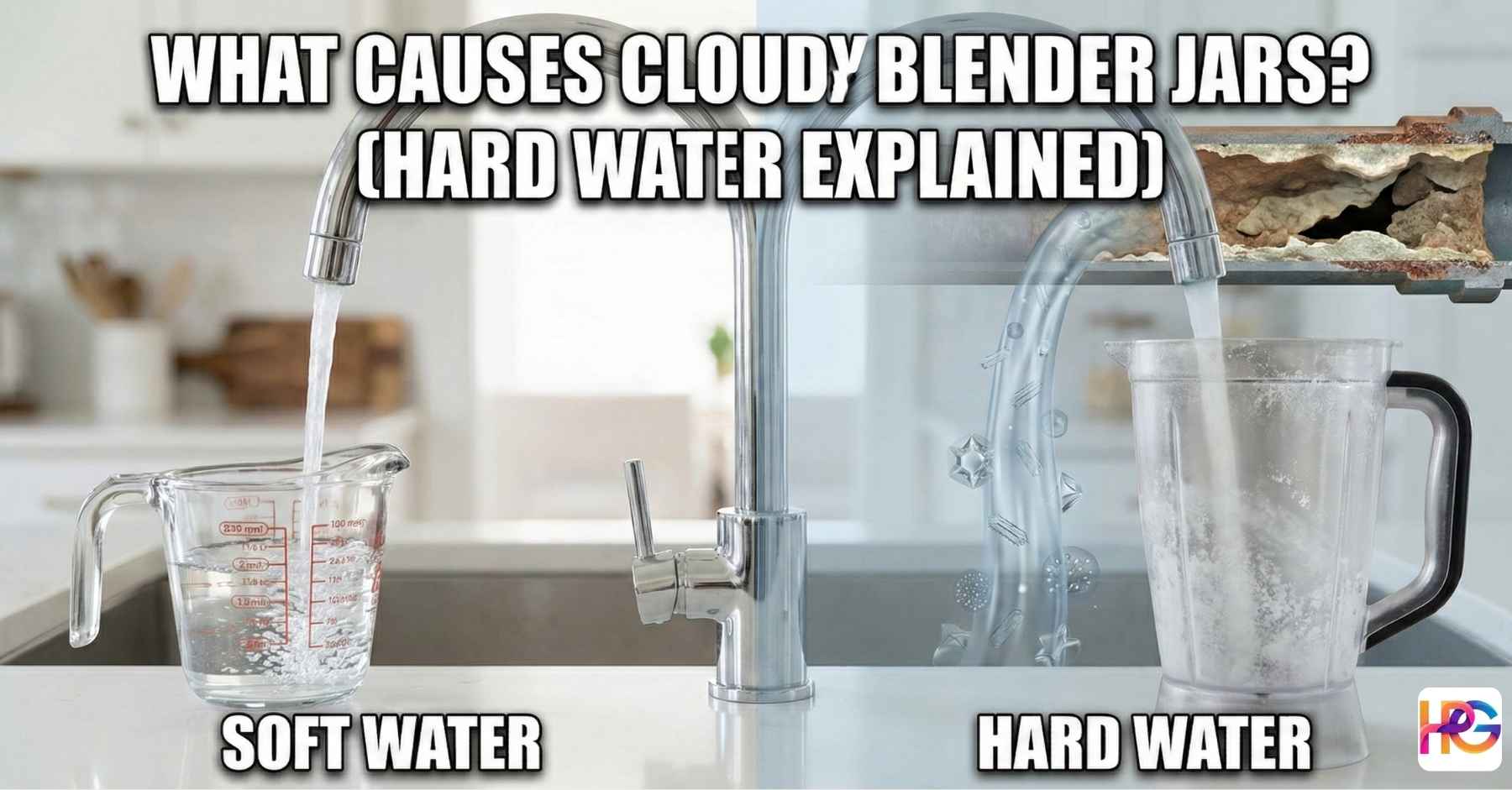
The main cause of a cloudy jar is hard water. What is hard water? It is just normal tap water with extra stuff inside it.
Rain water is very soft when it falls from the sky. But it lands on the ground. It sinks deep into the earth. The ground is full of rocks. It has lots of limestone and chalk. The water picks up tiny pieces of these rocks. We call these tiny pieces minerals.
The main minerals are calcium and magnesium. The water carries these tiny rocks through pipes to your house. This is what we call hard water. It is totally safe to drink. It is even good for your bones. But it is very bad for your kitchen gear.
How The White Film Grows Every Day
Let us look at how the white fog actually forms. It does not happen while you blend your food. It happens while the jar is drying.
You wash your jar with hard tap water. The jar is wet inside. You leave it to air dry on the counter. The liquid water turns into a gas. It floats away into the air.
But the heavy rock minerals cannot float away. They stay behind on the plastic. They stick to the sides of the jar.
At first, you cannot see them. The layer of rock is too thin. But you wash the jar every single day. Layer after layer builds up on the plastic. The layers form tiny hard crystals. Soon, the invisible film turns into a dense white cloud.
This white crust is called limescale.
Why Blenders Get Cloudy So Fast
You might have a very smart question right now. Why do your glass drinking cups stay clear? Why does only the blender look so cloudy and gross?
The answer hides inside the jar. You have to think about the food you put inside.
The Danger Of Ice And Seeds
Think about your daily smoothie. You blend hard ice cubes. You blend frozen fruit. You blend tough berry seeds.
The metal blades spin very fast. They throw the hard food against the jar walls. This action is quite violent. It causes tiny cuts in the plastic.
We call these cuts micro scratches. You cannot see these scratches with your normal eyes. But they are there. They make the inside of the jar very rough.
Tiny Traps For Minerals
Now think about a smooth drinking glass. Water drops just slide right off smooth glass. They have nothing to grab onto.
But a scratched blender jar is completely different. The rough cuts act like little traps. The hard water rocks fall into these traps. They grab onto the rough plastic. They hold on very tight.
This makes the white cloud build up much faster in a blender than in a normal cup.
Comparing Blender Jar Materials
Not all jars are the same. Some get cloudy much faster than others. The material makes a big difference. Let us look at the facts.
Table 1: Jar Material Facts
| Jar Material Type | Risk of Scratching | Risk of Cloudiness |
| Tritan Plastic | Very High | Very High |
| Standard Polycarbonate | High | High |
| Thick Tempered Glass | Low | Low |
| Stainless Steel | Very Low | Very Low |
Plastic is light and safe to drop. But as the table shows, it traps minerals very easily.
Is The White Film Safe To Eat?
A cloudy jar looks terrible. You might worry it will make you sick. I want to give you peace of mind.
The white film is completely safe. It will not hurt you at all. Calcium is just a natural mineral. It is the exact same mineral you find in milk or cheese.
Your morning smoothie is still safe to drink. The food is perfectly clean. But I know the truth. Nobody wants to use a dirty looking tool in their kitchen. It looks bad when guests come over.
Does The Film Change How Food Tastes?
The rocks do not have a taste. Your food will still taste like food.
But there is one small problem. The rough scratches can trap food odors. If you blend strong things like garlic or onions, the smell can hide in the scratches.
The mineral crust can seal the smell inside the plastic. This can make your sweet fruit smoothie taste a little funny. Keeping the jar clear helps keep the odors away.
Hard Water Versus Other Blender Problems
Sometimes the white fog is not hard water at all. You need to know the difference. Here are two other big reasons your jar might look bad.
The Sticky Protein Film
Sometimes the white cloud comes from your food. Do you make protein shakes? Do you use whey protein powder? This powder can cause a huge mess.
Many people wash their jar with very hot water. This is a very bad idea for protein. Hot water cooks the protein powder. It changes the shape of the food. It acts like strong super glue.
It sticks the protein right to the plastic walls. This leaves a thick cloudy haze on the jar.
How do you fix this? Always rinse your protein shakes with cold water first. Cold water washes the sticky protein away. Then you can use warm water and soap to finish the job.
Permanent Scratch Damage
There is one more reason your jar looks cloudy. It is called permanent etching.
This happens when you blend completely dry foods. Do you grind dry rice to make flour? Do you grind hard dry spices?
Dry grains fly around the jar like a sandstorm. They hit the plastic at very high speed. They blast away the smooth surface. This causes deep damage to the jar walls.
The plastic turns dull and fully white. This is permanent damage. You cannot wash etching away. The plastic is simply ruined forever.
If you want to blend dry grains, you must buy a special dry jar. Do not use your main wet blending jar for dry grains.
How To Check Your Home Water
You might wonder if your house really has hard water. Most homes do.
You can do a quick check right now. Look at your shower head. Do you see a white crust around the tiny holes? Look at your tea kettle. Is there a white ring on the bottom?
If yes, you definitely have hard water. You can also check your local city water report online. Water hardness is measured in grains per gallon. Let us look at a simple chart.
Table 2: Water Hardness Scale
| Grains Per Gallon | Water Hardness Level | Blender Cloudiness Risk |
| 0 to 3 Grains | Soft Water | Very Low Risk |
| 3 to 7 Grains | Moderate Water | Medium Risk |
| 7 to 10 Grains | Hard Water | High Risk |
| Over 10 Grains | Very Hard Water | Extreme Risk |
If your city has over 7 grains, your blender will get cloudy very fast.
My Personal Blender Mistakes
I test lots of gear. My local tap water is quite hard. My plastic jars always get this white film.
When I first started Home Pick Guide, I made a big mistake. I tried to fix the cloudiness with brute force. I took a rough green sponge. I scrubbed the plastic as hard as I could. I thought I could scrape the dirt away.
That was a huge error. The rough sponge just added thousands of new scratches. More scratches meant more places for the minerals to hide. The cloudiness only got much worse.
I learned my lesson. You cannot scrub hard water minerals away. You will only destroy your jar.
You have to melt the rocks away. You have to use simple chemistry. You need a mild acid to break down the crust. Things like basic white vinegar or fresh lemon juice work great.
They dissolve the rocks without hurting the plastic. I will share my exact step by step cleaning routine in another post. It is very easy to do.
Final Thoughts On Cloudy Jars
Now you know the full truth. Your cloudy jar is not dirty. You are not bad at washing dishes.
It is just covered in a thin layer of tiny rocks from your tap water. It happens to almost everyone. It is safe to use.
You can fix it easily with the right gentle knowledge. We want your kitchen tools to last a very long time. Treat them well. Wash them right. Skip the hard scrubbing. Pick better habits today so you can live smarter tomorrow.
Frequently Asked Questions
Can hard water permanently ruin my clear blender jar?
Hard water leaves a white crust, but it will not ruin your plastic pitcher. You can safely soak your Ninja or other blender in white vinegar to clear it up.
Why does my blender get cloudy when glass cups stay clear?
Blending hard ice and seeds makes tiny cuts inside your plastic jar. These rough scratches trap hard water minerals very fast. Smooth glass cups do not do this.
Is it safe to drink from a cloudy blender jar?
Yes, your sweet drink is very safe to sip. The white fog is just basic rock dust from your tap water. It looks very bad, but it will not hurt you at all.
Can protein powder make my blender pitcher look cloudy?
Yes, washing thick protein shakes with hot water cooks the powder. This acts like strong glue and leaves a sticky white film. Always rinse with cold water first.
Will hard scrubbing fix a cloudy plastic blender jar?
No, hard scrubbing is a very bad idea for your kitchen tools. A rough sponge adds more scratches that trap even more dirt. Use a mild acid to clean it gently.