I never thought I would spend a Saturday reading grease can labels. But here I am, and I am glad I did. It saved my uncle’s shop from a real mess. Maybe it can save yours too.
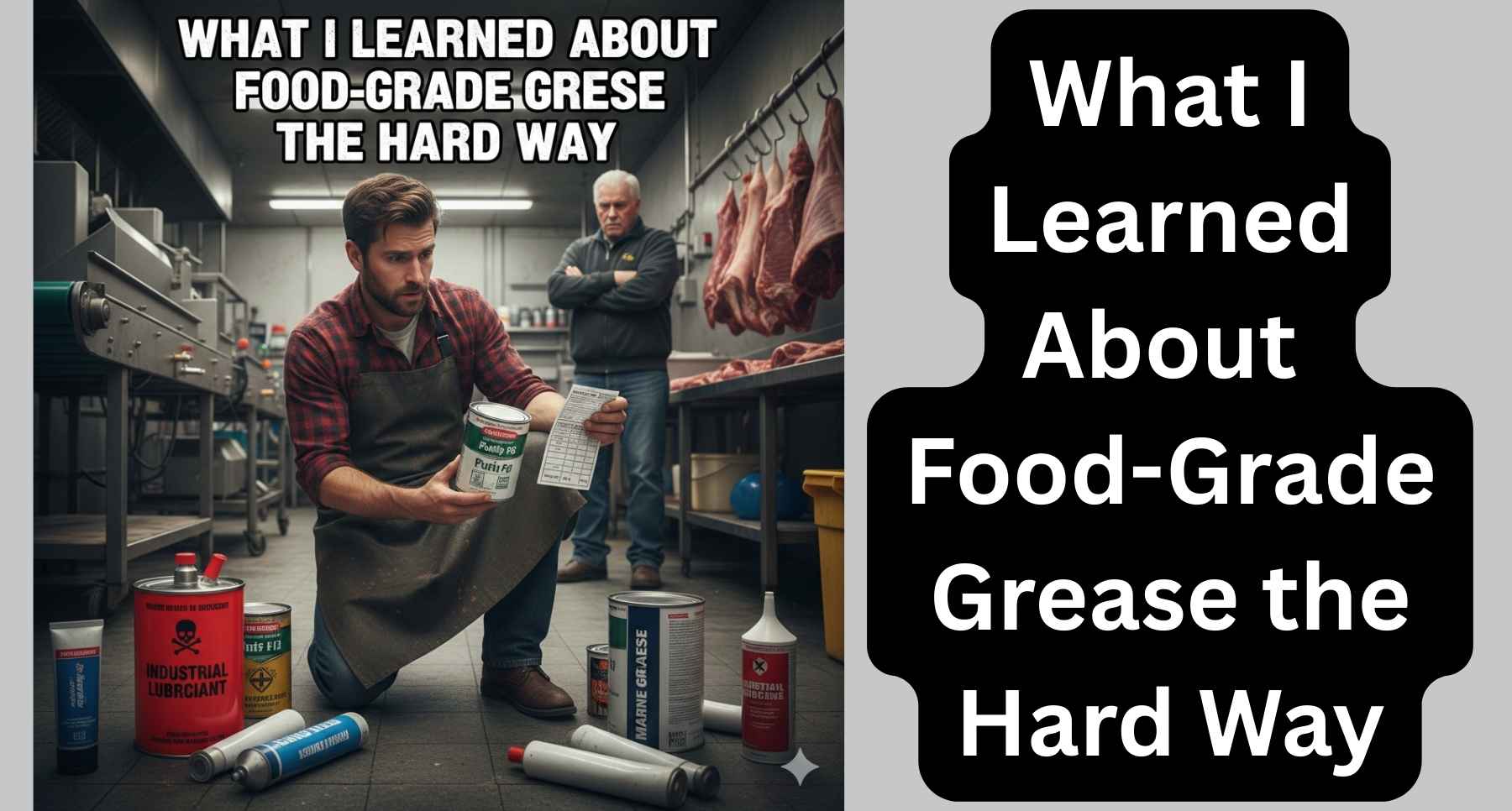
It all started at his small meat shop one busy week. The belt on his line was making a loud grinding noise. His usual repair guy was out of town, so he called me. I thought I could help out. How hard could it be?
I grabbed the closest grease tube from the shelf. I put it on the belt. The noise stopped. I felt good about it. Two days later, a food safety inspector showed up and flagged it right away. The grease I used had no NSF mark at all. It was not food-grade grease. That one slip changed how I look at food-safe lube jobs forever.
What Is Food-Grade Grease and Why Does It Matter
Food-grade grease is a lube made with safe parts. It is made for use near food or food gear. The big idea is “incidental contact.” That means a tiny bit may touch food by chance. When that happens, it must not cause harm to anyone.
Regular grease can have toxic dyes, harsh chemicals, and bad compounds. None of that belongs near food. Not even in small amounts. The risk is just not worth it at all.
The main group that sets the rules is NSF International. They sort food-safe lubes into three main groups. This table makes it easy to see each one at a glance.
| NSF Class | Use Case | Food Contact OK? |
|---|---|---|
| H1 | Machines in food zones | Yes, by chance (max 10 ppm) |
| H2 | Gear away from food | No |
| H3 | Edible oils on hooks and carts | Yes, direct |
H1 is the one you will hear most. It is the top pick for food plant lines. If I had used H1-rated grease that day, we would have had no issue at all.
My First Real Try at Picking the Right Food-Safe Lube
After that visit from the inspector, I got serious fast. I read forums, watched videos, and called sales reps. I learned more about grease in one week than I ever planned to.
The first big thing I found out was this: not all white grease is food-grade grease. I thought any light, clean grease was safe to use. That is not true at all. You need to see the NSF H1 mark on the can. If it is not there, do not use it near food.
I also found out that the base oil in the grease matters a lot. Each type works best in a set of conditions. This table breaks it down by use and heat range.
Common Base Oils in Food-Grade Grease
| Base Oil Type | Best For | Heat Range |
|---|---|---|
| White mineral oil | Basic use, low cost | -20°C to 120°C |
| PAO synthetic | Fast bearings | -40°C to 150°C |
| Silicone | High heat, rubber seals | -50°C to 200°C |
| Vegetable or canola oil | Fully edible use | Low range |
My uncle’s belt runs fast and sits in a cold room. I picked a PAO-based H1 grease with an aluminum complex thickener. It dealt with the cold and the load just fine. No more grinding noise after that.
The Smell Test That Fooled Me
Here is something I did not see coming at all. Some food-grade greases have no smell at all. Others have a faint, clean scent. A few I tried smelled like light cooking oil. I made the mistake of thinking smell meant safety. It does not work that way.
One grease I tested had a nice, clean scent. It felt clean and looked clean too. But it had no NSF mark on the label. I almost used it and walked away. Only a last-minute label check stopped me from making a big error.
Smell tells you nothing useful here. Only the cert mark matters. I see this mistake a lot in small kitchens and home food setups. People grab what seems fine. It is just not worth the risk of guessing wrong.
How I Now Pick Food-Grade Grease for Any Job
After my early errors, I built a short check list. I use it every time now, no matter how small the task is.
My first step is to check the NSF H1 cert. If I am not sure, I look it up on the NSF site online. It takes two minutes and gives me peace of mind before I start.
My second step is to think about heat. Does the gear run hot or cold? A bearing near an oven needs a very different grease than one in a cold room. Getting this wrong can break the gear fast and cost a lot.
My third step is to check how well the grease holds up to water. Many food areas get rinsed down each day. If the grease washes off each time, I have to put more on too often. That adds time and cost to the whole job.
My fourth step is to check the thickener type. Aluminum complex and polyurea are both solid picks. They hold up under load and do not break down in tough conditions all that fast.
My fifth step is to check for any faith-based certs if the job calls for it. Some plants need Kosher or Halal marks on all food contact items. A few brands offer this and list it right on the label.
Brands I Have Used With My Own Hands
I am not going to say one brand is the best. That would not be fair or true. What I can share is what I have used and seen work in real life.
Petro-Canada Purity FG was my first pick after the inspector came. It was easy to find and had a clear NSF H1 mark on it. It worked well on the belt chain, and the next check-up went smooth with no flags.
Lubriplate FGL is one I used at a friend’s bakery not long after. The FGL-2 grade worked great on the dough mixer bearings. It was easy to put on and lasted a good while before needing a top-up.
I also tried a Klüber product near a hot oven on a food line. It held up much better than the cheap one I tried first. That cheap grease dripped off the parts in less than a week. The Klüber one stayed put and did its job well the whole time.
What Goes Wrong When You Use the Wrong Grease
I want to be direct here because I have seen this go badly in real life. Using the wrong grease near food is not just a rule problem. It is a real health risk that can hurt people.
Some regular greases have mineral oils that are not safe to eat. Others have heavy metal compounds or added chemicals that cause harm even in tiny amounts. None of that belongs anywhere near the food we eat.
On the cost side, a failed check can shut down a whole line. My uncle lost almost a full day of work due to my mistake. He was not happy, and I could not blame him for that.
There is also damage to the gear itself. The wrong grease can break down seals and build up gunk over time. A grease that is too thick for a fast bearing can cause heat and wear it out much faster than normal.
Getting the right grease from the start saves money, time, and a lot of stress down the road.
One Thing Most People Miss
This one caught me off guard when I first found out about it. Even the best H1-certified food-grade grease will let you down if you put it on wrong. The product is only part of what makes the job work.
Too much grease is a very real problem that I see all the time. Excess grease makes heat build up inside the bearing. That heat breaks down the lube faster than it should. The grease then leaks out or burns up, and both of those outcomes are bad news.
I now use a grease gun with a set output for each job I do. I also check the gear maker’s guide for how often to re-lube. It sounds basic, but before I knew this, I was just guessing each time. And guessing costs you money in the end.
Final Thoughts From Someone Who Learned This the Hard Way
Food-grade grease is not a fun topic to bring up. Nobody talks about it over dinner. But if you run food gear or work in a food plant, it matters far more than most people know.
The short take from all I have learned: always check for the NSF H1 cert. Match the grease to the heat and load of the job. Do not put on too much. And never trust smell or color alone to judge if it is safe.
I wish someone had shown me this before I walked into my uncle’s shop with the wrong can. It would have saved us both a lot of stress that week. But now I know what to look for, and I hope this helps you get it right the first time.
Frequently Asked Questions About Food-Grade Grease
What makes a grease safe to use on food processing equipment?
Look for the NSF H1 mark on the label. That cert means the grease is safe for incidental food contact. No mark, no use near food gear.
Can I use regular white grease on a food line conveyor belt?
Not all white grease is food-grade grease. You need the NSF H1 cert on the can. White color or clean smell does not mean it is safe to use near food.
What is the best food-grade grease for high-speed bearings in cold rooms?
A PAO-based H1 grease works great in cold, fast-moving parts. It stays stable at low temps and holds up under heavy load without breaking down.
How often should I reapply food-grade grease to my equipment?
Check the gear maker’s guide for re-lube times. Too much grease causes heat buildup and breaks down the lube faster than it should.
Does food-grade grease hold up during daily washdowns in a food plant?
Some do, some do not. Look for a water-resistant H1 grease with a strong thickener like aluminum complex. It will stay in place after a rinse-down.