What Is a HEPA Filter and How Does It Work?
My Dusty Wake-Up Call in Alabama
It was a plain Tuesday morning right here in Alabama. I woke up with a very sore and dry throat. The fan spun slowly above my warm and cozy bed. Sun peeked through the gaps in my old window blinds. I saw thousands of tiny dust specks dance right there.
You know that feeling when you really need to sneeze? I felt that bad way but could not sneeze out. I knew I had to clean my indoor air fast. My old vacuum just pushed the dirty dust all around. It smelled like warm dirt every time I used it.
I decided to look closely at new home air purifiers. Every box I checked showed the big smart word HEPA. They promised fresh air and no more bad morning sneezes. But I am a guy who doubts big bold claims. I like to know how things work before buying them.
That is the main idea behind our Home Pick Guide. We want to pick better so we can live smarter. I spent weeks reading thick books and testing noisy machines. Today I will share my fun home tests with you. Let us see how these filters trap gross room dirt.
What Does HEPA Actually Mean?
HEPA is just a long and very nerdy science word. It stands for High Efficiency Particulate Air in the books. You might see it called High Efficiency Particulate Arrestance too. Both names mean the exact same simple thing for us. It is a smart way to say the tool works.
These filters are not a brand new tool at all. Smart folks made them back in the old war days. They built them to catch bad stuff in secret labs. That sounds out of control to us in our modern times. Fast forward to today, and that tech sits near you.
The science went from cool labs to normal small homes. Now these tools help us fight daily bad pet hair. They also stop bad spring pollen and dark city smog. But not just any cheap foam gets to use this. It is a very strict rule for the big brands.
A filter must pass a hard test to win out. The government sets the official rules for this big test. A real HEPA filter must catch most of the dirt. It has to grab 99.97 percent of bugs and dust. The dust must be exactly 0.3 microns in total size.
The Magic Number and Tiny Microns Explained
That percentage sounds super exact to most people today. Why do they ask for 99.97 percent to pass? Why do they care so much about 0.3 tiny microns? I asked myself those exact questions on that dusty Tuesday. We need to learn what a micron is first though.
What Is a Micron Anyway?
A micron is a very tiny way to measure things. It is a short word for the longer term micrometer. One single micron is one millionth of a normal meter. That size is so small my brain hurts thinking now. Our human eyes only see things bigger than 40 microns.
Anything smaller is fully hidden from our plain normal sight. We would need a big thick microscope to see it. To make this easy, let us look at normal things. I made this simple chart to clear things up fast. Read it to see the big size gaps we face.
| Particle Type | Size in Microns |
| Fine beach sand grains | 90 microns |
| Human hair width | 50 to 70 microns |
| Spring pollen bits | 10 to 30 microns |
| Cat and dog dander | 2.5 to 10 microns |
| Airborne sick bugs | 0.3 to 10 microns |
As you can see, normal house dust is quite huge. A HEPA pad stops things as small as 0.3 microns. That means it blocks big stuff like loose pet hair. It also traps hidden threats that make us very sick. You stay totally safe from nasty mold and bad dander.
Why the 0.3 Micron Benchmark Matters
You might wonder if filters catch even smaller tiny things. The simple and true answer is a big loud yes. Smart folks call 0.3 microns the hardest size to catch. That is just a fancy science phrase they like to use. It means 0.3 microns is the ultimate tough big test.
Bigger dust chunks are very easy for machines to stop. They get stuck like fat flies in a big web. Smaller bits are also quite easy to block out fast. They bounce hard and hit the thick filter walls fast. But 0.3 micron parts are super sneaky and very smooth.
They are the exact right size to ride the wind. These specs glide right past the normal cheap filter strings. Because this size is so tough, experts use it often. If a machine catches the sneaky 0.3 micron parts, it wins. It will then catch almost all other dust sizes too.
How Does a HEPA Filter Work?
Before my deep dive, I thought a filter was a net. I pictured a basic screen door on my front porch. My brain thought fat bugs stayed out while tiny bugs entered. That is not how this cool tech works at all. It is much smarter than a simple house screen door.
If you cut one open, it looks very wild and messy. It looks like a wild bowl of dry white noodles. The filter holds lots of tiny glass threads inside it. These thin strings cross over each other in weird ways. There is no straight path for the fast wind here.
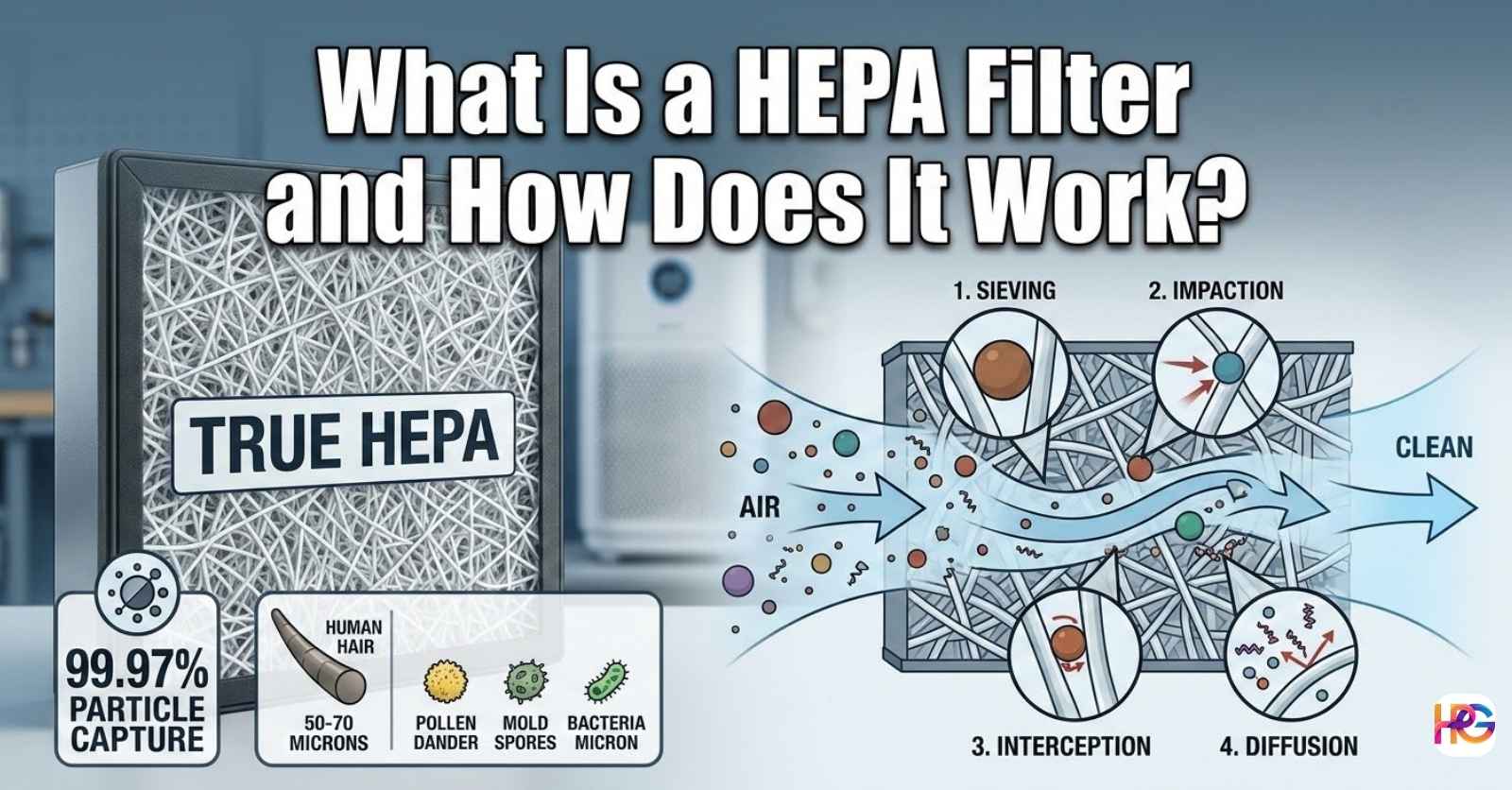
The air must twist and turn through the thick maze. As the dusty wind tries to push through, dirt gets trapped. The machine uses four real ways to grab the junk. Let us break down the hard science into easy steps. I promise to keep it fun and very simple today.
The Four Steps of Trapping Dust
How a HEPA Filter Captures Tiny Dust
Step 1: Basic Sieving
Step one is just basic sieving inside the thick strings. This is the easiest part to see in your brain. It works exactly like the screen door I talked about. Big house dust flies right into the wild glass strings. A piece of dog hair cannot fit through tight gaps.
The hair gets stuck firmly between two thick glass strings.
Step 2: Strong Impaction
Step two is a bit more rough and very fast. We call it strong impaction in the science nerd world. Think of a big truck driving fast on a curvy road. The truck goes way too fast to turn very well.
When a sharp turn comes, the heavy truck fails fast. It crashes hard right into the solid stone rock wall. That is exactly what impaction is for the tiny dust. The wind turns sharp, but the heavy dust goes straight. It smashes right into the glass thread and stays stuck.
Step 3: Smooth Interception
Step three grabs dust that is a tiny bit lighter. We call this smooth interception in the testing lab rooms. Let us use the mountain road story one more time. Picture a small sports car on that same curvy road. The small car makes the sharp turn very well indeed.
It follows the windy path of the fast moving air. But the road is super tight and very narrow now. The car mirror scrapes the cold metal guard rail hard. The dust grazes the side of the string and sticks. It gets snatched up fast by the sticky glass fibers.
Step 4: Tiny Diffusion (Brownian Motion)
Step four is the coolest part of the whole thing. We call this wild and shocking step fast tiny diffusion. It shows how the filter grabs the tiniest stuff floating. Parts smaller than 0.3 microns do not fly straight at all. They are so tiny that other air hits them often.
This fast hitting makes the tiny dust jump wildly around. Smart folks call this wild dance the Brownian motion trick. Because they bounce like fast pinballs, they hit strings often. They move too erratically to ride the smooth air path. They hit a glass wall and stick for good forever.
Where Are HEPA Filters Used?
Once you learn how great these filters are, you look. You start seeing them everywhere you go in the world. I used to think they were just for clean sick rooms. Now I check the bright boxes on stuff I buy. You will find them inside normal home tools very often.
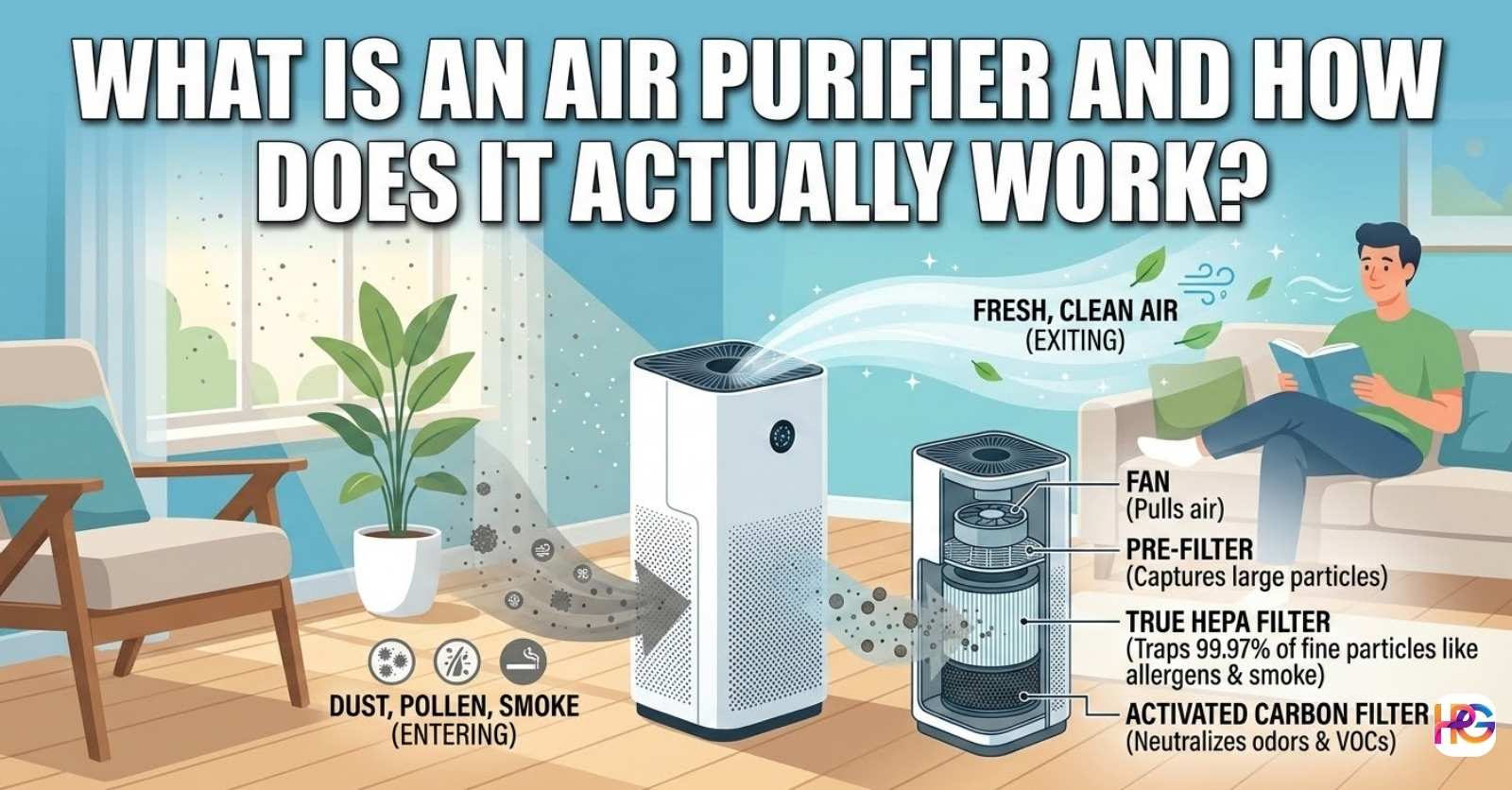
Air purifiers are the top way normal folks use them. You just plug the small box into your wall plug. A quiet fan pulls your dirty room air right inside. Fresh and clean air blows out the top thin slots. I keep one running by my bed every single night.
It fully stopped my bad morning throat pain for good. A really good vacuum also needs a great exit filter. If your tool lacks true HEPA, you just move dirt. The vacuum sucks up loose crumbs from your nice rug. The tiny dust blows right back into your eyes fast.
That is why my old tool smelled like hot dirt. A good brand seals all the junk inside the cup. Big home heating units use them a whole lot too. Many new air systems use thick and folded HEPA pads. They clean the air for the whole big happy house.
The huge fan in your heater pushes dirty air hard. The air hits the thick pad before reaching your vents. This easy step keeps your whole house smelling very nice. It protects your loved family from breathing bad air all day. Fresh air makes the whole home feel bright and safe.
Keeping Your Kitchen Air Fresh
We cook a whole lot of food in our homes. My kitchen gets very smoky when I use hot oil. Hot air fryers also blow out some nasty cooking fumes. A strong range hood helps pull that thick smoke out. But a good air cleaner grabs what the big hood misses.
The HEPA pad catches the tiny bits of burnt food. The carbon pad handles the strong smells of fried onions. I keep a small unit running near my main fridge. It keeps the whole food zone smelling clean and nice. This makes my daily kitchen chores much more fun now.
The Good and the Bad Sides
I always swear to be fully honest on my blog. No tool on this green earth is fully perfect ever. These thick filters are very great, but they have flaws. They cost money and take real effort to run well. I made a short list to show both clear sides.
Here is a fast look at the good and bad. I put the main facts in a small box here. This helps you weigh your own choices very fast now. Look at the facts before you spend your hard cash. Smart choices come from knowing the clear facts up front.
| Strengths Found Here | Areas to Fix Now |
| Grabs almost all fine dust | Costs cash to replace often |
| Makes zero bad air ozone | You cannot wash a real HEPA |
| Helps with basic sneezes | Needs a loud fan to push |
| Clears bad fire smoke out | Fails to block strong smells |
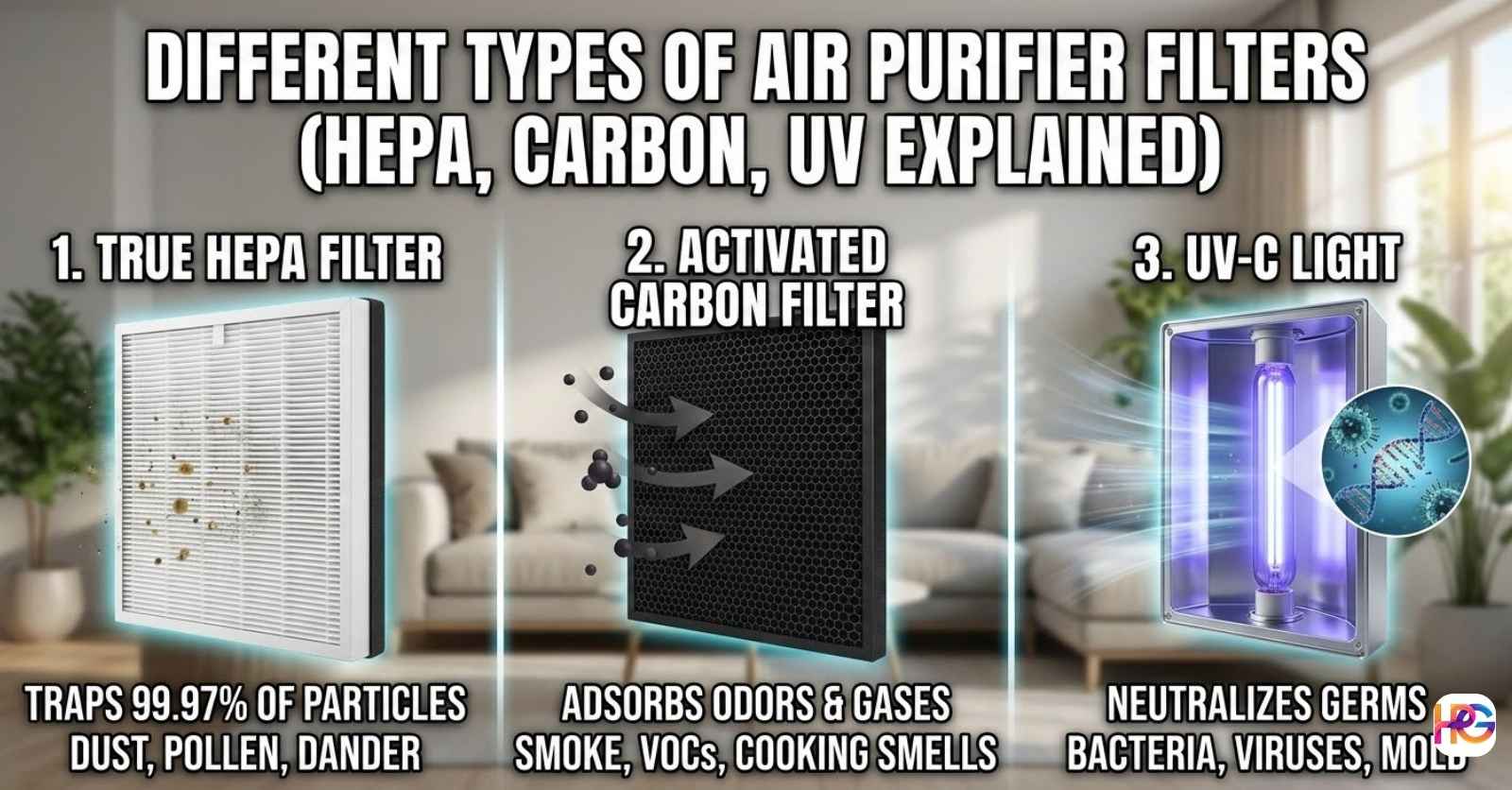
One big thing to spot is the strong smell issue. Glass strings only catch solid bits of real dry dust. They fail totally to block hidden gas forms and smells. If you fry fresh fish, the strong smell stays around. A normal HEPA pad will not stop that fishy odor.
You need a black carbon pad to soak up smells. Many top purifiers use both types of pads together now. They mix a carbon layer with a HEPA layer today. This smart mix keeps your home smelling super fresh always. It grabs the dust and blocks the bad fried fish odor.
My Bad Choice with Cheap Filters
I want to share a foolish mistake I made once. When I bought my first spare pad, I acted cheap. I tried to save five bucks at the local shop. I bought a fake brand that said HEPA type loud. It looked just like the real deal in the box.
It was plain white and folded up like a fan. But after one short week, my sneezes came right back. I learned the hard way that HEPA type means zero. Bad brands use those tricky words to fool nice buyers. The fake pads look close but fail the hard tests.
They let lots of tiny dust blow back at you. Always hunt for the words True HEPA on the box. Never settle for a cheap trick that hurts your lungs. It is just not worth the small cash you save. Your sweet health is worth much more than five bucks.
How Often Should You Swap Them?
This is a top question I hear from my readers. The life span depends on how dirty your house gets. I live in a very dusty spot right here today. Because of this sad fact, I change mine a lot. I buy a fresh pad every six months or so.
If your home stays quite clean, yours lasts much longer. You might get a full year out of one pad. Never try to wash a true HEPA with plain water. Wetting it fully ruins the weak glass web deep inside. The warm water breaks the tiny strings we talked about.
Once the strings are packed full of dark dirt, stop. You simply must throw the nasty pad in the trash. Then you go buy a brand new one from town. It is the only real way to keep air clean. A clean pad protects the fan motor from burning out.
Picking Better for Your Smart Home
Learning all this deep science changed how I buy stuff. These days, the cheapest vacuum on sale is no longer my first choice. Instead, I look closely for that strong 99.97% filtration promise and check whether the main unit seals properly. The goal is simple—keep every bit of dust trapped inside where it belongs.
Breathing clean air is not just a rich guy trick. It is key for our daily joy and long life. Since I got better tools, I sleep so much sounder. My nose stuff rarely makes me mad in the morning. The sun beams in my room look clear and nice.
They do not look like a dirty and wild storm. They just look like bright and warm morning sun light. Making smart tiny upgrades in your home tools works wonders. When you know the facts, you dodge the fake talk. Smart choices protect your entire home. Instead of wasting money on cheap foam that fails quickly, better tools become the smarter investment for your family. That small shift leads to a cleaner and healthier living space.
Frequently Asked Questions
Can I put a true HEPA filter in my shop vacuum?
Yes, brands like DeWalt and Makita make true HEPA filters for their wet dry vacs. They easily trap fine sawdust to keep your hot garage air safe and clean.
Will freezing winter cold ruin my HEPA air purifier?
Cold air will not hurt the dry glass strings inside a real HEPA filter at all. Just keep your workshop tools dry, as wet frost can quickly plug the tiny pores.
Is it safe to wash a HEPA filter from my table saw dust collector?
No, you should never wash a real HEPA filter with water. The heavy water breaks the weak glass web, so you must toss it and buy a fresh one for your safety.
Does a thick HEPA filter drop the suction power of my tool?
Yes, a thick HEPA filter will drop your suction power a tiny bit. The dense glass web makes the motor work harder, but you get much safer workshop air back.
Will a HEPA filter catch bad concrete and drywall dust?
A true HEPA filter easily grabs that fine white dust before it hits your lungs. Just check your Milwaukee or DeWalt manual to find the right size for your vac.