There is nothing like that low hum of the fan kicking on. I could already smell the crispy wings cooking. But then I looked up. Steam was curling right under my low cabinet. The wood felt dangerously hot. It was almost a Saturday morning disaster.
That close call woke me up. It is not just about finding empty counter space. It is about airflow and stopping heat damage. If you are wondering where to place air fryer in kitchen for safety, you have to think about the heat. Let’s find the perfect, safe spot for your machine.
The Prime Spot: Can I Put My Air Fryer on the Countertop?
Most of us treat this appliance like a toaster. We just shove it into the nearest empty corner and forget about it. I did this too when I first unboxed mine. But you have to shift your mindset. Treat it like a powerful mini-oven, not a harmless gadget. The countertop is usually the best place for it, but only if you prep the surface right. If you don’t, you might ruin your expensive counters.
Surface Material Matters
I used to think my granite counters were invincible. They feel cold and hard, right? But even tough stone like granite, marble, or quartz can suffer from something called “thermal shock.” That constant, focused blast of heat downwards can cause hairline cracks over time.
If you have laminate or wood counters, you are in the danger zone. These materials don’t handle concentrated heat well at all. I remember lifting my fryer after a 20-minute cycle of roasted veggies. I touched the laminate underneath, and it was scary hot. It felt soft, like it was ready to bubble up.
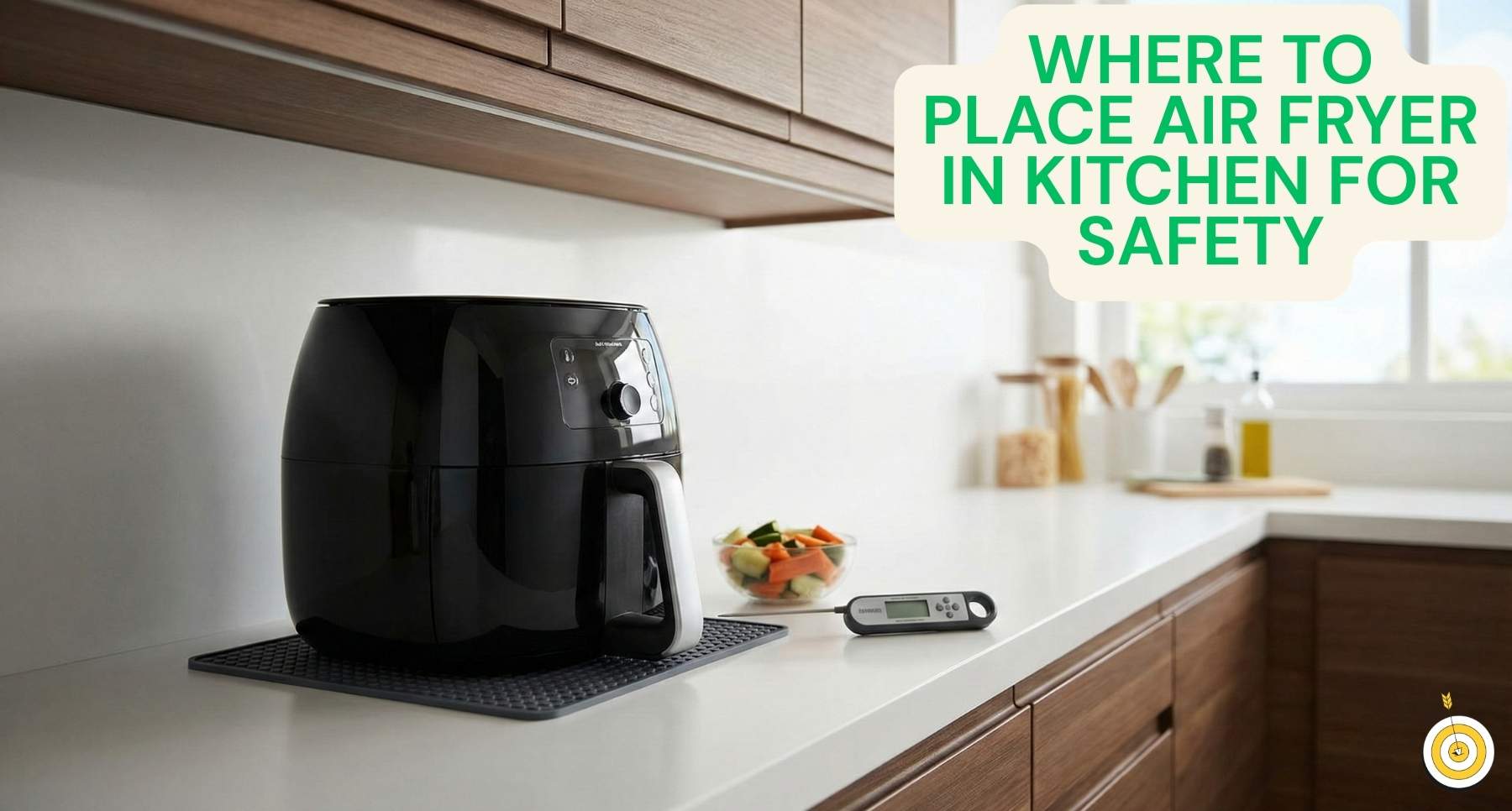
- Actionable Advice: Don’t take the risk. Put a barrier down. A simple silicone heat-resistant mat is perfect. Even a thick wooden cutting board works wonders. Think of it as cheap insurance for your kitchen remodel.
The Outlet Situation
Have you noticed how incredibly short air fryer cords are? It is annoying. I spent five minutes cursing mine the first time I tried to plug it in on a busy Tuesday night. But manufacturers do this for safety, not to be stingy.
Long cords act like tripwires. They get tangled or snagged on cabinet handles, which can pull the hot machine right off the counter. That is a disaster waiting to happen.
- The Golden Rule: Never use an extension cord. Air fryers draw a lot of power. Using an extension cord is a major fire risk.
- Check the Vent: Make sure the exhaust isn’t blowing hot air directly onto the power outlet itself. I almost melted a plastic nightlight that was plugged in next to my fryer because I wasn’t paying attention.
Understanding the Airflow Rules (The “20/20 Rule” and Spacing)
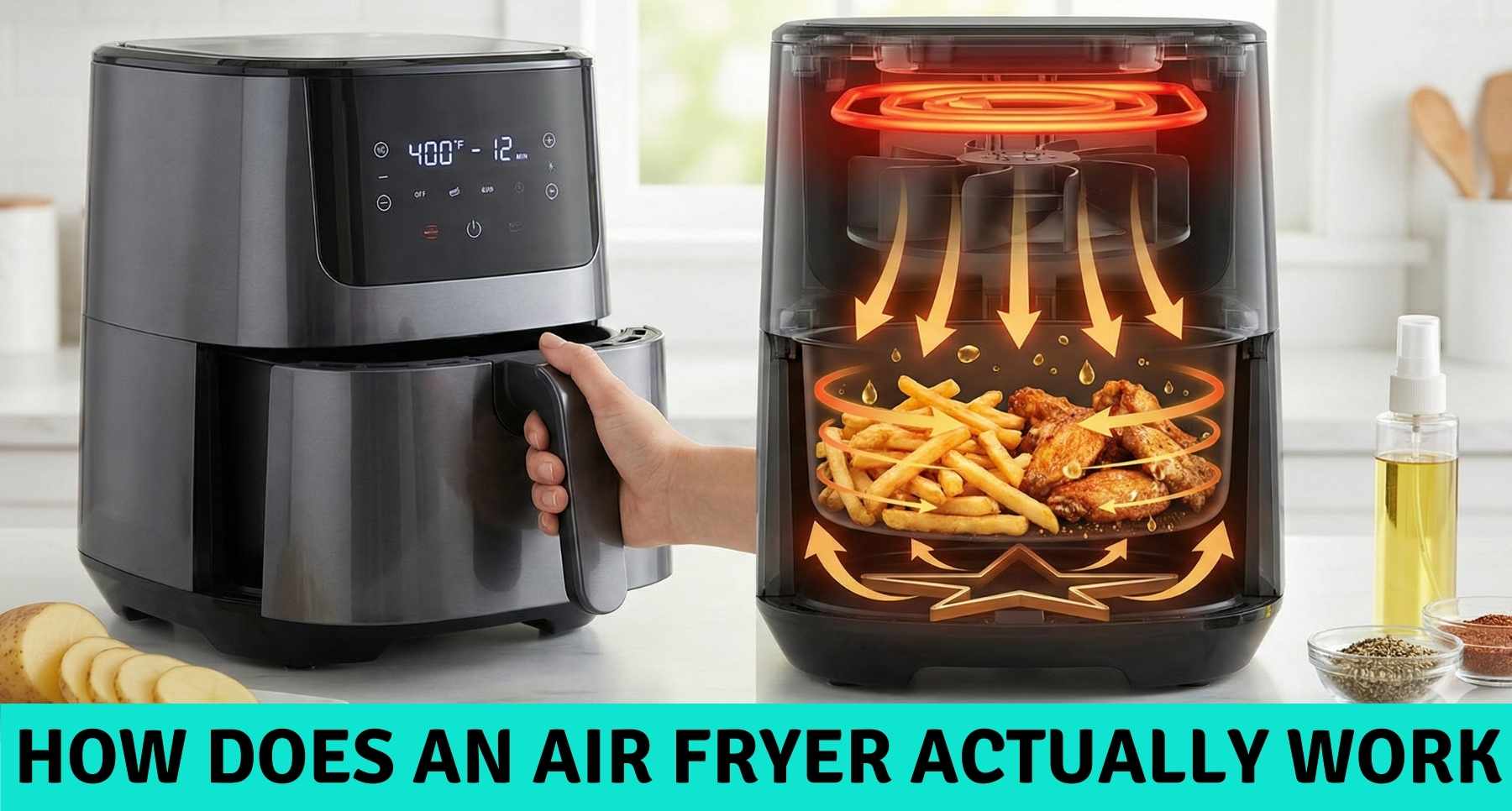
Think of your air fryer like a marathon runner. It needs to breathe. These machines work by whipping super-heated air around your food. But that air has to go somewhere. If the machine can’t exhale, it suffocates. This traps heat, which can damage the unit or warp your cabinet doors.
What is the spacing rule?
Most user manuals are strict about this. They demand a 5-Inch Standard (about 13cm) of empty space on all sides. However, you might see people online asking about the “20/20 rule.”
Usually, this rule is for eye strain at a computer. But in the kitchen, I use it to remember 20cm of space (about 8 inches). While 5 inches is the minimum, 20cm is ideal if you are cooking for a long time.
- The Hand Test: I do this every time I cook. Put your hand behind the unit while it runs. Does it feel like a hair dryer on high heat? If so, push the machine forward. If the wall feels hot to the touch, you are too close.
Vent Direction Awareness
You must find out where your specific unit vents. Most shoot hot air out the back, but some vent from the top.
I learned this lesson the hard way on a Sunday afternoon. I had a bowl of fresh fruit sitting just behind my air fryer. After an hour of cooking wings, I reached for an apple. It was warm and wrinkly. The exhaust vent had slowly cooked my fruit. Now, I always check the airflow direction before I turn the dial.
Danger Zones: Where Should Air Fryers Not Be Placed?
We all love a tidy kitchen. I hate clutter too. But you cannot hide this machine while it cooks. If you tuck it away in a tight spot, you are asking for trouble. A hidden air fryer is a recipe for melted plastic and warped wood.
Under Low Hanging Cabinets
This is the most common mistake I see. You might think your cabinets are safe, but steam is silent and sneaky.
- The Steam Effect: Air fryers release hot steam. When that moisture hits the bottom of your upper cabinets, it sits there. Over time, it destroys the wood. I ruined a cabinet door this way once. The steam loosened the glue, and the veneer layer started to peel right off.
- The “Hand Test”: Here is a quick check I use. Try to slide your forearm between the top of the fryer and the cabinet. If your arm does not fit easily, the space is too tight. Move it to an open island or a table.
Near “Melters” and Corner Nooks
It is tempting to push the unit into a “dead corner” to save space. Usually, that is where we keep the bread bin or the butter dish.
I learned this lesson the hard way. I once shoved my fryer into a corner next to a loaf of white bread. After ten minutes, I smelled something weird. It wasn’t the food. The hot side of the fryer had melted the plastic bread bag. It fused right to the unit. It was a mess to clean up.
Items to banish from the zone:
- Butter dishes: They will melt into a puddle.
- Spices: Heat kills the flavor of your expensive spices.
- Plastic utensils: Keep spatulas far away.
On the Stove Top
This is the ultimate “No.” I know why people do it. They want to use the range hood fan to catch the smoke. It seems smart, but it is incredibly risky.
The Risk: It only takes one accident. You bump a burner knob while moving the basket. You might not even hear the gas click or see the electric coil turn red. Within minutes, the bottom of your air fryer will melt. I have seen photos of this in user groups, and it happens more than people admit. Keep it on the counter, never on the stove.
Negative Side Effects of an Air Fryer (Caused by Bad Placement)
The machine itself is usually safe. But where you park it can cause household headaches. I used to think my fryer was just messy and loud. It turned out, I just had it in the wrong spot.
Smoke and Lingering Odors
This is a huge issue. If you place the unit far from a vent, grease gets trapped in the air. I remember walking into my living room two days after “Taco Tuesday.” I could still smell that heavy, greasy scent clinging to my curtains. It was gross.
The Fix: Put it near a window or your range hood. This helps pull the oily steam out before it settles on your sofa. Just remember the golden rule: never set it on the stove itself.
Noise Amplification
Air fryers naturally hum. But if yours rattles like an old car, check the placement. Pushing the unit right up against a tiled backsplash amplifies the vibration.
I once jammed mine against the kitchen wall to save space. The contact turned a soft hum into a loud, annoying buzz. It drove me crazy during breakfast. I pulled it forward just an inch, and the peace returned.
Why Are People Getting Rid of Air Fryers? (And Is It Just Clutter?)
I see them at thrift stores all the time. Brand new units sitting on the dusty shelf. It makes me wonder. Why give up on crispy fries? It is rarely about the food. The food is usually great. It is about the hassle. If you don’t have a good spot for it, the machine becomes a burden.
The “Counter Hog” Factor
Let’s be honest. These machines are huge. They are awkward and heavy. I tried the “hide it away” method for a week. Lifting a twenty-pound fryer out of a bottom cupboard every evening was a gym workout. I hated it.
If you have to wrestle your appliance out of storage to use it, you will stop using it. It is that simple.
- Reframing: You need a permanent home for it. If your counter is full, get creative.
- The Solution: I bought a small rolling cart for mine. Now, I just wheel it out when I need it. Some friends use an “appliance garage” to keep it on the counter but out of sight.
Size vs. Output
Size matters in a small kitchen. I have seen friends buy the biggest “XXL” model they could find. They get it home and realize it takes up their entire prep zone.
If you live in a small apartment, a massive dual-basket fryer is overkill. It blocks your cutting board. It touches the wall. Suddenly, cooking feels cramped and stressful. People donate them because they bought the wrong size for their specific kitchen layout.
Frequently Asked Questions
Where is the safest place to put an air fryer?
The best spot is a flat, heat-safe countertop. Keep it five inches from walls to let air flow. This prevents overheating and keeps your kitchen safe from fire risks.
Do I need a heat mat under my air fryer?
Yes, you should always use a mat. Air fryers get very hot on the bottom. A silicone mat or wood board stops heat from cracking your granite or melting laminate.
Can I use my air fryer under a cabinet?
No, do not put it under low cabinets. The hot steam can peel the wood finish. It also traps heat, which might damage the unit. Move it to an open island instead.
How much space does an air fryer need?
Most brands need five inches of open space. This helps the fan push out hot air. If the vent is blocked, the machine can overheat or break down much faster.
Is it safe to use an extension cord?
Never use an extension cord with this tool. It uses too much power and can cause a fire. Always plug it right into a wall outlet that is not loose or damaged.