It was cold in the Midwest today. I baked fresh sourdough bread. The house smelled so good.
I poured a hot cup from my Keurig pot. I saw gross chunks in my mug. A crunchy drink is sad.
You may ask, white flakes in coffee water reservoir: what are they? Hard water scale clogs the heat pipes. Do not trash your brewer yet. We can fix it now.
What Are the White Flakes in My Coffee Water Reservoir?
Let’s figure out what that crusty stuff actually is before you throw your machine in the trash. It is usually one of three things.
Calcium Deposits and Limescale (The Main Culprits)
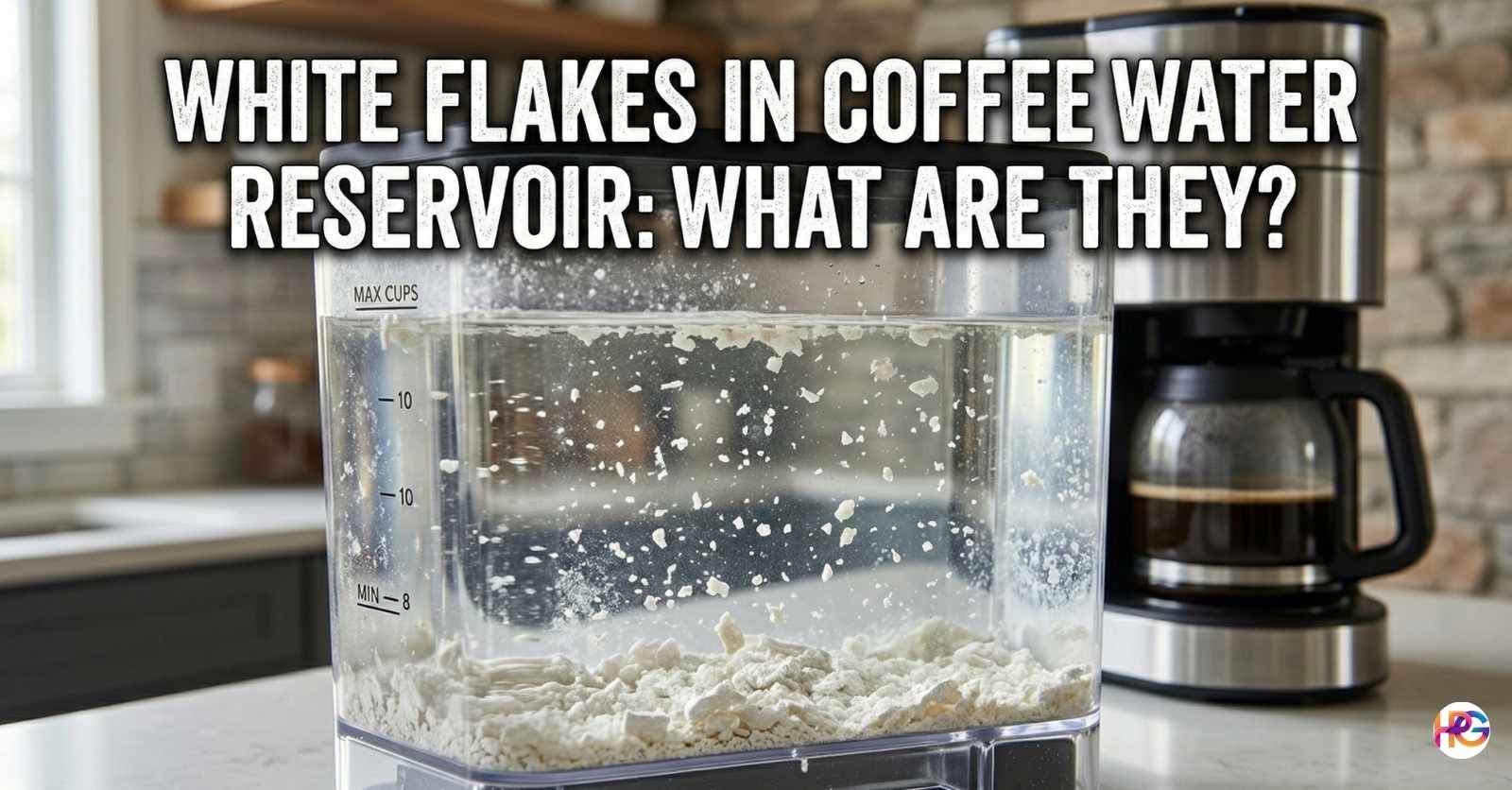
You are probably asking, what is the white stuff in my coffee maker? And why are there white chunks in my coffee? Most of the time, it is just calcium. If your house has hard water, that water is full of minerals. When your machine heats up, calcium carbonate drops out. It bakes right onto the plastic tank. I fished a dry flake out of my mug to check. I rubbed it between my fingers. It had a hard, chalky texture. It crumbled like tiny bits of drywall. It ruins your morning, but it is very common.
White Mold (The Gross One)
This is the one nobody wants to find. If you are searching how to clean mold from coffee maker reservoir, check the flakes first. Limescale feels like hard rock. Mold feels soft, fuzzy, or slimy. I once left water sitting in my tank before a long weekend trip to the lake. I came back Sunday night to a slick, slimy film floating in the corners. If the floaties feel gooey, do not brew it. Dump it out fast.
Plastic Residue or Filter Debris
Sometimes, those flakes are not minerals or mold at all. They are just debris. Many brewers use tiny charcoal water filters inside the tank. If that small filter rips open, it leaks white and black specks into your water. Also, if you just took a brand new machine out of the box, it might be leftover manufacturing dust from the factory.
Is Sediment in Coffee Bad?
Nobody wants to drink chalk. I stared at my mug and wondered if I should just drink it anyway. I really needed the caffeine. But will a few weird chunks actually hurt you? Let’s talk about safety.
Are Those Floaties Safe to Drink?
You might ask, is sediment in coffee bad? And what are the floaties in my coffee anyway? If the flakes are hard, white calcium, you are totally safe. It is just a tiny rock. Your bones might even like it. But it completely ruins the taste. A sip of gritty coffee feels awful on your tongue. It makes the brew taste bitter and flat. I spat mine right into the sink.
Now, if those flakes are soft and slimy mold, that is a big health risk. That sediment is definitely bad. Dump that gross mug down the drain right away. Wash the cup with hot soap.
Why Does My Coffee Have Sediment? (Coffee Grounds vs. Flakes)
Lots of friends ask me, why does my coffee have sediment? We need to look at the color of the sludge to find out.
If the bottom of your cup is dark, brown, and muddy, do not panic. Those are just tiny coffee grounds. It usually means your paper filter folded over during the brew. Or maybe you ground your fresh beans way too fine for your machine. That is just a simple filter issue.
But if the chunks are white and flaky, you have a water issue. That is mineral scale from your home plumbing. Your tap water is simply too hard.
How to Get Rid of Calcium Deposits in Coffee Maker
Time to roll up our sleeves and wash the tank. Do not worry, it is actually really easy.
What Dissolves Calcium Deposits Best?
So, what dissolves calcium deposits best? You probably have the answer in your kitchen right now. Friends always ask me, can vinegar dissolve calcium deposits? Yes, it absolutely can. I usually grab plain white vinegar from my pantry. It is super cheap and it eats right through the crust. But I will be honest, the smell is harsh. It makes the house smell like warm pickles. If you hate that sour smell, buy some citric acid powder instead. It works just as well and leaves a clean, sweet scent behind.
Step-by-Step: How to Clean a Coffee Maker Water Reservoir
Here is my simple method for how to clean a coffee maker water reservoir. If you are stuck wondering how to remove limescale from coffee machine pipes, just follow these quick steps.
- Step 1: Empty and Rinse. Dump the old water down the drain. Give the tank a quick rinse in the sink.
- Step 2: Mix the Solution. Fill the tank with half fresh water and half white vinegar. Pour it right in.
- Step 3: Brew and Soak. Start a normal brew cycle. Stop the machine halfway through. Let that hot vinegar sit inside the heating element for 30 minutes. It slowly eats away the rock-hard scale.
- Step 4: Finish the Cycle. Turn the maker back on. Let it finish brewing the rest of the dirty liquid into the pot.
- Step 5: The Fresh Water Flush. Run two or three full pots of plain water through the brewer. You must do this part. I rushed this step once on a busy Monday morning. My next cup of coffee tasted like warm salad dressing. It was completely awful.
How to Prevent White Flakes From Coming Back
Once the tank is crystal clear, you want to keep it that way. I honestly hate cleaning. So, I learned how to stop the mess before it starts. Hard water from your sink is the real enemy here.
Stop Using Tap Water
If your tap water is hard, the chalky flakes will come right back. I live in a house with very hard water. My kitchen sink gets a white crust just from washing dishes. I finally stopped using tap water for my daily brew. You should switch to clean, filtered water. I just keep a water pitcher filter in my fridge. Cold, filtered water makes the coffee beans taste so much sweeter anyway.
A Simple Maintenance Routine
You need an easy habit to keep things fresh. I set a loud alarm on my phone for the first Sunday of every month. If you use hard tap water, descale your coffee maker every single month. If you use filtered water, you can wait three months between washes.
Here is my best lazy trick. When you finish making your coffee, just leave the water reservoir lid wide open. Fresh air flows in and dries the wet plastic. A dry tank stops gross, slimy mold from ever growing. It saves you so much extra work later.
Is My Coffee Machine Damaged Permanently?
Sometimes the mess is worse than just a dirty water tank. Here is how to know when you should just give up.
Signs Your Heating Element is Toast
My old brewer died last winter. I pushed the brew button on a freezing Sunday morning. The machine made a loud, angry gurgling noise. It choked and sputtered. But no water came out at all.
When the water finally did drip out, my coffee was just lukewarm. It was incredibly sad. Why does this happen? Thick limescale builds up deep inside the internal heating tubes. That hard scale acts just like a thick winter coat. It blocks the heat entirely. The hot metal coils cannot actually reach the water.
If your brewer is choking, try cleaning it first. Run the vinegar descaling steps two full times. If the coffee is still cold after two washes, the internal pipes are ruined. The damage is permanent. You can finally throw it in the trash and buy a fun new one!
FAQ: White Flakes in Coffee Water Reservoir
Q: What are the white flakes in my coffee water reservoir? A: Those white flakes in your coffee water reservoir are just hard mineral scale. Tap water leaves calcium behind as it heats. Read our Home Pick Guide steps to fix it now!
Q: Is sediment in coffee bad for your health? A: You may wonder, is sediment in coffee bad? Hard white calcium flakes will not hurt you. But they make your morning brew taste awful. Find out when to dump your cup out!
Q: How to get rid of calcium deposits in coffee maker? A: You can quickly learn how to get rid of calcium deposits in coffee maker tanks. A simple vinegar wash eats the rock away. Check out our easy steps to descale your pot.
Q: Can vinegar dissolve calcium deposits safely? A: Yes, plain white vinegar works great! So, can vinegar dissolve calcium deposits? It eats right through the hard scale fast. See our guide to flush your Keurig out safely.
Q: How to prevent white flakes from coming back? A: Stop using hard tap water in your tank. Switch to filtered water to prevent white flakes from coming back. Leave the lid open to dry. Explore our maintenance tips today!