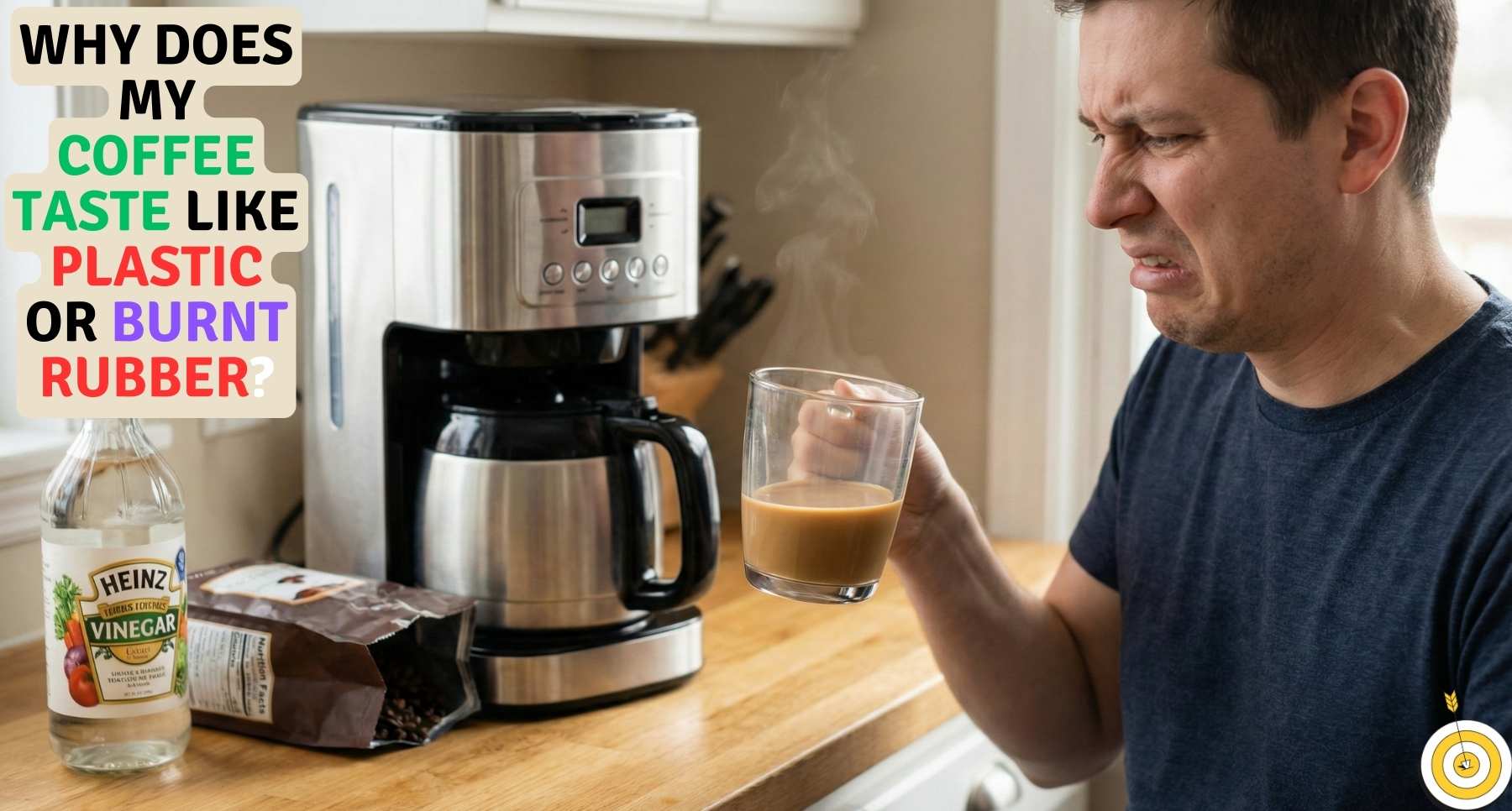
It’s 7:00 AM. The house is quiet. You grab your favorite mug, ready for that first life-giving sip. But instead of roasted bliss, you get hit with a nasty surprise. It tastes like a melted tire.
I know that look on your face. It is pure frustration. You just want your caffeine fix, not a chemistry experiment. Nobody wants their morning ruined by a cup that tastes like chemicals.
I have been there too. I once bought a shiny new coffee maker that made my whole kitchen smell like a shoe store. Whether you have a brand-new machine or an old faithful brewer, this issue is common. You are likely asking, “Why does my coffee taste like plastic or burnt rubber?“
Don’t worry. You usually don’t need to return it. In this guide, I will show you why this happens—from new machine “off-gassing” to dust on the heater. Then, I will share the exact steps to flush that funk out for good. Let’s fix your brew.
The “New Car Smell” Problem: Why New Coffee Makers Taste Like Plastic
There is nothing quite like unboxing a new gadget. You rip off the tape, peel away the protective film, and plug it in. You expect liquid magic. But that fresh factory scent? It definitely does not belong in your mug.
If your new coffee maker tastes like plastic, don’t panic. You didn’t buy a lemon. You just skipped a crucial step that the manual barely mentions.
Understanding “Off-Gassing” and Manufacturing Residue
Why does a machine built for water taste like a chemistry set? The simple answer is “off-gassing.”
When plastic parts are made in a factory, they go through a process called injection molding. To get the plastic out of the molds easily, manufacturers use release agents and industrial lubricants. Think of it like greasing a cake pan.
When you unbox the machine, traces of these manufacturing oils are still clinging to the water reservoir and internal tubes. As soon as hot water hits those parts for the first time, those oils heat up and release Volatile Organic Compounds (VOCs) into the air—and into your brew.
I remember unboxing my first single-serve brewer on a Tuesday morning. I was desperate for caffeine. But five minutes after hitting “brew,” my whole kitchen smelled like a department store shoe section. It was that distinct, sharp scent of a new vinyl shower curtain. If you smell that, you are definitely going to taste it.
Is It Dangerous? (The Trust Factor)
This is the big question I always get: “Am I drinking melted plastic?”
Take a deep breath. It is highly unlikely that your machine is melting. Most reputable brands use heat-resistant, BPA-free plastics designed to handle boiling water.
The nasty flavor isn’t the structure of the machine breaking down. It is just that surface residue washing off. It is gross, sure. But it is usually temporary. You aren’t drinking toxic sludge; you are just tasting the factory floor. We just need to give it a proper bath to wash those industrial leftovers away.
The “Burnt Rubber” Taste: Issues with Older Machines
Sometimes, an old friend turns on you. You have had your coffee maker for years. It has been faithful. Then, one random Tuesday, it betrays you.
If an older machine starts acting up, that sudden burnt tire flavor is not “off-gassing.” It is a warning sign. You should not ignore it.
Burnt Dust and Grime on the Heating Element
Here is a scenario I have lived through. I went on a vacation for two weeks. My kitchen was empty and quiet. Dust settled on everything, including the inside of my brewer.
When I got home and hit the power button, the machine got hot fast. That layer of dust on the internal heating element scorched instantly. Suddenly, the coffee maker smelled like burning plastic.
If you haven’t used your machine in a while, this is likely the culprit. The dust burns off, and that smoky aroma gets pulled right into the brew basket.
The Sniff Test: Lean in close to the top vents of the machine. Does it smell like hot, dusty air? If so, run two cycles of plain water. That usually clears the grime and fixes the taste.
Wearing Out: Gaskets, Seals, and Electrical Wires
Now for the scary part. Sometimes, burnt rubber actually means burnt rubber.
Coffee makers are tough, but they are not immortal. Over years of daily use, the internal rubber washers, seals, and plastic tubing can degrade. They get brittle, crack, or even melt slightly near the boiler.
You need to pay attention to safety here. If the coffee tastes like metal or you see wisps of acrid smoke coming from the base, stop. This is often an electrical short melting the plastic casing or wire insulation.
My Rule: If it smokes, unplug it. Do not try to flush it. It is not worth the fire risk. It is time to say goodbye and buy a new one.
Water Quality: When the Culprit isn’t the Machine
We often blame our expensive gear. It is easy to point a finger at the machine when things go wrong. But sometimes, the issue comes straight out of the kitchen tap.
If your water tastes bad, your coffee will too. Coffee is 98% water, after all. Before you take your brewer apart, let’s look at what you are pouring into it.
Chlorine and Chemical Reactions
I once blamed my machine for a whole week. Every cup tasted medicinal and sharp. The pot got scrubbed and the filter was replaced, yet the taste still refused to improve. At that point, throwing the machine away almost felt justified.
Then, I drank a glass of water from the sink. It tasted like a swimming pool.
It turned out the city had just flushed the water lines. Municipal water treatment plants use chlorine to keep water safe. That is good for health, but bad for flavor. Chlorine reacts with the natural oils in coffee. This reaction creates a harsh chemical taste that mimics burning plastic.
If you have hard water, the extra minerals can also mess with the flavor. But usually, that swimming pool smell is the real enemy.
The “Metallic” Twinge
You might be asking, “What does it mean when coffee tastes like metal?“
This is different from the plastic smell. A metallic taste usually points to plumbing, not the brewer itself.
If you live in an older home, your copper pipes might be leaching flavor into the water. In other cases, the water itself might be acidic. Acidic water can react with the metal heating boiler inside your machine, especially in high-end espresso machines. The water slowly eats at the metal, and that sharp, penny-like flavor ends up in your morning cup.
The Beans: Are You Drinking “Burnt” Coffee?
Sometimes the hardware is innocent. The beans might be the real villains. You might have just bought a bag that was roasted within an inch of its life.
Dark Roasts vs. Burnt Rubber
There is a fine line between “bold” and “burnt.” I learned this lesson the hard way. One Sunday I ran out of my usual coffee and grabbed a cheap bag labeled “Extra Dark French Roast” from the corner store. A fresh pot was brewed soon after.
It did not taste smoky or rich. It tasted like I was drinking liquid asphalt.
Here is the truth. Cheaper coffee blends often use Robusta beans. These beans are high in caffeine, but they naturally have a bitter, rubbery flavor profile. If they are roasted too dark, that rubbery note gets amplified. It creates a harsh, acrid flavor that mimics the taste of burning plastic.
Quick Test: Before you grab a screwdriver to take your machine apart, stop. Buy a small bag of high-quality, medium-roast beans. Brew a fresh pot. If the burnt rubber taste vanishes, your machine is fine. You just need better beans.
How to Fix It: The Ultimate Flushing Guide
Enough talk. Here is the hands-on part where we roll up our sleeves. We are going to scrub that chemical funk away for good.
You don’t need expensive cleaners. You probably have everything you need in your pantry right now.
The Vinegar Solution (The Classic Fix)
I keep a gallon of white vinegar under my sink just for this. It is the gold standard for a reason.
The Recipe: Mix one part white vinegar with two parts water.
The Process:
- Pour the mixture into the water reservoir.
- Place a filter in the basket, but do not add coffee.
- Turn the machine on. Let it brew halfway, then turn it off.
- Let it sit for 30 minutes. This lets the hot liquid soak the internal lines.
- Turn it back on and finish the cycle.
Why it works: The acetic acid in vinegar is a powerhouse. It cuts through those manufacturing oils and breaks down mineral scale on the heating element.
The Baking Soda Method (For Stubborn Smells)
Sometimes, the plastic smell is stubborn. Or maybe you just hate the smell of vinegar.
If the odor seems stuck to the plastic tank itself, try baking soda. Dissolve two tablespoons of baking soda in a pot of warm water. Pour it into the machine and run a full cycle. Baking soda is a natural deodorizer. It neutralizes the acids that cause that nasty burnt rubber scent.
The “Just Water” Flush
This is the most critical step. Do not skip it.
Once you have cleaned the machine with vinegar or baking soda, you must rinse it out. Fill the tank with fresh, cold water. Run a full brew cycle. Dump the water. Repeat this two or three times.
If you forget this step, your next cup of coffee will taste like hot salad dressing. Trust me, that is a flavor you want to avoid.
When to Return the Machine
Most of the time, a good scrub fixes the issue. That annoying plastic funk is usually just surface oil. It washes away with vinegar and a little patience.
But sometimes, you just get a lemon.
I have a hard limit. I call it the “Five Flush Rule.” If I have cleaned a new machine five times and it still smells like a burning tire factory, I am done. At that point, it is not just residue. It is a manufacturing defect.
Do not force yourself to drink it. Pack it up. Take it back to the store. You deserve a coffee maker that makes coffee, not toxic sludge.
Did a vinegar flush save your morning? Or did you have to return your machine? Let me know in the comments below. I would love to hear your story.
Frequently Asked Questions
1. Is it safe to drink coffee that tastes like plastic?
It is rarely toxic, but it tastes very bad. The plastic taste comes from new parts. You must clean the tank first. Flush it with water to fix the flavor. It helps a lot.
2. How do I get the plastic taste out of my coffee maker?
Use a mix of white vinegar and water. Run a full brew cycle. This cleans the oil inside. It removes the bad smell fast. Rinse with plain water two times.
3. Why does my new coffee maker smell like chemicals?
New plastic parts release gas when hot. This is called off-gassing. It is normal for a new coffee maker. You can fix it. Flush the machine to stop the smell.
4. Why does my old coffee maker smell like burnt rubber?
Dust often burns on the hot coils. This smells like burnt rubber. Clean the inside well. If the machine smokes, unplug it. It might be broken and very unsafe.
5. Why does my coffee taste metallic?
It might be your tap water. Chlorine causes a bad chemical taste. Old pipes add a metal flavor too. You should try using bottled or filtered water for a better brew.