
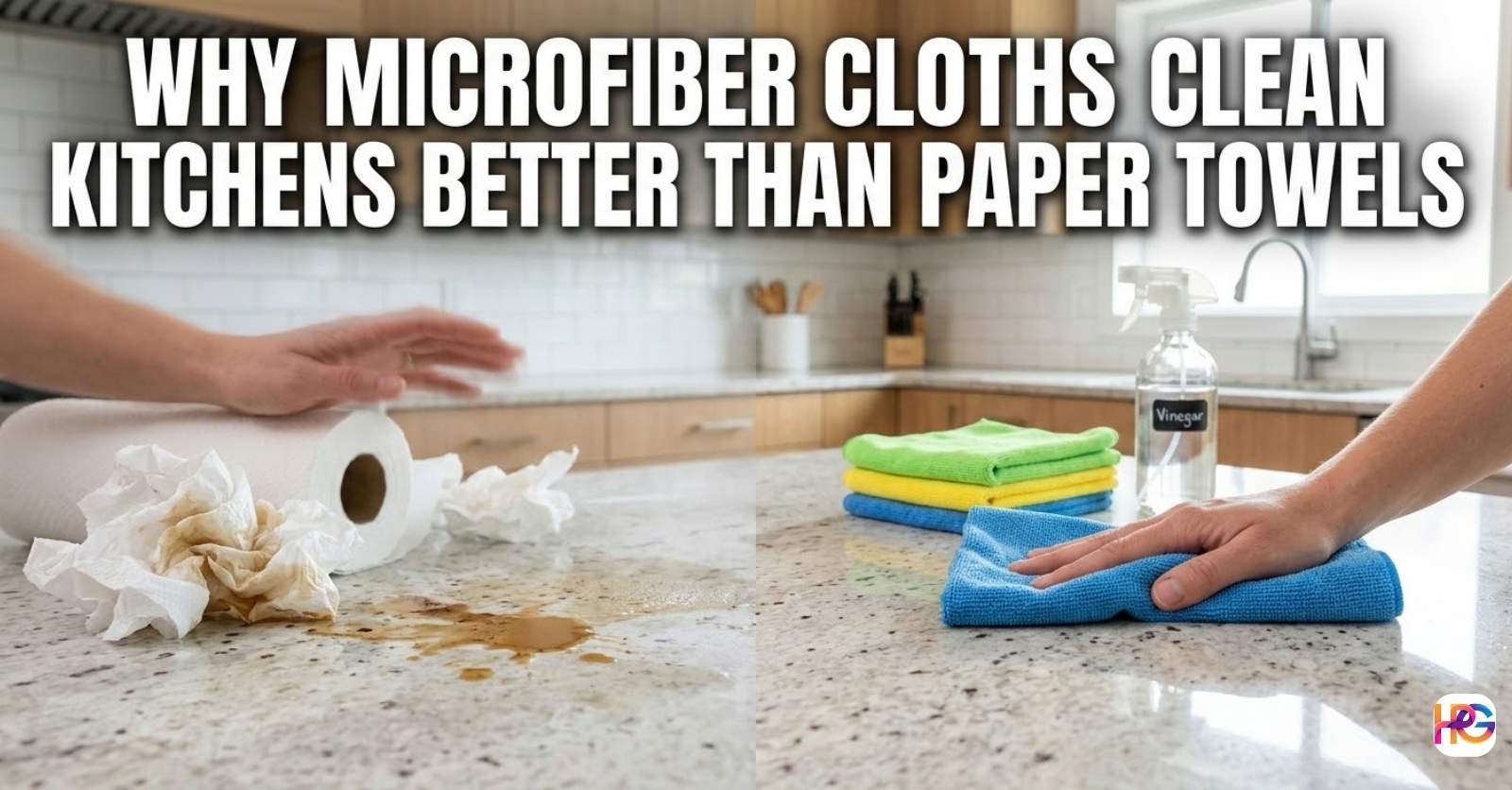
Why Microfiber Cloths Clean Kitchens Better Than Paper Towels
My Messy Kitchen Wake Up Call
Let me paint a picture for you. It was a very sticky morning here in Alabama. I was in the middle of my usual daily routine. My kitchen counter was a total disaster zone. Flour was everywhere. I bake a lot of sourdough bread during the week. A fine layer of white dust covered every flat space.
To make matters worse, I had just spilled my drink. I tipped over a fresh pot of coffee from my brewer. Dark liquid ran everywhere. I grabbed my trusty roll of paper towels. One thin sheet turned into five quick sheets. Soon, half the paper roll was gone.
The wet paper just pushed the sticky coffee around. It mixed with the flour to make a gross paste. It felt like a very sick joke. I kept wiping, but the mess just grew bigger.
That was the exact moment I knew things had to change. I run a site named Home Pick Guide. My whole goal is to help folks pick better and live smarter. Yet, here I was wasting cash and making huge piles of trash.
I decided to buy a pack of microfiber cloths that same day. The change in my daily life blew my mind. I want to share my true story with you today. This simple swap is a major home upgrade.
What Exactly Is A Microfiber Cloth Anyway
You have surely seen them in car shops. Maybe you saw them in store cleaning aisles. They feel very soft in your hands. Sometimes they catch on dry bits of skin. Have you ever wondered what they are made of?
Microfiber is a fake type of fabric. Factories make it from a mix of plastics. It uses polyester and nylon parts. The real magic happens during the making phase. Machines split the tiny threads until they are super thin.
We are talking about strands much thinner than a human hair. This splitting process changes how the cloth acts. It makes millions of tiny hooks in the fabric. It also creates lots of open gaps.
Regular cotton rags look like smooth pipes under a lens. Microfiber looks like a star with lots of sharp points. Those sharp edges do all the hard work. They scoop up dirt like tiny shovels. This design is what makes them so special for daily chores.
How Microfiber Traps Grease And Bacteria
I used to think you needed harsh bleach to clean well. I thought strong soap was the only way to kill bugs. I was very wrong about that fact.
These small cloths do heavy work with just tap water. It sounds too good to be true. I promise you it is real science. The secret lies in the special plastic mix.
The blending of fibers makes a tiny static charge. Think about rubbing a balloon on your hair. It works just like that. Dirt, heavy dust, and tiny bugs carry a different charge. The cloth acts like a giant magnet. It pulls the bad stuff right off your counter tops.
The Magnet Effect In Real Life
Think about trying to clean a greasy stove. Paper towels just smear the old oil into a thin film. You wipe for ten minutes but it stays very slick. The oil never really goes away.
When I wipe my stove with a damp microfiber cloth, the grease vanishes fast. The tiny gaps in the fibers scoop up the heavy oil. They hold onto it tightly. The dirt cannot fall back out onto the stove.
These cloths can even pick up unseen germs. Science tests show they grab a huge amount of hidden bacteria. They lift bugs away from flat spaces easily. You do not always need strong toxic spray anymore. A damp rag does the job safely.
Paper Towels Versus Microfiber Cloths
Let us look closely at the real world data. I love seeing hard facts before I change a daily habit. Paper towels cost a lot of money over a whole year. You use a clean sheet once and throw it in the trash.
The waste adds up very fast. You pay for the paper, the plastic wrap, and the fuel to ship it. I made a simple chart to show the massive difference. This data matches my own personal use at home over the last year.
A Simple Cost And Value Chart
| Key Feature | Paper Towels | Microfiber Cloths |
| Cost Over Time | Very high and endless | Super low one time fee |
| Daily Waste | Huge amount of trash | Almost zero daily trash |
| Grease Cleaning | Smears and pushes oil | Traps and lifts oil up |
| Reusable Trait | Never reusable | Good for hundreds of washes |
| Streak Free Shine | Very rare to see | Happens almost every time |
The basic math is very clear to me now. Buying one good pack of cloths saves so much cash. You stop putting giant plastic bags of waste on the curb. It is a huge win for your wallet. It is also a massive win for the earth.
The Best Way To Use Microfiber In Kitchen Cleaning
You might think you just scrub in a messy circle. There is actually a much better method to follow. I learned this neat trick from pro cleaners online.
Never bunch the fabric up into a tight ball. Fold it neatly in half first. Then fold it in half one more time. This easy step gives you eight clean flat squares to use.
When one side gets too dirty, you just flip it over. Now you have a fresh side ready to work. This trick saved my sanity during busy days.
Tackling Kitchen Appliances Easily
I use one side for the sticky food counters. Another side cleans the dirty outside of my large blender. A third side wipes down my air fryer after I cook hot snacks.
This fold method stops you from spreading old dirt. It keeps the germ count very low. You can clean the whole room with just one square cloth.
Keeping Machines Looking Brand New
Coffee machines get dirty very fast. I use my brewers every single day. Coffee oils splash up on the plastic and metal parts. Hard water leaves white crusty rings near the water tank.
Paper towels used to leave tiny white lint bits all over my shiny black machines. It looked terrible. Now, I use a damp microfiber square. It wipes away the brown coffee stains in one simple pass. The metal parts shine like a new mirror.
My air fryer is another big challenge. Cooking hot wings leaves a sticky film of fat on the outside box. Before, I had to use strong spray soap to cut the fat.
Now, warm water and my blue cloth do the whole job. The fabric grabs the greasy film instantly. My machines look fresh out of the box again. It takes less than one minute to wipe them down fully.
Wet Cleaning Versus Dry Cleaning
Clean water is your best friend right here. You want the fabric damp, not dripping wet. If it holds too much water, it cannot soak up new spills.
I run mine under the cold tap and squeeze it out hard. This simple damp state is perfect. It cuts through thick kitchen grime fast.
Dry cloths are fully amazing for easy dusting chores. I keep a dry one handy to wipe loose flour. I clean my digital food scale with it safely. The static pull grabs the dry powder in one quick swipe. It stops the white flour from flying up into the air. This saves me from sneezing all morning long.
Tackling Really Tough Dried On Messes
Sometimes we miss a spill when it happens. A drop of red sauce dries hard on the floor. A splash of sweet juice turns into sticky glue on the tile.
Paper towels fall apart when you scrub hard. The wet paper tears into small messy pieces. You end up picking wet paper chunks off the floor with your fingernails.
Microfiber is built very tough. The strong plastic threads do not rip or tear easily. When I find a hard dry spot, I place a warm damp cloth over it. I let it sit for two full minutes.
The water softens the hard food gently. Then I use the sharp little fibers to scrub the spot away. I do not need a harsh metal scraper. The cloth handles the heavy scrubbing without scratching my nice tile floors.
Washing And Reusing Cloths The Right Way
I need to confess a big mistake I made early on. I ruined my very first set of nice cloths. I washed them with my regular heavy bath towels. I also added a bunch of thick liquid fabric softener.
When they came out of the hot dryer, they felt slimy. They pushed water around just like cheap paper towels. The thick softener coated all those tiny cleaning hooks. The wax ruined the special static charge completely.
Simple Laundry Rules I Follow Now
I had to throw that sad first batch away. Now, I follow strict washing rules to protect my new items. These steps keep them working like brand new for many years.
First rule, I only wash them with other microfiber things. Regular cotton towels leave fine lint everywhere. The little sharp hooks grab the loose lint. They get fully clogged up and stop working.
Second rule, I only use plain clear laundry soap. I never pour bleach in the wash load. I never use soft wax items. Sometimes I add a small splash of plain white vinegar. I put it in the final rinse cycle. This helps remove trapped food smells nicely.
Drying Tips For Long Lasting Use
Third rule, I dry them on a very low heat setting. Super high heat can melt the tiny plastic fibers easily. The cloth will get hard and scratchy.
They dry really fast anyway due to the open gaps. Often, I just hang them over a wood chair. The warm room air dries them in a few short hours. Taking good care of them saves you from buying new ones.
The Hidden Cost Of Paper Waste
Think about the whole journey of a paper towel roll. Trees get cut down in a huge green forest. Big loud trucks haul the heavy wood to a loud factory.
The factory uses tons of fresh water and harsh bleach. They turn the rough wood into soft white paper. Then they wrap the rolls in thick clear plastic. More trucks burn gas to bring them to your local shop.
You buy them, use them for ten seconds, and throw them away. A garbage truck burns more fuel to take them to a big dump. The cycle is very bad for our home planet.
Using a cloth stops this bad cycle fast. You wash the same rag week after week. It feels good to stop making so much daily trash. Small easy choices add up to make a huge global impact.
Other Budget Cleaning Tools I Love
Microfiber is the main star of the big show. Still, I rely on a few other cheap items daily. These basic goods keep my home shining bright. They cost almost nothing at the local store.
Plain clear white vinegar is a true miracle worker. I mix it with tap water in a cheap spray bottle. It melts hard white water spots off my metal sink. It leaves a very clean scent once the liquid dries up.
Baking soda is my absolute favorite gentle scrubber tool. Sometimes food burns onto a soup pot. I make a thick paste with warm water and the white soda. It lifts the black burn mark easily. It does not scratch the shiny steel at all.
Ditching Gross Sponges Forever
I also switched to a firm plastic dish brush. Foam sponges get gross and smell very bad fast. They hold wet germs deep inside the foam holes.
A good stiff brush lasts for many long months. Food washes out of the long bristles quickly. You can even run the brush through the hot dishwasher safely. This keeps it very clean and fully germ free.
My Final Thoughts On The Big Switch
Change is very hard for us sometimes. We get used to grabbing a paper sheet without thinking. Breaking that old bad habit took me a few full weeks.
Now, I never want to go back to my old ways. My cooking space feels cleaner than ever before. My trash can is not full of wet smelly paper every single night.
I save real money every time I go to the big store. I do not walk down the paper goods aisle anymore. It gives me deep peace of mind.
If you are tired of wasting your hard earned cash, try it out. Buy a small cheap pack online. Use a damp cloth on a gross greasy stove top.
The fast results will fully surprise you. It makes chores feel less like hard work. It truly is a much smarter way to live your daily life.
Frequently Asked Questions About Shop Cleaning Tools
Can I use microfiber cloths to clean my power tools?
Yes, they are great for wiping sawdust off your DeWalt or Makita drills. The dry cloth grabs fine dust fast without scratching the plastic body. Keep one in the hot garage to wipe dirt away.
Do microfiber cloths clean greasy garage stains better than paper towels?
They trap thick oil much better than thin paper towels. The split fibers lift heavy grease from your steel workbench easily. You can just wash the cloth instead of filling your trash bin.
How do I store my cleaning cloths in a cold workshop?
Keep your dry microfiber cloths in a sealed plastic bin. This stops cold air and keeps them from freezing if they get damp. A clean cloth is always ready for your Milwaukee hand tools.
Will thick tool grease ruin my reusable microfiber cloths?
Heavy black motor grease can stain the fabric over time. Wash dirty shop rags in warm water with strong clear soap. Do not dry them on high heat because that melts the tiny plastic threads.
Are stiff scrub brushes safe for cleaning metal tool parts?
A good plastic scrub brush easily removes stuck dirt safely. It will not scratch the smooth steel on your nice table saw. Pair the brush with a damp cloth for a fast and bright finish.