
It was a Tuesday morning. I remember because I was already running late for work. I had just finished a quick workout at home. All I wanted was a smooth, delicious chocolate protein shake. A fast and easy breakfast, right?
Wrong.
Whey protein went into the blender first, followed by milk, a banana, and ice. Then, the power button brought everything to life.
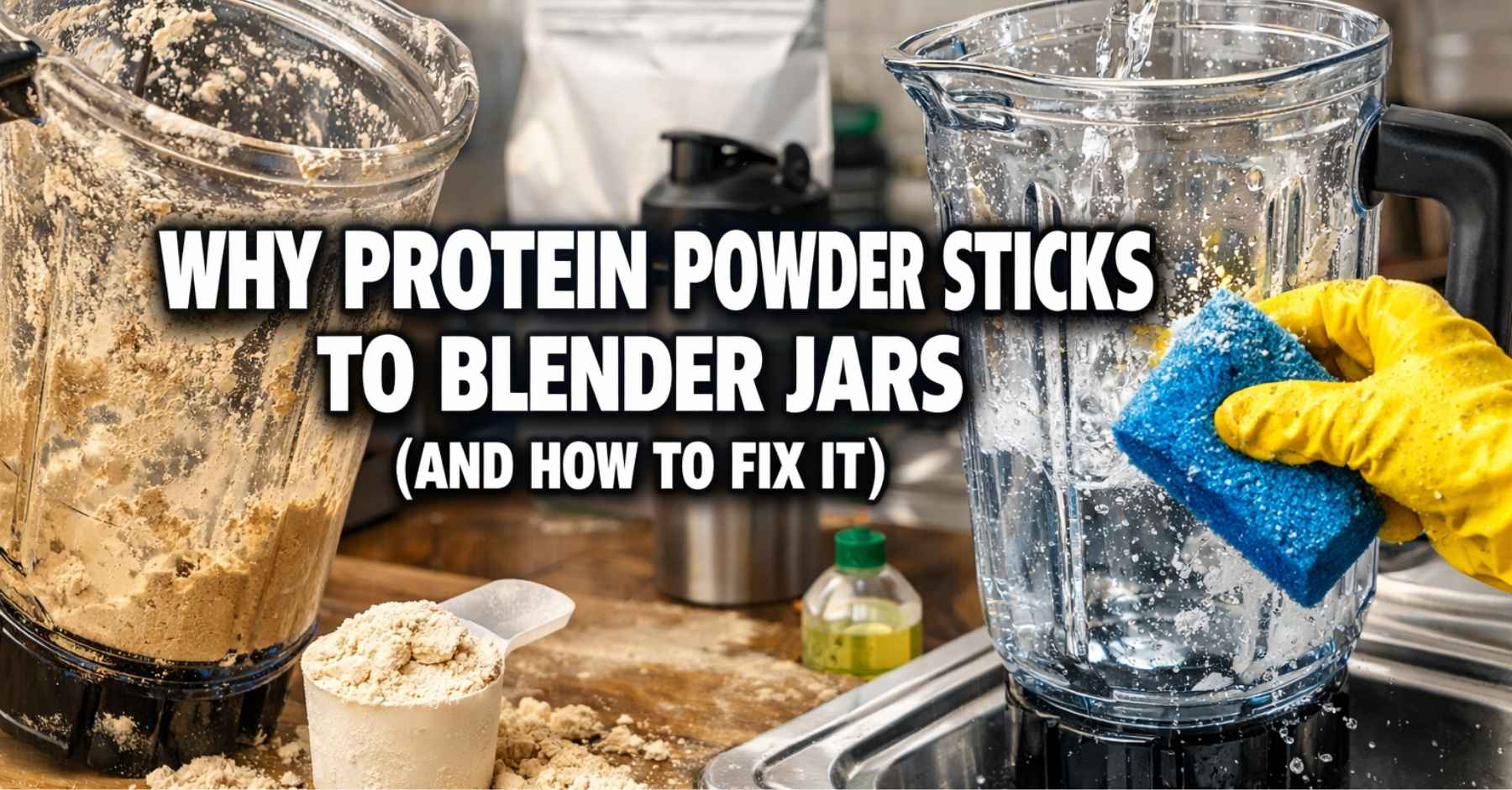
The blender roared to life. After a minute, I poured my “shake” into a glass. What I got was a lumpy, gritty mess. And to make it worse, a thick layer of wet powder was plastered to the sides and bottom of the blender jar. It looked like brown cement.
I was so frustrated. Not only was my shake ruined, but I had wasted expensive protein powder. Plus, cleaning that sticky mess was a nightmare. Does this sound familiar to you? If you’ve ever felt this pain, you’re in the right place.
I spent weeks trying to figure this out. I was tired of lumpy shakes and wasted supplements. I’m going to share everything I learned. We’ll look at why this happens and the simple tricks I now use to get a perfect shake every single time.
Why Does Protein Powder Turn Into Blender Glue?
I used to think my blender was just bad. Or maybe my protein powder was cheap. But the real reasons are actually pretty simple. It’s all about science.
The Clump Problem: It Starts Before the Blend
It turns out, the powder itself is part of the issue. Many powders are super fine. This seems like it would be a good thing, right? But it’s not.
- Static Cling: Fine powders can create static electricity. Think of a balloon sticking to your hair. The same thing happens in the tub of protein. The powder sticks to the scoop. It sticks to the sides of the tub. And it really wants to stick to the plastic walls of your blender jar. This is worse when the air is dry.
- Moisture is the Enemy: Have you ever left the lid a little loose? Or scooped powder with a wet spoon? Big mistake. Protein powder loves to absorb water from the air. When it does, it forms little clumps before you even start. These clumps are almost impossible to break up in the blender.
The Wrong Order of Operations
This was my biggest mistake. For years, I did it wrong. I would put the powder in the blender first. Then I’d add the milk or water.
This is the number one cause of sticking.
When you dump the powder in first, it creates a thick, dry layer at the bottom. The liquid sits on top. The blender blades spin, but they can’t reach that bottom layer. The liquid and powder don’t mix well. Instead, the powder gets packed down. It becomes a dense, sticky puck at the bottom of the jar.
Here is a quick look at what happens:
| Your Action | What Happens in the Blender |
|---|---|
| Powder First | Powder gets trapped under the blades. |
| Liquid on Top | Liquid can’t reach and mix the bottom layer. |
| Blend | Blades spin above the powder, creating a vortex that doesn’t help. |
| Result | A sticky, wasted layer of protein cement. |
My Step-by-Step Guide to a Perfect, Clump-Free Shake
After lots of trial and error, I found a method that works every time. It’s easy. It’s fast. And it will save you from the headache of a clumpy shake.
Step 1: The Liquid Goes In First
This is the golden rule. It is the most important change you can make.
Start by pouring your liquid into the blender. This could be water, milk, or a non-dairy milk like almond or oat. This creates a base for the powder to fall into. It allows the blender blades to create a whirlpool, or vortex. This vortex pulls the powder down from the top and mixes it in smoothly.
There’s no dry layer at the bottom. No sticky puck under the blades. Just a perfect mix.
Step 2: Add the Protein Powder Next
Now it’s time for the powder. With the liquid already in the blender, the powder has nowhere to hide. It falls right into the moving liquid.
I like to add my powder while the blender is on its lowest speed. This helps it mix in even better. If you don’t want to do that, just adding it on top of the still liquid works great too.
Step 3: Add Your Other Ingredients Last
Do you like adding fruit, ice, or spinach to your shakes? Add them last.
Putting heavy things like frozen bananas or ice on top of the powder helps push it down into the liquid. This ensures everything gets mixed in well. If you put ice in first, the powder can sometimes get stuck on top of it.
Here is my new and improved order:
| Order | Ingredient | Why It Works |
|---|---|---|
| 1 | Liquid (Water, Milk) | Creates a vortex to pull powder in. |
| 2 | Protein Powder | Mixes into the liquid, doesn’t stick. |
| 3 | Fruits, Ice, Etc. | Weighs the powder down for a better blend. |
Step 4: Use the Right Temperature
I used to love my shakes ice-cold. So, I would use milk straight from the coldest part of the fridge. This was another mistake.
Very cold liquids make it harder for the powder to dissolve. Think about dissolving sugar in iced tea versus hot tea. It’s the same idea.
Now, I use cool or room-temperature liquid to blend. If I want it cold, I add a few ice cubes at the end (Step 3). The shake still gets cold, but the powder mixes in perfectly first.
Extra Tips From My Kitchen
Those steps will solve 99% of your problems. But here are a few more pro tips I’ve picked up along the way.
The “Paste” Trick
If you have a very stubborn powder, try this.
Before you make your shake, put your scoop of protein in a small glass. Add just a tiny bit of your liquid (maybe two tablespoons). Use a spoon to mix it into a thick, smooth paste. It should look like frosting.
Once you have the paste, scoop it into your blender with the rest of your liquid. It will blend in perfectly. This trick is a lifesaver for thick or grainy powders.
Give It a Quick Rinse
Cleaning is the worst part. But I found a trick for that too.
As soon as you pour your shake, rinse the blender jar. Don’t let it sit. Just a quick rinse with warm water will wash away most of the leftover shake. If you let it dry, it turns into that cement I was talking about.
For a deeper clean, put a drop of dish soap and some warm water in the jar. Put it back on the base and blend for 30 seconds. It will clean itself.
Not All Powders Are the Same
I’ve learned that the type of protein matters. Whey isolate tends to be finer and can be more static-prone. Casein protein is thicker and can get very gummy. Plant-based proteins can sometimes be a bit gritty.
Don’t be afraid to try different brands or types. You might find one that just naturally works better with your blender and your recipes.
My journey to a perfect protein shake was long. But it was worth it. I no longer dread my post-workout meal. I look forward to a smooth, creamy shake every time. And my blender has never been cleaner.
So, next time you reach for that protein tub, remember these simple tips. Put the liquid in first. Add the powder second. Use cool, not cold, liquid. I promise you’ll notice a huge difference.
Happy blending!
Frequently Asked Questions
1. Does the type of blender I use cause my protein powder to stick?
Not usually. Most blenders can mix powder well. The problem is often the order you add things, not the blender itself. Using your tool the right way works wonders.
2. What’s the best way to load my blender to stop powder from sticking?
Always add your liquid to the blender jar first. Then, add the protein powder on top. This simple step helps almost any blender prevent that sticky, wasted mess.
3. Will a powerful blender, like a Vitamix, prevent powder from sticking?
A powerful blender helps a lot by breaking up clumps with sheer force. However, powder can still stick if you load it wrong. Always add liquid first, even with a great tool.
4. Should I use a high or low speed on my blender for protein powder?
Start with a low speed as you add the powder. This gently pulls it into the liquid. Once it’s mixed in, you can then switch to a high speed to make your shake smooth.
5. Is there an easy way to clean a blender jar after making a protein shake?
Yes, and it’s fast. Right after you pour your shake, rinse the jar. Then, add a drop of soap and some warm water. Blend for 30 seconds, and the tool will clean itself.