I learned this lesson on a rushed weeknight.
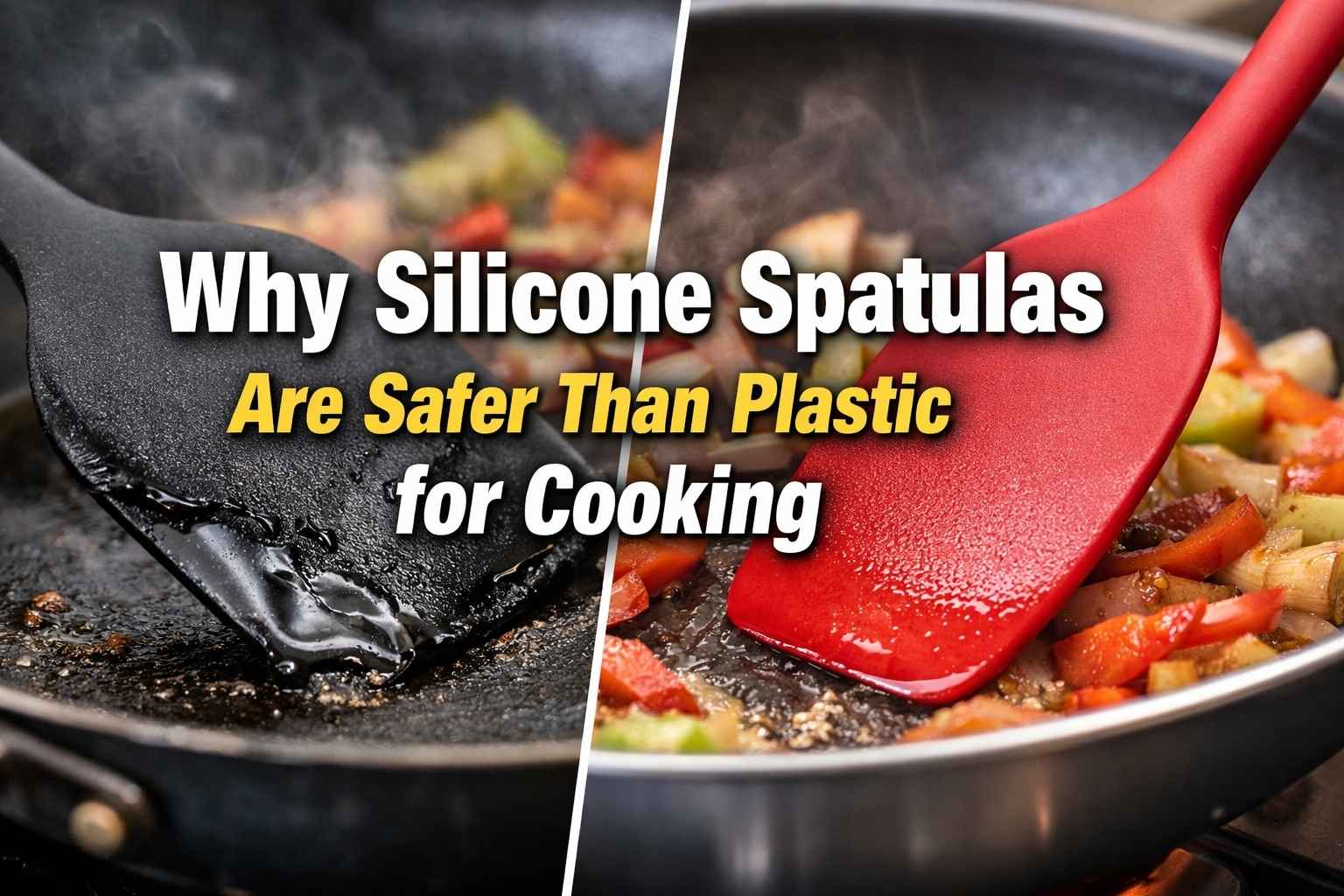
I was making eggs after work. The pan was hot. I left my plastic spatula resting inside for a minute.
When I came back, the tip had curled.
It looked warped and shiny. A sharp smell filled the kitchen. I threw the eggs away.
That small moment changed how I see kitchen tools.
Now I pay close attention to what touches my food. Over time, I moved from plastic to silicone.
Plastic vs Silicone Spatulas in Real Life
At first, I bought plastic spatulas because they were cheap.
They looked fine and felt light in my hand. I did not think much about heat back then.
After months of cooking, I saw wear and tear.
The edges got rough. Small scratches showed up. Some stains never came out.
Silicone felt different from day one.
It bent with ease but stayed firm on heat. The surface stayed smooth after many washes.
The change did not feel fancy.
It just felt safer and more solid in daily use.
How Heat Affects Plastic and Silicone
Heat is the main issue in this debate.
Most stovetop cooking goes above 350°F. Oil can climb past 400°F fast.
Many plastic spatulas are rated between 200°F and 400°F.
That means they can soften near normal pan heat. Mine did more than once.
Food-grade silicone often handles 450°F to 600°F.
That extra range makes a big difference. It gives a safety buffer when the pan runs hot.
Here is a simple comparison I keep in mind:
| Material | Common Heat Limit | What Happened in My Kitchen |
|---|---|---|
| Plastic | 200–400°F | Softened and warped |
| Silicone | 450–600°F | Stayed firm and stable |
Numbers matter when cooking with oil.
The higher limit of silicone gives peace of mind.
Health Concerns with Melted Plastic
The smell of burnt plastic is hard to ignore.
It smells sharp and bitter. That alone made me question what was happening.
When plastic overheats, it can break down.
Some types may release chemicals at high heat. Even BPA-free plastic can degrade.
Scratched plastic also worries me.
Over time, the edges chip and wear down. Tiny bits can mix into food without notice.
Silicone does not flake the same way.
It can tear if cut, but it does not chip from heat. That makes me feel more at ease.
What Temperature Rating Should You Choose
I now check labels before buying.
A clear heat rating is important. If I do not see one, I skip it.
For daily cooking, I look for at least 450°F.
That covers eggs, veggies, and sauces. Higher ratings add more safety.
Here is a quick guide I use:
| Cooking Task | Safe Minimum Rating |
|---|---|
| Eggs and pancakes | 400°F |
| Sautéing veggies | 450°F |
| Stir-fry dishes | 500°F |
| Oven contact use | 450°F+ |
Choosing the right rating prevents melting.
It also helps the tool last longer.
What I Look for in a Silicone Spatula
One-piece design is a must for me.
Early on, I bought one with a removable head. Water got trapped inside.
Now I pick solid designs with no seams.
They wash easily and dry fast. No hidden spots collect food.
A steel core handle adds strength.
Without it, the spatula can feel floppy. With it, scraping thick batter feels easy.
Texture also matters.
Good silicone feels smooth and firm. It should not smell strong when new.
Are There Any Downsides
Silicone is not perfect.
Bright sauces can stain it over time. My red pasta nights left faint marks.
It also costs more than plastic.
Still, I have used the same one for years. In the long run, it saves money.
Very soft silicone can struggle with heavy foods.
For big burgers, I still grab a metal turner. Each tool has its job.
Why I Stopped Using Plastic for High Heat
Gradually, I phased plastic out of hot cooking.
Cold mixing is fine. Heat is where I draw the line.
Cooking should feel calm and safe.
I do not want to worry about melting tools while making dinner.
Since switching, I have not smelled burnt plastic once.
That alone feels worth it.
Final Thoughts on Silicone Spatulas vs Plastic
Small tools make a big impact.
A spatula touches food every day. The material matters more than we think.
Silicone spatulas are safer than plastic for cooking at high heat.
They resist melting. They handle higher temperatures. They last longer in my kitchen.
Plastic still has a place for low heat tasks.
But for frying, sautéing, and daily stove use, I trust silicone.
Now when I cook eggs on a busy morning, I feel relaxed.
No curling edges. No strange smells. Just simple, steady cooking.
FAQ: Silicone Spatulas vs Plastic for Cooking
1. Are silicone spatulas safer than plastic for cooking on high heat?
Yes. Silicone spatulas handle up to 450–600°F in most cases. Plastic can soften near 350–400°F, which is common on a hot skillet.
2. Can a plastic spatula melt during normal stovetop cooking?
It can. If the pan gets too hot or the spatula rests on the edge, plastic may warp or melt. That can leave marks or smells in your food.
3. What heat rating should I look for in a silicone spatula?
Choose a silicone spatula rated at least 450°F. That covers frying, sautéing, and most daily cooking without risk of melting.
4. Do silicone spatulas last longer than plastic ones?
In my use, yes. Silicone resists heat damage and cracking better than plastic. It keeps its shape after many washes and hot meals.
5. Is a one-piece silicone spatula better than a two-piece design?
Yes. A one-piece silicone spatula is easier to clean and won’t trap water in the handle. It also feels stronger during heavy mixing.