
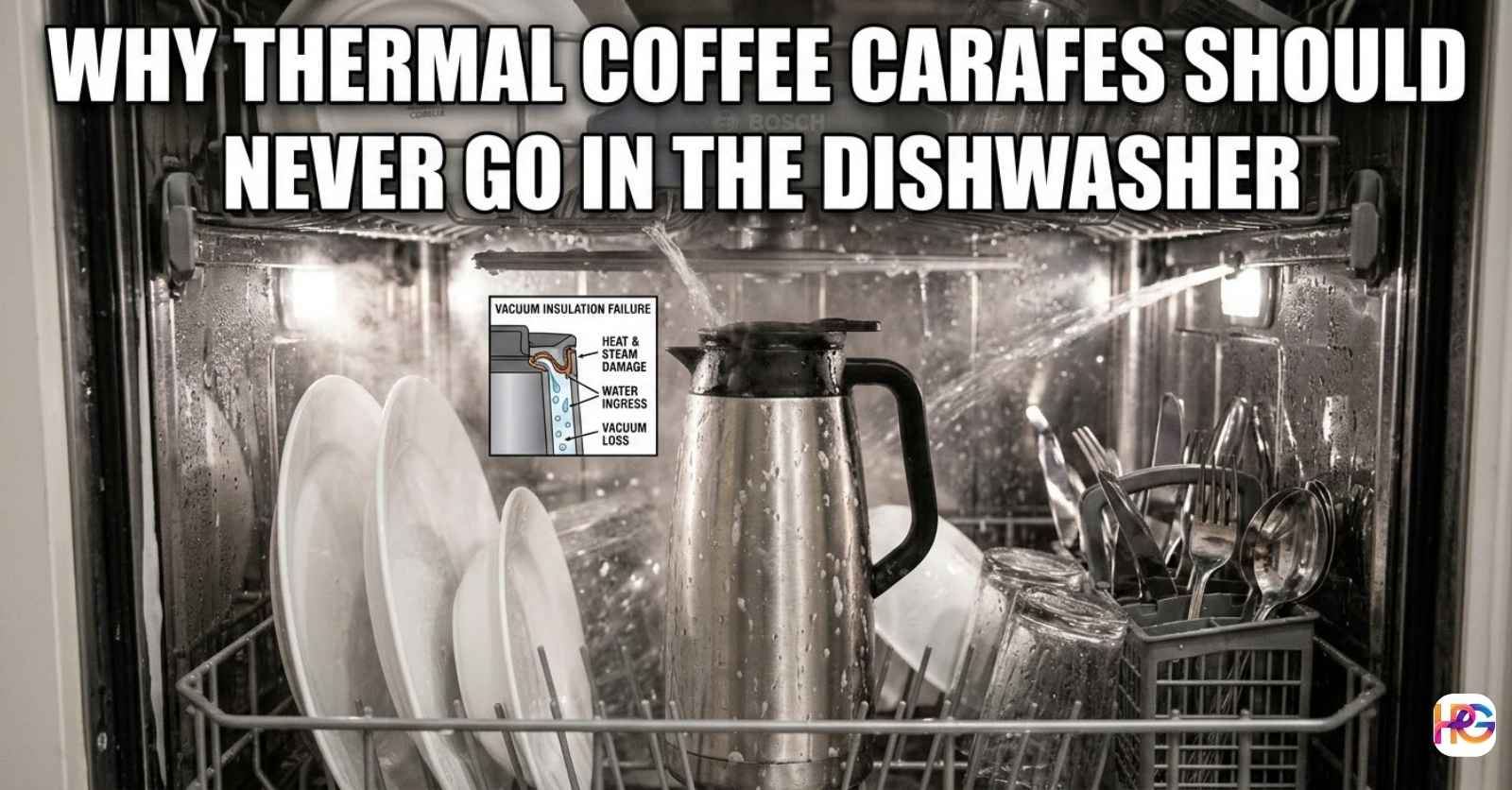
Why Thermal Coffee Carafes Should Never Go in the Dishwasher
A Costly Mistake in My Kitchen
It was a rainy day here in Alabama. The dark sky matched my sleepy mood. A warm cup of dark roast was what I needed. Testing home gear is my true job. Running my site helps folks find good kitchen tools.
My site helps folks buy the best gear. I test everything to give real facts. A good pot saves you time and money. Bad habits can ruin good gear fast. This is why I share my real tests.
That morning, I walked to the kitchen. My trusty Moccamaster was ready to brew. The house filled with the rich smell of fresh grounds. I grabbed a brand new thermal pot. My goal was to test the heat loss.
Later that week, I made a bad choice. Being lazy got the best of me. That nice metal pot went right into the wash. It was a bad move that ruined the item for good.
I love making coffee in many ways. A steel French press is great for rich taste. Sometimes I grab my AeroPress for a fast cup. But making a big batch takes a heavy duty machine. I keep a Bunn Velocity Brew at my office.
Big batches need a way to stay warm. Leaving a glass pot on a hot plate ruins the taste. The bottom burns and gets bitter very fast. Vacuum sealed pots fix this issue in a great way. They trap the heat inside without cooking the drink.
The Hidden Magic of the Vacuum Void
How do these thick metal jugs work so well? It really seems like pure kitchen magic. You pour hot water in and it stays hot all day. The big secret relies on empty space. Engineers build these pots with two steel walls.
One inner wall touches the hot drink. An outer shell forms the part that you hold. Factory machines suck all the air out. They pull the air from between these two walls. This makes a tight void with zero air inside.
Heat needs a path to move around. It uses air or solid things as a bridge. A true vacuum void gives zero bridges for the heat. Hot energy hits that empty gap and just stops. The heat stays trapped deep inside the middle chamber.
This smart design saves you from using a hot plate. Power bills go down without active heaters. Your taste buds stay happy because the flavor never burns. A good thermal pot is a must for any home. It keeps your daily brew perfect for hours.
What Extreme Dishwasher Heat Really Does
Washing machines act like a storm in a box. Strong jets shoot hot water in every way. Thick heavy steam fills up the whole space. Harsh soaps scrub hard against every part. All of this action spells doom for vacuum gear.
Water damage ruins the metal body slowly. Rust can form near the broken edges. A rusted pot is not safe to use. You must protect the outer shell from harm. Hand washing stops this damage from starting.
Your insulated jug has one major weak spot. A tight rubber ring sits near the top rim. This tiny seal holds the two metal walls together. Keeping the void locked depends on this small part. Dishwashers destroy this seal very fast.
Melting the Vital Rubber Seals
Steam cycles act like poison to soft rubber. High heat cooks the ring until it warps. The soft rubber stretches out and loses its grip. Tiny gaps form along the sealed edges. Room air quickly sneaks into the empty void.
Your magic thermal shield drops to zero right away. That costly pot becomes just a heavy metal pitcher. It will never hold heat the same way again. The damage is permanent and cannot be fixed. You lose your money and your good coffee pot.
The Dirty Hidden Water Trap
Things get even worse when the seal breaks. High pressure jets push dirty water past the rubber. Soapy wash liquid flows deep into the gap. You cannot see this hidden mess from the outside. Washing it out at home is largely impossible.
Dark spaces with wet trapped water will grow mold. Picking up the pot might reveal a gross noise. A quiet slosh means water lives inside the walls. Old dish water moving around is a terrible sign. You must throw the pot away if this happens.
Signs Your Thermal Carafe is Ruined
Spotting a broken pot is very easy to do. Maybe a friend ran it through a wash cycle. Perhaps you made a tired mistake like I did. Finding out the truth needs no special tools. Your bare hands and tap water will show the facts.
| The Simple Test | What You See or Hear | What It Means |
| Touch the outer shell | The metal feels very warm | Heat is escaping fast |
| Add pure ice water | The outside sweats heavy drops | The void is fully broken |
| Shake the empty pot | You hear sloshing noises | Dirty water lives inside |
| Time the heat loss | Hot brews cool in an hour | The gap is full of air |
Failing any of these simple checks means bad news. You must throw the broken item into the trash. Fixing a ruined vacuum seal is not an option. Learning this lesson cost me a good chunk of cash. Tossing broken gear away always feels like a loss.
Finding a broken pot can ruin your whole day. Coffee is the best part of the early morning. A cold cup makes the morning feel sad. Testing your gear saves you from this sad fate. Always check your pot if you doubt its safety.
The Truth About Dishwasher Safe Labels
Sometimes you see a box that claims it is safe. Brands print these bold words to sell more items. Folks love buying things that seem easy to clean. But read the tiny text hidden on the back. It usually tells you to use the top rack only.
The top rack stays slightly cooler than the bottom. However, the intense steam still reaches every corner. I never trust those printed claims on thermal items. My testing proves that hand washing is the only way. Risking a ruined void is not worth the saved time.
My office taught me this harsh lesson twice. Coworkers drink a ton of dark roast all day. Making huge batches keeps everyone happy and alert. Large thermal pots sit on the counter all the time. Trouble starts fast if someone loads one into the wash.
Two costly pots went straight to the trash last year. We had to buy brand new ones the next day. Now I leave a warning note near the sink. The note tells everyone to wash the pots by hand. It saves us money and keeps the coffee hot.
Safe Hand Wash Method for Daily Use
Avoiding the machine entirely is the only safe path. Cleaning by hand takes a few extra minutes. But this simple effort protects your costly kitchen gear. My daily wash routine is very basic and fast. It keeps the metal bright and smelling clean.
Fresh roasts always taste sweet from a clean jug. You will notice the difference in your very first cup. Dirty pots make even the best beans taste bad. A clean pot lets the true flavor shine through. Let me share my simple daily cleaning steps.
The Daily Rinse Routine
Good habits start the moment you finish your cup. Never let cold liquid sit trapped in the dark. Dump the old drops straight down the kitchen drain. Run hot tap water into the container right away. Give it a fast swirl and toss the water out.
This quick step removes the loose bits of coffee. Next, grab a brush with very soft nylon bristles. Avoid hard scratchy pads that damage the smooth steel. Deep scratches easily trap old stale oils over time. Bitter flavors grow strong when oils hide in tiny cuts.
Add a single drop of mild dish soap inside. Fill the bottom half with warm water from the sink. Push your soft brush inside and gently scrub. Wipe the inner walls with slow circles. Pay special attention to the pouring spout at the top.
Pour the soapy mix out and run fresh water. Rinse the container three or four times. You must remove all the tiny soap bubbles. Soap residue ruins the rich flavor of your next brew. This whole process takes less than two minutes.
Deep Cleaning Stale Coffee Oils
Daily washing handles the easy dirt very well. But roasted beans have very thick sticky oils. Dark roasts leave behind a heavy coat of grease. A cloudy film builds up on the metal over time. The inside might start looking brown instead of silver.
You might even notice a faint funky smell forming. When the smell gets weird, I do a deep clean. This happens about once every month for my gear. Harsh bleach never touches my nice coffee pots. Cheap baking soda from the pantry works much better.
Drop two large spoons of white powder inside. Boil a full kettle of fresh water on your stove. Pour the hot liquid right onto the dry powder. Bubbles will fizz up and foam near the top. Leave the foaming pot alone on your kitchen counter.
Set a timer for thirty full minutes of soak time. The gentle action eats away at the nasty brown stains. Tough grease breaks down without any hard scrubbing. Listen for the timer alarm to ring across the room. Dump the muddy brown water right down the sink.
Run plenty of fresh tap water through the wide top. Look inside to see shiny silver metal staring back. The chamber will smell completely neutral and totally fresh. This deep clean method is cheap and very safe. Your thermal pot will look like a brand new item.
Proper Drying Stops Hidden Mold
Washing the item right is only half of the job. Drying things the right way matters just as much. Never twist the tight lid back onto a wet pot. Dark and wet spaces act like magnets for green mold. Musty damp odors form fast when water gets trapped.
Keep the plastic lid separate from the main body. Flip the heavy metal jug totally upside down. Rest the open top on a slotted wire rack. Gravity pulls the water drops down to the counter. Open air flows freely inside to dry the walls.
Wait until the inside is completely dry to the touch. Store the dry pieces apart until your next brew. Putting the lid on early seals in bad stale air. A dry pot means a fresh start every single morning. Your nose will thank you for taking this extra step.
Final Thoughts on Protecting Your Gear
Buying nice kitchen tools is a smart choice. My site testing needs lots of premium home gear. Like my security cams, things must work well. We want our favorite tools to last for many years. Proper care becomes a fun part of the day.
Owning a great thermal jug keeps mornings happy. It stops you from drinking bitter scorched mud. Always remember the painful lesson from my lazy night. Fight the strong urge to use the washing machine. Keep your delicate gear safe from the hot storm.
Spend a few extra minutes at the kitchen sink. Your morning taste buds will thank you for the work. Saving cash feels good when gear lasts a long time. Enjoy the pure taste of a hot morning roast. Taking care of your things always pays off well.
Frequently Asked Questions
Can I put my Stanley thermal coffee carafe in the wash?
No, the high heat ruins the rubber seals fast. Your Stanley will lose its vacuum void in one wash. Hand wash it to keep your morning coffee hot in the cold garage.
Why does my insulated carafe get hot on the outside?
This means the inner vacuum seal is totally broken. Heat is now leaking right through the metal walls. A hot shell means your drink will cool down fast in the shop.
Does dishwasher heat melt the carafe seals?
Yes, the harsh wash steam cooks the soft rubber rings. The high heat warps the tight seal and lets room air inside. This fast damage kills the tough heat trap.
How can I safely clean my coffee pot for the garage?
Just use warm sink water and a very soft nylon brush. Add one small drop of mild dish soap to wash it. This quick hand wash keeps the steel safe and shining.
Will a Yeti carafe survive the dishwasher bottom rack?
No, the bottom rack has the most extreme heat in the wash. This hot water easily melts the tough rubber gaskets. Hand wash your Yeti to keep drinks hot all shift.