Last winter, on a calm Tuesday morning in my kitchen in Grand Rapids, Michigan, I felt frustrated.
My coffee tasted sharp and dry. It left a harsh bite on my tongue.
I had used fresh beans and clean water. Still, something felt wrong.
At first, I blamed the grinder. Then I blamed the roast level.
For a few days, I kept changing small things. Nothing fixed the bitter taste.
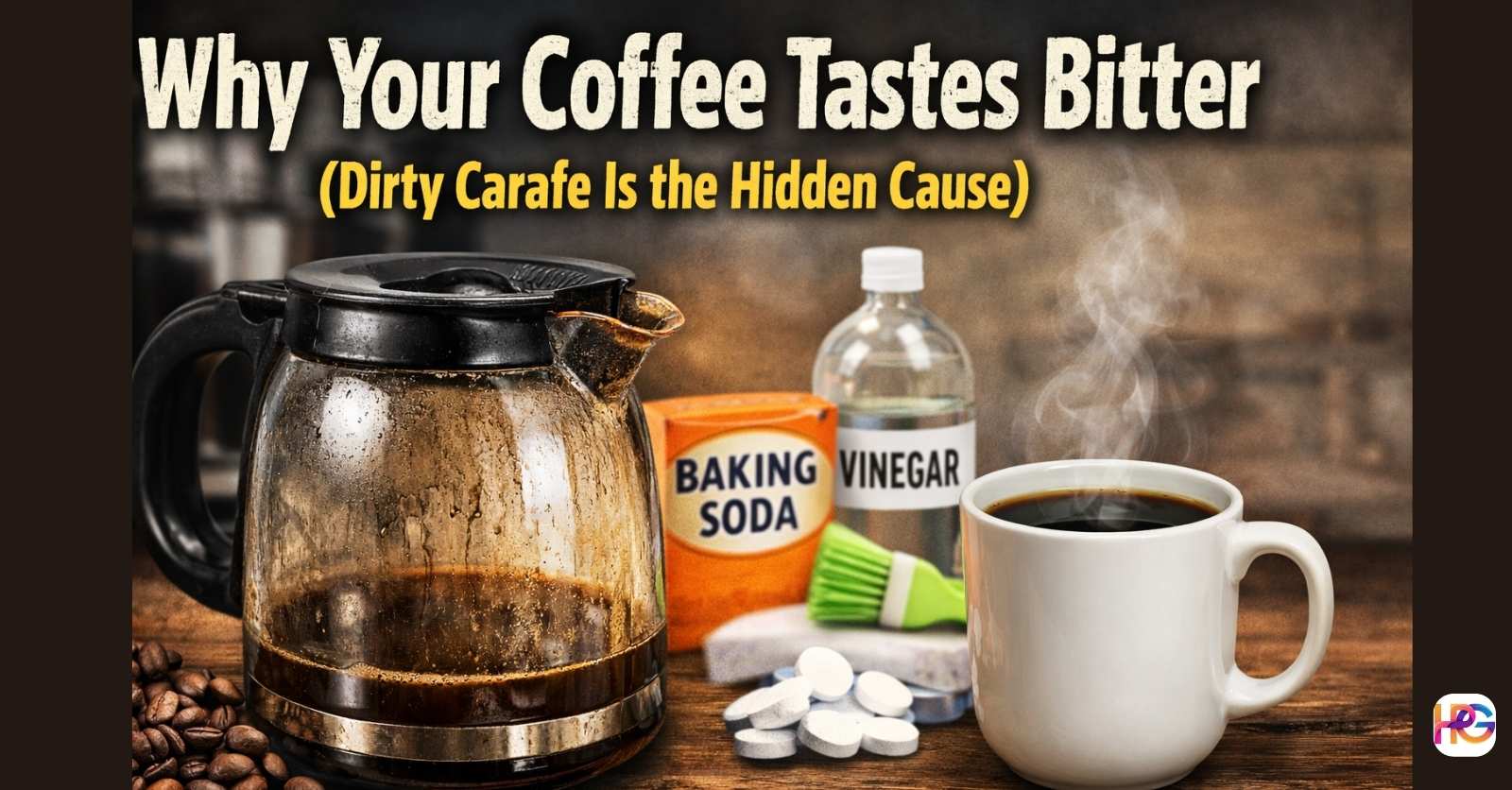
That is when I found the real issue. My dirty carafe was the hidden cause.
Why Your Coffee Tastes Bitter Even With Good Beans
Taking my coffee routine seriously means grinding fresh beans and measuring carefully each time.
Because of that, I expected smooth flavor every time.
Instead, the bitterness grew worse each week.
One morning, I stopped and asked a simple question.
What if the problem was not the beans?
What if the dirty carafe was ruining my coffee?
Coffee leaves oil behind after every brew.
Those oils cling to glass and steel walls.
Over time, they turn stale and sharp.
Old oil smells bad. When hot coffee hits it, steam lifts that smell.
Your brain mixes smell and taste together.
So the cup feels bitter, even if the brew was correct.
The Coffee Oil Buildup I Ignored
For months, I only rinsed the carafe with hot water.
It looked clean, so I thought it was clean.
That small habit caused a big problem.
Coffee oil buildup forms a thin film.
You may not see it right away.
But you can feel a slight stickiness if you touch the inside.
As days passed, I noticed clear signs.
The aroma felt dull and flat.
The aftertaste stayed too long.
The lid smelled worse than the body.
That surprised me the most.
Hidden parts trap more residue than open glass.
Smell and Taste Work Together
I used to think bitterness came only from over brewing.
Now I know smell plays a huge role.
Your nose guides your flavor sense.
One Saturday, I rinsed my empty carafe with hot water.
Then I took a deep breath.
It smelled sour and stale.
That moment felt like a wake up call.
If the carafe smells bad empty, it will taste bad full.
The steam carries trapped odors straight to your senses.
After a deep clean, the change shocked me.
The same beans tasted softer and brighter.
Nothing else in my process had changed.
Is a Dirty Carafe a Health Concern?
I also worried about safety.
Warm and damp spaces can grow bacteria.
Leftover coffee residue adds fuel.
I noticed a faint slimy feel near the lid seal.
Dark stains hid around the spout.
That made me uncomfortable.
While most buildup will not harm you fast, it is not ideal.
Mold can grow if moisture stays trapped.
Regular cleaning lowers that risk.
My Simple Cleaning Test
One Sunday afternoon, I ran a small test at home.
I wanted clear results, not guesswork.
So I compared three methods.
| Method | Time | Result | Smell After |
|---|---|---|---|
| Hot water rinse | 1 min | No change | Sour |
| Soap and brush | 3 min | Better | Slight odor |
| Baking soda soak | 20 min | Very clean | Neutral |
Hot water alone did almost nothing.
Soap helped, but odor stayed.
Baking soda removed the oil film best.
Later, I tried denture tablets.
They also worked well for stains.
The key step was cleaning the lid parts.
My Weekly Routine That Fixed Bitter Coffee
After testing, I made a simple schedule.
It is easy and realistic for daily life.
This routine keeps bitterness away.
Each day, I rinse right after use.
Then I wash with warm soap and water.
I let it air dry fully.
Once a week, I do a deep clean.
I soak it with baking soda or a tablet.
I scrub the lid and seals carefully.
Every month, I inspect for stains.
I smell the empty carafe again.
If it smells neutral, I know I am safe.
Why Oil Turns Bitter Over Time
Coffee oils contain natural compounds.
When exposed to air, they oxidize.
Oxidation changes flavor.
Heat makes this process faster.
Hot coffee releases trapped smells.
That creates harsh notes in the cup.
This is simple chemistry, not opinion.
Old oil equals bad flavor.
Clean surfaces protect taste.
Signs the Dirty Carafe Is the Hidden Cause
I learned to watch for small clues.
They appear before the flavor gets very bad.
Ignoring them makes the issue worse.
Coffee tastes fine outside your home.
But at home, it feels sharp and dry.
That is a major hint.
The carafe smells odd when empty.
Brown stains sit near the spout.
Flavor keeps getting worse each week.
If you notice these signs, start there.
Do not rush to buy new gear.
Clean first and test again.
What I Learned From This Experience
I almost replaced my grinder.
I even looked at new coffee brands online.
The fix was much simpler.
Deep cleaning the carafe solved the problem.
The next morning, my cup tasted smooth again.
That felt both funny and humbling.
Now I treat the carafe as part of the brew system.
It is not just a container.
It shapes flavor more than we think.
If your coffee tastes bitter, check your tools.
A dirty carafe may be the hidden cause.
Clean it well before changing anything else.
FAQs: Why Your Coffee Tastes Bitter (Dirty Carafe Is the Hidden Cause)
1. Can a dirty carafe really make coffee taste bitter?
Yes, it can. A dirty carafe holds old coffee oil buildup that turns rancid. When hot coffee hits that film, it releases harsh smells that your brain reads as bitterness.
2. How often should I clean my coffee carafe to stop bitter taste?
Rinse it daily with soap and warm water. Do a deep clean once a week to remove hidden oil. This simple routine keeps bitter coffee from coming back.
3. What tool works best to remove coffee oil buildup?
A bottle brush with firm bristles works best for scrubbing inside the carafe. Pair it with baking soda or denture tablets for a deeper clean that removes stale oil.
4. Why does my carafe smell bad even after rinsing?
Hot water alone does not remove coffee oil buildup. Oil sticks to glass and steel walls. That trapped film causes sour smells and makes coffee taste bitter.
5. Is coffee oil buildup in a dirty carafe unsafe?
Most buildup will not harm you fast, but it is not ideal. Moist lids can trap residue and grow bacteria. Regular cleaning keeps both flavor and safety in check.