My Honest Guide to the Worst Places to Store Spices in the Kitchen
It was a rainy night in my home. I wanted to make a warm bowl of fresh chili. I was also baking a fresh loaf of sourdough bread. The house felt cozy and smelled really great.
I grabbed my jar of cumin to season the ground meat. I twisted off the cap and took a deep breath. I expected a rich and earthy smell to hit my nose. But I got nothing at all from the jar. It smelled just like plain old dust.
My dinner tasted very bland that night. I felt so confused by this bad cooking result. I had just bought that ground cumin a few weeks ago. Then I looked closely at my current kitchen setup.
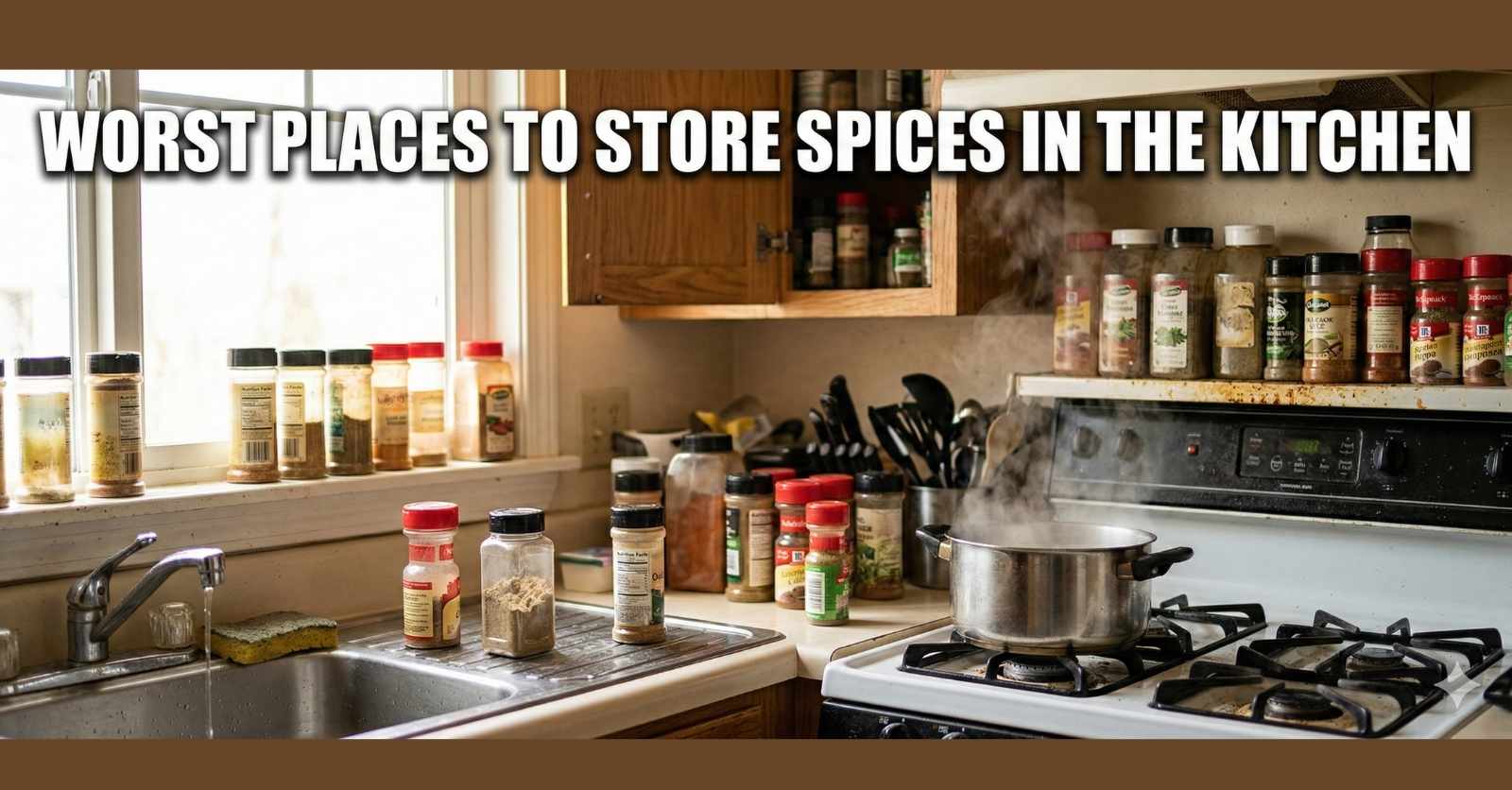
My spice rack was sitting right next to my hot stove. My new air fryer was sitting on the other side. Heat was hitting those small jars every single day. I was ruining my own food without even knowing it.
Why Good Spices Lose Their Great Flavor
I love cooking with lots of rich, bold flavor. Nothing beats the smell of fresh garlic powder in a pan. But dried herbs are very weak to the hard elements. They get their good taste from tiny, hidden oils inside them.
These tiny oils break down and fade away very fast. Heat, bright light, open air, and water are the main bad guys. If you put your jars near these things, they die quickly. Your hard work and your food will lack that special punch.
I have made almost all of these bad storage choices myself. I want to help you save your hard earned cash. Let us look at the worst places to store spices in the kitchen.
The 12 Worst Places to Store Spices in the Kitchen
1. Right Above the Hot Kitchen Stove
This is the most common mistake we all tend to make. I used to keep my salt and pepper right over the burners. It felt very easy to grab them while stirring a hot pot. But this spot is absolutely awful for your delicate jars.
Intense heat rises every time you boil pasta or fry an egg. Hot steam rolls right up into your little glass jars. The high heat cooks your herbs before they ever touch your food. Water also makes your loose powders turn into hard, useless rocks.
2. Near Windows or Bright Sunlight
I once bought a lovely glass spice rack for my home. I put it on my window ledge because it looked so nice. The sun shone right through the clear glass every single day. It looked like a bright art piece in my busy kitchen.
Six months later, my bright red paprika turned a pale orange. Bright sunlight bleaches away the rich colors of your good food. UV rays also break down the hidden oils deep inside. They lose their fresh smell and taste very fast. Keep your clean jars in a dark spot instead.
3. Right Next to the Wet Kitchen Sink
Water is just as bad for your food as oven heat. You wash dirty dishes in the sink every single day. Soapy water splashes out onto the nearby open counter. Wet hands often reach for a handy jar of dried sweet basil.
Moisture builds up in this wet area all the time. Tiny drops of water get inside your small glass jars. Dry powders clump together into solid, hard chunks very fast. Even worse, hidden green mold can grow inside the damp glass.
4. Inside the Cold Fridge
You might think the fridge keeps all basic food fresh. That is very true for cold milk and fresh farm eggs. But it is not true for your daily dry green herbs. A fridge is cold, but it is also a very damp place.
When you take a cold jar into a warm room, it sweats. Water drops form on the inside of the glass walls quickly. This daily dampness ruins your dried leaves in record time. Your daily flavor rack needs to stay out of the cold box.
5. On Top of the Microwave or Oven
Counter space is often very tight in a normal home. I fully understand this daily cooking struggle we all face. I used to stack my extra jars on top of my toaster oven. It seemed out of the way and perfectly safe at the time.
But kitchen tools get very warm when you plug them in. That heat travels straight up into your stored food jars. It is a slow and very quiet kind of mild heat. You might not even feel it touching the thick glass bottoms.
Day after day, that gentle heat drains the rich flavor out. Your dried thyme and green oregano will slowly fade away. Try to find a nice spot that stays cool all day long. A stable room temp is the best choice for these items.
A Quick Kitchen Heatmap Guide
Here is a fast look at where to put your jars. This chart helps you see the bad danger zones clearly. Keep this basic guide in mind when you clean your kitchen next time.
| Kitchen Spot | Danger Level | Main Problem to Watch |
| Right above the stove | Very High | Steam and high heat damage |
| Right next to the sink | High | Water splashes and mold risk |
| A sunny window ledge | High | Sun light fades the rich color |
| A dark pantry shelf | Very Low | None (This is the best spot) |
| Inside a cool drawer | Low | Safe only with tight sealed lids |
More Hidden Traps You Might Not Think About
We have looked at the most obvious hot zones now. But there are more tricky spots to watch out for today. Let us keep going down this list to learn some more tips.
6. In Open Racks on the Counter
Those spinning racks look great on a large kitchen island. Store displays make them look so neat and very clean. I bought one for my very first small apartment home. But they leave your food out in the open air all day.
The jars sit out under the bright room lights all day long. Damp air seeps in when it rains outside your home. House dust falls right on top of the small jar lids. It is a very harsh place for fine, dry cooking foods. A dark, closed wood cabinet is a much better choice.
7. In Door Racks Right Near the Stove
You might have a nice rack on a cabinet door. That sounds like a smart way to save some tight space. You just need to check what is right next to that door. If it is near your hot oven, you have a big problem.
Every time you open the door, hot air blasts the jars. The air temp changes back and forth all night long. Going from hot to cold ruins the good taste super fast. Pick a quiet cabinet on the far side of the big room.
8. In Store Bought Plastic Bags
I love buying cheap herbs in small, thin plastic bags. You can get a lot of fresh cumin for just one dollar. Leaving them in those bags is a huge mistake though. Store bags are almost never fully sealed tight against the air.
Thin plastic lets plain air sneak inside over a long time. Stale air makes things go flat and lose their spicy punch. Bugs can also chew right through thin paper or clear wrap. I learned this the hard way with some old bay leaves.
Always pour your new buys into real, solid glass jars. Make sure the new caps screw on very tight every time. This one simple tip will save you lots of food money.
9. Near Harsh Home Cleaning Soaps
You likely keep your dish soap safely down under the sink. But sometimes we put extra food in random hall closets. Dried leaves and loose powders are very soft, porous things. They act like dry sponges for strong, bad chemical smells.
If you put sweet nutmeg next to pine floor soap, it absorbs it. It will slowly take on that harsh, chemical clean scent. Nobody wants a sweet baked pie that tastes like floor polish. Keep your food far away from your daily cleaning tools.
10. In Busy Cooking Splash Zones
Think about where you chop, mix, and pour things the most. Some spots are away from the stove but still get very messy. I have a spot where I always use my fast smoothie blender. I make mixed fruit drinks right there every single morning.
Sticky fruit juice splashes all over that spot by mistake. Wet pancake mix flies around during a busy weekend breakfast. If jars sit there, they get covered in sticky, gross grime. You have to wipe them down with a wet cloth all the time.
Extra handling just puts your jars in much more danger. You drop them or get them wet by silly mistakes. Keep them tucked away safely until you really need to use them. A high, clean shelf is a great choice for this goal.
11. In Drawers Without Tight Seals
Moving jars off the open counter into a drawer is super smart. I keep my most used daily items in a top drawer now. The dark space stays cool and out of the bright sun. There is just one big rule for this clean drawer system.
You absolutely must use air tight lids on every single jar. If you toss loose bags into a drawer, air still moves around. Every time you pull the drawer open, dry dust flies right up. Small drops of water drift in from the normal room air.
Make sure every single lid clicks shut tightly in your hand. Check them all twice before you close the heavy wood drawer. This keeps the bad, wet air away from your nice cooking food.
12. Storing Them Too Long Anywhere
This is the sad truth for all busy cooks out there. Time takes away the deep flavor of everything in your home. Even if you have the perfect dark and dry cabinet spot. Nothing in your warm kitchen will last forever on a shelf.
I used to keep jars for five or six long years. I thought they were fine because they looked exactly the same. Old dry leaves just taste like sad, dry wood dust to me now. You end up using a lot more just to taste a little bit.
You must know when to finally throw old food away. Toss out the very old stuff and start fresh again today. Your family meals will thank you for making this wise choice.
How Long Do Herbs Hold Their Good Taste?
You might wonder how often to clean your own shelves. I like to do a big sniff test once every single year. If I cannot smell the rich scent fast, I toss it out. Different types of foods have different life spans in a jar.
Whole hard seeds always outlast crushed and ground dusts. The hard outer shell guards the weak oils deep inside the seed. Here is a simple guide to help you remember shelf lives. Keep this close by when you clean up your kitchen next.
| Food Type | Common Examples | Max Shelf Life |
| Ground dusts | Garlic dust, ground cumin | 6 to 12 long months |
| Dry cut leaves | Dried basil, parsley flakes | 1 to 3 full years |
| Hard whole seeds | Whole cloves, pepper balls | 3 to 4 full years |
| Liquid drops | Vanilla drop, almond drop | 2 to 3 full years |
| Pure rock salt | Sea salt, plain table salt | Lasts forever and ever |
Making New Habits for Better Cooking
Changing bad old habits can take a little bit of time. I used to reach for the stove shelf without even thinking. My arm just knew where the salt shaker lived back then. I had to train myself to walk over to the new drawer.
After just one week, the new habit felt very normal to me. I liked seeing my clear counters free of random junk clutter. It makes wiping down the kitchen much faster after big meals. The whole room looks more clean and open to my eyes now.
Plus, I feel like a real fancy chef using matching glass jars. It adds a touch of simple class to my daily home life. It proves that small kitchen changes bring big, happy meal results.
The Best Ways I Keep My Own Food Fresh
Now you know the worst places to store spices in the kitchen. So, where should they actually go to stay safe and fresh? I found a very simple way that works great for my life. I cleared out a drawer far away from my hot cooking stove.
Next, I bought a basic set of nice, clean glass jars. It was vital that they all had tight metal screw caps. I poured my messy plastic bags into the neat, clean jars. Then I put a white blank sticker on top of each one.
I wrote the exact buy date on the bottom of the glass. This simple trick made my daily cooking much better for me. My hot soups taste brighter and so much richer right now. Taco meat finally has a real, spicy kick to it again.
Even my fresh baked bread smells absolutely amazing in the oven. It did not cost much money to fix this bad cooking habit. It just took a little bit of smart, easy daily planning. You can easily do this in your own home too.
Final Thoughts on Good Kitchen Storage
Cooking should be a fun and happy time for you today. You spend your money on good food for your loved family. Do not let bad storage spots ruin your nice, hot dinner. Take a short walk into your kitchen right now to check.
Look at exactly where your little jars are sitting right now. Are they resting right above the hot cooking stove flames? Are they sitting in a bright and sunny window ledge today? If they are, just take a single minute to move them.
Find a dark, cool place tucked safely away from the mess. Check all your caps to make sure they are shut real tight. Your taste buds will thank you later for doing this small chore.
Would you like me to share my list of the best airtight jars I have found for my kitchen?
FAQ: Smart Tool Storage Tips
Q: Can I leave my hand tools out in a damp garage?
A: No, wet air is very bad for safe tool storage in the shop. Damp air causes fast rust on your good steel gear. Keep them all in a dry chest to stop the bad rust.
Q: Is a hot summer garage safe for my DeWalt batteries?
A: High heat ruins tool battery life very fast in the summer. A hot room will drain the power and hurt the inner cells. Bring your DeWalt packs inside the cool house.
Q: Will winter cold hurt my new Milwaukee power tools?
A: Deep cold drains your Milwaukee battery power very fast. Freezing cold winter air also makes the soft rubber grips crack. Store them inside a warm room for safe daily use.
Q: Does bright sun damage Makita tools on a clear workbench?
A: Yes, bright sun rays will fade the hard plastic case over time. The hot sun also dries out the soft tool grip. Store your good Makita tools in a dark and cool box.
Q: Are open wall racks good for daily tool storage?
A: Open wall racks let shop dust fall deep inside the tool parts. This hard dirt hurts the motor power over a long time. A closed steel box is a much safer tool storage bet.