Are Countertop Spice Racks Bad for Your Spices? My Honest Experience
I used to love my countertop spice rack.
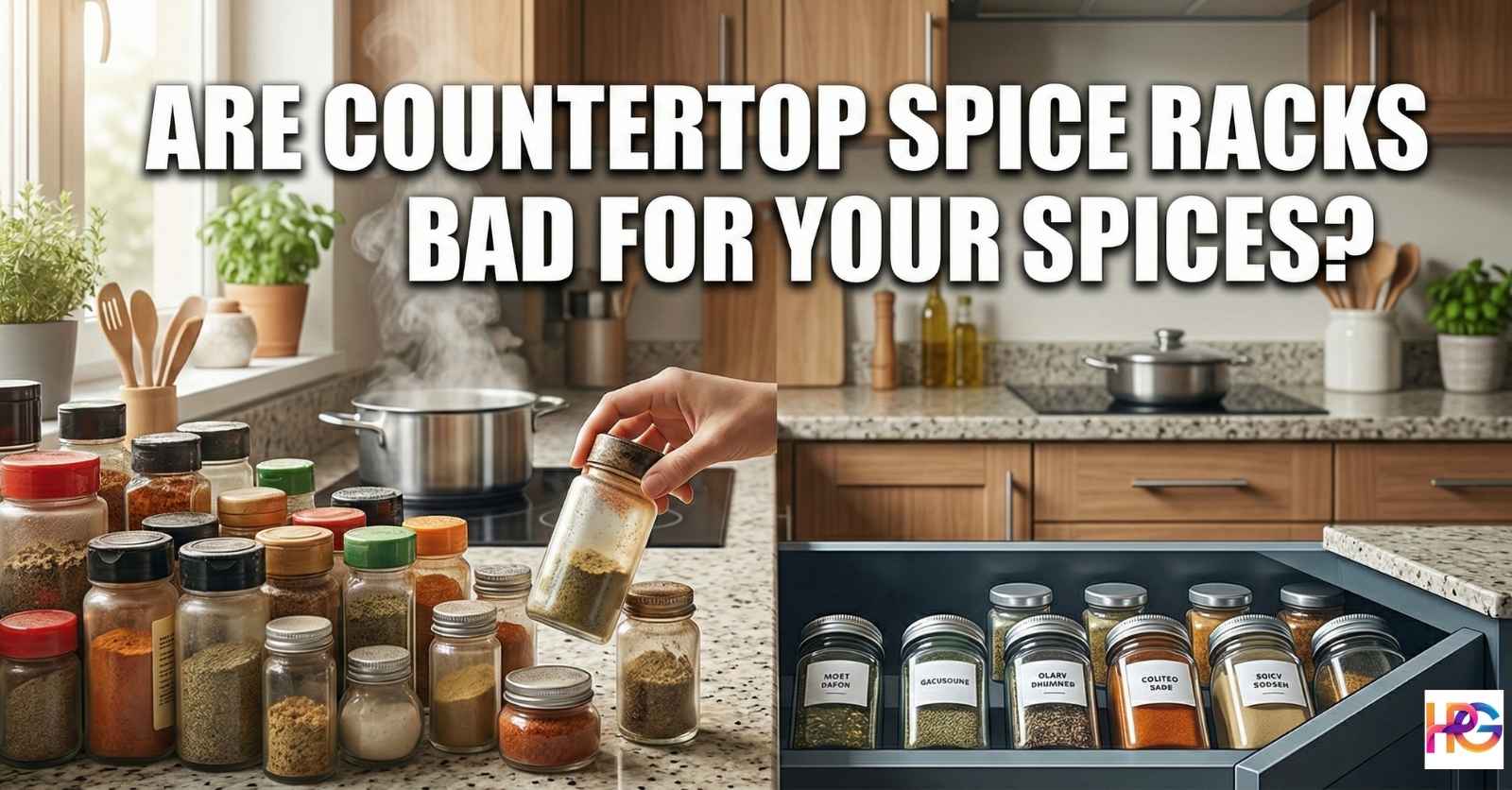
It sat right next to my stove. Glass jars lined up in neat rows. Paprika glowing red. Turmeric bright yellow. It looked like a cooking show set.
Friends would come over and say, “Your kitchen looks amazing.”
But after a few months, something felt off.
My food tasted flat.
That’s when I started asking myself: are countertop spice racks bad for your spices?
Here’s what I learned from my own kitchen.
What Is a Countertop Spice Rack and Why I Loved Mine
A countertop spice rack is simple. It’s a spice holder that sits out on the counter. Most people place it near the stove for easy reach.
I loved mine because:
- I could grab spices fast
- It made cooking feel smooth
- It looked organized
- It added color to my kitchen
On busy weeknights, that quick access mattered. I didn’t have to open cabinets. I didn’t have to search.
It felt efficient.
What I didn’t think about was the environment around it.
Heat. Light. Steam.
All three were hitting my spices every single day.
The First Sign Something Was Wrong
One evening, I made chili. Same recipe. Same steps. Yet the flavor felt weak.
I added more cumin. Still dull.
Then I opened the jar and smelled it. Almost nothing.
That jar was only eight months old.
That moment pushed me to dig deeper into spice storage and freshness.
How Heat from Cooking Changed My Spices
My spice rack sat about one foot from the stove.
At the time, I thought that was far enough.
It wasn’t.
Every time I cooked:
- The oven heated the air
- The burners gave off steady warmth
- The kitchen temperature rose fast
Spices contain essential oils. Those oils hold flavor. Heat speeds up how fast those oils break down.
After months of daily cooking, my spices had slowly lost strength.
They didn’t spoil. They just faded.
I realized countertop spice racks near stoves create a slow flavor drain. You don’t notice it at first. Then one day, your food tastes flat.
Light Exposure: The Quiet Damage I Ignored
My kitchen has a big window. Morning light hits the counter hard.
I loved that natural glow.
Sunlight makes spices look beautiful. It also weakens them.
UV light breaks down color and aroma compounds. That’s why:
- Paprika turns brown
- Dried herbs look dusty
- Chili powder loses its kick
I didn’t see this happening day to day. It was gradual.
But when I bought a fresh jar and compared it side by side, the difference shocked me.
Moisture and Steam: The Problem I Didn’t Expect
Steam was the sneaky one.
When I boiled pasta or simmered soup, steam rose straight into the air. Guess what sat right above that path? My spice rack.
Over time I noticed:
- Garlic powder clumped
- Onion powder hardened
- Salt formed small lumps
Moisture enters jars when you open them in a steamy kitchen. Even a few seconds of exposure matters.
In high humidity, mold can become a risk, though that’s rare in dry climates.
Still, clumping alone told me my spices were absorbing moisture.
How Much Faster Do Spices Go Bad on a Countertop Spice Rack?
I tracked this over one year.
Here’s what I noticed in my kitchen.
Spice Freshness Comparison
| Storage Method | Noticeable Flavor Loss | Texture Changes | Aroma Strength |
|---|---|---|---|
| Dark cabinet | 12–24 months | Rare | Strong |
| Countertop near stove | 6–9 months | Frequent clumps | Faded |
These are not lab numbers. They are real kitchen results from my own use.
Ground spices suffered the most. Whole spices lasted longer but still lost punch faster on the counter.
That was the turning point for me.
The Simple Science Behind Spice Degradation
I like to understand why things happen.
Here’s the short version.
Spices contain volatile oils. These oils create smell and taste.
Add:
- Heat
- Oxygen
- Light
And chemical reactions speed up.
More energy equals faster breakdown.
It’s not dramatic. It’s slow. Yet daily exposure adds up.
When I learned this, it made sense why my countertop spice rack was affecting flavor.
Common Countertop Spice Rack Mistakes I Made
Looking back, I made almost every mistake possible.
I placed my rack:
- Right beside the stove
- Near a sunny window
- Close to the sink
- Under a cabinet light
Each spot increased exposure to heat, light, or moisture.
If you search “best place for a spice rack,” you’ll see similar warnings. I wish I had paid attention sooner.
Are Countertop Spice Racks Always Bad?
No.
That surprised me too.
After moving my rack to a shaded corner away from the stove, things improved.
Here’s when a countertop spice rack can be okay:
- It sits far from heat
- No direct sunlight hits it
- Jars are airtight
- Kitchen humidity stays low
In cooler kitchens, the damage slows down.
The real issue is placement, not the rack itself.
Better Alternatives I Tested
I tried three different spice storage setups.
1. Cabinet Shelf Storage
I moved half my spices into a dark cabinet.
Result:
- Aroma lasted longer
- Colors stayed bright
- Less clumping
This method gave the best freshness.
2. Drawer Spice Organizer
I installed a flat drawer insert.
Spices lay on their side. Labels faced up.
I loved this system.
It was dark. Cool. Easy to scan.
3. Pantry Bin Storage
Bulk spices went into a pantry bin away from appliances.
This worked well for backup jars.
Out of all three, drawer storage felt like the best mix of access and freshness.
How I Check If My Spices Are Still Fresh
Now I test spices every few months.
Here’s my simple system.
Quick Freshness Test
- Rub a small pinch between fingers
- Smell immediately
- Check color against a new jar
- Look for hard clumps
If the smell is weak, the flavor will be weak.
Trust your nose. It rarely lies.
Pros and Cons of a Countertop Spice Rack
I want to stay honest here. Countertop spice racks are not evil.
They just come with trade-offs.
Pros
- Fast access while cooking
- Looks clean and stylish
- Encourages daily use
Cons
- Faster flavor loss
- Heat and light exposure
- Moisture risk
For me, convenience once mattered more. Now flavor matters more.
Your priorities may differ.
What I Did Instead of Throwing Mine Away
I didn’t toss my rack.
Instead, I made small changes.
I:
- Moved it away from the stove
- Blocked direct sunlight
- Switched to smaller jars
- Bought spices in smaller amounts
- Replaced ground spices yearly
These steps reduced waste and kept flavors stronger.
Small shifts made a big difference.
Final Verdict: Are Countertop Spice Racks Bad for Your Spices?
From my experience, countertop spice racks are not automatically bad.
They become bad when placed near heat, light, and steam.
If your rack sits next to the stove, your spices will lose strength faster. That’s almost certain.
If it sits in a cool, shaded corner with airtight jars, the impact is much smaller.
Today, I keep my most-used spices in a drawer. A small rack stays on the counter, but far from heat.
My food tastes better now. Chili has depth again. Cumin smells warm and rich.
That alone made the change worth it.
So if you’re wondering whether your countertop spice rack is hurting your spices, look at where it sits.
Sometimes the problem isn’t the rack.
It’s the environment around it.
Frequently Asked Questions About Countertop Spice Racks
1. Are countertop spice racks bad for your spices?
Countertop spice racks can be bad if they sit near heat or sunlight. Heat and light break down spice oils fast. Move the rack to a cool, dark spot to slow flavor loss.
2. How long do spices last on a countertop spice rack?
Spices on a countertop spice rack may lose strength in 6–12 months. Heat and steam speed this up. In a dark cabinet, they often stay fresh much longer.
3. Is it safe to keep a countertop spice rack near the stove?
It’s not ideal. Stove heat and rising steam weaken spices over time. Even sealed jars can lose aroma faster in that spot.
4. What is the best place to put a countertop spice rack?
Place your countertop spice rack in a shaded corner away from heat. Keep it far from the sink and windows. Cool, dry air helps spices last longer.
5. Are airtight jars important for a countertop spice rack?
Yes, airtight jars help a lot. They limit air and moisture inside the spice container. This keeps flavor stronger and reduces clumping.