Why is it so hard to pick a good grill brush? You just want to cook a good meal. You do not want to ruin your pan. Most folks waste cash on cheap wire tools. They buy them at the local hardware store.
These cheap tools cause big problems. They scrape off the good, hard oil coat on your grill. This coat is what makes the cast iron work well. Without it, your food sticks. Without it, the metal rusts.
Worse than rust, cheap wire brushes drop tiny metal bits. These sharp bits fall on the grates. They get stuck in your meat. You can swallow them by mistake. This is a very real health risk.
You just want to clean off sticky grease. You want to wipe away burnt sauce from last night. But you end up scratching the costly metal. You strip it down to raw iron. Finding a good tool should not be a wild guess.
Quick Answer Section
Do you just want the fast facts? You might not want to read the whole guide. Here is the quick list of the best tools. These are the top picks for cast iron grates.
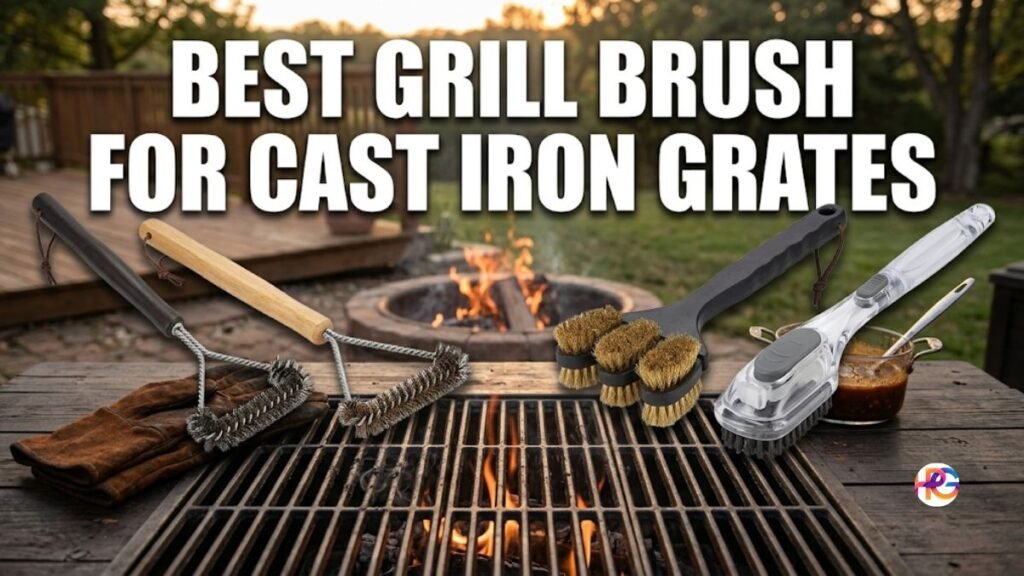
- Best Overall: Weber V-Style Cast Iron Brush. It is made for tight gaps. It rips right through burnt bits. It keeps flat parts safe.
- Best Budget: Char-Broil Wood Brush. It uses real wood bristles. The wood burns up if it falls. It spreads oil while you scrub.
- Best Premium: Grill Rescue Steam Pad. It uses strong heat and hot steam. There are zero metal wires. It will never scratch your grill.
- Best for Old Souls: Napoleon Brass Brush. Brass is much softer than steel. It scrubs hard but leaves the iron safe.
Product Comparison Section
Weber V-Style Cast Iron Grill Brush
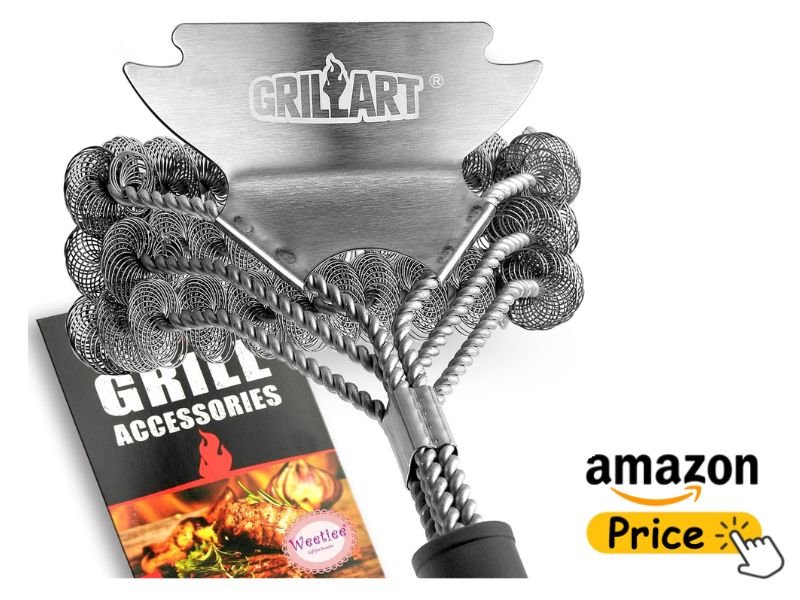
- What it is best used for: It gets deep down between thick grates. Burnt food hides in these tight spaces. The angled head digs it all out.
- Where it does well: It rips off thick, sticky mess. Sugar glazes burn on like hard glue. You need raw power to scrape them off. This tool pushes hard without bending.
- Where it struggles: It is not good for flat pans. A griddle is flat and smooth. The V-shape feels clumsy on a flat space. It is made just for grates.
Key Details:
- Size and specs: The grip is a bit short. It is less than twelve inches long. The plastic grip holds up well to heat.
- Performance: The steel wires are very thick. Cheap brushes get flat fast. This one stays stiff and strong.
- Ease of use: It grabs the grate like a tight claw. You clean the top and sides all at once. This saves you a lot of time.
Pros and Cons Table:
| Pros | Cons |
| Cleans top and sides fast | Short grip keeps hands close to heat |
| Thick wires stay stiff and strong | Steel wires can still break and fall |
| Firm handle gives a great grip | Too harsh for thin, weak grill coats |
Grill Rescue Steam Pad
- What it is best used for: It is great for fast, hot cleaning. You use it right after you cook. The iron must be very hot.
- Where it does well: It takes off grease with hot steam. The steam lifts the dirt right off. Your hard oil coat stays perfectly safe.
- Where it struggles: It is useless on a cold grill. You cannot clean cold, hard grease with it. It needs high heat and fresh water to work.
Key Details:
- Size and specs: The head is made of strong foam. Tough yellow cloth wraps around the foam. It handles very high heat.
- Performance: There are zero metal wires on this tool. You will never eat a sharp wire. That gives great peace of mind.
- Ease of use: You have to do some prep work. You need a bowl of fresh water nearby. You dunk the head in the water first.
Pros and Cons Table:
| Pros | Cons |
| No risk of eating sharp metal wires | Fails completely on a cold, unlit grill |
| Steam keeps your grill oil coat safe | Costs much more than a cheap wire tool |
| The head can go in the dishwasher | Foam parts wear out and need replacing |
Char-Broil Wood Bristle Brush
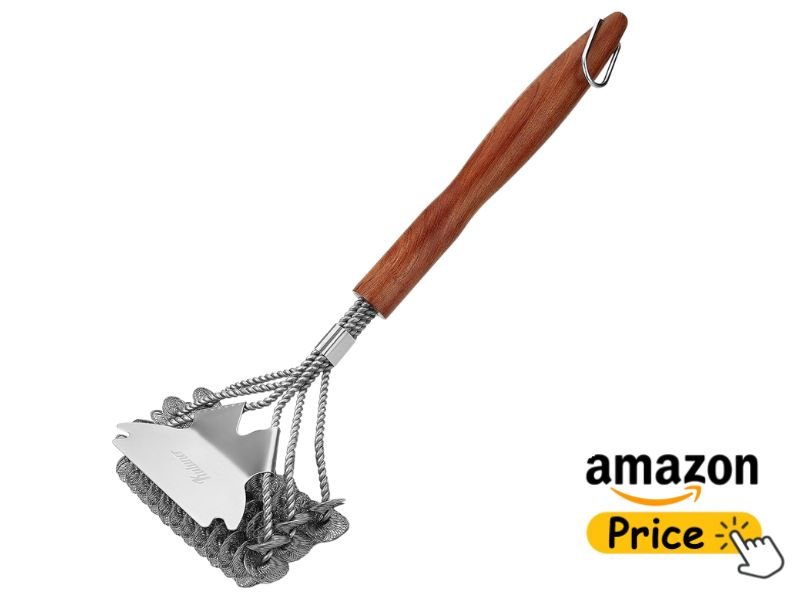
- What it is best used for: It works great for daily, safe care. Food safety is the top goal here. It protects the metal from deep cuts.
- Where it does well: It acts like a sponge for grill oils. The wood soaks up the slick fat. It rubs the fat back on the iron. This helps coat the grill as you clean.
- Where it struggles: It fails on thick, hard crusts. Wood just lacks the raw strength of steel. It takes more work to cut through hard dirt.
Key Details:
- Size and specs: The brush uses real plant fibers. The fibers come from tough palm trees.
- Performance: The wood bristles will just burn to ash. If a piece falls off, it is safe. The fire will turn it to safe dust.
- Ease of use: You must watch out for big flames. Wood can catch on fire. You have to keep it away from direct fire.
Pros and Cons Table:
| Pros | Cons |
| Fallen bits burn to safe, soft ash | Bristles catch fire in big, hot flames |
| Wood spreads oil to help the iron coat | Lacks raw power for thick, hard crusts |
| Soft wood will never scratch the metal | Wears down fast and needs replacing often |
Napoleon Brass Bristle Brush
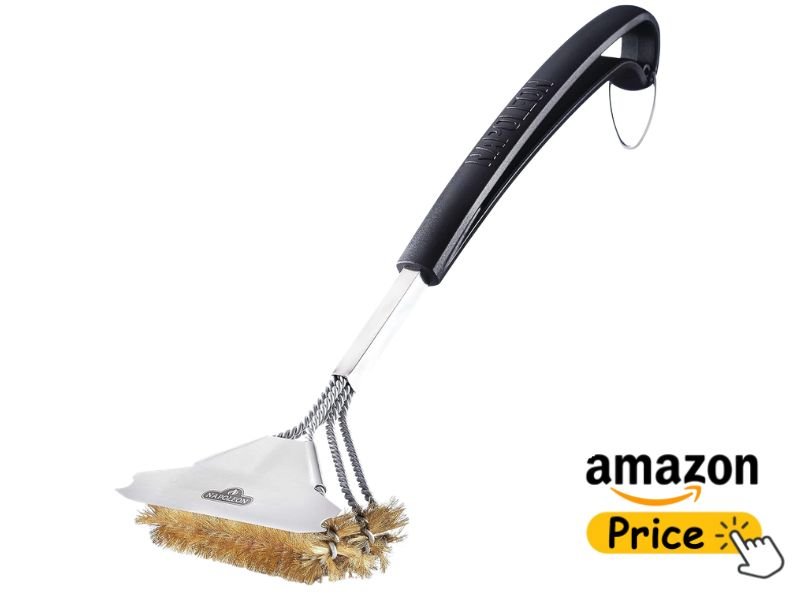
- What it is best used for: It is for tough, hard scrubbing. You get to push down hard. You do not have to fear deep cuts on the metal.
- Where it does well: It is huge and covers a lot of space. Big grills take a long time to wipe down. This wide tool speeds up the chore.
- Where it struggles: Brass is a soft metal. It bends and gets flat fast. It also rusts fast. It does not last very long.
Key Details:
- Size and specs: The grip is very long. It measures a full eighteen inches. The brass wires sit in three thick rows.
- Performance: The brass bends with the cast iron. It does not dig deep gouges. It is kind to the surface.
- Ease of use: The long grip keeps you safe from the fire. You get great reach. You keep your hands cool.
Pros and Cons Table:
| Pros | Cons |
| Soft brass will not scratch cast iron | Soft brass bends and gets flat very fast |
| Long grip keeps your hands safe and cool | Rusts fast if left outside in the rain |
| Wide head cleans big grates very fast | Big head does not fit in tiny grill corners |
Testing and Research
We do not trust bright ads. Ads tell bold lies. They say every brush is safe. They claim their tool will last for life. We know those claims are not true because we test these products in real-world conditions and rely on measurable results instead of marketing promises.
Our testing covers the different metals, how they perform under intense heat, how they wear over time, and how well they protect the seasoning on your grill grates. This coat is called seasoning. It keeps food from sticking to the pan.
It stops the iron from rusting. If you use a bad brush, you scrape off this coat. Then your grill rusts fast. Rust ruins your good food. We test how hard a brush scrapes. Steel is harder than cast iron. If you push too hard, you scratch the iron.
Brass is soft. Wood is even softer. Soft tools do not scratch. We also look at big health risks. Metal wires can break off. They hide right in your food. You can swallow them by mistake. This is very bad for your gut.
We give high marks to tools with no wires. We like natural tools. Real-world tests show the truth. We buy these products with our own money and put them through real use, leaving them out in the sun and rain to see which ones truly stand the test of time.
Instead of judging a product by the box, we put it to work. We scrub sticky barbecue sauce, remove burnt-on steak grease, inspect the grates for scratches, and check for loose wire bristles that could end up in your food. Above all, we want you to choose a tool that is both effective and safe.
Performance Comparison
Let us look at how they stack up. Side by side, the truth stands out. You can see the real gaps in power. The Weber brush wins on pure strength. It takes off dirt fast. Its steel wires act like tiny knives.
They chip away the hard crust. But you must use a light touch. If you push too hard, you hurt the grill. The Grill Rescue takes a weird path. Rather than scraping the surface, it relies on hot water and steam to loosen stubborn residue with minimal effort.
It is very safe. It works great. But timing is a big deal. You have to clean right after you cook. The grill must stay hot. The Napoleon brass tool works well for a short time. Brass is a nice, soft metal. But it bends fast.
It gets flat fast. It rusts fast. You will have to buy a new one soon. It is a ticking clock. The Char-Broil wood tool is safe. It is cheap. But you have to work hard. Wood is soft. It does not cut well.
You have to scrub and scrub. It is safe, but it takes more sweat. You get what you pay for. Cheap tools make you work hard. Safe tools cost more cash. You have to pick what matters most to you. What matters most to you—speed, safety, or the lowest price?
Time and Effort
Every tool asks something from you. Some ask for your time. Some ask for your sweat. Here is what they cost you in real life.
- Setup time: The Grill Rescue is the only one with setup. You must get a bowl of clean water. You must soak the foam head for a bit. You do this before you scrape. The other tools are fast. You just grab them and go.
- Learning curve: Metal tools need a soft hand. You must learn the right force. If you push hard, you scratch the iron. The steam pad needs heat skills. If the grill cools off, the pad fails. You must learn to clean while the fire is hot.
- Daily usage effort: The wood brush asks for the most sweat. Wood gives way to a hard crust. You have to rub hard. You have to rub for a long time. It wears you out.
- Maintenance: Metal tools hate the rain. You must keep them dry. Put them in the shed. The wooden tool rots in the rain. The steam pad needs a deep wash. You must run it in the dishwasher. Meat fat smells bad if you let it sit. Keep it clean.
Real Downsides
Let us be honest right now. The grill brush world is tough. No brush will last for life. Every single tool will wear out. They all break down. The heat is too high. The grease is too harsh.
You will throw them away. You must treat them like a sponge. When a sponge gets gross, you toss it. When a brush gets old, you toss it. If you buy steel wires, you take a risk. A wire might snap off.
It might stick to the grate. It might go in your food. This is a rare thing. But it is a real medical risk. You must check your grates with care. If you buy safe pads, you lose raw power. Foam does not scrape.
Wood does not cut. You have to scrub twice as long. Or you have to clean when it is very hot. You trade time for peace of mind. Do not fall for big claims. A brush is just a tool. It takes damage so your grill does not.
Who It Is For
Different tools fit different folks. You need to know your own style. Check this list to see where you fit.
Best for:
- Grill snobs: The Grill Rescue. They love their hard oil coat. They want zero deep cuts. Steam is the most safe way to clean.
- Fast cooks: The Weber V-Style. They want to scrub and go. They do not mind being careful. They want raw power right now.
- Scared parents: The Char-Broil Wood brush. They fear sharp wires in hot dogs. Wood turns to safe ash. They can sleep well at night.
Not ideal for:
- Lazy cleaners: The Grill Rescue. They leave the mess for the next day. A cold grill makes the steam pad useless.
- Rain folks: The Napoleon Brass. They leave their tools outside. The rain will rust the brass fast. It will break in weeks.
- Smash burger fans: The Char-Broil Wood. Smash burgers leave a thick, hard crust. Soft wood cannot lift it.
Comparison Insight
How do you spend your cash wisely? A cheap wood brush is ten bucks. A Kevlar steam pad is fifty bucks. Why pay more? It comes down to your time and your peace of mind.
When you buy a cheap wire tool, you buy pure force. Grinding away the buildup can remove stubborn grime, but it also increases the risk of damaging the grates or leaving behind loose wire bristles. When you pay more, you buy smart design. The Grill Rescue uses physics.
Steam lifts away grease and residue while helping protect your grill grates and eliminating the risk of wire bristles ending up in your food, making it a safer cleaning option. But fifty bucks does not buy a magic tool. It will still wear out. The foam core breaks down. You will have to buy new heads.
The best trick is to change your habits. Clean the cast iron when it is hot. Hot dirt lifts fast. If you clean a hot grill, you can use a cheap soft tool. A wood brush works great on hot grease. You save cash. You save your grates.
Final Verdict
What should you buy right now? We have looked at all the facts. Here is the final call.
If you want safe food, buy the Grill Rescue Steam Pad. It is our top overall pick because it cleans with hot steam instead of metal wire bristles, making it both effective and safer to use.
Steam is the best way to clean cast iron. It keeps your hard oil coat safe. It is a smart buy.
If you hate prep work, buy the Weber V-Style Brush. You do not need water bowls. You just grab it and scrape. Its sturdy steel construction reaches deep into narrow spaces and cuts through stubborn carbon buildup with ease.
Choosing the right tool often comes down to a trade-off between maximum cleaning power and food safety, so it is worth deciding which matters most for your grilling style.
A strong tool can scratch. A safe tool takes more work. We say pick the safe path. Clean your grill when it is hot. Throw away old tools. Keep your food safe and enjoy the cook.
Frequently Asked Questions
Can you use a steel wire brush on cast iron grill grates?
Yes, but you must be careful. Hard steel can scrape off your grill’s oil coat. A light touch keeps the metal safe. Want to learn how to fix a scratched grate?
What is the safest, best grill brush for cast iron grates?
A wood fiber brush or steam pad is safest. They have no metal wires that can fall into your food. This keeps your family safe. Curious how steam cleaning works?
How do you clean cast iron grates without scratching them?
Clean the grates while they are very hot. Use a soft brass brush or a wet steam pad. The dirt lifts off fast with heat. Want our top hot-cleaning tips?
Will a brass grill brush damage my cast iron seasoning?
No. Brass is a soft metal. It bends easily and will not gouge your grates. It protects the oil layer well. Need help picking the right brass tool?
How often should you replace your grill grate cleaner?
Toss it as soon as the bristles look loose or flat. Old brushes drop dangerous wires. A fresh tool keeps you safe. Want to see our durability test results?
Read More: