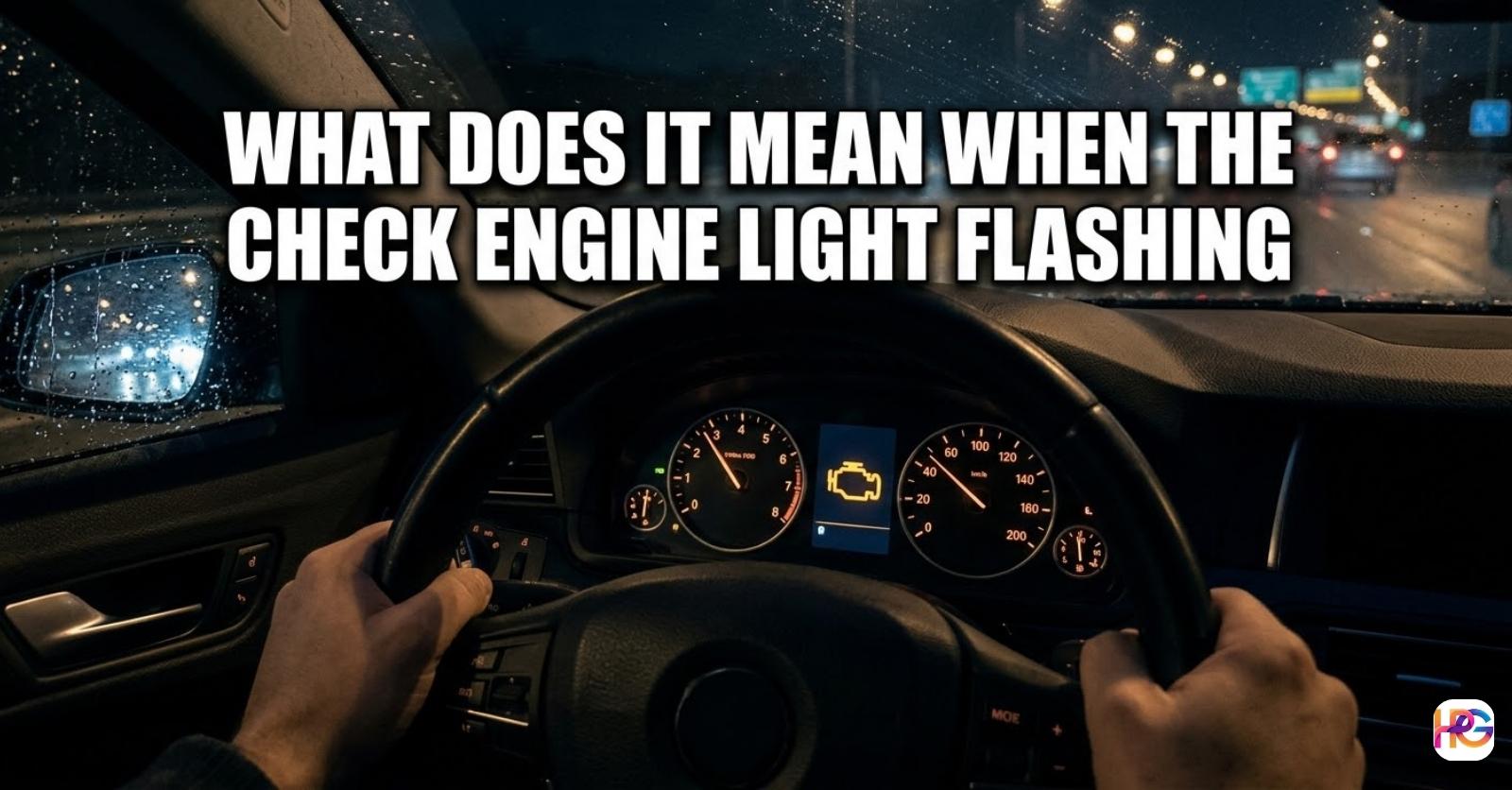
You drive in the cold Midwest snow. A check engine light flashing pops up on the dash. I hate that sick feeling. I grab my Craftsman scan tool to find the bad spark plug fast. You must park the car right now. If not, raw gas will cook the hot exhaust pipe. Let me help you read the code and fix it right.
What Does a Flashing Check Engine Light Actually Mean?
Let’s skip the hard shop talk. When that little dash icon blinks, your car is choking on raw fuel.
I recall pulling into a damp Ohio gas station on a tired Friday night. My hands shook right along with the rough steering wheel. I smelled a nasty, rotten egg scent coming from the tailpipe. That is when I learned the hard truth about these warning lights.
Solid vs. Flashing: Know the Difference
It is easy to get confused when the dash lights up. Let me break down exactly what is happening under your hood.
- The Solid Light: This light is just a gentle nudge. It means, “Hey, look at me when you have time.” It is often a loose gas cap or a lazy sensor. You can fix it this weekend in the garage.
- The Flashing Light: A check engine light flashing is a giant red alert. It means, “Pull over right now before things break.”
- The Root Cause: Why all the panic? It almost always points to a bad engine misfire. The spark plugs fail to ignite the gas. One or more cylinders just go completely dead.
- The Danger: Here is the part that hurts your wallet. That dead cylinder dumps wet, raw fuel straight into your hot exhaust pipe. This fuel hits the catalytic converter. That metal honeycomb gets wildly hot. The raw fuel literally cooks it from the inside out in just a few short minutes. A cheap fix quickly turns into a massive repair bill.
Why Is My Check Engine Light Flashing?
You sit in the driver’s seat and sigh. You wonder what just broke. Why is my check engine light flashing? It is a scary question. The car loses its smooth rhythm. It bucks like a wild horse. I remember gripping the wheel, praying my engine would not explode. Usually, just a few pesky parts cause this huge mess. When I pull out my diagnostic tools in the garage, I always check these culprits first.
Bad Spark Plugs or Failing Ignition Coils
This is the most common reason your engine light is blinking. I see it all the time.
- Spark plugs light the fuel on fire.
- Old plugs get dirty with thick black soot.
- Sometimes the ignition coil sitting right on top just dies.
- When that happens, you get zero spark.
- The raw gas just washes down the dead cylinder. You can feel the engine kick and sputter. It is a terrible feeling.
Fuel Delivery Nightmares
Your engine needs a perfect mix of air and gas. Fuel injectors spray this gas in a fine mist.
- A dirty fuel injector can clog up tight. It starves the cylinder.
- Or, an injector gets stuck wide open. It drowns the spark plug.
- I had a stuck injector once on a hot July afternoon. The rich gas smell was so strong it burned my nose.
- Either way, the precise air-to-fuel ratio is ruined.
Vacuum Leaks and Rogue Sensors
Sometimes, sneaky air leaks throw the engine computer into total chaos.
- A cracked rubber hose causes a massive vacuum leak.
- Bad mass airflow (MAF) sensors read the incoming air wrong.
- Oxygen sensors can also fail and lie to the main computer.
- The engine tries to guess the right mix. It fails.
- The motor stumbles, coughs, and misfires violently. You feel every single hard bump right in your seat.
Why Is My Check Engine Light Flashing Then Stops?
It blinked for a scary mile on your trip. Then, it just stopped. Do not let the quiet fool you. The bad part is still there. I drove up a steep, snowy hill in Denver last fall. The dash light blinked fast. My palms sweat on the cold steering wheel. When I reached the top, the light vanished. I let out a big breath. But I knew the truth.
The Intermittent Misfire Mystery
So, why is my check engine light flashing then stops? It means the misfire only hits under hard stress.
- It might act up when you push the gas pedal hard.
- Maybe it happens on a freezing cold day before work.
- You might see it only on steep hills. Once the heavy work is done, the engine catches its breath. The flashing quits. You smile and feel safe. But the worn-out part is still broken.
The Hidden Codes Are Still There
The dash light may go dark. It might stay solid. But the car brain never forgets. It saves the exact second your motor choked.
- It stores these facts as “pending codes.”
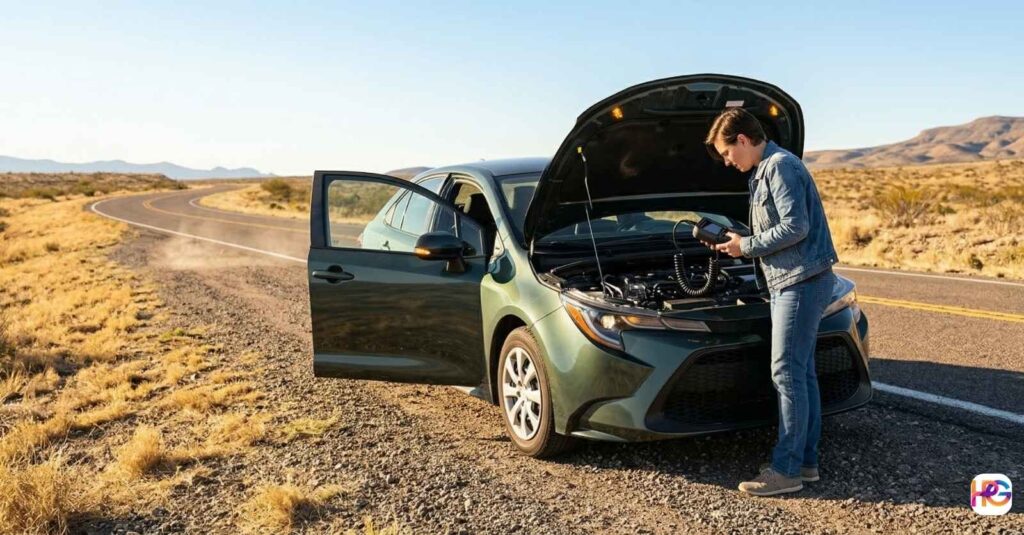
- I keep a cheap OBD2 scan tool in my messy garage.
- You just plug it in under the steering wheel.
- It reads the hidden memory of your car.
- It tells you the exact dead cylinder.
A code like P0301 points right to cylinder one. You can read it, wipe the dirt off your hands, and know what to fix.
What to Do When the Engine Light Flashes
Do not try to reach the next exit. Even if it is just a short mile away. When you see a check engine light flashing, you must act fast. I remember driving to buy lumber on a hot, sticky Tuesday. The light started blinking. I just wanted to push through and get home to dinner. That was a bad idea. Here is exactly what I do the second that light starts its scary dance.
1. Pull Over and Kill the Engine
Take your foot off the gas right now. Slow down easy. Do not slam on the heavy brakes.
- Look for a safe, grassy shoulder or a wide parking lot.
- Guide your car far out of fast traffic.
- Turn the key completely off. Every single second your car runs like this is bad. Your hot exhaust pipe is melting from the inside. Turning the key off stops the damage and saves your car.
2. Use Your Senses
While you sit there safe on the side of the road, pay close attention. Your mechanic needs to know exactly what you felt. I always make a quick mental list.
- Smell: Do you smell rotten eggs? Do you smell strong, raw gas? I smelled pure gas filling the cabin once. It made my eyes water.
- Feel: Did the car shake hard? Did the steering wheel rattle your hands?
- Listen: Did you hear loud pops from the back tailpipe? Tell the repair shop all these clues. It helps them find the broken part fast.
3. Call a Tow Truck (Seriously)
I know you want to drive it home. I know towing costs real money. But do not limp it home.
- Driving with that blinking light ruins your car fast.
- A cheap spark plug fix costs maybe a hundred bucks.
- Buying a new catalytic converter costs two grand. That huge bill is enough to make anyone cry.
- Call a tow truck. Sit back in your seat. Put on a funny podcast on your phone. Let the pros haul your car to the shop safely.
Frequently Asked Questions
Is a check engine light flashing safe to drive with?
No, you must stop. A flashing check engine light means a bad engine misfire. If you keep driving, it will melt your hot exhaust pipe fast. Call a tow truck now.
Why is my check engine light flashing then stops?
It means the engine misfire only happens when you drive hard. The broken part is still in there. Use an OBD2 scan tool to read the hidden code today to fix it.
How much does it cost to fix a flashing engine light?
It depends on the broken part. A new spark plug is very cheap. But if you ignore a check engine light flashing, a burned catalytic converter costs thousands.
Can a bad gas cap cause a flashing check engine light?
No, a loose gas cap only makes the warning light stay solid. If you see a check engine light flashing, your motor has a deep fuel issue. Park the car safely.
What is the most common reason for a flashing engine light?
Dead spark plugs or bad ignition coils are the top causes. They stop the vital spark fast. This makes the check engine light flash to warn you of raw gas leaks.