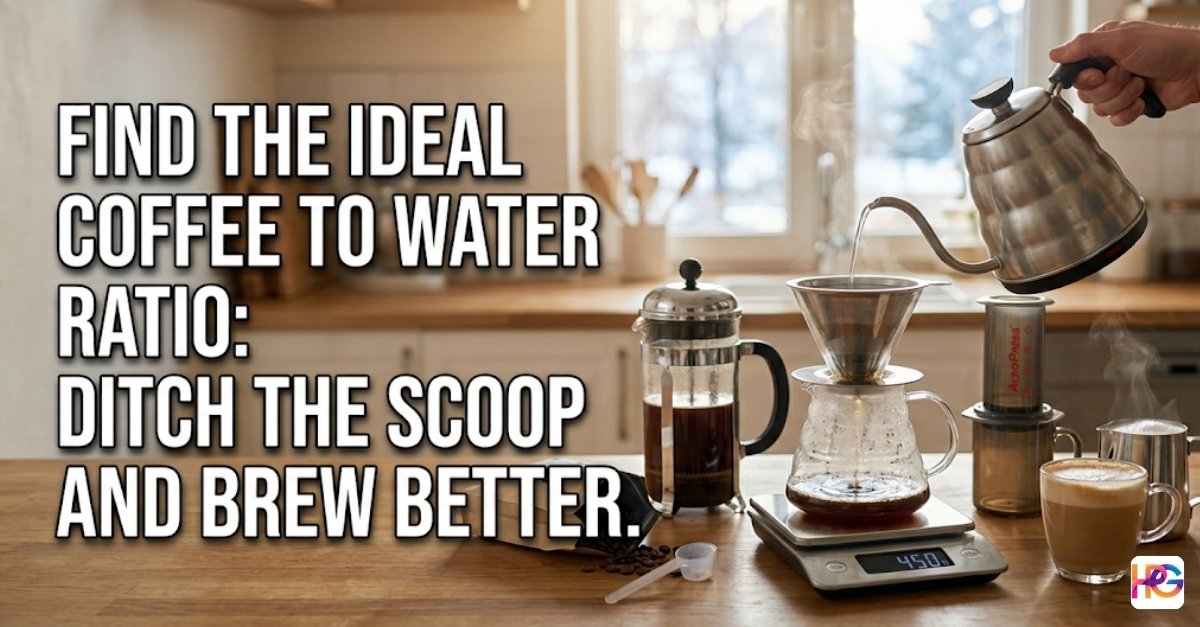
The Ideal Coffee To Water Ratio For Every Brew Method
I still remember a freezing Tuesday morning in Chicago. My kitchen felt like an icebox. All I wanted was a hot cup of coffee to warm my cold hands, so I grabbed my plastic scoop, guessed the amount of beans, tossed them into the drip maker, and hit start.
Ten minutes later, I took my first sip. It tasted like bitter mud. I actually spit it into the kitchen sink. That was my lowest point. Frustration quickly set in after realizing I had spent good money on those beans, only to ruin them by guessing the measurements.
That specific morning changed how I brew my drinks. I realized that guessing never works out well. You need a solid system. You need exact math to win. Today I will share my personal journey with you. I will show you how to find the perfect coffee to water ratio.
This guide will help you fix your bad batches. We will look at real data and simple kitchen tools. You will learn how to make a great cup every single time. Let us dive right into the numbers.
What Is The Golden Ratio For Coffee
You might hear people talk about the golden ratio. It sounds fancy but it is a very simple concept. It simply means finding the perfect balance of water and coffee grounds.
For most brewing methods, this magic ratio sits between 1:15 and 1:18. This means you use one gram of coffee for every fifteen to eighteen grams of water.
A 1:15 ratio makes a very strong cup. It feels heavy and thick in your mouth. A 1:18 ratio makes a much lighter drink. You can often taste more sweet and floral notes in the light brew.
I usually start with a 1:16 ratio for brand new beans. It sits right in the exact middle. It gives you a nice balance of bold strength and clear flavors. From there, you can change it based on your own tongue.
Why Your Taste Matters Most
Numbers are great starting points for beginners. But your own tongue has the final say. Some mornings I want a punchy dark roast. Other days I want a smooth light roast.
You should always play around with these target numbers. If your cup tastes sour, try a tighter ratio. If it tastes dry and overly bitter, use slightly more water. It takes some fun trial and error to get it right.
Why A Kitchen Scale Beats A Coffee Scoop
For years, I used a cheap plastic tablespoon to measure my morning grounds. I honestly thought one scoop equaled one perfect cup. I was completely wrong about this. This was my biggest tool failure early on.
Coffee beans come in many different sizes and weights. A dark roast bean is very light and full of air. A light roast bean is small and very dense.
Volume lies to you every single day. Weight tells you the honest truth. When I finally bought a digital kitchen scale, everything changed. My coffee tasted much better instantly.
Here is some real data from my own kitchen tests. This chart shows exactly why scoops fail us.
| Bean Type | One Level Scoop Weight | Water Needed For 1:16 Ratio |
| Light Roast Ethiopia | 7 grams | 112 grams |
| Medium Roast Colombia | 6 grams | 96 grams |
| Dark Roast Sumatra | 5 grams | 80 grams |
As you can see clearly, the exact same scoop holds different amounts. If you just use measuring scoops, your water ratio changes every single day. A scale stops this frustrating problem completely.
Finding The Right Ratio For Drip Coffee Makers
I absolutely love a good drip coffee maker. My main goal is helping people pick better tools for their homes. A quality drip machine is an absolute must for busy work mornings.
I have used a Technivorm and a Bunn machine for several years. They are truly great tools. But they still need the right math to work well.
For these machines, a 1:16 or 1:17 ratio usually works best. The hot water flows through the basket at a steady pace. This ratio gives the water enough time to grab the good flavors.
My Daily Drip Routine
I normally brew a large batch for myself and my wife. I weigh out exactly 60 grams of coffee. Then I add 960 grams of water to the clear tank. This hits that perfect 1:16 sweet spot.
The final result is always incredibly smooth. It never tastes weak or watery. If you use a cheap plastic machine, you might need a 1:15 ratio instead. Cheaper machines often do not extract flavor very well.
Nailing The French Press Ratio
I have a love and hate relationship with the French press. I own a heavy stainless steel version that I adore. It keeps the liquid hot for a very long time.
But I used to make a huge mess with it. I would put way too much coffee in the metal pot. When I pushed the plunger down, hot liquid spilled everywhere. It even burned my hand once.
Now, I stick to a very strict 1:15 ratio. The French press is a slow immersion brewer. The coffee sits in the hot water for the whole duration. It needs a slightly stronger ratio to taste right.
I use 30 grams of coarse coffee and 450 grams of hot water. I let it sit for exactly four minutes. Then I press the metal filter down very slowly. The heavy body and rich oils taste amazing.
AeroPress And Espresso Concentrate Rules
The AeroPress is my absolute favorite travel tool. I took it on a fun camping trip last summer. I woke up early to birds singing in the trees. The crisp air smelled like pine needles. I pushed the plastic plunger and made a flawless cup.
This clever tool is very forgiving. You can use many different ratios without ruining the drink. I really like a 1:15 ratio for a normal morning cup.
Sometimes I just want a tiny, strong shot of energy. For a quick fix, I stick to a tight 1:5 ratio, using 15 grams of finely ground coffee and 75 grams of water. After that, I stir it vigorously and press it down quickly.
This makes a thick, heavy concentrate. It is not true espresso, but it comes very close to the real thing. It works perfectly when I want to make a quick iced latte.
How I Adjust For Milk Based Drinks
Brewing plain black coffee is easy once you know the math. Adding milk changes the whole entire game. Milk is very sweet and very thick. It hides the roasted taste of your coffee very fast.
I learned this important lesson the hard way. I used to make a normal 1:16 brew. Then I poured a huge splash of cold milk into my favorite mug. The rich coffee taste vanished. I was just drinking dirty colored milk.
If you love adding milk, you must brew a stronger base. The coffee needs sharp acidity to cut through the heavy dairy fat.
Tweak Your Math For Lattes
If I use my stainless steel French press for a milk drink, I change my math. I drop the normal ratio down to a tight 1:14. This makes a very bold and bitter cup on its own.
But when I add the warm milk, pure magic happens. The bitter notes balance out the sweet milk perfectly. The final warm drink tastes rich and highly complex.
You must remember this simple rule. Always brew slightly stronger than you think you need when using milk. Your taste buds will thank you later.
Final Thoughts On Perfecting Your Brew
Making great coffee at home is a long journey. You will surely make a few bad cups. You will spill water on your clean counter. I have done all of these messy things many times.
Do not let a few bad mornings ruin your whole mood. Go buy a cheap digital kitchen scale today. Pick a solid starting ratio like 1:16. Stick with it for a whole entire week.
Notice how the fresh coffee smells. Notice how the warm liquid feels on your tongue. Adjust the numbers slightly until you finally find your own perfect recipe.
You have the power to live smarter and drink better coffee. It just takes a little bit of math and some patience.
Common Coffee Tool Questions
Why use a digital scale instead of a scoop?
Scoops fail because bean size varies a lot. A scale gives the true weight for a perfect coffee to water ratio. This tool keeps your daily brew fast and very steady for years.
Can a Technivorm handle a strong coffee to water ratio?
A Technivorm machine works best at a 1:16 ratio. Its copper heat coil is strong and keeps water hot. You get a bold cup that is never weak or sour at all. Try it today.
How do I store my brewing tools in a cold garage?
Store glass pots in a thick case to stop cracks. Cold winter air can make thin glass break with a tiny bump. Keep your gear dry to prevent mold growth in the dark.
Does heat hurt my digital coffee scale in a workshop?
High heat in a garage can drain scale batteries fast. Keep your tool in a cool spot to protect the screen. This helps the sensor stay sharp and give the right weight every time.
What is the best coffee to water ratio for a French press?
A 1:15 ratio is best for a stainless steel press. This tight math creates a heavy body that tastes great. It makes a bold drink that stands up to a splash of thick milk.