People ask me about backyard cookers all the time. You want to cook great food outside. You do not want to clean all day long. The fight between a gas or pellet grill is huge right now. Most folks only think about the taste of the meat. They forget about the hard work later. But the work you do after you cook is what matters most. It tells you if you will actually use the thing.
I test home gear for Home Pick Guide. I have fixed and cleaned many outdoor cookers. Here in Alabama, we get heavy rain and thick, wet air. This wet weather tests any machine. My child loves weekend hot dogs. So, my gear must be ready fast. If you want to know what it takes to keep these running, read on. I will share my real-world tests with you.
Wood Fuel and Wet Air Problems
Pellet units act like outdoor bake ovens. They burn small bits of pressed wood. This gives your food a rich, real smoke taste. But those exact wood bits cause big headaches. Wood acts just like a dry sponge. It pulls water right out of the air. Wet air is very bad for this fuel.
I left my hopper full during a damp week. That was a huge mistake. The wood sucked up the wet air. It got fat and soft. Then, the sun came out and dried it. It turned into a hard rock inside the machine. My cooker would not turn on at all. I ended up taking the entire side assembly apart.
After that, I spent nearly an hour using a long cleaning tool to clear stubborn dust and debris from the metal tube. With a standard gas setup, you never face this sad trap. Propane does not care about local rain or wet air. You just turn the knob and light the fire.
Ash Mess versus Grease Mess
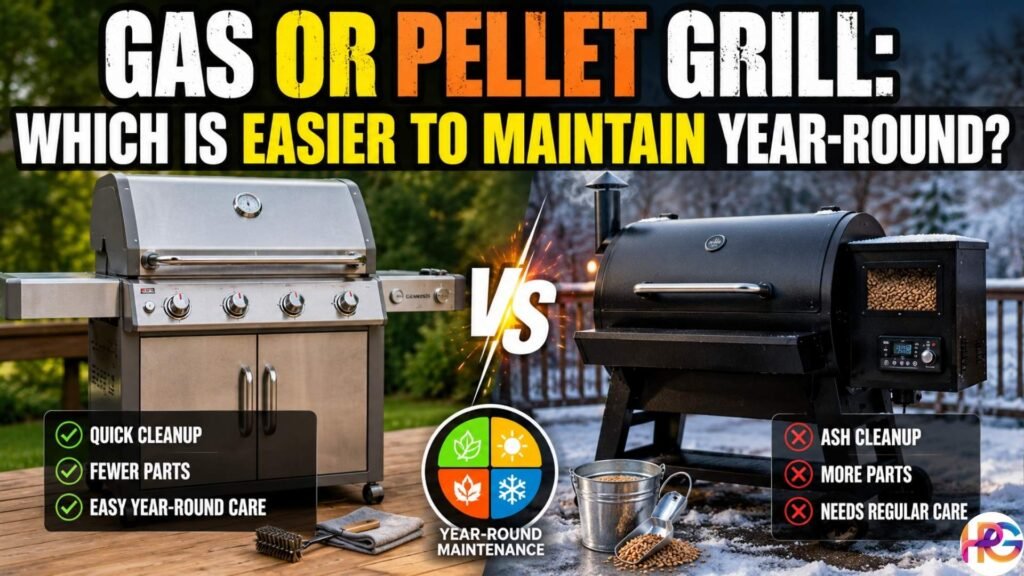
Every cooker gets dirty when you make food. Meat drops hot fat and wet juices. But the type of dirt changes how you clean. Gas models only make grease and burnt black scraps. You just scrape the hot metal bars with a brush. You empty the small tin cup under the box.
Every few months, you might scrub the metal fire tubes. This keeps the flames smooth and even. That is the whole job. A gas or pellet grill choice comes down to this core difference. Pellet models make grease and fine gray ash. This mix is a massive game changer.
As the wood burns, a fan blows ash inside the big steel drum. It coats the deep bottom. More importantly, it fills the small fire cup. This cup is where the heat starts. If you do not clean this ash out, the machine stops. Heavy ash kills the hot start rod.
The Shop Vac Routine
Your fire might not light at all. Or, it makes the heat swing wildly while you cook. Start by removing the cooking grates, then slide out the grease tray and lift out the metal heat shield to access the inside of the grill. All this work just to reach the thick ash.
Then, you need a strong shop vac. You suck the gray dust out of the belly. You have to do this dirty job every three cooks. I had to build a strict habit. After a weekend cook, I pull all the parts out. I clean the drum until it shines.
This adds fifteen clear minutes to my clean-up time. I do not mind the work now. The deep flavor is worth it. But I hated the chore at first. If you want zero fuss, the gas path is the clear winner every time.
Wet Weather and Digital Parts
Let us talk about leaving expensive gear outside. A gas frame is a simple, basic machine. It uses metal pipes, a rubber hose, and a spark button. Water does not hurt a gas pipe easily. You can leave the gas tank hooked up all year long. A good cloth cover keeps the metal safe from rust.
I left mine out in a huge rainstorm once. It fired right up the next day. It gave me no trouble at all. But the other option is a very different beast.
Inside, it is packed with advanced electronics, including a digital display, cooling fan, electric motor, temperature probe, and other control components. All these smart parts hate water. You must guard the wires from bad weather. If rain gets in the main board, it will short out fast. New circuit boards cost a lot of cash to replace.
The Hidden Heat Probe Issue
During our heavy rain season, I roll my smoker onto a safe porch. I do not trust a thin nylon tarp. Sideways rain can ruin the brain of the machine. There is also a small metal stick inside the main drum. This is the heat sensor.
Smoke and hot fat coat this stick over time. When it gets dirty, it reads the heat wrong. The screen might say two hundred degrees. But the fire is really much hotter. I burnt a full batch of chicken wings this way. Now, I scrub that small stick with wire wool each month.
Gas or pellet grill setups have different hidden quirks. But gas systems do not have this sensor issue at all. They use simple, manual heat knobs that rarely fail you.
Quick Answers to Common Doubts
Do I need to clean out the wood bits every time?
Not every time. But empty the box if you expect rain or wet air soon.
Can a gas tank blow up if left out in the sun?
No. Modern tanks have strong safety valves. They stop bad pressure leaks fast.
How often should I deep clean the inside?
Scrape and scrub the whole inside twice a year. This goes for both types.
Can I leave my smart smoker in the rain?
You can, but it is very risky. Always use a thick, heavy, waterproof tarp.
Which type of frame lasts for more years?
A gas frame lasts longer. It has zero computer parts or screens to fail.
Final Thoughts
After running both types side by side in my yard, the truth is clear. Gas is the top winner for fast, easy upkeep. It handles harsh weather with very little maintenance, requires no routine vacuuming, and runs on a reliable fuel that stores well even in damp conditions. If you want a gas or pellet grill that demands less work, buy gas.
Pellet units are amazing for deep, true smoke taste. But you must treat them like fine indoor tech. They demand respect, dry wood, and regular ash removal. If you love the craft of smoke, the extra chore time is fine. If you just want fast food with no mess, gas is your best friend.