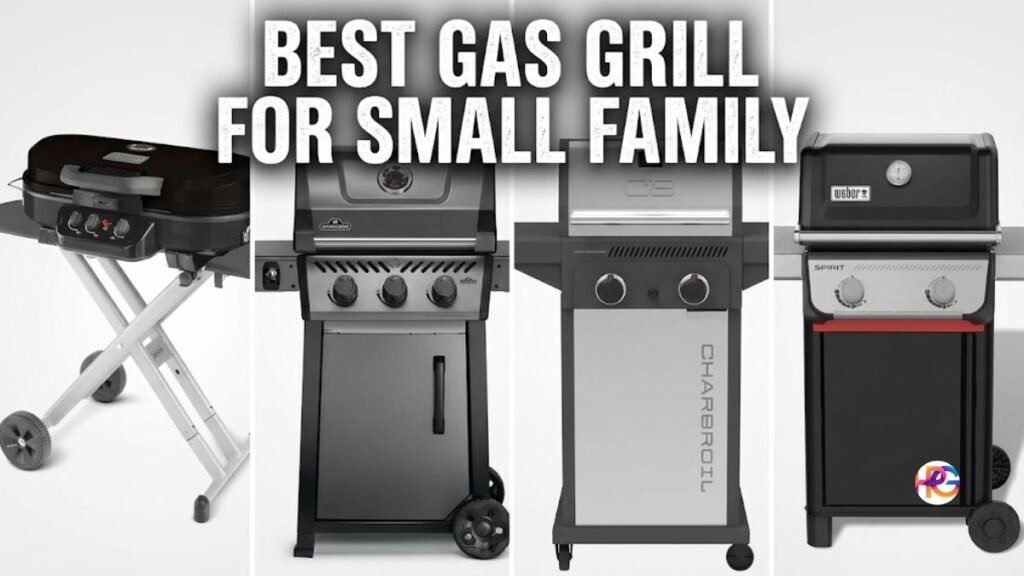
Why is it so hard to choose the right gas grill? You just want to cook dinner for your family. Most people waste money on huge grills they will never fill with food.
What usually goes wrong when buying a gas grill? Buyers grab a cheap steel model from a big-box store. That cheap steel rusts out in just one cold winter. They end up throwing the grill away and wasting their cash.
Or, they buy a massive six-burner unit. These giant grills waste gas and hog all your patio space. You need a strong grill that fits your patio. It needs to get hot fast. It must last for many years.
The Quick Answer
If you want to skip the deep dive, here is the fast summary based on real-world use:
- Best Overall: Weber Spirit II E-210 (The benchmark for reliability and even heating).
- Best Budget: Char-Broil Performance Series 2-Burner (Best entry-level cabinet style).
- Best Premium: Napoleon Freestyle 365 (Screaming hot with a 10-year warranty).
- Best Space-Saver (Specific Use-Case): Coleman RoadTrip 285 (Folds flat for apartment balconies and camping).
Product Comparison Section
We focused on small grills that have two or three burners. These are the perfect size for a family of three or four people. They save space, and they save gas.
Weber Spirit II E-210
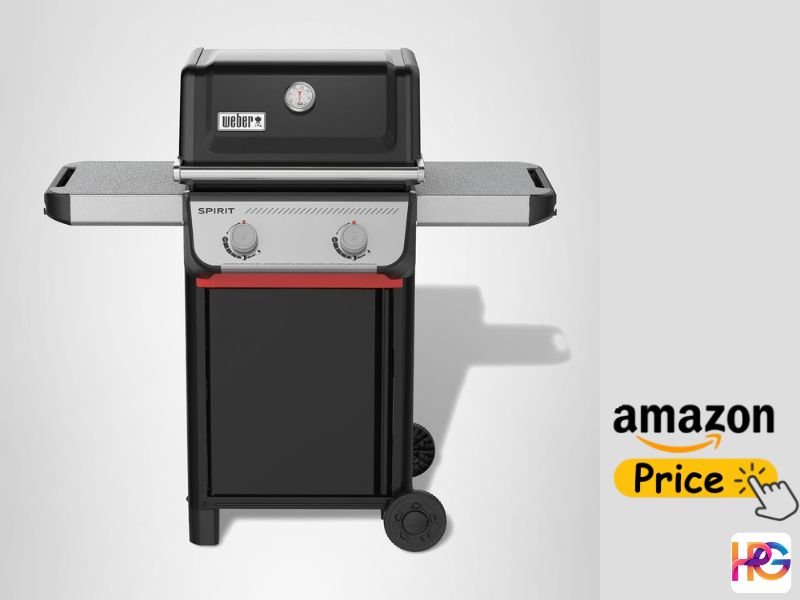
This grill is a pure daily workhorse. It is best used for fast and simple weeknight dinners. Think about basic foods like burgers, hot dogs, and thin cuts of chicken.
It performs very well at keeping the heat even across the whole cooking grate. You will not have to move your hot dogs around to keep them from burning.
Where does it struggle? It struggles with true slow cooking. Two burners just do not give you enough room to move food far away from the flame.
Key Details:
- Size and capacity: It gives you 450 total square inches of space. You can fit about ten average burgers on the main grate at one time.
- Performance indicators: It packs 26,500 BTUs of power. It reaches 500 degrees in about ten or twelve minutes.
- Ease of use: It is incredibly easy to use. The open cart design lets you reach the gas tank with no hassle at all.
| Pros | Cons |
| Thick cast aluminum firebox | Open-bottom cart design |
| Will last for a decade without rust | Leaves your stored tools out in the rain |
| Flawless even heat across grates | Hard to reach extreme searing heat |
Char-Broil Performance 2-Burner
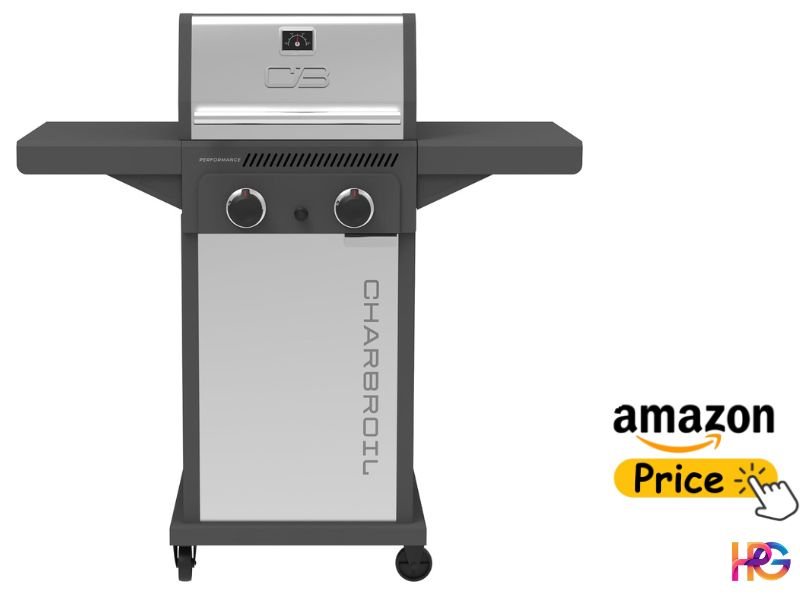
This is a decent choice if your budget is very tight. It is best used for weekend cooks who just want a basic meal.
Where does it perform well? It cooks standard hot dogs, sausages, and thin steaks just fine. It does a decent job for the low price tag.
Where does it struggle? It hates bad weather. The thin metal body loses heat very fast on a cold or windy day. It will also rust quickly if you leave it out in the rain without a good cover.
Key Details:
- Size and capacity: It has 300 square inches of main cooking space. This is just enough room for about three or four people.
- Performance indicators: It runs on 24,000 BTUs. The cast-iron grates do help to hold the heat fairly well once they get hot.
- Ease of use: The closed cabinet doors hide the ugly gas tank. This makes your patio look much cleaner to your guests.
| Pros | Cons |
| Closed cabinet base style | Thin sheet metal frame |
| Hides the ugly gas tank from sight | Rusts very fast in damp weather |
| Fast warm up to cooking temp | The grease pan is sticky and hard to empty |
Napoleon Freestyle 365
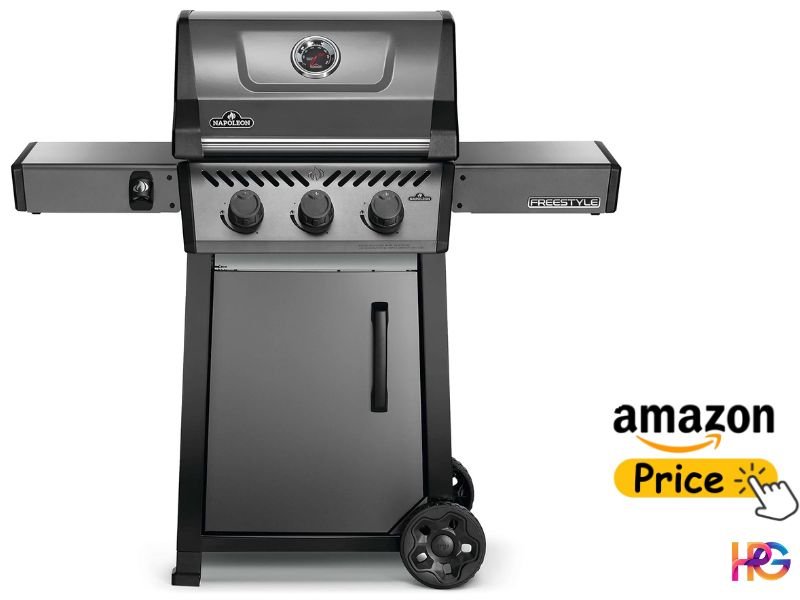
This is a premium grill shrunk down into a small size. It is best used by families who take their outdoor cooking very seriously.
Where does it perform well? It gets blazing hot. It is amazing for getting a dark crust on a thick steak. Having three burners also helps you cook away from the direct flame.
Where does it struggle? The build process is awful. The box comes with dozens of parts. The manual is very confusing.
Key Details:
- Size and capacity: It offers 365 square inches of main grill space. The heavy grates have a unique wave shape to hold small foods.
- Performance indicators: It pumps out 33,000 BTUs. This grill gets extremely hot in just a few short minutes.
- Ease of use: The flame starter is the best on the market. It shoots a real jet of fire to light the gas instantly.
| Pros | Cons |
| Three strong heat burners | Bad assembly instructions |
| Gives you the power to sear heavy meat | Takes over two hours to build at home |
| Very fast heating times | The grease catch cup feels very cheap |
Coleman RoadTrip 285
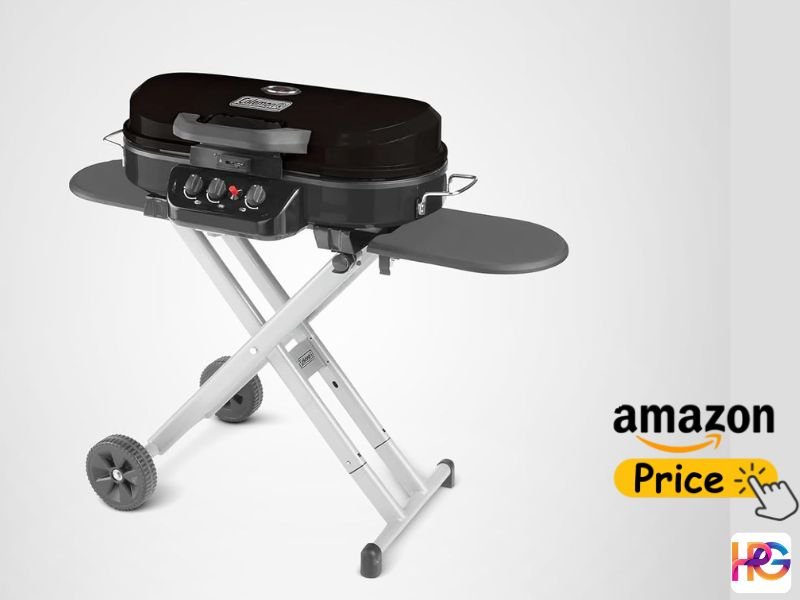
This grill is the ultimate space saver. It is best used on tiny apartment balconies or packed into a car trunk for camping trips.
Where does it perform well? It folds completely flat in just a few seconds. You can easily store it in a closet or a garage corner when you finish your meal. It also features three small burners, which is rare for a portable grill.
Where does it struggle? The grease management system uses a shallow water pan. You have to dump out dirty, greasy water after you cook. This process is very messy. It also loses cooking heat very quickly on a windy day.
Key Details:
- Size and capacity: It offers 285 square inches of grill space. This is a bit tight, but it easily fits a round of burgers for a small family.
- Performance indicators: It pushes up to 20,000 BTUs. It runs on small camping gas bottles, but you can buy a hose to use a large tank.
- Ease of use: The folding legs work exactly like a sturdy ironing board. Two big wheels make it very easy to roll across your patio or through the grass.
| Pros | Cons |
| Folds completely flat | Messy grease water pan |
| You can store it inside a small closet | Dumping the dirty water is gross and hard |
| Two slide-out side tables | Poor wind resistance |
| Gives you extra room to set your plates | Loses a lot of cooking heat in breezy weather |
| Three separate heat zones | Heavy portable frame |
| Offers much better heat control than most small models | It is quite heavy to lift into a car trunk by yourself |
Testing and Research Transparency
How did we rate these small grills? We do not pay much attention to flashy marketing claims on the box. Instead, we focus on how the grill performs in real-world cooking, using hands-on testing to separate the facts from the hype.
First, we look closely at the metal thickness. Thin metal is a huge red flag for a grill. It warps when it gets hot. It rots out after a few rainstorms. We look for thick cast aluminum. It holds heat better and stops rust in its tracks.
Second, we test how even the heat is. We use the cheap white bread test. We cover the entire cold grill with slices of white bread. Then, we turn all the burners to medium. We wait five minutes and turn the bread over.
This bread test shows us the exact heat map of the grill. Good grills toast every slice evenly. Bad grills burn the center slices. They leave the outer slices completely white and raw.
Third, we check the real warranty details. What happens if a burner cracks in five years? A good brand will mail you a new part for free. A cheap brand will ignore your calls. We only reward brands that stand behind their work.
Fourth, we test moving parts. For portable grills like the Coleman, we fold the stand up and down twenty times. We pull it across real grass and bumpy dirt to make sure the wheels actually work.
Performance Comparison (Key Insights)
How do these four grills compare when you actually cook on them? Let us break down the real facts. Performance is the most important factor.
The Weber gives you the smoothest and evenest heat. You can fill the entire grill with chicken. Every piece will finish at the same time. You will not have to juggle the food around to stop bad flare-ups.
Napoleon is the absolute king of pure heat. If you want a steakhouse crust on your meat, you need the Napoleon. The Char-Broil can cook a decent steak, but it takes much longer to heat up the metal grates.
The Coleman is the pure king of travel. It cannot match the Weber for even cooking heat. But it is the only grill here that you can throw in your car trunk.
Next, we look at ease of use. The Weber is the clear winner here. The grease drops right into a simple pan. You can swap that pan out in ten seconds. The Char-Broil is fine, but the grease tray can get stuck. The Coleman is a big pain to clean. You have to fill a tray with water. Then, you must carefully dump out that dirty, greasy water when you finish.
Reliability is a massive difference here. Both the Weber and the Napoleon use heavy cast aluminum. They are built like tanks. They will easily survive a full decade on your deck. The Char-Broil uses cheap stamped steel parts that bend. The Coleman is built tough, but it has plastic latches that might snap if you drop it hard.
Value for money is the final point. The Char-Broil costs the least on day one. But the Weber is the true best value. You spend a bit more upfront, but it lasts three times as long.
Time, Effort, and Usability Reality
Grilling should not feel like a hard chore. Here is what living with these gas grills really looks like on a normal Tuesday night.
Setup Time
Setup time is your very first challenge. You will spend about one hour building the Weber. The Char-Broil is also pretty simple to piece together with basic tools. The Coleman is the easiest. It comes almost fully built right inside the box. You just snap on the wheels and stand it up.
The Napoleon will test your patience. The pictures in the manual are very hard to read. You should plan for two full hours of building time. You might want a friend to help you lift the heavy base.
Learning Curve
The learning curve is next. Two-burner grills like the Weber and Char-Broil are very simple. You just turn the knobs to medium and start cooking. You cannot really mess it up.
The Napoleon takes some real practice. Because it gets so hot, you might burn your first few meals. The Coleman also takes time to learn. You have to learn how to manage its three small heat zones.
Daily Cooking Experience
Daily usage effort is very low across the board. Just open the valve, press the ignition button, and the grill is ready to cook.
Maintenance Reality
Maintenance is a strict reality for all gas grills. You must scrape the hot grates with a good brush after every single meal. If you skip this, your grates will rust. Rust will ruin your food. The Coleman requires the most daily effort. Dumping the dirty water pan is not fun.
Once a year, you must take the grates out of the stationary grills. You have to scrape all the black grease out of the bottom tub. The Weber makes this deep clean very easy. The Char-Broil has sharp metal corners. These corners make cleaning a real hassle.
Real Downsides (Category-Level)
We need to be brutally honest about small gas grills. They are not magic machines. There are common flaws in this entire product category. You should know them before you buy.
First, they are terrible for slow cooking. True BBQ needs indirect heat. This means placing the meat on an unlit side of the grill. On a small grill, there is not enough distance. The heat from the lit side will still cook the meat too fast.
Second, the cooking space fills up way faster than you think. The box might claim it fits fifteen burgers. That is a very tight squeeze. Once you add a large pan of vegetables, your space is totally gone. You will end up cooking in batches if you invite some friends over.
Third, the fake stainless steel trick is everywhere. Many brands use a cheap grade of steel on the lids. This makes them look shiny in the store. But this steel is very weak. It pits and rusts very fast if you live near the ocean.
Fourth, portable grills hate the wind. If you buy a folding grill like the Coleman, expect to lose a lot of heat on breezy days. The thin lid simply cannot block a cold wind.
Who It’s For (and Not For)
Who is actually going to love these small grills? We have a clear list for you.
Best for:
- Small families of three to four people.
- People with a tiny patio, a small deck, or a tight balcony space.
- People living in strict apartments who need a grill that folds away.
- Active families who love to go camping or to the local park.
- Busy parents who want fast weeknight meals without a huge cleanup.
Who should avoid these small grills entirely?
Not ideal for:
- People who throw big parties for their whole street.
- Home cooks who want to smoke huge cuts of meat for ten hours.
- Buyers who want a massive shiny grill to show off to their friends.
- People who need to cook multiple large side dishes at the same time.
Comparison Insight (Smart Buying Guidance)
What do you really gain when you choose a premium grill over a cheap one? This is the most important lesson in this guide.
When you buy a cheap grill, you get thin metal. Thin metal bends when it gets hot. Moisture gets trapped inside the frame. The burner tubes rot out from the inside.
You might save two hundred dollars on day one. But you lose all that money when the grill completely dies in three years. You have to buy a new one all over again.
When you spend more on a premium grill, you get real peace of mind. The main firebox is made of solid cast aluminum. It physically cannot rust. It traps heat inside like a heavy indoor oven.
Spending more money actually matters a lot in this category. You are buying a solid ten-year warranty. You are buying a grill that you do not have to throw away. It is much smarter to buy one good grill right now. It is foolish to buy three cheap grills over the next decade.
Final Verdict
Which small gas grill should you actually choose today? We have four final answers for you.
The absolute safest pick is the Weber Spirit II E-210. It offers an excellent balance of price, cooking performance, and long-term durability, delivering even results while being built to last for many years. The amazing build quality makes it the best choice.
If your patio space is completely gone, grab the Coleman RoadTrip 285. It is the best gas grill for small family camping trips or tiny balconies. It folds flat to hide in a closet. Just be ready to handle the messy water pan.
If your budget is extremely tight, grab the Char-Broil Performance 2-Burner. It is a fine machine for basic grilling. But you must buy a thick cover. You must keep it out of the rain. You must accept that it will not last forever.
If you love cooking and want top performance, buy the Napoleon Freestyle 365. The three burners give you great heat control. The intense heat gives you the best dark crust on your steaks. You must endure a hard assembly process, but the results on the plate are totally worth it.
Frequently Asked Questions
Can a small gas grill feed a family of four?
Yes. A small two-burner gas grill fits ten burgers at once. This is plenty of space for a family of four. Want to see how to save space? Read our guide.
What is the best gas grill for a small family on a budget?
The Char-Broil two-burner grill is the best budget pick. It heats up fast and saves cash. Just make sure to buy a good cover. Check out our full budget test now.
How long does a premium small gas grill last?
A good grill like a Weber lasts ten years or more. They use tough cast aluminum that stops rust. Want to see which brands have the best warranties? Click here.
Do small gas grills cook as well as large ones?
Yes. Small grills hold heat very well. They use less gas to get hot. They are perfect for fast weeknight meals. Read our heat test to see how they perform.
Can you use a small two-burner grill for slow smoking?
It is very hard. Small two-burner grills do not have enough space for indirect heat. A three-burner model works much better. Learn how to smoke meat on a small grill.