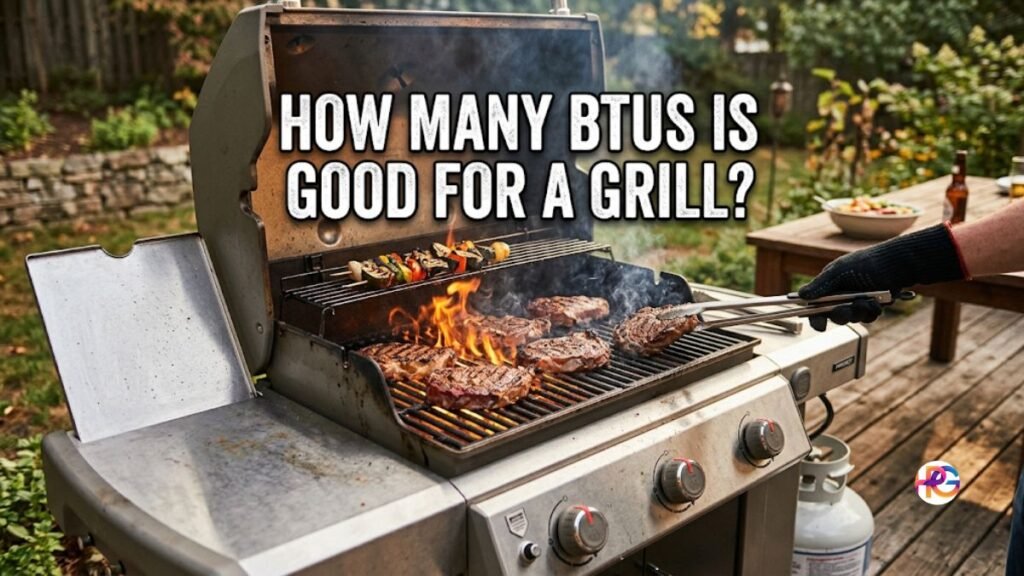
I remember looking at a long row of shiny gas grills. This was at the local store a few years ago. One grill showed off 40,000 BTUs. The one right next to it claimed a huge 70,000 BTUs. I honestly had no clue what that meant. I just guessed a bigger number meant a better grill. So, I bought the biggest number I could afford. It ended up being a big mistake.
If you are wondering how many BTUs are good for a grill, the short answer might shock you. You actually want between 75 and 100 BTUs per square inch of main cooking space. Anything more is just a sales trick to make you spend cash. Anything less will fail to put a good crust on your meat. Let me explain how I learned this the hard way. I will help you avoid buying the wrong grill for your yard.
The Big BTU Trap I Fell For
When I bought my first gas grill, I felt very proud. I thought I was taking home a real beast. It claimed a huge BTU rating right on the box. But then I tried to cook thick steaks for my friends. The meat just turned a sad, dull gray. There was no sizzle at all. There was no crust. I just ended up with baked meat.
I could not figure it out. The box said it had so much power! But here is the dirty secret. Most grill brands hide this fact from you. They often add up every single burner on the grill. That is how they get that huge number for the sticker.
That big rating includes the side burner. You might only use that side burner once a year. It includes the back burner for a spit. The main cooking space was huge. But the burners were spaced way too far apart.
The grill was made of thin, cheap metal. I opened the lid to flip a burger. All that heat flew into the air right away. The high BTU rating meant absolutely nothing. The grill could not hold onto the heat.
How to Calculate the Golden Ratio
You do not need a math degree to buy a good grill. You just need to look past the shiny sticker. Do a tiny bit of math on your phone. The only number that truly matters is the BTUs per square inch.
Finding the Main Cooking Space
First, find the total BTUs of the main burners only. Ignore the side burner completely. Next, find the square inches of the main cooking area. Do not count the top warming rack in your math.
Doing the Simple Math
Divide the main burner BTUs by the main cooking space. Does the result land somewhere between 75 and 100? If so, you are in the perfect sweet spot. This is exactly how many BTUs are good for a grill.
A Quick Real-World Example
Let us look at a standard three-burner grill. This will make it easy to see. Say the sheet says it has 30,000 BTUs. That is just across the main burners. The main cooking grate is exactly 400 square inches.
You divide 30,000 by 400. That gives you exactly 75 BTUs per square inch. That is a perfectly balanced grill. It will get hot enough to sear meat. But it will not waste your gas.
Why Higher BTUs Can Actually Be a Bad Thing
A lot of folks think they need a huge monster on their patio. I used to be one of them. That was before I started writing about this for my blog. But a grill with too much power causes everyday problems.
You Will Burn Through Propane
High BTUs mean high gas use. It is really that simple. Your grill might run too hot and waste gas. If so, you are just burning money. I used to swap out gas tanks every other week. Once I got a better grill with a lower BTU rating, things changed. A single gas tank easily lasted me twice as long.
Flare-Ups Become a Nightmare
A bad grill pumps out too much raw heat. The grease hits the flames hard. This causes huge, wild flare-ups. You end up with bad chicken. It is charred black on the outside. It stays raw on the inside. A balanced heat output gives you much better control. It keeps your food and your eyebrows safe.
Things That Matter Way More Than BTUs
Over my years of grilling, I burned a lot of hot dogs. But I learned a very simple truth along the way. How a grill holds heat is very important. It matters much more than how it makes heat.
Heavy Cast Iron Grates
Thin steel rods lose their heat fast. They get cold the second raw meat touches them. Heavy cast iron acts differently. It takes in heat deeply and holds onto it. This gives you those great grill marks. Even a lower BTU grill can sear perfectly. It just needs heavy, good grates.
A Thick, Heavy Hood
Lift the lid of the grill before you buy it. Does it feel heavy? It really should. A heavy hood traps the heat inside the box. That is exactly where the heat belongs. Cheap grills have thin lids. A well-built, thick lid makes a 30,000 BTU grill work great. It will beat a cheap 60,000 BTU grill every single time.
Heat Tents and Bars
Look beneath the grates. Good grills have angled metal plates. These cover the burners safely. They catch grease drips, turn them into flavorful smoke, and help distribute heat evenly across the cooking surface. Cheap grills leave the burners out in the open. That wastes heat and ruins your food.
The Weather Factor Nobody Mentions
Your local weather plays a huge role. It changes how your grill works. A grill might work great in a hot summer. But that same grill might fail in the snow.
Grilling in the Cold
I grill all year round. I even cook in the cold. If you live in a cold place, you will lose heat. It escapes right through the metal body of the grill. In this case, you might want more power. Aim for the 100 BTUs per square inch mark. This helps fight the freezing outside air.
Dealing with the Wind
Wind is the worst enemy of a gas grill. Strong winds used to blow out my burners all the time. Good grills route air the right way. They block harsh winds. But they still feed the fire enough air. You will never see wind stats on a box. But wind changes how the grill works on a breezy night.
How to Test the Heat Yourself
Let us say you already have a grill at home. If you are wondering whether it heats evenly, you do not need to read the manual. A simple bread test will tell you everything you need to know.
The Simple Bread Test
Buy a cheap loaf of white bread. Turn your grill on high. Let it warm up for ten minutes. Place slices of bread all over the main grate. Wait about one minute. Then, flip all the slices over.
Reading the Results
Look at the toast marks on the bread. Are the middle slices burnt black? Are the edge slices totally white? If so, your grill has bad heat flow. It might have too many BTUs in the center. A great grill will toast all the slices evenly. This proves the heat is balanced and steady.
What About Newer Infrared Grills?
New tech throws the old heating rules out the window. I tested an infrared model last month. I was blown away by the real difference.
These grills use a special glass or clay plate. The plate sits right above the gas flames. The gas flame heats the plate up. Then, the plate sends hot, even heat up to the food. They are very smart and save gas. They use far fewer BTUs to get the job done right.
An infrared grill might only put out 60 BTUs per square inch. But it will actually get much hotter than a normal grill. Keep this in mind if you look at newer tools. Do not let a lower BTU number scare you away.
Common Questions About Grill BTUs
I get asked these exact questions all the time. I hear them from friends and folks on my blog. Here are the simple, straight answers you need.
Does a bigger grill need more BTUs? Yes, it does. There is more space inside to heat up. But the golden ratio of 75 to 100 BTUs per square inch stays the same.
Can a grill have too many BTUs? Yes, it sure can. A bad grill with too much gas is very dangerous. It causes wild grease fires and wastes all your costly fuel.
Do side burners count for the total? No, they do not. You must ignore side burner stats. Only look at the main grill box because side burners are separate tools.
Is 30,000 BTUs enough for a grill? It has plenty of power. It works great for a normal two-burner grill. Just make sure the main grate is around 300 to 400 square inches.
Final Thoughts
Shopping for a new grill can be a huge pain. The brands want you to stare at big numbers on the box. But the biggest number rarely means the best cooking experience. It just means you will likely buy more gas.
I learned my lesson the hard way. Now you do not have to make my exact mistake. Skip the cheap grills with giant numbers. Find a solid, heavy grill. Look for that sweet spot of 75 to 100 BTUs per square inch. Your steaks will taste much better. Your gas tank will last longer. And you will love standing by the fire again.
FAQs:
How many BTUs are good for a grill?
You want 75 to 100 BTUs per square inch. This gives you great heat. It sears your food fast without wasting gas.
Can a patio grill have too many BTUs?
Yes. A poorly made grill with high BTUs burns too hot. It causes huge grease fires. It also wastes your costly fuel fast.
Do side burners count toward the grill total?
No, they do not. Ignore side burner stats when you shop. Only look at the main grates where you cook your meat.
Is 30,000 BTUs enough to cook steaks?
It has plenty of power for a small two-burner grill. Just check that the main grate is under 400 square inches.
Do infrared grills need fewer BTUs?
Yes, they need far less power. They use smart plates to trap and spread heat. They get super hot on very little gas.