Hot gear dies fast in a tight space. A humid Florida kitchen makes it worse. You might ask, how much clearance does a microwave need in a cabinet? I fix these units a lot. Let us look at the facts.
Why Microwave Clearance Actually Matters More Than You Think
A microwave looks safe on your counter. But inside a cabinet, heat and airflow become a big deal. This is how most people ruin their machines.
The parts inside make a ton of heat. They need a fan to push that hot air out. The power usage of these things is wild. Wood cabinets trap that heat fast. A closed box stops fresh air. The hot air has no place to go. It just stays there and cooks your wires.
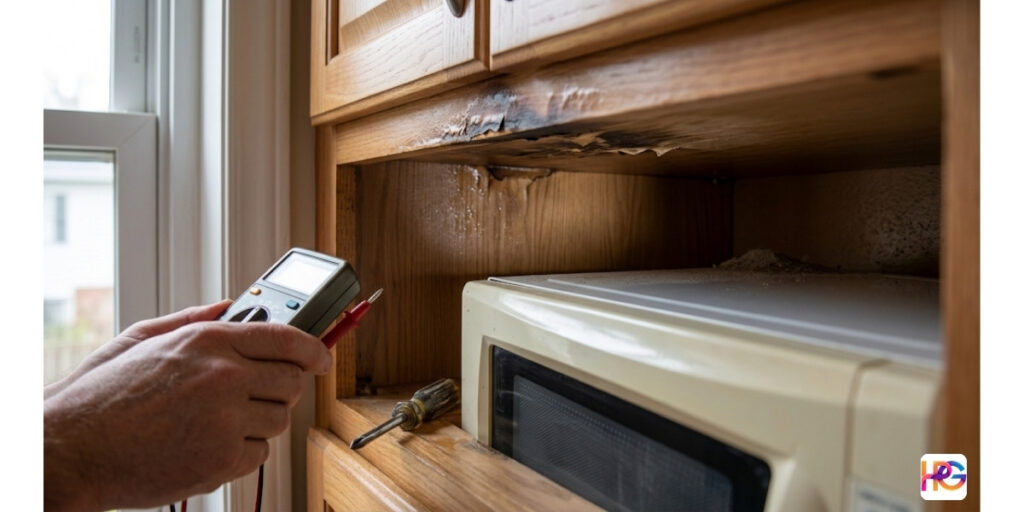
I set up a unit on a damp Tuesday in Seattle. I just wanted to warm up some sourdough bread. The fit was way too tight. Ten minutes later, the whole thing died. The thermal fuse blew out. I had to grab my screwdriver and multimeter to fix it.
People love to hide ugly tech. They push the unit far back into the box. Then they close the wooden door. This cuts off all the vents. You will know it is wrong very soon. The wood will smell like hot glue. The box gets hot. Finally, the unit will shut off on its own.
How Much Space Does a Microwave Need in a Cabinet? (Exact Clearance Numbers)
This is the part most manuals hide in fine print. These numbers are what keep your microwave safe and your cabinet from warping.
Standard Clearance Guidelines (Most Countertop Microwaves)
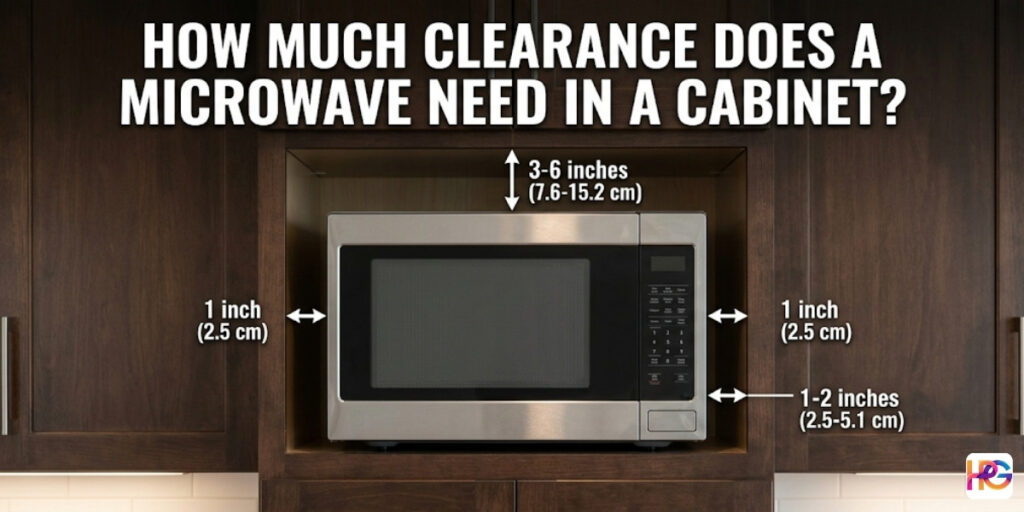
Let us talk about exact numbers. People often ask, how much clearance does a microwave need in a cabinet? It was a freezing Monday in Chicago. I was helping a friend set up his kitchen. He bought a nice new unit. He tried to push it deep into a tight wooden box. I had to stop him. I grabbed my tape measure to show him the truth.
Here are the rules for most standard units:
- Top clearance: 3 to 6 inches. Heat rises fast.
- Back clearance: 1 to 2 inches. The plug needs space.
- Side clearance: At least 1 inch on both sides.
- Front: Fully open. Never block the door air.
Brands like GE Appliances, Panasonic, and Toshiba test this stuff hard. They specify these gaps to keep the parts cool. A wild amount of heat builds up inside. If you skip this, your gear will fail fast.
Why These Gaps Are Non-Negotiable
You might think you can cheat these rules. Please do not do it. Every model is built in its own way. The cooling fan location changes by brand. Vents can be on the side, back, or top.
If you block them, the hot air stays inside. Poor heat dissipation is a real fire risk. I have touched wood panels that felt like a hot frying pan. The smell of baking wood dust is awful. It makes my heart jump just thinking about it! Your unit needs room to push out that exhaust. Give it the gap it needs. Your home stays safe, and your food gets hot.
Can I Put My Microwave in a Cabinet? Yes — If You Follow These Rules
Yes, you can. But only if the cabinet is working with the microwave, not against it.
People ask me this all the time. They want a clean kitchen. Can I put my microwave in a cabinet? The short answer is yes. But you must follow the rules.
Cabinet Requirements Checklist
I remember a hot Thursday down in Austin, Texas. I was fixing a unit for a buddy. The power draw on these things is wild. They get so warm. He put his unit in a nice wooden box. But he did it wrong. We had to fix his whole setup.
Here is what you must have for a safe space:
- Open back panel: You need holes. Cut a large hole in the back wall. Or drill big ventilation holes. Air must flow out.
- Heat-resistant surface: The base gets very warm. Do not place it on cheap peel-and-stick vinyl. Use solid wood or a good mat.
- No tight shelves above: Keep the top clear. Remember, heat goes up.
- Door style: An open shelf is always best. If you have a closed cabinet door, you must leave it wide open while your food cooks. Never close it while running.
When It’s a Bad Idea
Sometimes, hiding your gear is just a bad plan. I have seen the damage. It is a sad sight. You should avoid these spots:
- Fully enclosed pantry cabinets: It is a dark, closed box. The heat stays trapped. Your unit will fail.
- Cabinets above ovens or dishwashers: These large machines make steam and heat. Putting a smaller unit right above them is a bad mix. Steam will ruin the electric parts inside.
- Humid, unventilated corners: Dead air is a huge problem. If the air does not move, the heat stays. You can feel the hot, sticky air when you reach in. The plastic parts will warp over time.
Do Microwaves Need Space Above Them? (The Most Ignored Rule)
Most people push the microwave right under a shelf. That is the fastest way to cook the electronics instead of your food.
I see this mistake a lot. You slide the unit onto a tight shelf. You think it looks neat. But do microwaves need space above them? Yes, they do. This is the rule everyone ignores.
It was a cold Sunday in Ohio. I was warming up some leftover sourdough bread. I noticed a weird scent. It was that warm wood smell after just five minutes of use. I grabbed my flashlight to look closer. The heat was completely trapped.
Here is why the top gap matters so much:
- Top vents are standard: Most brands put the main exhaust vents on the top roof of the unit.
- Heat rises fast: Hot air goes straight up. If a shelf is right there, the heat hits the wood and bounces right back down into the machine.
- Wood takes damage: The steam and hot air ruin your boxes. I have seen badly warped wood shelves and peeling laminate doors. It looks awful and costs a lot to fix.
When you ask how much clearance a microwave needs in a cabinet, you must always look up. Leave at least three inches of empty air above the unit. Your food will get hot. Your wood shelves will stay safe. These machines push out a wild amount of heat. Do not trap it.
What Is a Zero Clearance Microwave? (And When You Need One)
If you want the built-in, seamless cabinet look, this is the microwave designed for that job.
People often ask me, ” What is a zero clearance microwave? It is a unit that blows hot air straight from the front. Most units vent from the back or sides.
It was a snowy Friday in Denver. A friend wanted a flush look for his new kitchen. He tried to force a normal unit into a small wood hole. I touched the cold metal of his machine and laughed at how tight the fit was, then told him he had the wrong gear. The power these things use is wild.
Here is the big difference between a countertop and a built-in microwave. A regular model needs lots of open room to breathe. A zero-clearance design has smart airflow engineering. It pulls cool air in and pushes hot air out the front vents.
You use built-in trim kits to hide the side gaps. The metal kit frames the unit perfectly into the wall. With these special models, you do not have to stress. You will not ask how much clearance a microwave needs in a cabinet anymore. They are built specifically for tight spots.
Top brands like Sharp Corporation and Bosch make great units. They cost a bit more money up front. But they save your wood boxes from heat damage and look amazing.
What Size Cabinet for a 24 Inch Microwave?
A 24-inch microwave never fits in a 24-inch cabinet. Here is why.
Ideal Cabinet Dimensions
People always ask me what size cabinet is needed for a 24-inch microwave. It was a wet Wednesday in Portland. A guy tried to shove his new 24-inch gear into a tight 24-inch wooden box. I heard the loud, awful scrape of metal hitting wood. He was so mad. I had to smile a bit. I told him the math does not work that way.
You must leave room for the air to move. When you wonder how much clearance a microwave needs in a cabinet, keep these exact numbers in mind:
- Width: Go for 25 to 27 inches. You must have those side gaps.
- Height: Leave big breathing room above. Three inches is the safe minimum.
- Depth: Add extra space behind the unit. Aim for 18 to 20 inches deep.
Measuring Tips Most People Forget
Measuring is hard if you rush it. Most folks forget the hidden parts. I always grab my bright flashlight and tape measure to look deep into the dark space before I buy anything.
- Include power cord space: That thick black cord is very stiff. It needs room to bend safely. If you crush it against the wall, the wires will break. The power draw on these units is wild, so a damaged cord is a real danger.
- Account for plug position: A big wall plug sticks out far. If the wall outlet is right behind the machine, you lose two inches of depth fast.
- Door swing clearance: The heavy glass door needs room to swing wide open. If the wood frame blocks the metal hinge, you cannot easily grab your hot food.
Where Should a Microwave NOT Be Placed?
Some spots in a kitchen look so handy. But they quietly ruin your gear over time.
People often ask me where to put their units. Knowing where to avoid is just as vital. Some spots look great, but they slowly kill your machine.
I drove out on a blazing hot Tuesday in Phoenix. A buddy put his unit in a sealed garage cabinet. I opened the heavy wooden door. A blast of hot, dusty air hit my face. He did not stop to ask how much clearance a microwave needs in a cabinet. He just shoved it in there. The whole thing was completely dead. I just shook my head and wiped the sweat off my face.
Do not put your gear in these bad spots:
- Above the fridge: It seems like great free space. But the fridge pushes out warm air from its own back coils. You are just adding heat to heat. Plus, pulling down a bowl of hot soup from way up high is scary.
- Next to the stove: The stove is a major heat zone. Boiling pots splash hot water. Sticky oil flies everywhere. That gross grease coats the machine and clogs your air vents fast.
- Inside closed drawers or lift cabinets: These look very modern and fancy. But if you shut the door while it runs, the heat is trapped. The hot air bakes the internal wires until they snap.
- In garage cabinets with no airflow: Garages get super hot in the summer. Dust builds up thick and fast. If you stick your unit in a tight wooden box out there, the cooling fan chokes. Give it real room to breathe.
Where Should I Put My Microwave in a Small Kitchen?
Small kitchens demand smart placement, not tight placement.
People always ask me where I should put my microwave in a small kitchen. You want your counter space back. But you cannot just jam the gear into a tiny hole.
It was a rainy Saturday in New York City. Space in those flats is so tight. My buddy had his heavy unit balancing right on top of his toaster. I laughed so hard I nearly spilled my hot coffee. He was totally desperate for a place to put it. I touched the hot metal sides of the machine. It was a fire waiting to happen. Even in a tiny room, you still must ask, how much clearance does a microwave need in a cabinet? You need good airflow to keep your home safe.
Here are the best ways to fit your gear safely:
- Open shelf in a lower cabinet: Take the wood door off a base box. This leaves a deep, open slot. Air flows nicely. Just watch your knees when you pull out a hot plate of food.
- Microwave cart with airflow: This is a very smart trick. Get a small rolling wire cart. The open metal grid lets hot exhaust escape from every single side. You can easily roll it into a corner when you are done.
- Under-counter shelf ideas: Build a strong wood ledge right under your top boxes. It lifts the machine off your main work zone. Just make sure the sides stay wide open to let the hot air out.
- Wall bracket solutions: You can bolt thick steel arms straight into your wall studs. The machine rests directly on those arms. It looks like it is floating in the air. There is no wood box to trap the heat at all.
What Is the Best Height for a Microwave? (Comfort + Safety)
Too high and you risk spills. Too low and your back pays the price.
People ask me what the best height for a microwave is. It was a windy Thursday in Boston. My sister put her unit way up high over her stove. I watched her pull out a bowl of hot soup. Her hands shook. The hot red broth splashed on the floor. It was a huge mess. I helped her clean the hot liquid. It smelled like burnt tomatoes. I told her we need to move it. But even when you move it down, you still must ask, how much clearance does a microwave need in a cabinet? Do not forget the air gaps.
Here are the best rules for a safe height:
- Ideal height: Keep it 15 to 20 inches below your shoulder level. This makes it easy to look inside. You can grab heavy plates without straining your arms.
- Kid-safe placement: Do not put it too low. A unit on a low base shelf is a bad idea. Kids love to push buttons. I keep my own kitchen gear high enough so my child cannot reach the door. Toys inside a running unit will cause serious damage.
- Spill and burn prevention: Lifting hot food down from above your head is very risky. Hot glass bowls can slip fast. A height near your chest keeps you safe from bad burns.
What are the 5 Rules for Using a Microwave Oven Safely in Cabinets?
These rules prevent overheating, fire risk, and early microwave failure.
People always ask me what the 5 rules are for using a microwave oven. It was a hot Friday in Atlanta. A guy called me in a huge panic. He had a small fire in his kitchen. I grabbed my pliers and drove right over. The charred wood smelled like burnt plastic and old grease. He had terrible daily habits. Even if you know exactly how much clearance a microwave needs in a cabinet, you still must follow strict safety rules.
Here is how you keep your home safe from fire:
- Never block vents: Your gear needs to breathe freely. Keep bread bags, mail, and dish towels far away from the air slots.
- Test airflow safely: Some guides say to run it empty to test the air. Please do not do that! Running it empty ruins the magnetron. Put a cup of water inside instead. Run it for one minute. Hold your bare hand near the side gaps. You should feel warm air flow out easily.
- Check for heat buildup after 3 minutes: Heat a big bowl of food. Then touch the wooden box around it. If the wood feels super hot to the touch, you have a bad heat trap.
- Keep cabinet door open during use (if enclosed): Do you have a solid wood door over your unit? Swing it wide open when you hit start. Trapped steam and heat will fry the internal wires in no time.
- Clean dust from vents monthly: Thick dust clogs the tiny air holes very fast. I wipe my own gear down every few weeks with a dry cloth. A clean fan keeps the machine running cool and safe for years.
What’s the Best Brand Microwave for Cabinet Placement?
Some brands are designed for ventilation better than others. A smart choice saves your wood boxes from long-term heat damage.
People ask me what the best brand of microwave is all the time. It was a bright Tuesday down in Dallas. A guy showed me his melted machine. He bought a very cheap brand to save some cash. It got so hot it warped its own plastic frame. The smell of hot, soft plastic was awful. He was so upset. I patted his back and told him that the power usage on these things is just wild. Even if you know exactly how much clearance a microwave needs in a cabinet, a cheap brand will still fail in a tight space.
Here are the brands that handle the heat the right way:
- Panasonic: Their inverter models run so much cooler. Normal units blast full heat on and off in big waves. A Panasonic uses a smooth, steady power supply. This means the internal fan works less hard. The outer metal stays nice and cool to the touch.
- GE Appliances: They have a very reliable airflow design. The exhaust fans inside these units are super strong. When I turn a GE model on, I can feel a thick breeze on my bare hand. They push the hot air out of the box very fast.
- Sharp Corporation: They make great built-in-friendly options. If you want a tight, flush look, they are the top choice. They build smart units that vent right from the front. You do not have to stress about the side gaps. Their metal parts slide into the wall like a perfect puzzle piece.
Final Thoughts From a Real Kitchen Setup
After installing one wrong and one right, the difference was obvious in heat, smell, and performance.
Looking back on a chilly Friday in Nashville, I remember working on my own setup. Since I bake fresh sourdough bread throughout the week, I rely on my kitchen gear constantly for tasks like melting butter and warming water. The first time, I shoved the heavy unit tightly into a wooden frame. It was a huge mistake. The power these things use is just wild. The box got so hot. A warm, dusty smell filled the air, and I immediately knew I had made a mistake.
I pulled everything out, grabbed my tools, and cut a larger opening in the back wall, making sure to leave at least three full inches of space above it for proper airflow. The change was instant.
- The cooling fan hummed nicely instead of choking.
- The wood shelf stayed perfectly cool to my bare touch.
- The bad, burnt smell completely vanished.
If you ever ask yourself, ” How much clearance does a microwave need in a cabinet, do not just guess. Please check the manual that comes in the box. Those pages have the exact airflow rules for your specific model. It takes five extra minutes to read it. But it will save your machine and keep your home safe for years.
Frequently Asked Questions
How much clearance does a microwave need in a cabinet?
Most units need 3 inches on the sides and top. This lets hot air out. Check your GE or Panasonic manual to be very safe. Room to breathe helps it last longer.
Where should a microwave not be placed?
Do not put it near a stove or a sink. Heat and water can hurt the parts. Avoid closed boxes without vents. Hot air must flow out, or it will fail soon.
What size cabinet for a 24-inch?
microwave? Use a 27- or 30-inch-wide cabinet. You need that extra space for air. It keeps the wood safe from heat. Make sure it is deep enough for the thick cord, too.
What is a zero-clearance microwave?
These units vent from the front. You can fit them flush in a wall or box. Brands like Sharp or Bosch make them. They are great for a very clean, built-in look.
What is the best height for a microwave?
Place it 15 inches below your shoulder. This height is safe for your back. You can see the food easily. It helps prevent spills when you reach for hot plates.