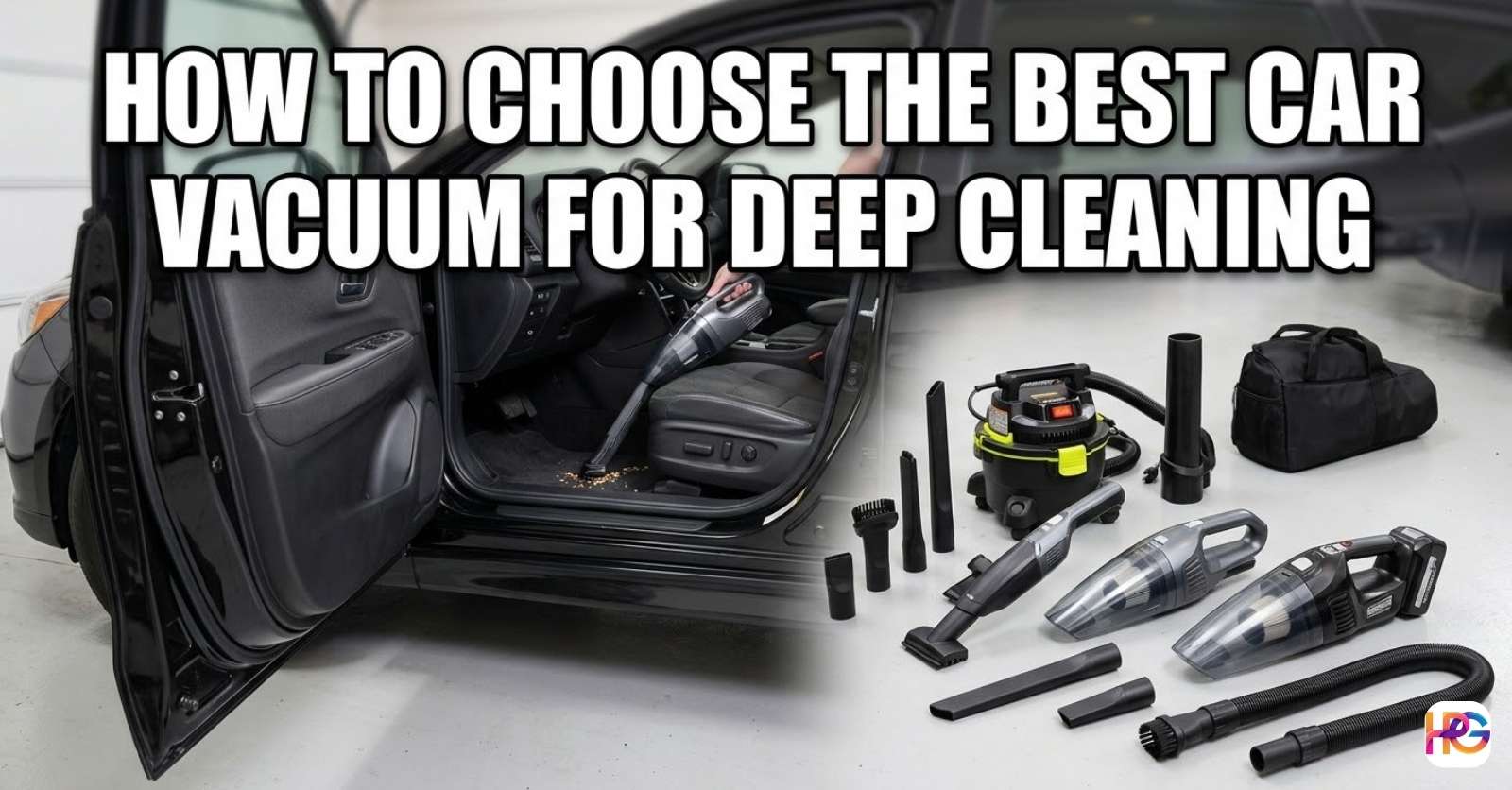
Last Saturday morning started with a massive disaster. I spilled a whole box of dry cereal across the back seat of my sedan. Tiny flakes went everywhere. They hid in the seat cracks. They fell under the floor mats. I sighed and knew it was time for a serious cleanup. This messy moment led me on a huge hunt. I wanted to find out exactly how to choose the best car vacuum for deep cleaning.
I have spent hours testing different tools for my site Home Pick Guide. My goal is always to help you pick better and live smarter. Car vacuums can be incredibly tricky. You might think any random shop vac will work perfectly. Then you try to pull stubborn pet hair out of a tight corner. It rarely goes well. Let me share what I learned from my own messy failures in the driveway.
Why You Need a Special Vacuum for Your Car
Cars are not like spacious living rooms. You have almost zero open floor space. There are tight gaps, weird angles, and strange fabrics everywhere. Dirt gets stomped deep into the floor mats on rainy days. Regular home vacuums are just too bulky to handle this job.
I tried lugging my heavy upright home vacuum out to the driveway once. It was a total joke. The hose was way too short. I hit my head on the door frame twice while reaching. You need a machine built specifically for tight spaces. It must easily handle rough dirt, wet sand, and dead leaves.
Key Features to Look For in a Car Vacuum
You will see a lot of random specs on shiny vacuum boxes. Do not let the clever marketing hype fool you. Most of those big numbers mean very little in the real world. You only need to care about a few main things.
Suction Power is Everything
You want a vacuum that actually sucks up heavy dirt. We measure this raw power in Air Watts or Pascals. Look for at least 15 Air Watts on the box. If you see Pascals instead, aim for 8,000 or more.
I bought a cheap portable vacuum from a gas station once. It had almost no power at all. It could not even pick up a small pebble from my floor mat. Good suction pulls out embedded sand easily. It saves you from furiously scrubbing the dirty carpets by hand.
Hose Length and Flexibility
A stiff plastic hose is your absolute worst enemy. You need a hose that bends and twists easily. It should be at least three feet long. Five feet is even better for bigger SUVs.
I tested one popular model with a very rigid hose. Trying to clean the front cup holders felt like an intense arm workout. A soft, stretchy hose lets you reach safely under the seats. You can leave the main heavy tank sitting flat on the floor mat.
Tank Size and Quality Filters
You will fill up a small dust bin very fast. Loose dirt, dry leaves, and pet hair take up a lot of room. Look for a debris tank that holds at least 500 milliliters.
Filters are also a huge deal. Get a vacuum with a real HEPA filter. Cars are basically small sealed boxes. If your vacuum leaks fine dust, you will just breathe it in while driving. A good filter traps that nasty dust forever.
Corded vs Cordless Vacuums
This is the biggest choice you will have to make. Both types have massive pros and cons. I have used both extensively in my own dusty driveway.
The Freedom of Cordless Vacuums
Cordless models run on lithium batteries. They give you total freedom of movement. You can walk around the car without ever tripping over a wire. They are great for quick daily cleanups.
If I spill coffee grounds, I grab my cordless vac. It takes two minutes to fix the tiny mess. But there is a heavy catch. The battery usually dies in roughly twenty minutes. Suction power also drops fast as the battery fades out.
The Power of Corded Vacuums
Corded vacuums plug into a garage wall or your car dashboard. They never run out of juice. The suction stays incredibly strong the entire time you clean.
I use a corded shop vac for my deep spring cleaning sessions. It rips dried mud right out of the floor carpets. The bad part is dealing with the heavy cord. It gets stuck under the dirty tires. It wraps tightly around the brake pedal. You also need a wall outlet nearby.
Here is a quick look at how they actually compare in real life.
| Feature | Cordless Vacuums | Corded Vacuums |
| Power Source | Battery pack | Wall plug or 12V port |
| Suction Level | Medium to high | Very high |
| Run Time | 15 to 30 minutes | Unlimited |
| Best For | Quick daily spills | Deep weekend cleaning |
| Main Flaw | Battery dies fast | Cord gets tangled easily |
Why Crevice Tools Are Essential for Cars
You can have the strongest electric motor in the world. It will not matter without the right attachments. The standard wide floor nozzle is mostly useless inside a tight vehicle.
A crevice tool is long and incredibly skinny. It usually has an angled tip. This is the single most important piece of plastic you will own. Let me tell you exactly why this tool matters.
Defeating the Dreaded Fry Zone
Every car has a dark gap between the front seat and the center console. I affectionately call this the fry zone. It eats dropped french fries, loose coins, and old gas receipts.
A normal wide brush cannot fit down there safely. A skinny crevice tool slides right in. It acts like a giant drinking straw. It sucks all the nasty junk out of the darkness. I once found a lost house key down there using a thin tool.
Protecting Your Expensive Car Seats
Dirt is very sharp at a microscopic level. It acts just like tiny pieces of glass. When dirt gets stuck in your seat seams, it cuts the heavy thread. It ruins the leather or cloth over time.
You must remove this hidden grit constantly. The crevice tool focuses the rushing air into a tiny spot. It acts like a high speed wind tunnel. It pulls the abrasive sand right out of the tight stitching. This routine makes your nice seats last much longer.
Cleaning the Greasy Seat Tracks
Look closely under your front seats. You will see thick metal tracks. They are covered in heavy grease to help the seats slide. This grease traps floating dust, pet hair, and food crumbs.
It naturally creates a nasty, sticky paste. A wide nozzle will just smear it around making it worse. A narrow crevice tool bypasses the wet grease completely. It sucks up the loose dry dirt hiding safely behind the metal rails.
Dealing with Stubborn Pet Hair
If you have a fuzzy dog, you truly know my pain. Pet hair weaves itself deeply into the soft car carpet. It locks in super tight. Normal vacuum suction will not move it at all.
You absolutely need a motorized brush head. This tool has fast spinning bristles. The hard bristles dig deep into the carpet fibers. They yank the tangled hair out by sheer force. Then the raw suction pulls it away safely.
I tried using just a plain hose on dog hair once. I rubbed the carpet violently for ten minutes. Nothing happened at all. A spinning brush tool cleared the whole dirty seat in sixty seconds flat.
Dusting the Dashboard and Vents
Deep cleaning is not just about the dirty floors. Your dark dashboard collects a thick layer of bright dust. The plastic air vents trap airborne allergens constantly.
Do not use a hard plastic nozzle on your glass screen. You will permanently scratch the expensive digital display. You need a soft dusting brush attachment instead. The soft bristles loosen the sticky dust gently. The vacuum motor eats it up before it floats away.
I strictly use a tiny brush on my air vents. It makes the whole car interior smell much fresher. It stops old dust from blowing right in my face when I turn on the AC.
Fighting Weird Smells in Your Car
Vacuuming is not just about removing visible dirt. It is also about improving interior air quality. Old hidden food crumbs start to smell very bad over time.
I once left a damp gym bag in my trunk for a full week. The foul smell soaked deeply into the trunk carpet. A regular fast vacuum did not fix it at all. A special cleaning trick was needed. Dry baking soda went all over the trunk floor and was left to sit there peacefully for two full hours.
The white powder safely absorbed the bad gym odors. Then I used my vacuum to suck all the white powder up.
You need really strong suction for this trick. Baking soda is surprisingly heavy. A cheap weak vacuum will leave a white powdery mess behind. A good machine pulls it completely out of the dark fabric. My car smelled brand new again.
Wet and Dry Cleaning Capabilities
Sometimes a horrible mess is mostly liquid. Maybe a kid dropped a full sticky juice box. Maybe you tracked wet freezing snow into the driver side footwell.
A standard dry home vacuum will die instantly if it sucks up water. The electric motor will short out completely. You desperately need a wet dry vacuum for these nasty disasters.
They have special internal filters. They can safely hold dirty liquid in the bottom tank. I keep a small wet dry vac in my garage for wild winter messes. It sucks the salty frozen slush right off my rubber floor mats.
Here is a quick breakdown of what basic attachments you need for specific dirty tasks.
| Cleaning Task | Best Attachment to Use | Why It Works Well |
| Between front seats | Long crevice tool | Reaches deep, narrow spaces |
| Dog hair on seats | Motorized brush head | Pulls tangled hair from fabric |
| Dusty air vents | Soft bristle brush | Sweeps and sucks dust gently |
| Wet muddy mats | Wet dry nozzle | Handles liquid without breaking |
Managing Annoying Vacuum Noise Levels
Nobody ever talks about the loud motor noise. A small enclosed car cabin makes loud noises feel even worse. The harsh sound bounces right off the glass windows.
I bought a cheap mini vacuum off the internet once. I turned it on inside my quiet closed garage. It shrieked loudly like a tiny jet engine. My ears rang badly for twenty minutes after I finished.
You want a modern motor that runs quietly. Check the official decibel ratings if the brand actually lists them. Anything under 75 decibels is perfectly fine for human ears. You should be able to hear a radio softly playing while you clean. If you need heavy earplugs, the vacuum is simply too loud.
The Secret to Simple Filter Maintenance
Buying a really good vacuum is only half the battle. You have to actively take care of it weekly. The paper filter is basically the lungs of your machine.
If the main filter clogs, the raw suction dies instantly. It happens very fast in dusty cars. Fine road dust permanently coats the paper pleats. The fresh air cannot freely flow through the machine.
I check my dirty filter after every single deep clean. I gently take it out and tap it against a hard trash can. A huge thick cloud of gray dust always falls out. Sometimes I thoughtfully use a soft brush to carefully clean the paper folds.
Do not ever wash a paper filter unless the manual clearly says you can. Plain water turns the fine dust into hard concrete. I quickly ruined a good HEPA filter by rinsing it too soon. Always thoroughly read the included instructions first.
How to Test a Vacuum Before You Buy
You cannot always fully test a vacuum inside the store. But you can physically check a few physical traits. Pick the heavy display model up off the shelf. Is it way too heavy? You will be holding it at very weird awkward angles.
Check the plastic dirt bin latch. Does it smoothly pop open easily? I had a bulky model where the latch was super stiff. I yanked it open forcefully and spilled the dirt right back onto my clean floor. It was a deeply frustrating moment.
Look closely at the filter replacement costs. Some fancy filters cost half as much as the vacuum itself. Try to naturally find a model with a washable permanent filter. You can just safely rinse it in the kitchen sink. It saves a lot of real money over the passing years.
My Final Deep Cleaning Routine
I have a very specific cleaning process now. I patiently start by taking out all the loose trash. Then I physically remove the dirty floor mats. I vigorously shake them outside first.
Next, I grab my handy vacuum with the soft brush attached. I gently dust the dashboard, center console, and side door panels. You always want to logically clean from top to bottom. Gravity makes dust fall straight down.
Then I quickly switch to the skinny crevice tool. I precisely hit the tight seat seams and the dark fry zone. Finally, I snap on the wide floor nozzle. I thoroughly vacuum the main soft carpets and the rear trunk.
This strict method saves serious time. It completely prevents you from doing the exact same spot twice. It magically turns a stressful hard chore into a simple quick habit.
Making the Final Smart Choice
Choosing the right helpful tool changes absolutely everything. You finally stop dreading the messy cleanup. You start truly enjoying a clean, fresh smelling ride.
Carefully think about your daily parking situation. Honestly think about the specific messy things you do. Perfectly match the machine to your busy lifestyle. A little early planning always goes a very long way.
Getting the best vacuum is just one small step. It is really all about finding great tools that make annoying chores much easier. That is exactly how we keep things constantly looking good without completely losing our minds. Stay super clean out there.
Essential Car Vacuum FAQs
Can I leave my cordless car vacuum in a hot garage?
High heat will ruin the battery in your cordless car vacuum. You must keep it inside the house during hot summer days. This keeps the power strong for deep cleaning.
Do tool brand vacuums have enough power for cars?
Yes, shop vacs from brands like DeWalt have great suction. They run on big tool batteries to easily grab heavy dirt. These units are very tough and last a long time.
What is the best car vacuum for deep cleaning large trucks?
A corded shop vac is best for cleaning big dirty trucks. It gives you raw suction power that never fades away. You can clean for hours without any dead batteries.
Can I use a normal vacuum for wet winter car mats?
No, wet snow and salty slush will ruin a normal dry vacuum. You need a tough wet dry vac for those winter chores. It will safely suck up cold water and heavy mud.
Why is a skinny crevice tool so important for cars?
Car seats have deep gaps that hide sharp sand and hard food. A skinny tool pulls out that hidden grit fast. This easy step keeps your nice seats from ripping over time.