
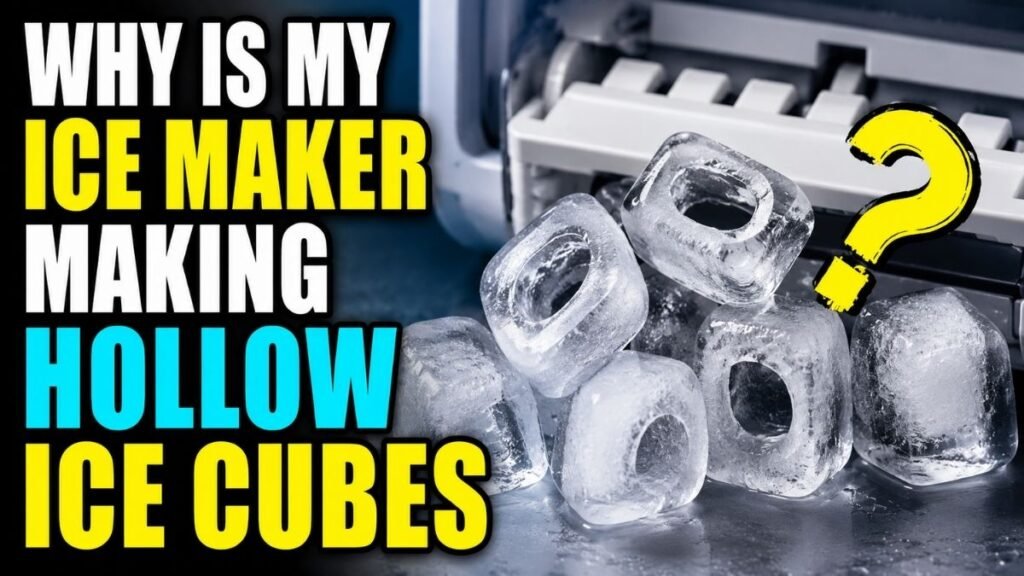
You reach for a cold drink on a hot afternoon. You press your glass against the fridge dispenser. Instead of solid chunks, out comes thin, fragile ice. It melts almost instantly. I had this exact problem last summer. On my blog, where I share home troubleshooting tips, I even wrote about my frustration.
I spent hours trying to figure out why is my ice maker making hollow ice cubes. It turns out this is a very common issue. The good news? You do not need to call an expensive repair tech right away. Most of the time, you can fix it yourself in just a few minutes. Here is exactly what I learned and how you can fix it.
The Moment I Noticed Thin Ice
It started slowly. First, the ice looked a little smaller than usual. Then, the cubes became half-formed shells. They sounded like breaking glass when they hit the bottom of my cup.
I initially ignored it. I figured the machine just needed to catch up after a busy weekend. But days passed. The ice stayed thin. I quickly realized something was actually wrong with the water supply.
Your fridge needs a steady flow of water to freeze properly. When that flow drops, the mold only fills halfway. The edges freeze first, leaving a gap in the middle. The result is a fragile shell instead of a solid cube.
The Water Dispenser Test
Before you move your fridge, try a quick test. Grab a measuring cup. Go to your fridge water dispenser.
Press the cup against the lever and time how long it takes to fill eight ounces. It should take less than ten seconds. If it takes twenty seconds or more, your water pressure is definitely too low.
This test saved me a lot of time. It confirmed that the fridge itself was probably fine. The issue was getting water into the machine in the first place.
The Main Culprit: Low Water Pressure
If you want to know what causes this, start with water pressure. This was my biggest mistake. I assumed the fridge was permanently broken. I almost ordered a whole new ice assembly.
Thankfully, a friend told me to check the water line first. Your fridge needs enough pressure to push water up into the ice tray. If the pressure is too low, the tray starves. It only gets a trickle. That trickle freezes into a sad, empty shell.
How to Check Your Water Valve
Pull your fridge away from the wall carefully. Look for the water line connected to the back. Trace that line to the wall or the floor. You will find a small shut-off valve.
Make sure this valve is turned all the way open. Sometimes, it gets bumped when you sweep behind the fridge. Sometimes, sediment builds up inside it over time.
If you have a saddle valve, pay extra attention. These clamp onto a pipe and are notorious for clogging. Opening and closing it a few times can sometimes clear the blockage. This simple check takes two minutes.
Inspect the Water Line for Kinks
While you are behind the fridge, look closely at the tube itself. Is it pinched? Is it bent at a sharp angle?
When you push a fridge back into place, it is very easy to crush the water line against the wall. A kinked line restricts the water flow. If the tube looks damaged, you should replace it. A braided steel line is a great upgrade that will not kink easily.
A Clogged Filter Ruins Everything
Here is a hard truth. Most of us ignore our refrigerator water filters. I certainly did. At first, I thought the six-month replacement rule was just a trick to sell more filters.
I was wrong. When a filter gets old, it traps a massive amount of minerals and debris. Eventually, water struggles to push through that thick layer of gunk. This creates low pressure inside the entire fridge system.
When Did You Last Change It?
Think about the last time you swapped out that filter. If it has been more than a year, this is likely your answer. Your appliance is simply suffocating.
Pop a fresh filter in. Run a few gallons of water through the door dispenser to clear any trapped air. Then, wait twenty-four hours. See if the ice returns to normal. In my case, a fresh filter made a massive difference.
The Hidden Impact of Hard Water
If you live in an area with hard water, you face an extra challenge. Hard water contains high levels of calcium and magnesium.
Over time, these minerals leave a white, chalky scale behind. This scale builds up inside the tiny tubes of your fridge. It can clog the water inlet valve completely.
Installing an inline water filter behind the fridge can help. These filters catch the minerals before they enter the fridge. It adds an extra layer of protection for your appliance. If the pressure is still low, you may need to clean or replace the inlet valve to get full flow again.
Water Temperature Matters Too
There is another sneaky issue that people rarely talk about. Your freezer temperature might be slightly off. It seems unrelated, but it changes everything.
If the freezer is too cold, the water might freeze in the fill tube before it even reaches the mold. This blocks the line. If it is too warm, the ice will not set properly before the harvest cycle dumps it into the bin.
Finding the Sweet Spot
Check your freezer settings today. The ideal temperature for making ice is zero degrees Fahrenheit.
Give it a full day to adjust if you change the setting. Also, make sure the coils under or behind your fridge are clean. Dusty coils make the compressor work too hard. Grab a vacuum and clean out the dust bunnies.
Common Questions About Ice Makers
Why are some ice cubes hollow?
This happens when water fills the mold too slowly due to low pressure. The outer edges freeze first, leaving the center empty.
Why is my ice maker making solid blocks of ice?
Water is likely overfilling the mold or leaking from a bad valve. The excess water overflows and freezes together in the bin.
What are the signs that my ice machine is going bad?
Look for very slow ice production, strange clicking noises, or leaks inside the freezer. These point to a failing motor or bad valve.
Why is my ice machine making thin ice?
Thin ice is caused by a restricted water supply. A bad filter, kinked line, or low house pressure will create thin, brittle cubes.
Knowing When to Call a Pro
I love fixing things myself. But you have to know your limits. If you checked the valve, changed the filter, and cleaned the lines, the problem might be deeper.
Sometimes, the water inlet valve inside the back of the fridge fails. It stops opening fully. The electrical solenoid gets weak over time.
Replacing this part is not too hard, but it requires basic tools and confidence. You can usually find a replacement valve online for a very fair price. Just make sure you write down the exact model number of your refrigerator before you order anything. If you feel uneasy messing with electrical parts, call a professional. It is better to pay a pro than to flood your kitchen floor.
My Best Advice for Maintenance
After fixing my own fridge, I changed my habits. I now treat my machine with a little more respect. It does a lot of work every single day.
I set a reminder on my phone to change the water filter every six months. Since then, I never skip it anymore. Twice a year, I also pull the fridge out to vacuum the coils.
I inspect the water line while I am back there. These tiny steps prevent so many headaches. You do not want to be stuck with warm drinks in the middle of a heatwave.
Final Thoughts
Dealing with a broken appliance is annoying. But finding out why is my ice maker making hollow ice cubes was actually a great learning experience.
The main takeaway here is to always start with the simplest fix. Check your water line. Change that old filter. Make sure your freezer is set to the right temperature. You will likely solve the issue without spending much money at all. Stay patient, and enjoy your cold drinks!
FAQ 1: Why is my ice maker making hollow ice cubes?
Low flow is the top cause. The tray does not fill up. The edge freezes, but the core is void. Look at your water line now to solve this issue and get great ice.
FAQ 2: Can an old water filter cause thin ice?
Yes, an old filter stops water flow. This drop leads to thin ice. Swap your fridge filter twice a year for the best taste. Try a new one to see a quick change!
FAQ 3: How do I check the water pressure for my fridge?
Put a cup by the door spout. It should fill one glass in ten counts. If it takes more time, the line is blocked. A quick fix saves you time, cash, and stress!
FAQ 4: Why is my ice maker making solid blocks of ice?
Your ice machine may have a bad valve. Too much water fills the tray. It spills out and makes a mess. The cubes freeze in one huge chunk. Check the valve now!
FAQ 5: What are the signs that my ice maker is going bad?
Look for slow ice speeds, thin shells, or loud clicks. These hints mean your fill valve might be dead. Catch these clues soon so you can fix it fast and cheaply!