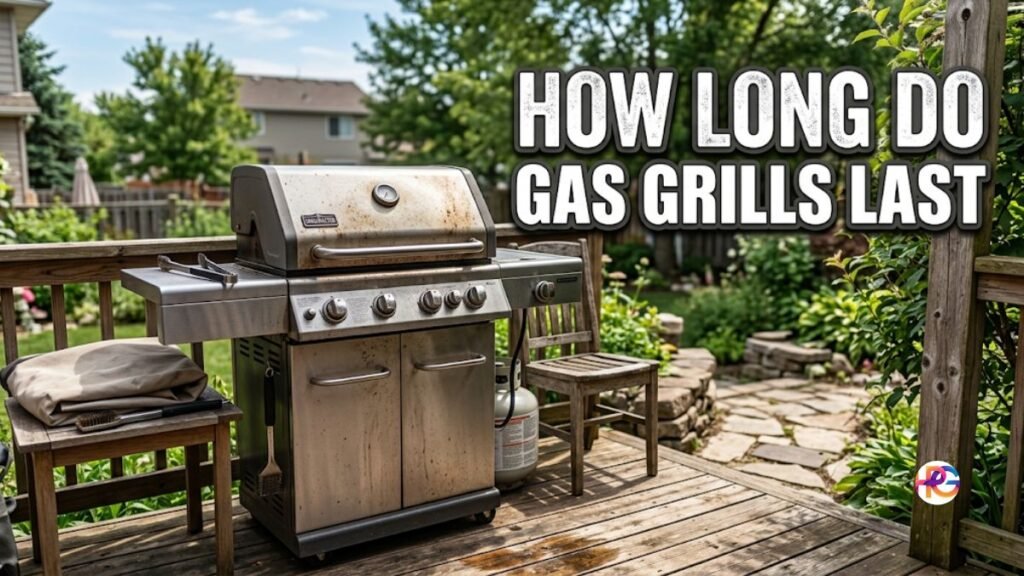
I still remember hauling my first grill out to the curb. It was a complete disaster. The metal was a rusty mess. I had owned it for barely three years. The internal burners were completely shot. The bottom tray was literally falling out onto the concrete. As I stood in my driveway looking at it, I found myself wondering how long gas grills actually last. I had always assumed they were built to withstand the outdoors forever, but I quickly learned otherwise.
Since then, I have learned a lot. I spent good money on a much better replacement. I wanted it to survive the harsh weather. The truth is, the lifespan of your grill depends on a few hidden details. A grill’s lifespan depends on much more than the brand name on the lid. The way you care for the metal and the daily maintenance habits you follow make a much bigger difference. Here is what I learned the hard way about keeping a grill alive.
The Short Answer: How Long Do Gas Grills Last?
Most people just want a quick, solid number. Let us start right there. On average, a standard gas grill lasts between 5 and 15 years.
That is a very wide range. Why is there such a massive gap? It all comes down to build quality and daily care. A cheap grill from a big store might give you 3 to 5 years. A mid-range model can easily hit 10 years. A high-end luxury grill can last over 20 years. But those numbers mean nothing if you neglect the machine. You can ruin an expensive grill in just three years. I know people who have done it. I learned that expensive lesson very quickly.
The Exact Mistakes That Ruined My First Grill
Looking back, I did everything wrong. I treated my first grill like a basic patio table. But it is an actual appliance. It needs real care. Here are the exact mistakes I made that ruined it so fast.
Skipping the Heavy Duty Cover
At first, I thought buying a grill cover was a waste of money because I assumed outdoor metal could easily handle the rain. It did not take long to realize how wrong I was. Rain and heavy morning dew slowly eat away at the steel frame. Rust is the absolute worst enemy of any grill. Buying a thick, heavy-duty cover is the easiest way to double its life. Never leave your grill exposed to the open sky.
Ignoring the Messy Grease Tray
Nobody likes cleaning the bottom grease pan. I used to let it fill up for cold months at a time. This was a terrible idea. Grease traps thick moisture right against the metal. That trapped moisture causes severe rust. A dirty tray also creates a massive fire hazard. A sudden grease fire will warp the metal body instantly. That kind of damage is permanent.
Forgetting to Season the Grates
I used a hard-wire brush to scrape off burnt food. Then I just walked away. I never wiped fresh oil on the hot grates. Because of this, the cast iron rusted very quickly. My expensive steaks started sticking every time. The grates eventually started flaking black pieces into my food. It was gross. Now, I always rub a little cooking oil on the grates right after cooking.
Never Washing the Outside Metal
I thought heavy rain would naturally wash the outside of the grill. That is a huge mistake. Cooking creates a fine mist of hot grease. This greasy smoke lands all over the outside metal. Dirt and heavy pollen stick to this invisible grease layer. Over time, this bakes right into the paint. It ruins the smooth finish. Now, I wipe the outside down with warm soapy water every single month.
What Actually Breaks First on a Gas Grill?
A grill rarely dies all at once. It usually breaks down one small part at a time. Over the years, I noticed a very clear pattern. Some parts always fail long before the rest of the unit. Knowing this helps you catch tiny problems early.
The Push-Button Igniter Switch
This is almost always the very first thing to break. You press the button, and absolutely nothing happens. No click. No bright spark. Sometimes it just needs a fresh battery. Other times, dripping hot grease clogs the tiny spark point. I gave up on my first igniter and just used a long lighter. Now, I keep the spark point clean with a soft, dry brush.
The Inner Burner Tubes
Burners do the hardest work of all. They sit right under the dripping hot grease. They also deal with intense daily heat. Over time, the small gas holes get totally clogged. The thin metal slowly corrodes away. When your flames look yellow instead of bright blue, your burners are failing. You can replace them easily, but it is a messy job.
The Metal Flavorizer Bars
These are the angled metal tents sitting over the burners. These components protect the delicate flames while vaporizing drippings to create that rich smoky flavor. Because they endure intense heat and grease every time you cook, they eventually rust and wear out. I have had to replace mine twice on my current setup. Thankfully, they are very cheap and slide right in.
Simple Daily Habits to Make Your Grill Last Longer
You do not need to be a skilled mechanic to maintain a grill. You just need a few basic daily habits. I completely changed how I care for my outdoor setup. These quick steps added many years to my grill’s life.
The 15-Minute Burn-Off Rule
After I take my food off the grates, I leave the gas on. To clean the grill, I turn all the burners to high, close the lid, and let it heat for 10 to 15 minutes. This turns all the stuck, wet grease into dry white ash. Then, I give it a quick scrape with a brush. This stops wet grease from sitting on the metal for weeks.
Doing a Deep Clean Twice a Year
I used to never clean the inside of the dark firebox. Now, I do a massive deep clean every spring and fall. Once the grill cools slightly, I remove the grates and burner covers before using a plastic putty knife to scrape the buildup from the inside, pushing the debris into the grease tray. Getting that old salt and ash out stops deep rust from forming fast.
Dealing With Winter Storage Realities
Leaving your grill buried deep in wet winter snow is a bad idea. If you live in a very cold climate, you need a solid plan. I try to roll mine straight into the dry garage for the long, cold winter. If you must leave it outside, take out the heavy propane tank first. Cover the grill very securely. Check on it occasionally to make sure field mice are not building a warm nest inside.
Checking for Hidden Gas Leaks
This is a vital safety habit most people ignore. Rubber hoses dry out fast in the hot sun. They get very brittle and crack over time. Once a year, I spray wet soapy water on the rubber gas hose. I turn the gas valve on. If I see small bubbles growing, I know there is a dangerous leak. A new rubber hose costs almost nothing. It is a simple, fast check that keeps my whole family safe.
Cheap vs. Expensive Grills: Is the Cost Really Worth It?
When my first cheap grill died, I faced a hard choice. Should I buy another cheap one? Or should I spend much more money? I decided to invest deeply in a much better model. It was a tough, hard choice, but it paid off big time. Here is why the cost actually matters over the long years.
Cheaper grills use very thin, cheap metal. They use low-grade stainless steel that still rusts easily. The small bolts strip out quickly. The custom parts are very hard to find when they finally break.
Expensive grills use much thicker metal. The heavy cast aluminum holds heat so much better in cold weather. The thick paint does not peel off after a single hot summer. Best of all, large brand companies sell exact replacement parts for decades.
My current grill costs three times as much as my first bad one. But I have owned it for eight great years. It still works perfectly today. In the long run, buying a better grill is actually much cheaper. You just have to be totally willing to maintain it.
Answering Your Common Questions
People always ask me the same questions when they see my setup. It can be very confusing to know when to fix things. Here are the most common things people always wonder about.
When should I completely replace my gas grill?
You should replace it when the main lower firebox starts to rust right through. If the actual metal frame or body is crumbling, it is time for a brand new one.
Is it actually worth repairing an old gas grill?
Yes, it is very worth it if the main heavy body is solid. Replacing old burners, metal grates, or push igniters is cheap and very easy to do yourself.
Do expensive stainless steel grills ever rust?
Yes, they absolutely can rust over time. Low-quality stainless steel will rust fast if exposed to sea salt and wet weather. Even high-quality, expensive steel needs to be washed and covered.
How often should I change the rubber propane hose?
You should check it every single spring for deep dry cracks. If the thick rubber feels dry or stiff in your bare hands, replace it immediately for total safety.
Final Thoughts
Learning exactly how long gas grills last totally changed the way I shop. I used to think gas grills were little more than disposable summer appliances that you bought, wore out, and replaced. Over time, I realized they can last for many years with the right care. A good outdoor grill is a serious investment in your family’s summer weekends.
The biggest lesson I learned is very simple. A good heavy cover and a little fast cleaning go a very long way. Do not let wet grease sit inside. Keep the hard rain off the outside metal. If you do those two simple things, you will be flipping great burgers on the same patio setup for a very long time.