How to Clean Clogged Burners on Gas Grill Without Going Crazy
It was the Fourth of July in Austin, Texas. The sun was hot. Friends were laughing in the yard. Cold drinks were in every hand. I had thick steaks ready for the fire. The smell of raw meat and spices filled the air. I felt like a true grill boss.
Then I turned on the gas. I pushed the start button. A sad puff of flame popped up. It was weak and yellow. Half the grill was cold. The other half barely cooked a hot dog. I felt my face get hot. My pride sank to the ground. That day was a total fail. We had to order pizzas.
I write a lot on my blog about home life and food. I try to share the good and the bad. That failed party was a very bad day. But it taught me a huge lesson. You have to clean clogged burners on a gas grill. If you do not do it, your food will suffer. Your grill might even catch fire in the wrong places.
Today I want to share my exact steps with you. I will show you what tools work best. Sharing the dumb mistakes I made might save you time. It is not a hard job. You just need to know the right moves. Let us dig into the dirt and grease.
The Real Signs Your Gas Grill Burners Are Clogged
You do not wake up one day and know your grill is clogged. It sneaks up on you. I ignored the signs for weeks. Thinking the wind was just blowing out the flame was my excuse. I was wrong. Grease and ash build up slowly. Spiders even build webs inside the tubes.
Here is what I look for now. Spotting these signs means it is time to clean.
- The flames are yellow or orange instead of a nice blue.
- The grill takes forever to get hot.
- You feel cold spots when you put your hand near the metal grates.
- You smell gas when the lid is open.
- The flames pop loudly when you turn the dials.
Yellow flames mean bad gas flow. You want a crisp blue flame with a tiny yellow tip. That means the gas and air mix perfectly. When the tiny holes clog, the mix goes bad.
Knowing The Parts of Your Gas Grill
It helps to know the parts. Grills look hard inside. They are just simple tools. Gas flows from the tank into a metal pipe. The pipe has small valves. Turning the dials opens those valves. They shoot gas into the tubes.
The tubes have rows of tiny holes. Gas escapes through those holes. A spark lights the gas. You get a line of fire. Grease falls down when you cook meat. It hits the big metal plates. We call those plates heat tents. They guard the tubes. But grease still splashes. Splashing fat lands on the metal and blocks the tiny gas holes.
That is why the clogs happen. Understanding this makes the cleaning job make sense. You are just giving the gas a clear path again.
Tools I Keep in My Grill Cleaning Kit
I am a huge fan of simple tools. You do not need expensive sprays. Harsh chemical soaps ruin the metal. I learned that the hard way when I rusted my old grill. I now keep a small plastic bin in my garage. It holds everything I need.
Here is a data table showing my exact toolkit. I included the average cost and why I use each item.
| Tool Name | Average Cost | Why I Use It For This Job |
| Stiff wire brush | $8.00 | Scrub hard rust off the outside of the tubes. |
| Large paperclip | $0.05 | Pokes through the tiny gas holes perfectly. |
| Venturi brush | $6.00 | Cleans spider webs out of the inside. |
| Putty knife | $4.00 | Scrapes thick grease off the heat guards. |
| Safety glasses | $5.00 | Keeps flying rust out of my eyes. |
A venturi brush is just a long wire with rough parts on the end. It bends easily. If you want to save six dollars, you can use a wire coat hanger. Just untwist the hanger. Make a tiny hook on one end. It works almost as well.
Buying expensive kits is a waste. Big box stores sell fancy cleaning boxes. They charge fifty bucks for them. You get a branded brush and some weak spray. Save your cash. Head to a cheap hardware store instead. You can build my exact kit for under twenty dollars. It will last you for years.
My Step-by-Step Guide to Cleaning Clogged Gas Grill Burners
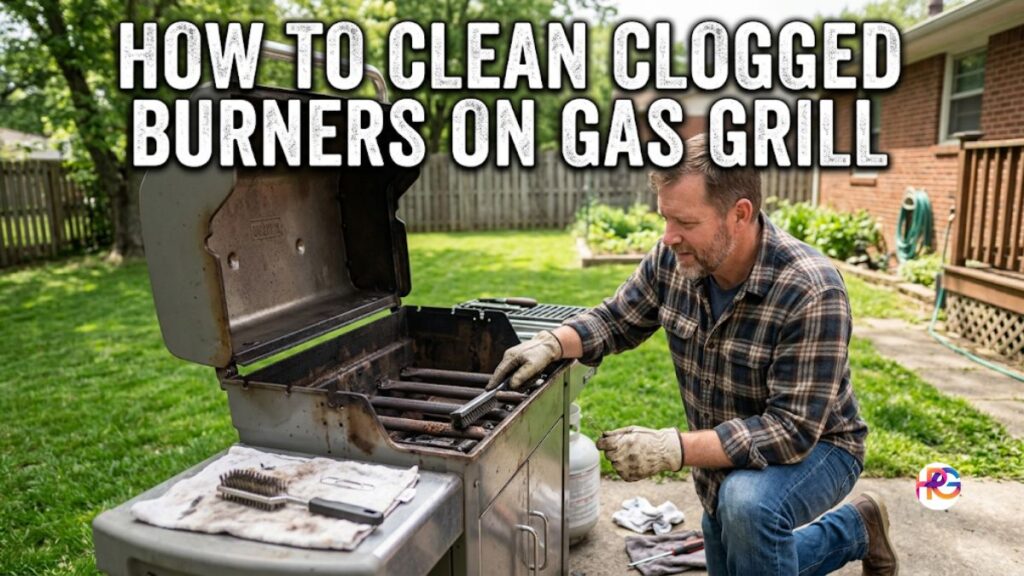
This is the exact process I follow. I do this twice a year now. Cleaning once in the spring is smart. I do it again right before winter. The job takes me about thirty minutes. Put on some old jeans. Grab a pair of thick work gloves. Your hands will get very dirty.
Step One: Turn Off the Gas First
Safety is my main rule. I always start here. Go to your propane tank. Turn the round valve all the way to the right. Shut it tight. Unhooking the hose from the tank is also smart. If you use natural gas from your house, shut off the wall valve. You do not want gas leaking while you scrape metal.
Step Two: Take Out the Grates and Heat Tents
Open the lid. Lift out the cooking grates. Put them on the grass or some old newspaper. Under the grates, you will see metal plates. Some folks call them heat tents. Others call them flavor bars. They cover the burners. Lift them out, too. Expect them to be coated in burnt grease. Take your putty knife. Scrape the thick dirt off them.
Step Three: Take Out the Burner Tubes
This step scares some folks. It is actually very easy. Look at the back of the burner tube. You will usually see one small screw or a metal pin. Pull the pin out. Lift the back of the tube. Slide it away from the front dials. It will pop right out. Taking them out makes cleaning much faster. You can hold them in your lap.
Step Four: Brush the Outside Carefully
Now grab your stiff wire brush. I prefer stainless steel bristles. Brass bristles are too soft. Hold the burner tube in one hand. Brush the outside hard. Scrub off all the white ash and brown rust.
Here is a huge tip I learned. Always brush across the little holes. Never brush down the long line of holes. Brushing down the line pushes dirt into the next hole. You just make the clogs worse. Go side to side. Ficking the dirt away works best.
Step Five: Poke Every Single Hole
This part takes the most time. It is also the most fun. Unbend your large paperclip. You now have a perfect tiny poker. Push the wire into the first hole. Wiggle it around. Pull it out. Move to the next hole.
I do this for every single hole on the tube. Yes, it takes patience. Put on some good country music. Feeling little chunks of carbon break free inside is great. That hard carbon is what blocks your heat.
Step Six: Scrub the Inside Tube
The inside of the tube is dark. Bugs love dark places. Small spiders climb in there during the winter. They spin thick webs. These webs block the gas. Gas then backs up behind the dials. This causes huge fires where your hands go. It is very bad.
Take your venturi brush or bent coat hanger. Push it all the way down the open end of the tube. Twirl it around in a circle. Pull it out. Expect to pull out dead bugs and silk webs. Do it a few times until it comes out clean.
Step Seven: Shake and Put Back
Hold the tube up. Tap the open end on the ground. All the junk you poked free will fall out. You will see a pile of black dust on the floor. That dust used to steal your grill’s heat.
Now slide the tube back into the grill. The open end must fit tightly over the gas valve. The valve is the little brass part behind the dial. Slip it over the nozzle. Put the back pin in place.
Step Eight: The Big Burn Off
Put your heat tents back. Replace your cooking grates. Hook up your propane tank. Turn the gas on. Light the grill and twist all dials to high. Close the lid. Let it run hot for fifteen minutes. Heat will burn up any tiny bits of dust left inside.
Open the lid. Look at the flames. They should be strong, even, and blue. I always smile when I see those blue flames. It feels like a big win.
Stupid Mistakes I Made the First Time
I did not know what I was doing my first time. Breaking things was my top skill back then. Sharing my failures might help you. Please do not do what I did.
First, do not use wooden toothpicks. Thinking a toothpick was the perfect size was dumb. I poked one in. It snapped in half. The wood got stuck deep inside the metal. Getting it out was impossible. Heat later burned the wood, but it blocked the gas flow for a week. Always use metal like a paperclip.
Second, do not use a drill bit. I read a bad tip online. A guy said to drill the holes bigger for more heat. Using my power drill ruined the tube. Gas flowed too fast. The flame was huge and dangerous. Factories drill those holes to an exact size. Do not change them.
Third, never use water. Taking the tubes to my sink seemed smart. I washed them with soap and water. Thinking they would be perfectly clean was foolish. They stayed wet inside. Three days later, they were covered in orange rust. Gas tubes are plain metal. Water kills them. Use dry brushes only.
How Often Should You Do This Job?
People ask me this a lot. The answer depends on how much you cook. I cook outside almost every weekend in the summer. My grill gets a heavy workout. Grease falls constantly.
Here is the data schedule I stick to. It keeps my grill running like new.
| Cleaning Type | How Often I Do It | What I Actually Do |
| Quick Brush | After every meal | Scrape the hot grates with a wire brush. |
| Deep Clean | Two times a year | Poke the holes and clear the tubes. |
| Heat Tent Wash | Once a month | Scrape the big metal plates clean. |
| Grease Tray Dump | Every ten cooks | Throw away the fat in the drip pan. |
Living near the ocean means you must clean more often. Salt air eats metal very fast. I live inland now. But when I visited my family in Florida, their grill rusted in one year. Salt air is brutal. Check your tubes every month if you live near the beach.
Winter storage also plays a big role. Leaving your grill uncovered invites pests. Mice sometimes build nests under the grates. Spiders move into the tubes. Buy a thick canvas cover. Strap it down tight before the snow falls. Good storage means less cleaning work in the spring.
Why Good Maintenance Saves You Money
Grills cost a lot of money. A nice one can cost over five hundred dollars. Cheap ones rust out fast if you ignore them. My current grill is six years old. It looks used, but it works perfectly.
Buying new parts is expensive. A new set of burner tubes costs around forty dollars. Heat tents cost thirty dollars. Letting them rust means you pay that tax. I prefer to keep my cash. A cheap wire brush and twenty minutes of work save me a lot.
The food also tastes much better. When grease builds up, it burns black smoke. That smoke coats your chicken. It tastes like bitter ash. Clean fire makes clean food. Guests will notice the difference. Your steaks will sear perfectly on the outside.
Final Thoughts on Fire and Food
Grilling is supposed to be fun. It brings people together outside. Nothing ruins a good party like bad food. Cold spots on a grill are annoying. Yellow flames are sad.
I still think about that failed party in Austin. Hating cold pizza when I bought a good steak is a bad memory. Taking care of your tools is just part of the hobby. It shows you care about the craft.
Cleaning clogged gas grill burners might seem like a chore. Doing it the first time takes patience. It gets faster every time you try. My hands still get dirty. My back still aches a little. But seeing that perfect blue fire makes it worth the effort.
Go check your grill this weekend. Fire it up. Look at the flames closely. Spotting weak heat means you know what to do. Grab a paperclip. Fetch a wire brush. Put on some old clothes. Clean clogged burners on a gas grill the right way. Your next backyard party will be a huge win.
Frequently Asked Questions: Tools for Grill Burner Care
What is the best tool to clean clogged burners on a gas grill?
A stiff stainless steel wire brush works best. It scrubs hard rust off your gas grill burners fast. Just brush across the metal so the tiny holes stay clear.
Can I use wood toothpicks to clear gas grill burners?
No, wooden toothpicks can easily snap inside the holes. Always use a metal paperclip to clean clogged burners on a gas grill safely. This simple step keeps gas flowing well.
How do I stop spiders from blocking my grill tubes in the garage?
Bugs love dark grill tubes when stored in cold USA garages. Use a flexible venturi brush to pull out thick webs. This simple tool stops scary grease fires fast.
Should I use harsh soaps to clean my Weber gas grill burners?
Skip the harsh chemical sprays. Toxic soaps can ruin the metal and leave a bad taste. Manual tools, like a cheap putty knife, scrape heavy dirt off the parts safely.
How often must I clean my gas grill burners if I live near the coast?
Salt air eats metal very fast. You should clean clogged burners on a gas grill every single month. Quick hand tool maintenance saves you from buying expensive replacement parts.