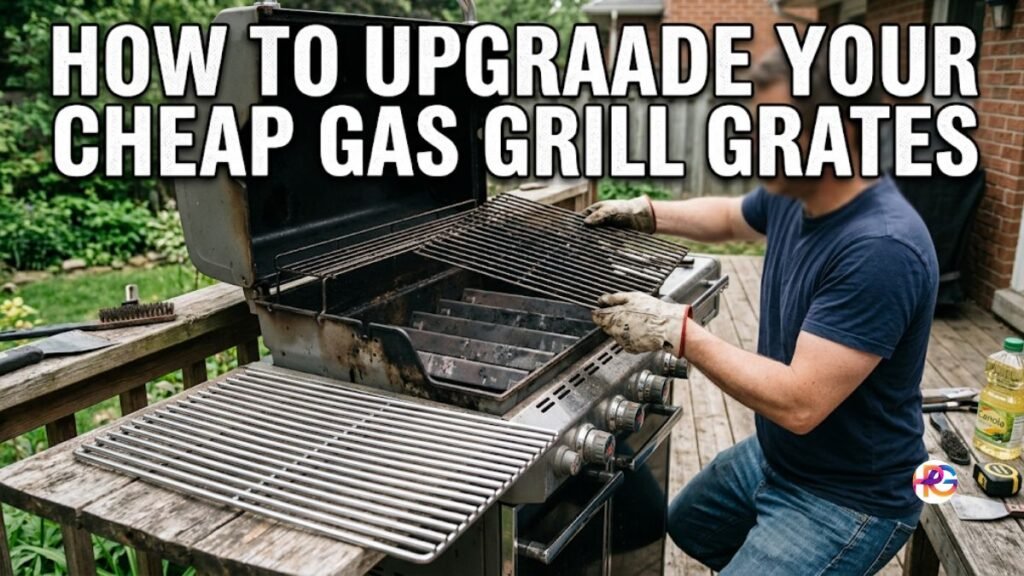
Gas Grill Grates: How to Upgrade Your Cheap Setup
I bought a budget grill a few years ago. I thought I scored a huge deal. The burners worked fine. But the gas grill grates were awful. They were thin and flimsy. Food stuck to them instantly. I quickly learned that cheap grates ruin good meat.
On my blog, I often write about my cooking projects. I always tell readers you do not need a fancy grill. You just need a good cooking surface. Upgrading your grates is the fastest way to turn a budget grill into a searing machine. Here is exactly how I did it, the mistakes I made, and what I learned.
Why Factory Gas Grill Grates Fail So Quickly
Most cheap grills cut costs on the cooking surface. Brands give you thin steel wire coated in black porcelain. They look shiny in the store. But they simply do not last long.
The main problem is heat retention. Thin wire cannot hold heat. When you drop a cold steak on them, the metal cools down fast. You do not get a nice crisp sear. You just get gray steamed meat. It is very frustrating to cook this way.
The Hidden Dangers of Bad Grates
Cooking on damaged grates is not just annoying. It can actually be unsafe. I learned this after finding black flakes on my chicken.
When the coating chips, it leaves sharp edges. If you use a cheap metal brush to clean them, the bristles catch on those edges. The bristles snap off and hide in the grease. The next time you cook, tiny metal spikes can stick to your food. Rust is also terrible for flavor. Upgrading fixes these issues instantly.
The Big Three: Choosing Your New Material
When you decide to fix this problem, you have three main choices. I have cooked on all of them. Each material has a specific purpose. You need to pick the right one for your daily habits.
Heavy Duty Cast Iron
This is what I bought first. Cast iron is heavy and dense. It holds a ton of heat. If you want thick sear marks on your burgers, cast iron is the way to go.
But it takes real work. You have to keep it oiled. If you forget to clean and oil cast iron, it will rust very fast. I live in a humid area. Keeping rust away was a constant battle. They cook great, but you must be willing to maintain them.
Solid Stainless Steel
Stainless steel is my personal favorite for everyday backyard cooking. Good stainless grates are thick and heavy. They hold heat almost as well as cast iron.
The best part is how easy they are to clean. You can scrub them hard without fear. You do not have to worry about chipping any porcelain. They resist rust naturally. Just make sure you buy solid stainless rods. Do not buy hollow tubes. Hollow tubes warp under high heat over time.
Hard Anodized Aluminum Panels
These are usually sold as custom panels. They sit right on top of your old setup. Aluminum heats up very fast. It also spreads heat evenly across the whole surface.
I tried a set of these last summer. They completely stopped my sudden grease flare-ups. The meat cooks beautifully and evenly. They do not give you the traditional look of standard metal grates. But they perform incredibly well. If you struggle with burning food, these are a lifesaver.
Mistakes I Made When Buying Replacements
Upgrading sounds simple. But I messed it up the first time. I assumed all grills from the same brand used the exact same parts.
I bought heavy cast iron grates online based on the brand name alone. When they arrived, they were half an inch too deep. The grill lid would not close. I tried forcing the fit and nearly damaged the hinges in the process.
In the end, I had to pay to ship the parts back, and to make matters worse, I had already thrown away the old components too soon. When the replacements did not fit, I had nothing to cook on. Keep your old parts until the new ones are installed.
How to Measure for Your New Grates
Do not trust the manual. Do not guess the size. You need to measure your current grill space yourself.
First, take your old grates out. Grab a real tape measure and find two exact numbers:
- The exact width of the firebox from left to right.
- The exact depth of the firebox from front to back.
Write these numbers down. When you buy new gas grill grates, you want a fit that is slightly smaller than the box. Leave about a quarter of an inch of extra space. Metal expands when it gets hot. If the grates fit too tightly when cold, they will warp.
The Break-In Process: Do Not Skip This
Installing new grates is only the first step. Before cooking on them, take the time to season and prepare the surface properly, or your food may end up sticking and cooking unevenly.
If you bought cast iron, you need to season it. Coat the metal in a thin layer of high-heat oil. Canola oil works perfectly. Turn the grill on high for thirty minutes. The oil bakes into the metal. This creates a non-stick surface and stops rust.
For stainless steel, you still need an initial burn-off. Run the grill on high for twenty minutes. This burns off any factory oils left over from shipping. After that, wipe them down with an oiled paper towel. Now you are ready to cook safely.
Daily Habits to Protect Your Investment
Once you spend money on good materials, you want them to last. My biggest lesson was changing how I clean my grill.
Do not clean your grates before you cook. Clean them right after you take the food off. While the metal is still hot, brush off the food bits. Then, take a paper towel dipped in oil. Rub it over the hot metal using long tongs. This seals the metal and protects it.
The next time you fire up the grill, the surface will be clean and slick. This one simple habit keeps your food from sticking. It adds years to the life of your new setup.
Common Questions About Upgrading
Here are a few quick answers to help you out.
Are custom replacement grates worth the money? Yes. A cheap grill with heavy grates will always cook better than an expensive grill with cheap wire grates.
How often should I replace my grates? Good solid stainless or heavy cast iron should last five to ten years. Cheap porcelain wire models usually fail in just one or two years.
Can I put new grates over my old ones? You can do this with some aluminum panel brands. However, for standard cast iron or steel, you must remove the old rusty ones first for safety.
What is the best way to clean a new grill surface? Use a wooden scraper or a thick nylon brush when the metal is warm. Avoid cheap metal wire brushes to prevent dangerous broken bristles.
Final Thoughts
Upgrading my gas grill grates completely changed how I cook outside. Once I made these changes, grilling became far more enjoyable. Fish stopped sticking to the grates, flare-ups became much less of a concern, and I could finally focus on cooking great food instead of fighting with the grill.
You do not need to spend a thousand dollars to get a premium cooking experience in your backyard. Just measure your firebox carefully. Pick a heavy metal that fits your style. Make the simple swap. Treat your new surface well, keep it oiled, and it will serve you for years.