Microwave Food Safety: Why Cold Spots Are Dangerous for Your Health
It was a gloomy rainy Tuesday afternoon here in Birmingham. I was starving after spending hours working on my website. My stomach was growling loudly. I grabbed a bowl of leftover chicken curry from the fridge. I tossed it into the microwave for two quick minutes. The ceramic bowl was piping hot when the timer beeped. I sat down at my desk and took a massive bite. The center of the chicken was completely ice cold.
We have all experienced this exact annoying moment. It is super frustrating when you are hungry. But that chilly bite is far more than just a gross surprise. It is a genuine health risk hiding in plain sight. I spend a lot of my time testing kitchen tools. My main goal is to help you pick better gear and live smarter. So I decided to dig deep into why this strange heating happens. Let me share exactly what I found out about dangerous microwave cold spots.
How Microwaves Heat Food Unevenly
Many people think microwaves cook food from the outside in. That is a very common myth. Regular gas ovens work that way. Microwaves do something completely different. They shoot unseen energy waves inside the metal box. These waves hit water drops in your food. They also hit fat and sugar parts. The waves make these tiny pieces shake very fast.
This fast shaking creates lots of heat. Think about rubbing your bare hands together on a cold winter day. They get warm very quickly. Your kitchen appliance does the exact same thing to your dinner.
The Problem with Bouncing Waves
The inside of your cooking box is made of hard metal. Those unseen energy waves bounce right off the metal walls. They ping around like wild rubber balls. But they do not spread out in a perfect circle. They cross paths in some random areas. These crossing points get incredibly hot. We call these areas hot nodes.
The moving waves completely miss other areas inside the box. These empty spots stay completely cool. We call them cold nodes. This creates a messy map of high and low heat. Your plate sits right in the middle of this wild chaos.
Why the Turntable is Not Enough
You might wonder about the spinning glass plate inside. That round turntable was invented to fix this exact problem. It spins your food slowly through the hot and cold zones. This moving helps a whole lot. It is still not a perfect fix. Dense foods block the traveling waves. Oddly shaped items block them too.
A thick piece of meat will heat differently than a flat bowl of soup. The outer edges get blasted with high energy. The deep middle stays safe from the flying waves. This is how you end up with a frozen center. It happens to me all the time with thick leftovers.
Bacterial Growth in Lukewarm Zones
Finding a cool spot in a basic burrito ruins your quick lunch. Finding one in leftover meat can ruin your entire week. This is where things get very serious. Uneven heating is a major food safety hazard in any home. Bad bacteria love warm and cozy places. They thrive in a very specific temperature range.
Health experts call this range the danger zone. The danger zone sits between 40 degrees and 140 degrees Fahrenheit. Food left in this specific zone grows ugly bugs very fast. Nasty germs can double in just twenty short minutes. That is a very scary thought for any home cook.
What Happens Inside the Danger Zone
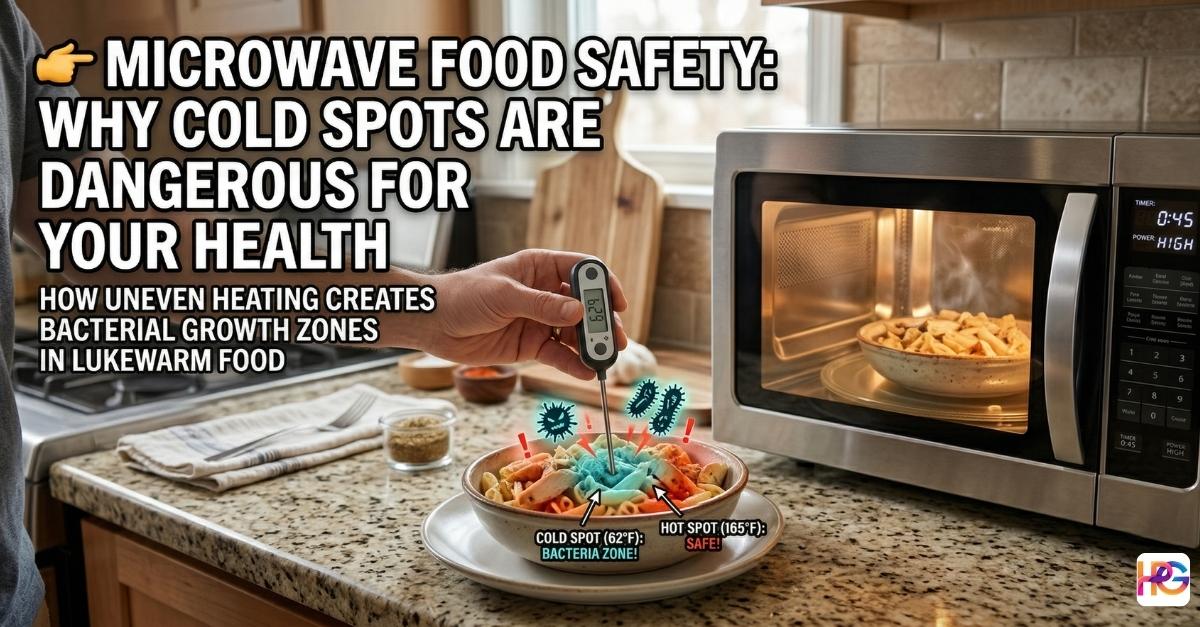
Let us look back at my leftover chicken from earlier. The outer edges of the meat got very hot. They probably hit a safe 165 degrees. That high heat is enough to kill bad germs. But the thick center stayed cold and damp. It was probably resting around 60 degrees.
That middle part was stuck right inside the unsafe danger zone. Any bad germs living there survived the quick microwave trip. If I ate that cold middle part I could get very sick. Food poisoning is not a funny joke. It can cause awful stomach cramps and a ruined weekend. You want to avoid it at all costs.
Temperature Zones Table
| Temperature Zone | Fahrenheit | What Happens to Bacteria |
| Cold Storage | Under 40 | Growth stops or slows down |
| Danger Zone | 40 to 140 | Rapid growth and doubling |
| Safe Cooking | Over 165 | Germs die off quickly |
My Worst Experience Defrosting Raw Meat
I want to tell you a short personal story. It happened a few months ago right in my own kitchen. I completely forgot to take ground beef out of the deep freezer. I needed to make a taco dinner fast. So I threw the rock-hard frozen block into the microwave. I hit the normal high cook button instead of the lower defrost button.
That was a massive and silly mistake. Five minutes later the whole kitchen smelled very weird. I quickly opened the machine door. The thin edges of the meat were totally brown and cooked. The thick center was still a solid block of hard ice. I ruined the entire batch of expensive meat. I had to throw it all in the trash bin.
Why Microwaves Struggle with Ice
There is a real science reason for my taco night failure. Microwaves are totally amazing at heating up liquid water. They are completely terrible at heating up solid frozen ice. The tiny parts in ice are locked very tightly together. They simply cannot shake or vibrate easily.
So the fast energy waves just pass right through the frozen chunks. But the soft outside edges thaw very quickly. Once they turn to liquid they heat up super fast. This creates a huge and dangerous heat gap. You get fully cooked edges and a frozen icy core.
The Perfect Storm for Germs
This split heat is the perfect storm for bad bugs to grow. The warm edges sit directly in the unsafe danger zone. The middle stays frozen solid. You are basically breeding bacteria while trying to make dinner. This is why thawing raw food takes real focus and care. You cannot just press start and walk away to check your phone.
The Safest Ways to Defrost Raw Meat
We all make goofy mistakes in the kitchen. Learning from them is exactly how we pick better daily habits. Defrosting raw meat safely takes a little extra cooking care. You have to actively manage the entire heating process.
If you must use your fast machine to thaw meat follow strict rules. These simple rules will keep you and your whole family safe. I use these steps every single time I need to thaw dinner in a hurry. They really do work perfectly.
Always Use the Defrost Setting
Never use full raw power to thaw frozen food. Your machine has a clear defrost button for a very good reason. It does not actually use a brand new type of wave. It simply cycles the main power on and off. The smart machine will blast heat waves for a few seconds.
Then it will pause fully for a few seconds. This built-in resting time is vital for safe thawing. It allows the strong heat from the outside edges to move inward slowly. The soft heat travels nicely toward the frozen icy center. This gentle process stops the thin edges from cooking early. It keeps the whole chunk of meat at a much safer level.
Pause and Separate the Pieces
You still need to help the smart machine do its best job. Do not ever ignore those loud annoying beeps. Stop the heat cycle halfway through the set timer. Open the big door and check the cold food. Flip the heavy meat over to expose the cold bottom.
Try hard to pull the sticky pieces apart if you can. Breaking apart thick chicken breasts helps them thaw evenly. Scraping off soft ground beef works absolute wonders too. Put the frozen bits back inside for more low time. Cook the raw meat right away once it is fully thawed. Never put warmed raw meat back into your cold fridge.
Defrosting Methods Table
| Defrost Method | Time Needed | Safety Level | Best Food Type |
| Fridge | 24 hours | Very High | Large heavy roasts |
| Cold Water | 1 to 2 hours | High | Sealed package cuts |
| Microwave | 10 minutes | Medium | Emergency quick meals |
| Countertop | Varies | Very Low | Never ever do this |
Smart Habits to Beat the Cold Spots
You can easily outsmart your boxy appliance with a few easy tricks. I use these super simple habits every single day. They make my hot food taste way better. They also keep my fast meals safe to eat.
You do not need any rich fancy tools to do this well. You just need a tiny bit of calm patience. Treating your microwave like a real hot oven changes everything. It is not just a magic fast heating box. It requires some basic cooking skills to get the very best results.
Stir Rotate and Wait
Always stop the running timer halfway through your cooking. Take a big spoon and stir your hot soup or wet chili. Move the cold damp food from the center to the hot outer edges. Move the piping hot food into the cold middle.
If you are heating a solid hard item flip it completely over. Turn the flat plate around if your machine lacks a spinning tray. This mixes up the dangerous hot and cold nodes. It forces the trapped heat to spread out evenly. Doing this one simple easy thing fixes most cold heating problems. It takes ten extra seconds but makes a massive difference.
The Magic of Resting Time
Have you ever read the back of a frozen meal box. The typed instructions often say to let the food stand for two minutes. Most hungry people ignore this boring step. I used to ignore it all the time too.
Do not ever skip the suggested resting time. This is a very real and smart cooking technique. Fancy chefs call it safe carryover cooking. The hot food actually keeps cooking after the machine turns completely off. The intense trapped heat from the hot spots moves into the cold icy spots. The total temperature balances out naturally. This quiet resting phase is crucial for real safety. It kills off those last hidden nasty germs.
How to Check Your Food Temperature
Guessing is never a good clear idea when it comes to raw meat. You cannot tell if pale chicken is done just by looking hard at it. Poking it with a metal fork is not a real science. The only way to be totally sure is to measure the hidden heat.
A good fast thermometer is your absolute best friend in any kitchen. I keep one right next to my hot stove. It gives me great peace of mind. Every smart home cook needs a digital fast food thermometer. They are very cheap and super easy to find online.
Measuring the Right Hidden Spots
You need to use the neat tool correctly to get a good reading. Take your hot food out of the machine first. Stick the sharp metal probe deep into the thickest part of the meat. Make sure you do not hit or touch any hard bones.
Bones get much hotter than the soft meat around them. Touching a hot bone will give you a very false reading. Check the deep temperature in three different places. This step is very important. You are actively looking for those dangerous hidden cold spots. The food is only fully safe when every single spot reaches 165 degrees.
Final Thoughts on Keeping Your Kitchen Safe
Microwaves are truly amazing tools when used the right safe way. They save us tons of precious time on super busy weeknights. But we have to fully respect exactly how they work. The unseen shooting waves are powerful but very sloppy. They easily leave behind icy cold traps that can make us sick.
Understanding these hidden cold spots is the first big step to better home cooking. Now you know exactly why they always happen. You also know exactly how to fix them quickly. Taking a few extra fast seconds to stir your food really matters. Using the low defrost button correctly matters even more. Let your hot food rest briefly before you eat it. Use a neat thermometer to check your kitchen work. These small simple habits help you live smarter every single day. Enjoy your totally safe and piping hot meals.
FAQs:
Do I really need a digital thermometer to check for cold spots in my microwave food?
Yes, a fast digital thermometer is a vital tool. It helps you find hidden cold spots that the microwave missed. This simple tool keeps your whole family very safe.
Does a microwave with inverter technology heat my food more evenly?
Panasonic and LG often use inverter tech for steady power. It helps avoid the harsh on-and-off cycles of old machines. This leads to fewer frozen centers in your meat.
Is it safe to use my microwave if the glass tray stops spinning?
A broken tray makes those dangerous cold spots even worse. The tray is a key part that moves food through heat nodes. Fix it fast to ensure your food stays safe.
Do smart sensors help prevent cold spots in frozen meals?
Smart sensor tools track steam to adjust the heat time. They work well for small items but can still miss deep ice. Always stir your food to be totally sure and safe.
Can I use metal meat thermometers inside a running microwave?
Keep metal tools out of a running microwave. Use a digital probe only when the machine stops. This stops bad sparks and saves your expensive kitchen gear for a long time.