
How to Use a Food Processor for Pesto (Perfect Texture Guide)
Last Tuesday was blazing hot here in Alabama. The sun was beating down hard. My kid came running inside after playing. He was hungry and wanted pasta for lunch. Walking out to my small garden felt like stepping into an oven. The sweet basil plants were growing wild in the summer heat. Their spicy scent filled the humid air. I knew exactly what to make right then. Fresh green sauce was the perfect quick meal. But getting the texture right is not just about a recipe. It is about how you operate your machine.
Years ago, I used to ruin this simple sauce. Everything went straight into a cheap plastic blender. Pressing a button was my only strategy. The result was always a very oily mess. Bitter flavors completely ruined the meal. It also looked dark and sad in the bowl. Things changed when I got a heavy metal food processor. Learning a few simple tricks made a huge difference. Now my homemade mix comes out bright green. The texture stays thick and creamy every single time. Today, I want to share my perfect texture guide with you. This works perfectly in 2026 just like it did years ago. Let me show you how to master this task.
Why Your Machine Matters for Good Pesto
Your kitchen appliance is the real star here. A strong motor makes a huge difference. I prefer heavy machines built for the long haul. Cheap gear often fails when you need it most. A powerful motor spins the sharp blade very fast. This cuts the soft herbs clean. It stops the delicate leaves from getting crushed. Crushed basil turns black quickly. The damaged leaves also taste very bitter.
Getting the Best Basil to Pine Nut Ratio
You cannot just guess the amounts. The bowl needs enough food to chop evenly. Putting too little inside means the food just spins around. The metal blades will completely miss the ingredients. Packing the bowl too full causes another problem. The bottom turns to absolute mush. Meanwhile, the top layer stays whole. You need a perfect balance.
My Go-To Pesto Formula
I like to stick to a clear plan. Two cups of fresh leaves are the perfect base. Pack them tight in your measuring cup. Add one third cup of toasted pine nuts next. Tossing in two cloves of garlic adds a great kick. You also need a half cup of hard cheese. Parmesan or Pecorino works best for this. A small pinch of salt brings it all together.
Basic Pesto Ingredient Table
| Ingredient | Amount | Purpose |
| Fresh Basil Leaves | 2 cups | Core flavor and color |
| Toasted Pine Nuts | 1/3 cup | Texture and rich taste |
| Garlic Cloves | 2 pieces | Spice and sharp bite |
| Hard Cheese | 1/2 cup | Salt and deep flavor |
| Olive Oil | 1/2 cup | Binds it all together |
The Secret Step Before Adding Basil
Many folks make a big error right at the start. Putting the greens in first is a bad idea. Soft herbs hate friction and heat. The spinning blade gets hot fast. You must protect those green leaves.
First, drop your garlic down into the empty bowl. Add the toasted pine nuts in there too. Pulse the machine a few times. Stop when the mix looks like coarse sand. Breaking down the hard parts first protects the herbs. Now, drop your delicate leaves inside. Pulse everything just a few more times. You want small green flakes. Turning it into a wet paste right now ruins the texture.
Why You Need to Stream Oil Slowly While Blending
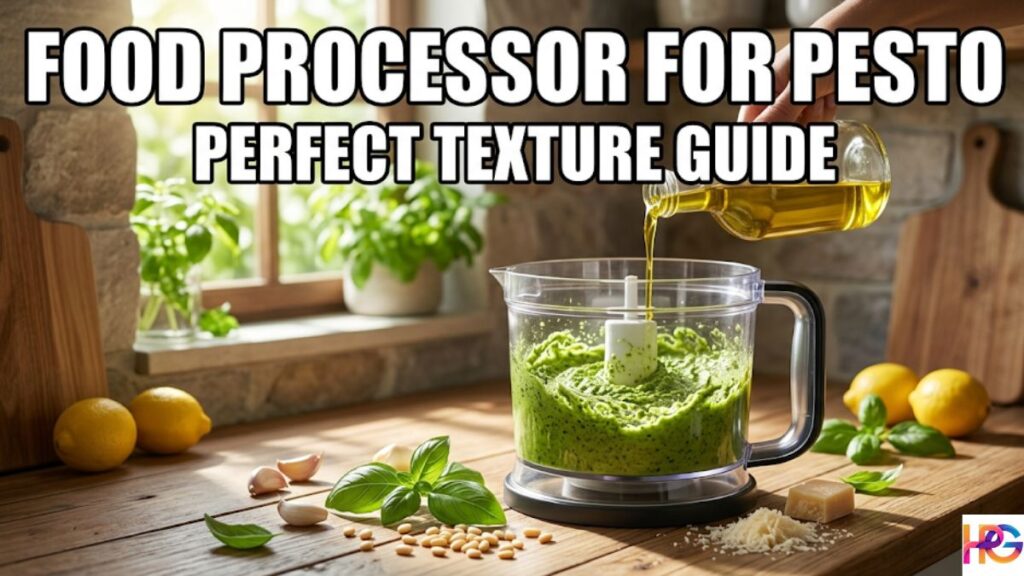
This is the most vital part of the whole process. Look at the lid of your machine. You will see a tall feed tube. It has a tiny hole sitting at the bottom. That little hole is there for a specific reason.
Creating a Perfect Emulsion
Do not pour all your oil in at once. Dumping it causes the sauce to break apart. The natural water from the leaves fights the fat. They actively push away from each other. You end up with a dense clump. A pool of grease sits on top of it. Looking at it is simply awful.
Turn your machine on low speed. Leave the motor running steady. Slowly pour the liquid fat into that feed tube. Letting it drip down slowly is the key. The spinning blade does magic right here. It breaks the fat into tiny drops. Those small drops mix with the wet herbs perfectly. They lock together tightly. This tight bond is called an emulsion. It creates that rich and thick texture. Your sauce will now coat pasta perfectly.
How to Tell When Your Emulsion Fails
Sometimes you stream the liquid slowly, but it still fails. How do you know something went wrong? The fat floats out to the wide edges. Green bits sink heavy into the middle. It looks just like a broken salad dressing. Panicking is not necessary if this happens. There is a wild trick to fix it.
Take one tablespoon of warm water. Put it into a clean mixing bowl. Whisk your broken sauce into that water very slowly. The warm temperature helps bind the fat again. Taking your time here requires some patience. However, it usually pulls the whole mix back together. Learning this the hard way saved many of my dinners.
Proper Storage Tips to Keep Pesto Green
Fresh cut herbs go bad fast when open air hits them. They turn a wild shade of dark brown. This nasty change can happen in just ten minutes. Wasting good food always bothers me. Over time, I found the best ways to save my leftovers. Keeping that bright green color is totally possible.
The Olive Oil Seal Trick
Sometimes we have leftovers after a big lunch. I put the extra sauce into a small glass jar. Tapping the jar on the counter helps a lot. This removes any trapped air bubbles hidden inside. Then, I smooth the top flat with a clean spoon. Finally, pouring a thin layer of olive oil forms a tight seal. The liquid acts just like a natural lid. Air cannot touch the green mix anymore. The sealed jar goes straight into the fridge. It stays fresh and bright for many days.
Freezing for Long Term Storage
We eat a ton of this amazing stuff. Making big batches on weekends is my routine. Freezing remains the best way to keep it safe for months. I grab an empty plastic ice cube tray. Spooning the fresh mix into the slots is easy. The tray then goes directly into my freezer.
When the cubes get rock hard, I pop them out. Putting the green blocks into a zip bag saves space. They go right back into the freezing cold. Next time my kid wants a quick meal, I am completely ready. Dropping two frozen blocks into hot noodles is fast. They melt right into the hot dish. The amazing smell takes me right back to summer.
Keeping Your Food Processor Clean
Making food at home means doing dirty dishes. This specific recipe leaves a greasy film everywhere. The hard cheese sticks tight to the plastic bowl. Thick oil heavily coats the sharp metal blades. Scrubbing dishes at night is not my favorite chore. But a neat trick fixes this problem fast.
My Natural Cleaning Method
I like to use natural things around my house. Harsh chemical soaps are not my style. Once the main bowl is empty, I put it back on the base. Next, a few drops of mild dish soap go in. Then, I pour in a good splash of white vinegar. Warm water fills the dirty bowl halfway. Securing the lid tightly is the last step.
Turning the machine on high speed does the real work. Letting it run for ten seconds is enough. The soapy water spins incredibly hard. It acts exactly like a tiny washing machine. The vinegar cuts right through the heavy grease. It reaches tight spots under the blades where my sponge cannot fit. Dumping the dirty water down the sink feels great. A quick rinse with clean water finishes the entire job. The bowl always looks brand new.
Selecting the Right Extra Virgin Olive Oil
The liquid fat you choose is a huge deal. It binds the entire dish together into one smooth unit. Cheap cooking oil will quickly ruin your hard work. Picking something special for this raw sauce is vital.
Reading the Bottle Label
Always look for cold pressed extra virgin bottles. The glass itself should be very dark. Dark glass stops sunlight from cooking the liquid inside. Bright light makes the fat go rancid very fast. Read the tiny harvest date printed on the back label. You always want the newest bottle sitting on the store shelf. Old products taste flat and totally lifeless.
The Taste Test
Pour a tiny drop onto a clean spoon. Smelling it first tells you a lot. It should smell exactly like fresh cut grass. Take a very tiny sip next. A good bottle will have a slight peppery burn in your throat. That specific burn means it is fresh and full of intense flavor. If it tastes like absolutely nothing, skip it. Your hard work deserves the best ingredients you can find.
Troubleshooting Common Pesto Mistakes
Sometimes things go wrong in the kitchen. Worrying about it will not help. We all make silly errors while learning. Let us fix a few common issues together right now.
Why Is My Sauce Too Thick?
Maybe your mix looks just like thick paste. It will not stir into your food easily. Fixing this problem is actually quite easy. Do not add more fat to the bowl. That just makes it super greasy. Just save some starchy water from your hot pasta pot. Stir a small splash of that water into your heavy bowl. The hot starch helps thin it out nicely. It perfectly binds everything together.
Why Does It Taste Bitter?
A nasty bitter taste usually means two specific things. First, you might have used cheap or very old oil. Tasting your ingredients first is a smart move. If the bottle smells weird, throw it away. Second, you might have blended the leaves way too long. The fast metal blade got way too warm. High heat quickly ruins soft summer herbs. Remembering to just pulse them lightly saves the flavor.
Making It Your Own Way
You do not always have to follow strict rules. Knowing the basic steps lets you play around. Trying new things in my kitchen is always fun. It keeps daily cooking fresh and exciting.
Swapping Out the Greens
Sweet basil is great, but it is not the only option. Finding fresh herbs in winter is often hard. Using fresh spinach instead works surprisingly well. It creates a very bright green sauce. Peppery arugula gives a really nice spicy kick. Some creative people even use carrot tops. Just keep following the same basic blending steps.
Playing With Different Flavors
Try squeezing fresh lemon juice in at the very end. The sour kick sharply cuts through the rich fat. It totally wakes up the whole dish. Adding a small pinch of red pepper flakes works nicely too. A little tiny bit of heat makes it exciting. Playing around with the amounts is the best part. Find exactly what your own family loves best.
Preparing a Meal with Your Fresh Sauce
Now you have a perfect green mix sitting on the counter. Serving it properly is the final step. Simply dumping it onto hot food is a major mistake. High heat from a stove pan ruins the delicate flavor.
The Right Way to Mix Pasta
Never cook this fresh sauce in a hot pan. Boiling your noodles until they are soft is the first step. Draining them is next, but save a little hot water. Put the cooked noodles into a large mixing bowl. Add a big heavy scoop of your fresh green mix. Splashing in some hot starchy cooking water helps a lot. Toss it all together far away from the hot stove. The gentle warmth of the noodles wakes up the raw garlic. It also melts the hard cheese perfectly.
Other Fun Ways to Use It
This amazing mix is not just for plain noodles. Spreading it on fresh sourdough bread tastes incredible. I bake bread often and absolutely love this specific pairing. Mixing a spoonful into plain yogurt is another great idea. It makes a super fast dip for fresh crunchy vegetables. Brushing it on grilled chicken right before serving works well too. The final flavor is incredibly intense and fresh.
Final Thoughts on Mastering the Mix
Learning to use your gear right changes everything. Fighting the machine is no longer a problem. Working with the tool makes life easier. Making fresh food at home brings me a lot of joy. Hoping these simple steps help you is my main goal. Grabbing some fresh herbs today is a great idea. Pulling out your heavy machine should be your next move. Trying a fresh batch yourself is highly recommended. Letting the machine do the hard work is smart. Guiding it along is your only real job. The final tasty results will truly amaze you.
FAQS for Your Workshop Kitchen
Does motor power matter for pesto?
A strong motor spins the blades fast to cut leaves clean. Weak machines crush herbs and create a bitter taste. High speed is vital for a smooth Food Processor for Pesto.
Can the spinning blades ruin the flavor?
Metal blades get hot when they spin for too long. This heat ruins delicate leaves and makes them taste bad. Use short pulses to keep your tool and food cool.
How do you clean the greasy tool bowl?
Mix warm water and white vinegar in the dirty bowl. Run the machine for ten seconds to strip away thick grease. This reaches the tight spots under the sharp blades.
Why choose a metal machine body?
Heavy metal machines like a Bunn offer much better durability than plastic. They stay stable and handle tough tasks without failing. Solid builds are best for a long life.
What is the purpose of the feed tube hole?
The feed tube hole lets you add oil at a slow drip. This builds a perfect emulsion for a thick, rich sauce. It is the best way to get a professional texture.