My microwave keeps tripping the circuit breaker when door opens
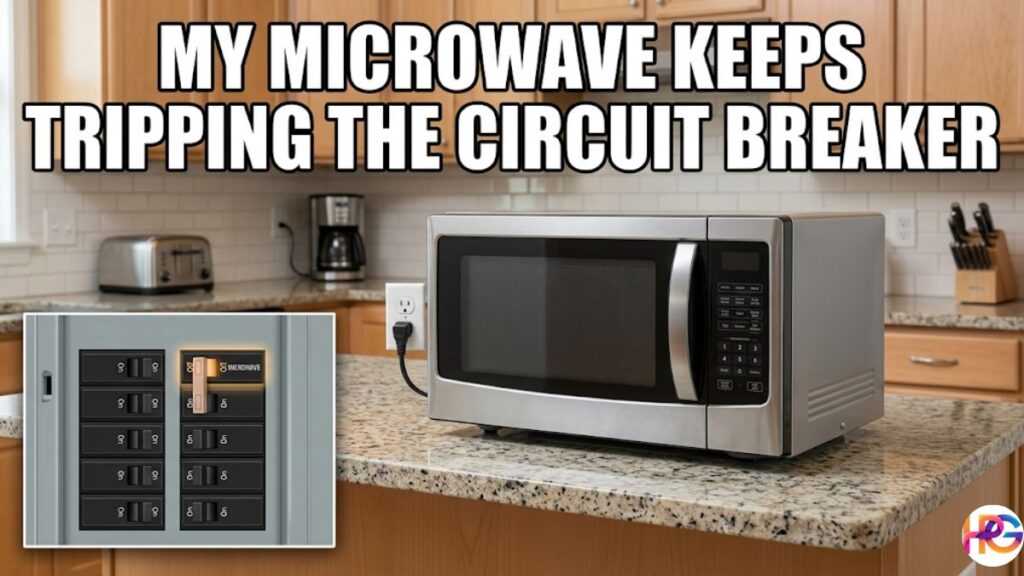
5:40 a.m. Coffee ready. Kitchen quiet. I open the microwave door… click… and the whole room goes dark. If my microwave keeps tripping the circuit breaker, even when it’s not running, something deeper is wrong.
I’ve dealt with this in real U.S. kitchens from humid Florida garages to dry Arizona homes, and it often comes down to hidden parts like door switches, wiring, and circuit load—not the breaker alone. Here’s what’s really happening inside, and how to fix it safely.
owave keeps tripping the circuit breaker. This is a bad switch. Fix it now.
Why my microwave trips the breaker the moment I open the door
It feels so strange. The machine is not even running yet. But pulling that door handle moves live electrical parts inside.
The hidden door switch system inside every microwave
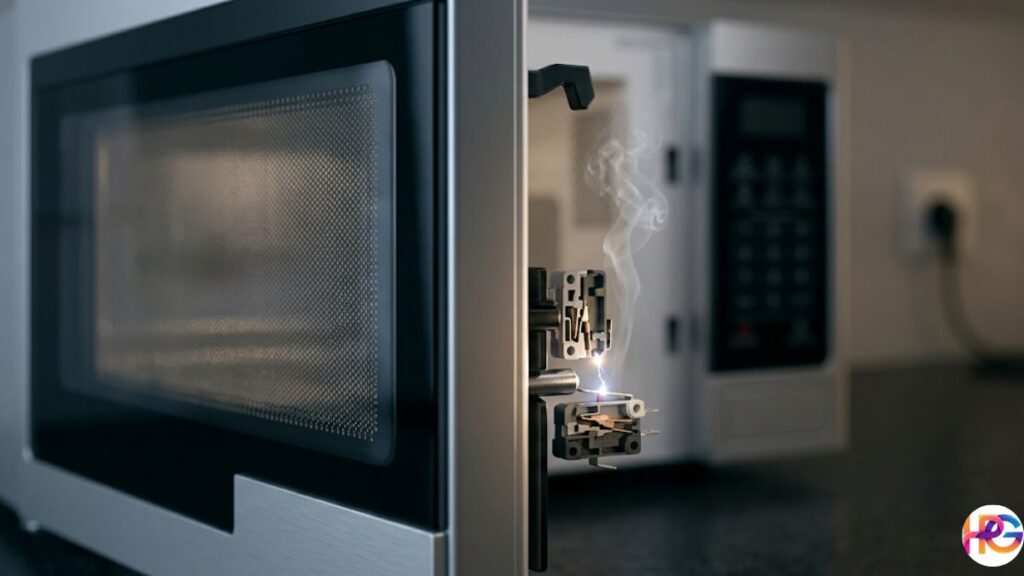
Your appliance has a hidden safety loop. It uses three small door switches. These are known as the primary, secondary, and monitor switches. Together, they guide the electrical current. They keep the power safely inside the box.
When you pull the handle, these switches must click in a set order. If one switch gets stuck, the safety loop breaks. The monitor switch then creates a fast short circuit on purpose. This shuts down all power to keep you safe.
What happens electrically when the door opens
Think of it as a fast traffic shift. Opening the door moves power paths in a split second. If the switches miss their timing, the power takes a wrong turn. It runs straight into a dead end.
This creates a hard short circuit. A huge wave of power rushes through the line. Your main home panel detects this giant spike in amps. The breaker flips off instantly to stop a wire fire.
Why this issue is more common than people think
This happens a lot more than you think. I learned this on a wet Tuesday morning. I used to slam my microwave door hard after cooking my food. That bad habit bends the tiny plastic parts over time.
Years of daily use will wear these pieces out. Also, your kitchen air is full of grease and steam. This sticky gunk gets inside the door latch. The switches get stuck and fail to click fast. That is exactly why my microwave keeps tripping the circuit breaker.
The real reasons electricity trips off due to a microwave
Using my trusty multimeter, I tested this in my own kitchen and even called an appliance tech in Ohio for extra insight. During the process, I learned a pretty surprising fact. It is rarely just a bad breaker. Let me share what we found.
Faulty door interlock switch (most common cause)
This is the top villain. Remember those three tiny switches? When they break, power jumps the track. I could smell a faint burnt plastic odor near the door latch. A broken switch causes a direct short. This makes the breaker snap shut. It protects your home.
Shorted high-voltage capacitor
This part stores a huge electrical charge. It gives the oven its cooking power. Over time, it can wear out. It might short to the metal case. When that happens, it pulls too much current. Your home panel feels this huge pull. It shuts off the power fast.
Failing magnetron drawing excess amps
The magnetron creates the heat for your food. Think of it as the heart of the machine. After years of heavy use, it can fail. A dying magnetron asks for too much power. Soon, it asks for more than your wires can give. The breaker drops out to stop the wires from melting.
Damaged internal wiring or burned connectors
I opened up my unit to look inside. I saw wires with brown, crispy edges. Heat and steam can ruin the plastic wire covers. Bare metal wires might touch each other. This creates a fast short circuit. It is scary, but your breaker acts fast to save you.
Weak or overloaded kitchen circuit
Sometimes the machine is fully fine. The real problem is your wall outlet. Kitchens use a whole lot of power. You might have a toaster and your oven on one line. When they all run at once, they pull too many amps. The circuit just gives up. That is why my microwave keeps tripping the circuit breaker.
Can a microwave overload a circuit? (Yes — here’s how)
Microwaves eat a huge amount of power. My oven pulls way more juice than my big kitchen fridge.
How many amps does a microwave use?
Most units need 12 to 15 amps just to run. But when they first wake up, they pull a massive surge of power. I grabbed my multimeter one Sunday to check my own unit. The dial spiked hard on startup. For a quick scale, your fridge only uses about six amps.
Sharing the outlet with toaster, kettle, or fridge
Kitchens are busy places. One cold morning in a snowy Chicago winter, I was very hungry. I ran my toaster and the oven at the exact same time. The wall outlet can only hold 20 amps in total. Adding a water kettle pushes the limit over the edge fast. The line just gives up.
Why older homes trip breakers more often
Older homes have weaker electrical wires. The main panels were built for basic lights. They were not made for big modern cooking tools. If you live in an older house, the power lines just get too hot. This is a very common reason why my microwave keeps tripping the circuit breaker.
Is it safe to use a microwave that trips the breaker?
I tried to force it to cook just one more time. It was a very bad idea. Please do not do this.
Fire risk from electrical shorts
A short circuit means the power jumps out of its safe path. It gets very hot in a flash. I felt the wall plug one day and it was warm to the touch. That raw heat can melt the plastic on your wires. It can easily start a fire in your wall.
Damage to your home wiring
Every time the safety switch snaps, it hurts your home wires. Think of it like bending a thin paper clip back and forth. Soon, the metal lines inside your walls will break down. This costs a huge amount of money to fix.
Risk of damaging the control board permanently
Power spikes are rough on the smart brain of your oven. The control board has tiny chips inside. Forcing a broken unit back on sends wild surges straight to the board. It can fry the computer fully. Then, you will be shopping for a whole new machine in 2026.
How I stopped my microwave from tripping the circuit breaker
I needed my morning coffee on a rainy Thursday in Seattle. But the power kept dying. Here is exactly what I tested step-by-step before calling for a costly repair.
Plugging into a different dedicated outlet
I moved the heavy box to the dining room. I plugged it into a fresh wall plug. It still killed the power. This told me the wall wires were fine. The machine itself was the real problem.
Resetting and testing the breaker
I walked down to my dark basement. I found the main metal panel. The switch felt weak and spongy. It did not have a hard click. Sometimes a tired switch just needs a firm push to reset and wake up.
Listening for clicking sounds from inside the door
After opening the front door very slowly, I pressed my ear close to the plastic frame. Only two soft clicks came from inside. There should be three clear snaps. One tiny piece was fully stuck.
Checking for burn smell or heat near the plug
Bending down near the wall plug, I noticed a faint, sharp smell of burnt wire. The thick black cord also felt unusual to the touch. It was very warm. That heat is a huge warning sign to stop.
When I knew it was an internal switch problem
The machine passed the wall plug test. But the door clicks were clearly wrong. That was my lightbulb moment. The hidden safety latch was broken. That is exactly why my microwave keeps tripping the circuit breaker.
What to do if an appliance keeps tripping the breaker
This wild issue does not just happen with ovens. This simple testing method works for your air fryers, space heaters, and water kettles too.
The outlet test
Unplug the broken machine. Plug a small lamp into that exact same spot. If the lamp stays bright, your house power is good. The machine is simply pulling too much juice.
The extension cord test (temporary diagnostic)
I grabbed a thick garage cord for a fast test. I ran it to a living room plug. Do not use a cheap thin wire for this. If the oven works out there, your kitchen line is just too full.
Testing the breaker load capacity
Think about what else is running. Is your fridge cooling? Is the toaster heating? Turn them all off. Try the oven by itself. If it works now, your line was just overloaded with too many amps.
When to call an electrician vs appliance technician
Call a home electrician if the wall plug feels hot or looks black. Call an appliance tech if the machine makes loud buzzing noises. Do not play with high voltage if you feel unsure. Safety always comes first.
Signs that a microwave is going bad (most people ignore these)
Looking back, my microwave had been warning me for weeks. It is funny how we ignore things until they fully break.
Door feels loose or misaligned
The door handle felt a bit wobbly in early 2026. It did not shut tight on the first try. I had to push the plastic frame twice. This simple bend throws the tiny safety switches off track.
Random power loss during cooking
Sometimes, I would warm up a bowl of soup. The oven would just stop halfway through. The light would die for a second. It was a clear sign of a weak power flow inside.
Louder humming noise than before
My unit used to run very quiet. Then it started to buzz loud, like an angry bee. A dying magnetron struggles to make heat. It cries out and hums loud before it completely fails.
Burning smell after use
One Friday night in a busy Boston apartment, I made a bag of popcorn. I smelled hot metal and melting plastic mixed with the warm butter. If it smells sharp and burnt, the wires are melting.
Display flickering or resetting clock
The green clock numbers would blink on and off. Sometimes the screen would just flash 12:00 for no clear reason. The smart control board was clearly dying from small power drops.
Why my LG microwave keeps tripping the breaker (brand-specific insight)
Every brand has a weak spot. I learned a wild truth about this specific make from chatting with other repair techs.
Sensitive door switch design
LG makes great gear, but the latch is very soft. If you shut it too fast, the small plastic hooks bend. The switches get stuck instantly. Then, my microwave keeps tripping the circuit breaker.
Control board vulnerability to shorts
The smart chips inside are very sensitive to thick steam. I often boil a bowl of water with white vinegar to clean the inside naturally. But too much hot steam can reach behind the front keypad. The wet board shorts out fast.
Parts that typically fail first
The little plastic hooks on the door break first. The main monitor switch dies next. It is a frustrating issue, but they are cheap parts to fix yourself with a good screwdriver.
What’s the average lifespan of a microwave?
Figuring out how long these boxes live helped me decide my next move. I had to choose to fix my unit or buy a new one.
7–10 year lifespan explained
Most modern ovens last seven to ten years. Many new ones feel like cheap gear. I want machines built for the long haul with strong metal bodies. If yours is old and my microwave keeps tripping the circuit breaker, its time is up. The inside parts just get too weak.
Heavy use vs light use lifespan
A big family will kill an oven fast. We use ours all day for hot drinks and warm meals. That heavy daily use wears out the core parts fast. If you only use it to melt butter once a week, it will live a very long time.
Cost of common repairs vs new unit price
I sat at my kitchen table on a sunny Monday in Denver. I grabbed my pen and did the math. A new basic oven costs about one hundred dollars in 2026. A service call to your house costs just as much. The final numbers looked wild to me.
Is it cheaper to repair or replace a microwave?
The repair quote made me drop my coffee mug. It was way too high.
Cost of door switch repair
If the problem is a small door switch, you are in luck. The plastic part costs ten bucks. I tested mine with my multimeter first. If you enjoy simple DIY projects, you can fix it fast. It is a very cheap job to do yourself.
Cost of magnetron replacement
If the main heat tube dies, that is very bad. A new part costs a whole lot of money. Paying a pro to put it in costs even more. At that point, fixing it is a truly bad choice for your wallet.
When replacement makes more financial sense
I looked at my burnt wires. I felt the cracked plastic latch. My unit was eight years old. Fixing it cost way too much money. Buying a brand new metal oven was the smart move. Sometimes, letting the old machine go is the absolute best choice.
How do I stop my microwave from tripping the circuit breaker? (action plan)
Here is a simple checklist you can use today. I follow these exact steps in my own home.
Step-by-step troubleshooting checklist
- Unplug and inspect cord: First, pull the plug out of the wall. Feel the thick black cord with your bare hands. If it feels hot or smells like burnt rubber, stop right there.
- Test another outlet: Move the heavy box to a new room. Plug it in. This tests if your kitchen wall plug is the main issue.
- Observe door behavior: Open the front door very slowly. Listen close for three clear clicks. If it sounds soft or mushy, the latch is stuck. That is exactly why my microwave keeps tripping the circuit breaker.
- Check breaker rating: Walk down to your main power panel. Look for the small number printed on the switch. A big kitchen tool needs a full 20-amp line to work safely.
- Decide repair vs replace: Look at the final costs in 2026. A small door switch is a cheap DIY fix. A dead main brain board means you should buy a brand new metal unit.
How can I fix my breaker that keeps tripping?
Sometimes the oven is perfectly fine. The main wall switch in your home is the actual problem.
Signs of a weak breaker
I learned this fast on a very hot Friday in an Austin garage. A tired switch feels soft and spongy. Instead of snapping back with a hard, loud click, the part may feel weak or even slightly warm to the touch. It is surprising how quickly these older components can wear out over time.
When a breaker needs replacement
If the switch flips off when the oven is fully empty, it is dead. Do not keep forcing it back on. The small metal parts inside are burned up and weak. You must swap it out for a fresh one to stay safe.
Role of a 20-amp dedicated kitchen circuit
Modern kitchens pull huge amounts of power. Your big oven must have its own personal power line. Do not share this path with a toaster or a fridge. A strong 20-amp line gives the machine all the safe juice it needs to heat your food.
Frequently Asked Questions
Why do I find that my microwave keeps tripping the circuit breaker when the door opens?
A bad door switch makes a short circuit. This forces your home panel to turn off the power fast. Check your door latch clips to see if they are bent today.
Can I use an extension cord to test my kitchen microwave?
Yes, you can use a thick garage cord for a quick test. Do not use a thin wire. See if a fresh wall plug stops the trip to learn more about your home power lines.
Is it safe to reset the breaker and try the microwave again?
No, it is not safe. Forcing it back on can melt your home wires. It can even start a big fire. You must inspect the internal door switches before you try to use it.
How many amps does a standard kitchen microwave draw?
They need tank to twelve amps to run. They pull a huge spike of power when they turn on. Check your other home tools to find out how much juice they all use.
What should I do if my LG microwave keeps tripping the breaker?
These models have soft door hooks. The small parts bend out of line fast. Look at the latch right now to see if you need to get new parts to fix the whole issue.